
HMP Millsike 'Absolute Chaos': Watchdog Says Prisoners Were 'Running the Jail'
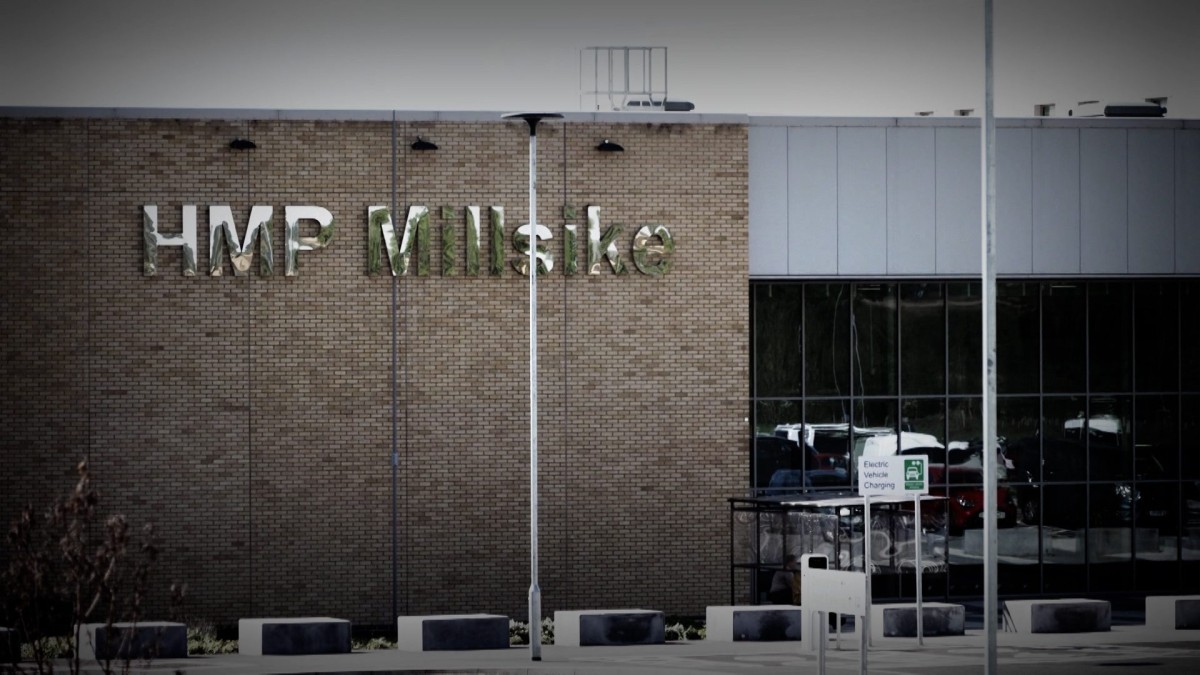
The gleaming promise of HMP Millsike, the government's flagship "super-prison" in the East Riding of Yorkshire, was meant to herald a new era for the justice system.
The gleaming promise of HMP Millsike, the government's flagship "super-prison" in the East Riding of Yorkshire, was meant to herald a new era for the justice system. Instead, the first independent scrutiny of the facility has laid bare a sobering reality: during its opening months, inmates were effectively running the wings, and the staff meant to control them were learning on the job.
Flagship to Fiasco: How Yorkshire's State-of-the-Art Super-Prison Descended into Chaos
London, UK – 6 September 2026 — The Independent Monitoring Board (IMB), the volunteer watchdog that reports directly to the Ministry of Justice, published its first annual review of HMP Millsike this week. The document does not pull its punches. It describes chaotic conditions at the 1,468-place Category C resettlement prison near Full Sutton, and reveals that during its first few months of operation, prisoners were effectively "running the prison". The finding is a profound embarrassment for the government, which hailed the facility's opening on 28 March 2025 as a landmark moment in its New Prisons Programme.
The report lands at a particularly sensitive time. The UK prison system is in the grip of a chronic overcrowding crisis, with the government relying on an early-release scheme to free up cells. Yet, as the IMB notes with evident frustration, hundreds of beds at Millsike remained empty more than a year after the first prisoners arrived in April 2025. The juxtaposition is stark: a brand-new, £400 million facility sitting partially dormant while the rest of the estate bursts at the seams.
A Staffing Crisis at the Heart of the Chaos
The root cause of the disorder, according to the IMB, lies in a fundamental failure of recruitment and training. At the time of the prison's opening, approximately 90% of the prison officers on duty had no previous experience of working in a prison. This was not a case of a few gaps in the rota; it was a systemic issue that left a vast, modern facility in the hands of novices, overseen by a private contractor, Mitie Care & Custody, operating under a ten-year deal.
The consequences were predictable and dangerous. With such a green workforce, established hierarchies among the inmate population quickly filled the vacuum. The IMB's report details how prisoners took control of daily rhythms on the wings, a situation that persisted for several months before any semblance of order was restored. For a prison designed to resettle offenders back into society, the environment was anything but rehabilitative; it was a powder keg.
Red Alerts and Unsafe Wings: The Warning Signs Ignored
This week's annual report is not the first time the IMB has raised the alarm. In January 2026, the board took the extraordinary step of writing a red-alert letter directly to the Prisons Minister, Lord Timpson. That letter, which has now been made public, warned of serious safety and security breaches, including "inconsistent gate security" and staff routinely leaving doors and gates open. The implications of such lapses in a high-security environment are chilling.
The IMB members did not mince their words about their own safety. They stated that they only visited wings in pairs because they felt unsafe, and that healthcare workers were so concerned for their wellbeing that they feared going in to treat patients. The report also reveals that some prisoners were confined to their cells for up to 23 hours a day, a practice that flies in the face of the prison's stated purpose as a "resettlement" hub designed to prepare men for release into communities across the North of England.

Mitie's Response and the Question of Accountability
Mitie Care & Custody, the company contracted to run Millsike, has pushed back against the IMB's characterisation. In a statement to Channel 4 News, a spokesperson said: "While we value the Independent Monitoring Board's oversight, we do not believe its description of the prison at the time it opened, as being a fair or accurate reflection of the conditions at HMP Millsike." The company points to its rehabilitation partners, including PeoplePlus for education and vocational training, and the Forward Trust for substance recovery, as evidence of its commitment to reform.
Yet actions speak louder than words. In February 2026, Mitie replaced Millsike's director after less than a year in post. A former security officer at the prison painted an even bleaker picture, telling Channel 4 News that the place was in "absolute chaos". The question now is whether the Ministry of Justice, which retains ultimate responsibility for the prison estate, will hold Mitie to account over its contractual obligations, or whether this will become another costly example of private-sector failure in the justice system.
Empty Cells in a Full System: The Overcrowding Paradox
The most galling aspect of the Millsike saga, for many in the justice sector, is the waste of resource. As of the report's publication in early September 2026, hundreds of cells remained empty. This is not due to a lack of demand; the prison population in England and Wales remains stubbornly high, and the government has been forced to introduce emergency measures to manage the numbers. The early-release scheme, which has seen thousands of offenders freed before the end of their sentences, is a direct consequence of this capacity crunch.
For the taxpayer, the situation is a double blow. They are paying for a state-of-the-art facility — built by Kier under the New Prisons Programme, following the earlier Five Wells and Fosse Way projects — that is not being used to its full potential. They are also footing the bill for the consequences of a prison system that is failing to rehabilitate offenders effectively. The Ministry of Justice has yet to carry out a full inspection by HM Inspectorate of Prisons (HMIP), meaning the IMB's report remains the most authoritative independent assessment of conditions at Millsike to date.
Local Impact: Yorkshire Communities and the Resettlement Promise
For the communities of the East Riding of Yorkshire, the promise of HMP Millsike was twofold: jobs and rehabilitation. The prison, located opposite the existing high-security HMP Full Sutton, was expected to be a major local employer and to help reduce reoffending rates by preparing inmates for release into the region. Instead, the chaos of the opening months has undermined that mission. Families visiting loved ones have been confronted with a facility in turmoil, and local residents are left to wonder whether the men released from Millsike will be any less likely to commit crimes than those from older, more crowded jails.
The contrast with older prisons is instructive. Mitie has boasted that Millsike is the first UK prison to run solely on electricity, using solar panels and heat pumps to consume around a quarter of the energy of ageing Victorian institutions like HMP Wormwood Scrubs in London. But a prison that is energy-efficient yet operationally chaotic is a poor trade-off. The physical infrastructure may be cutting-edge, but the human infrastructure — the experienced officers, the robust procedures, the consistent leadership — has been found wanting.
The Road Ahead: Lessons for the New Prisons Programme
As Lord Timpson and the Ministry of Justice digest the IMB's findings, the broader implications for the New Prisons Programme are significant. Millsike was meant to be the template for future prisons, a showcase of how modern design and private-sector efficiency could solve the capacity crisis. Instead, it has become a cautionary tale about the dangers of opening facilities before they are properly staffed and resourced. The government's own rhetoric about "building prisons that work" now rings hollow.
The immediate priority must be to stabilise Millsike. That means accelerating the recruitment of experienced officers, addressing the security lapses identified by the IMB, and ensuring that the empty cells are filled only when the prison can safely accommodate more inmates. It also means subjecting Mitie to rigorous oversight, with the threat of financial penalties if standards are not met. The prison's first full HMIP inspection, when it eventually comes, will be the true test of whether the lessons of this chaotic opening have been learned.
This article was produced with AI-assisted research and editorial support. Sources: Channel 4 News, The Independent, The Spectator, Wikipedia.
By Erica Thornton, Staff Writer
What's Your Reaction?
 Like
0
Like
0
 Dislike
0
Dislike
0
 Love
0
Love
0
 Funny
0
Funny
0
 Wow
0
Wow
0
 Sad
0
Sad
0
 Angry
0
Angry
0

US Politics and Policy Correspondent at Global1.News. Based in Washington DC, covering American politics, policy, elections, and the courts. Knows how the system works and tells you what it actually means.














Comments (0)