
Newcastle council takes on 'auditors' filming vulnerable people for TikTok clicks
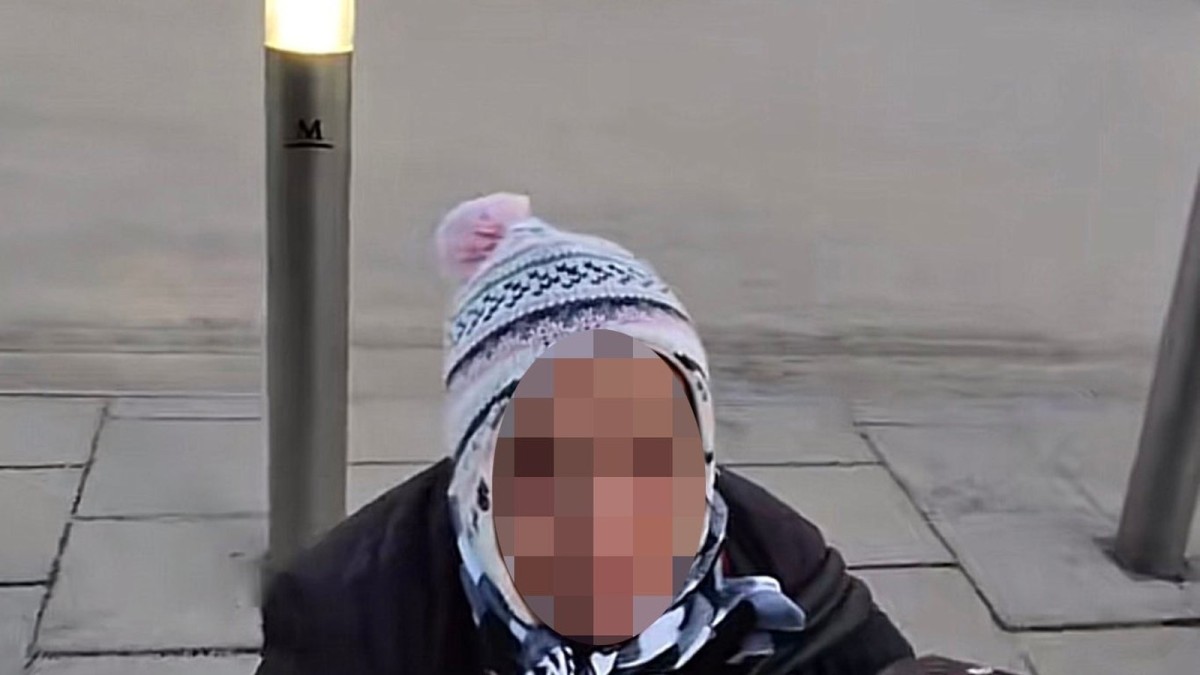
On a cold morning in Newcastle city centre, a woman sits in a woolly hat and coat, a blanket draped over her lap, playing the accordion. A man approaches and offers her a £20 note, only to snatch it back the moment she reaches for it.
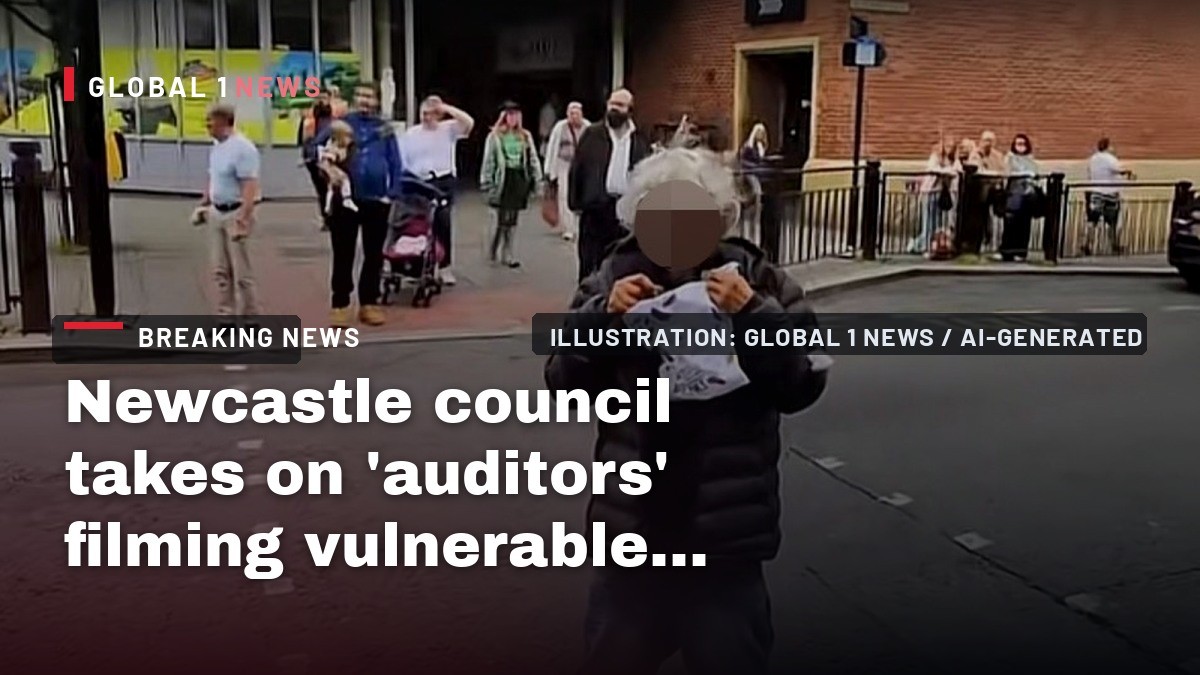
On a cold morning in Newcastle city centre, a woman sits in a woolly hat and coat, a blanket draped over her lap, playing the accordion. A man approaches and offers her a £20 note, only to snatch it back the moment she reaches for it. He swears at her and walks away. The entire exchange is captured on camera without her knowledge, then uploaded to TikTok, where it amasses 4.2 million views and more than 5,000 comments.
The vast majority of those comments criticise the man's behaviour. But that, it seems, is beside the point. For him, it is all engagement. He is a self-styled “auditor” — part of a growing breed of content creators who film in public spaces to test whether public employees and police respect the legal right to record. Yet critics increasingly argue the practice has drifted far from any notion of public interest and into something far uglier: the systematic exploitation of society's most vulnerable people for clicks.
Council issues community protection warnings
Last week, Newcastle City Council took the unusual step of issuing two such “auditors” with community protection warnings (CPWs) — a civil instrument that can be escalated to a notice and, if repeatedly breached, to criminal court proceedings. The council's accusation is stark: the individuals in question have been “ruthlessly exploiting” people going through “tough times” for social media likes, using Meta smart glasses to film vulnerable individuals and uploading the footage to platforms where comments are often “dehumanising”.
“These are people who are setting out, it would appear, to film people who are experiencing vulnerability and using that to create clicks on social media,” Newcastle City Council deputy leader Councillor Mark Mitchell told The Independent. “To us, that's really exploitative.”
Videos reviewed by The Independent on one of the accounts in question show the creator filming vulnerable people while intoxicated, sleeping, and even during arrest — frequently accompanied by comment threads in which the subjects are openly ridiculed. Mitchell said the problem had become markedly more pronounced over recent months, with services supporting vulnerable people in the city reporting that users felt increasingly uncomfortable seeking help as a result of being targeted.
“Even if that only happens once, that is not acceptable,” he said. “It really is a form of bullying or harassing behaviour. We're recognising that filming people who are vulnerable, either without consent or whether indeed they may not be able to give consent, is not okay.”
A legal grey area exposed
The Newcastle action throws into sharp relief a legal landscape that has struggled to keep pace with technological change. Broadly speaking, filming in public spaces is not illegal in the UK, which has left police with limited recourse when confronting covert recording of vulnerable people. The council's move to deploy civil powers rather than criminal law is, according to legal academics, a telling indicator of the gaps in current legislation.
Chara Bakalis, associate professor in law at Oxford Brookes University, said the shift towards civil action demonstrates that authorities are genuinely concerned. “If councils are beginning to use this, then obviously they're finding that this is an issue that needs to be addressed somehow,” she explained. “The use of technology is changing our understanding of harm so quickly that the law just can't keep up. It's not so much that the law has considered whether this is harmful and decided it isn't. It is just that we haven't even really thought about it in that way.”
Mitchell was unequivocal that the council would pursue prosecution if the individuals fail to stop their activities. He also called on the government to address the wider issue of secret and “exploitative” filming of vulnerable people in public places for social media gain. “A line needs to be drawn, and it is for parliament to consider how they determine where that line is and how you deal with this,” he said. “But the behaviour we're talking about right now is far, far over any line that I think any reasonable person could draw.”
Previous police efforts collapsed
This is not the first time authorities have attempted to rein in such behaviour. In 2024, Greater Manchester Police launched an investigation that saw a 27-year-old man arrested on suspicion of voyeurism and harassment — believed to be the first arrest in the country linked to viral “nightlife” videos on social media platforms, in which vulnerable women were filmed without their consent and posted online. But in January this year, the criminal investigation collapsed, with police citing “limitations within the current legislation”. At the time, detectives said they would assess pursuing civil action instead.
The Manchester case underscored a fundamental problem: the law, as currently constructed, was never designed for an era in which discreet recording devices could capture and broadcast the most intimate moments of strangers' lives to millions. The rise of Meta's AI smart glasses — dubbed “pervert glasses” by critics following multiple cases of the devices being used to film women without consent — has only intensified public concern.
Political pressure mounts
This week, the Liberal Democrats launched a campaign demanding stronger safeguards on smart glasses, including a ban on convicted sex offenders being able to purchase them. The move reflects growing political unease about the technology's potential for abuse, though questions remain over whether any future legislation would target covert filming generally or smart glasses specifically.
Prof Bakalis said she believes it is “almost inevitable” that lawmakers will be forced to act. “I think we will definitely see something about the idea of covert filming, and then the uploading of that and sharing of that being criminalised,” she said. “But I also think we will see more directly in terms of Meta glasses — where and when they can be used and by whom.”
A Meta spokesperson said: “Harassing content doesn't belong on our platforms. We're cracking down by removing it, taking action on the accounts behind it, and continuing to refine and evolve our enforcement efforts to stay ahead of anyone who violates our policies.” TikTok and the government have been contacted for comment.
What this means for privacy and public space
The Newcastle case raises profound questions about the nature of public space in an age of ubiquitous recording. The legal right to film in public is a cornerstone of democratic accountability — it has exposed police misconduct, documented protests and held power to account. But that right, exercised without restraint or ethical consideration, collides with another fundamental principle: the right of vulnerable individuals to dignity and to access public services without fear of humiliation.
Councillor Mitchell was careful to distinguish between legitimate filming and the specific behaviour Newcastle is targeting. He acknowledged that the overall issue of filming in public without consent is a “huge issue”, but emphasised that the council is cracking down on “specific behaviour which is deliberate, is being repeated, and is being used for a specific purpose — to upload and get clicks”.
The distinction matters. An auditor filming a police interaction to test legal compliance occupies a different moral and legal category from someone who films an intoxicated person sleeping rough and posts it for entertainment. The former has a claim to public interest; the latter, as Mitchell put it, is “far, far over any line that any reasonable person could draw”.
For local authorities across the UK, the Newcastle action may well become a template. Civil powers such as community protection warnings offer a route to intervention that does not require the high evidential bar of criminal prosecution. But they are, at best, a sticking plaster over a legislative wound that requires parliamentary attention.
The woman with the accordion in Newcastle city centre will likely never know her image travelled the world, nor that her moment of distress became fodder for 4.2 million views. The man who tormented her will face consequences only if he offends again and the council follows through on its threat of prosecution. In the meantime, the wider question remains unanswered: in a society where anyone can film anyone, and everyone can broadcast to everyone, where exactly is the line — and who will draw it?
This article was produced with AI-assisted research and editorial support. Sources: The Independent (independent.co.uk).
By Erica Thornton, Staff Writer
What's Your Reaction?
 Like
0
Like
0
 Dislike
0
Dislike
0
 Love
0
Love
0
 Funny
0
Funny
0
 Wow
0
Wow
0
 Sad
0
Sad
0
 Angry
0
Angry
0

US Politics and Policy Correspondent at Global1.News. Based in Washington DC, covering American politics, policy, elections, and the courts. Knows how the system works and tells you what it actually means.










Comments (0)