
Egyptian TV Presenter Among 12 Sentenced to Death in Landmark Drugs Case
An Egyptian court has confirmed death sentences by hanging for TV presenter Sarah Khalifa and 11 co-defendants convicted in a major drug-trafficking case. The sentences are not final and remain subject to appeal, with Senegal's abolitionist path highlighting Africa's divide over capital punishment.
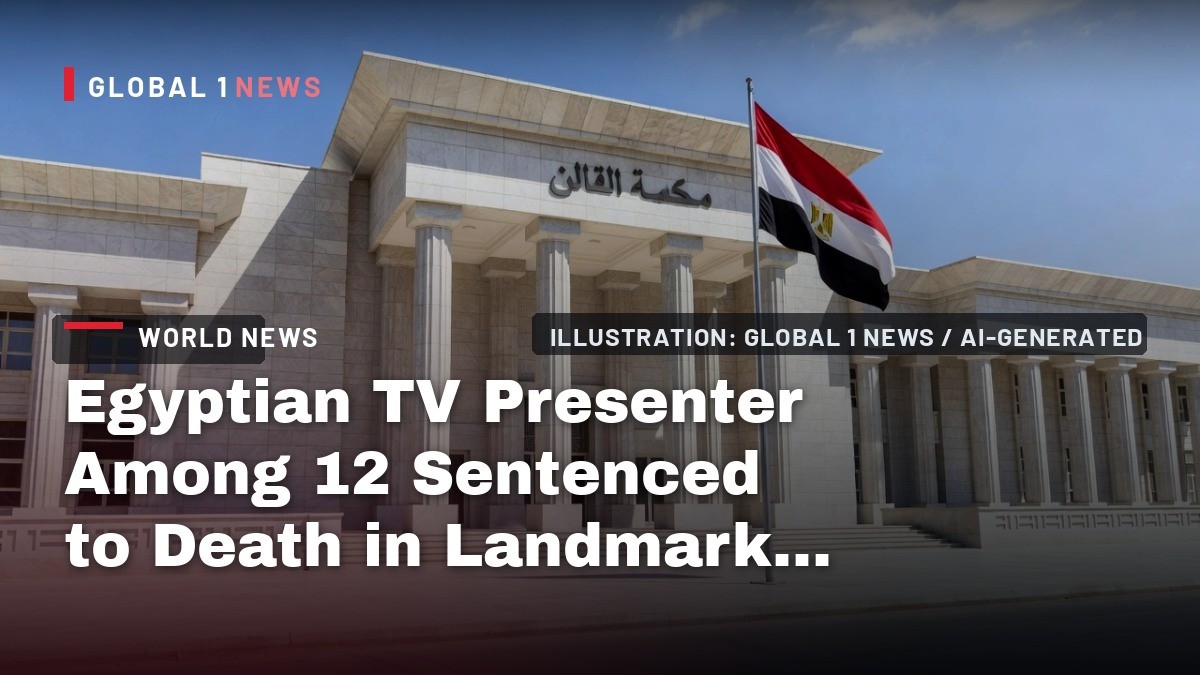
A Cairo criminal court has confirmed death sentences by hanging for Egyptian television presenter Sarah Khalifa and 11 co-defendants convicted of drug trafficking charges, according to state-linked media reports on Saturday. The sentences, first announced last month, are not final and remain subject to appeal before Egypt's Court of Cassation.
Egyptian TV Presenter Among 12 Sentenced to Death in Landmark Drugs Case
Dakar, Senegal — Article continues below.
The Case Against Khalifa
Sarah Khalifa, 39, is a well-known Egyptian television personality, best recognised for her programme Mission Impossible, which focused on crime issues. Her public profile made Saturday's confirmation of her death sentence all the more striking, as she now faces the ultimate penalty in a case that has gripped regional attention.
According to the state-owned al-Ahram newspaper, Khalifa and her co-defendants were part of a criminal gang that imported ingredients used to manufacture drugs with the intent of selling them. The group was also found to be in possession of illegal firearms and munitions, adding a weapons charge to the narcotics allegations.
Khalifa has consistently denied the charges. In a court appearance last September, she told the judge she had never seen any drugs until she was photographed with them inside the offices of the anti-narcotics authority. That account, reported by the state-run Akhbar al-Youm newspaper, underscores her insistence that the evidence against her was staged or misleading.
What the Court Heard
The trial heard that authorities had seized more than 750kg (1,653lbs) of narcotics, along with the imported raw materials used to produce them. This substantial haul formed the backbone of the prosecution's case, which painted the defendants as key players in a large-scale drug operation.
Prosecutors presented statements from 20 witnesses, al-Ahram reported, in addition to electronic evidence that included recorded conversations and video clips. The volume of testimony and digital material suggests a lengthy and complex investigation preceded the trial.
In total, 28 defendants were tried. Of these, 12 received death sentences, nine were sentenced to life imprisonment, and seven were acquitted. The mixed outcomes indicate that the court distinguished between levels of involvement, though the severity of the harshest penalties has drawn international scrutiny.
Why the Verdict Took a Month to Confirm
The verdict was first announced last month, but its confirmation was delayed by a legal requirement unique to capital cases in Egypt. Before a death sentence can be finalised, the court must obtain a religious opinion from the Grand Mufti of Egypt, the country's highest official Islamic legal authority.
This referral is a mandatory step under Egyptian law, though the Grand Mufti's opinion is advisory rather than binding. The court is not obliged to follow it, but the process adds a layer of religious and legal review to the most serious of sentences. In this case, the month-long delay between the initial verdict and its confirmation reflects the operation of that procedure.
It is important to note that this confirmation does not mark the end of the legal road. The sentences remain subject to appeal before Egypt's Court of Cassation, the highest criminal court in the country. Nothing about this case is final until those appeals are exhausted.

The Numbers Behind Egypt's Death Penalty
Egypt's use of capital punishment is extensive, according to a 2025 Amnesty International report, which documented 492 death sentences in the country during the course of that year. Of those, 23 were carried out.
Amnesty's report criticised Egypt's broad application of capital punishment, noting that many of those sentenced in 2025 had been convicted of drug trafficking and other crimes that the organisation argues "did not amount to 'intentional killing' to which the use of the death penalty must be restricted under international law and standards."
This is a crucial point of contention. International human rights standards, as articulated by bodies like the United Nations and Amnesty International, generally hold that capital punishment should be reserved for the most serious crimes, namely intentional killing. The application of the death penalty to drug offences places Egypt at odds with those standards — even as Cairo defends the practice under its domestic legal framework, where drug trafficking carries a possible death sentence.
An African Divide Over Capital Punishment
As a Senegalese journalist, I watch this case from a country that has taken a very different path. Senegal abolished the death penalty for all crimes on 10 December 2004, under Act No. 2004-38, championed by then-President Abdoulaye Wade. Our last execution had been carried out in 1967, nearly four decades before the formal abolition.
Senegal was the fourth member state of the Economic Community of West African States (ECOWAS) to abolish capital punishment, following Cape Verde, Guinea-Bissau and Ivory Coast. This move reflected a broader trend across the continent, where more than half of African Union states have now abolished the death penalty in law or in practice.
Yet the picture across Africa remains deeply divided. Egypt, along with a number of other countries, continues to apply capital punishment, including for offences such as drug trafficking. This divergence creates a patchwork of legal standards across the continent, where the right to life is protected in some jurisdictions and forfeited in others for crimes that do not involve killing.
What Happens Next
Khalifa's lawyer has announced that she will appeal the death sentence. The case will now move to Egypt's Court of Cassation, which serves as the country's highest criminal court. This appeal process could take months, and the outcome is far from certain.
It is essential to use cautious language here: the sentences are not final, and the appeals process must be allowed to run its course. The Court of Cassation has the power to overturn the verdict, reduce the sentence, or order a retrial. Until that process concludes, Khalifa and her co-defendants remain under sentence of death, but they have not been executed.
The case has drawn attention from human rights organisations and regional observers, who will be watching the appeal closely. The involvement of a public figure like Khalifa adds a layer of media scrutiny to proceedings that would otherwise attract far less notice. Amnesty International recorded that Egypt carried out 23 executions in 2025, a reminder that sentences confirmed in cases like this are, in practice, sometimes carried out.
The Regional Drug Trade Context
This case sits within a broader regional context of drug trafficking that affects many African nations. Egypt's location as a transit point between Asia, Africa and Europe makes it a significant node in the global narcotics trade, and authorities have pursued high-profile prosecutions as part of their enforcement strategy.
The seizure of more than 750kg of narcotics and raw materials in this case suggests a sophisticated operation, one that Egyptian authorities were clearly determined to dismantle. The heavy sentences handed down reflect the state's zero-tolerance approach to drug trafficking, a stance that resonates with public concerns about the social harms of narcotics.
However, the use of the death penalty for these offences raises questions that extend beyond Egypt's borders. As African nations grapple with the challenges of drug trafficking, the choice of punishment reflects deeper debates about justice, deterrence and human rights that are playing out across the continent.
For now, the focus remains on the appeals process in Cairo. Khalifa and her co-defendants await their fate, their case a stark illustration of the stakes involved in Egypt's war on drugs.
By Amara Diop, Staff Writer
This article was produced with AI-assisted research and editorial support. Sources: BBC News; Amnesty International; AFP.
What's Your Reaction?
 Like
0
Like
0
 Dislike
0
Dislike
0
 Love
0
Love
0
 Funny
0
Funny
0
 Wow
0
Wow
0
 Sad
0
Sad
0
 Angry
0
Angry
0

West Africa/Sahel Correspondent at Global1.News. Dakar-based journalist covering politics, security, climate, and development across Francophone and Anglophone West Africa. Tells the stories of a region undergoing profound transformation.













Comments (0)