
US and EU’s China talks channel comes back to life after stalling since Trump’s return
The United States and the European Union are set to reconvene a bilateral dialogue on China that has lain dormant for two years. It functioned as a venue where officials from both sides could compare notes on issues ranging from trade practices to security challenges.
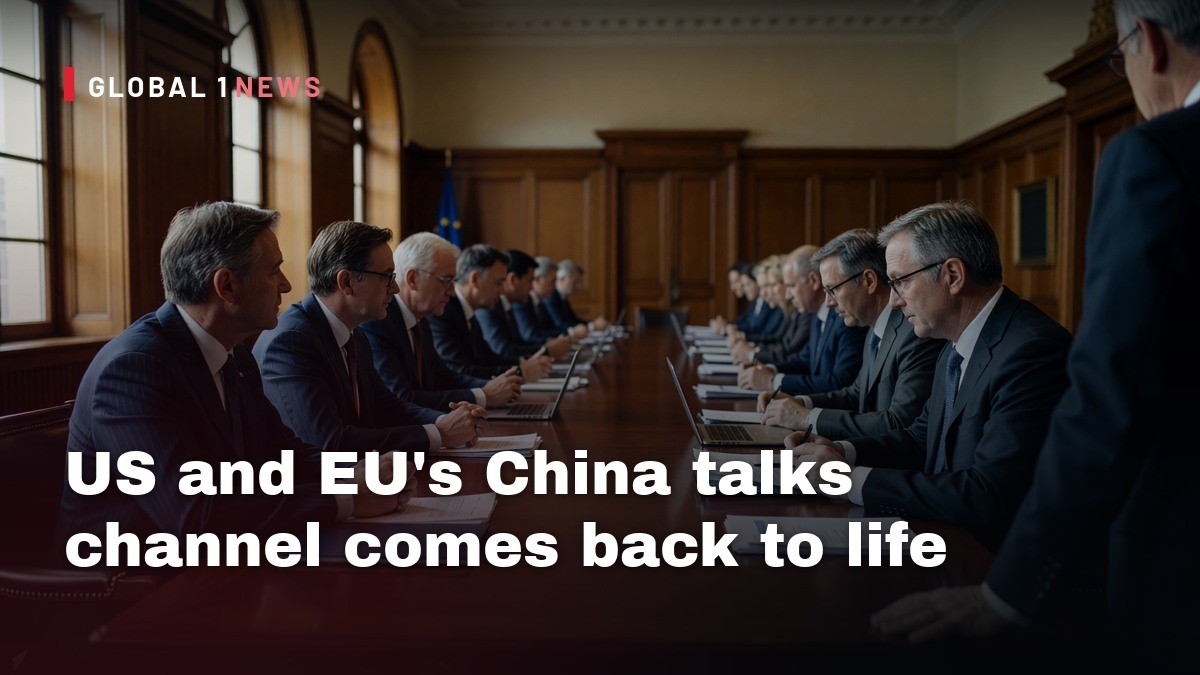
The United States and the European Union are set to reconvene a bilateral dialogue on China that has lain dormant for two years. According to multiple sources familiar with the planning, the talks will be scheduled for the first week of December, marking a tentative revival of a forum that once served as a regular conduit for sharing assessments of Beijing’s policies. The renewal comes despite a broader deterioration in transatlantic relations, underscoring a pragmatic recognition that shared concerns over China remain a point of convergence for Washington and Brussels.
Background of the US‑EU China Dialogue
The joint US‑EU forum on China was established during the Biden administration as part of a suite of mechanisms intended to synchronize Western approaches to Beijing. It functioned as a venue where officials from both sides could compare notes on issues ranging from trade practices to security challenges. The dialogue was characterized by a regular cadence, reflecting an underlying belief that coordinated policy could amplify influence over Chinese actions that affect both the Atlantic and the Pacific spheres.
When Donald Trump returned to the White House, the forum, along with several other bilateral platforms, lost momentum. Sources indicate that the transition to the Trump administration led to a cessation of the regular meetings, leaving a gap in structured communication between the United States and the European Union on China‑related matters.
Reasons for the Recent Revival
According to the same insiders, Washington initiated outreach to Brussels, prompting the planning of a December meeting. The decision to revive the talks appears to be driven by a pragmatic assessment that, despite broader frictions, the United States and the European Union share “areas of shared concern” regarding Beijing. The timing—just weeks before the end of the year—suggests an urgency to re‑establish a channel before the calendar turns, perhaps to set the agenda for 2027.
Analysts note that the revival may also be a signal to China that the West remains capable of coordinated messaging, even as bilateral ties between Washington and Brussels face strains on other fronts. By re‑engaging the forum, both sides can demonstrate a willingness to cooperate on strategic issues without necessarily resolving the underlying transatlantic tensions.
Implications for Transatlantic Relations
The renewed dialogue occurs against a backdrop of “a series of blows to transatlantic relations,” as described in the source material. While the exact nature of these blows is not detailed, the phrasing indicates that diplomatic, economic, or policy disagreements have tested the partnership. Nonetheless, the willingness to reconvene the China talks suggests that the United States and the European Union can compartmentalize disagreements and focus on common strategic interests.
This compartmentalization could serve as a template for other areas of cooperation. If the December meeting proves productive, it may encourage both sides to explore additional joint mechanisms, potentially easing broader tensions. Conversely, a lackluster outcome could reinforce the perception that transatlantic discord is deepening, limiting the scope of future coordination.
Strategic Context of China Policy
Both Washington and Brussels have articulated concerns about China’s economic practices, technological ambitions, and regional security posture. The forum historically provided a structured environment to align positions on these issues. By resuming the dialogue, the United States and the European Union can once again calibrate their respective policies, ensuring that actions taken in Washington or Brussels are not inadvertently contradictory.
Given that the forum was one of “several platforms used to compare notes on China policy” during the Biden era, its revival may also revive other complementary mechanisms. The coordination could extend to joint statements at multilateral venues, synchronized sanctions regimes, or coordinated investment screening policies, though such specifics remain to be negotiated.
Potential Agenda Items for the December Meeting
While the source material does not list concrete topics, it emphasizes “areas of shared concern with regard to Beijing.” It is reasonable to infer that the agenda will likely focus on high‑visibility issues that affect both the United States and the European Union. These could include the security environment in the Indo‑Pacific, especially around Taiwan and the South China Sea, as well as concerns over forced technology transfers and market access restrictions that impact Western firms operating in China.
Another probable focus is the alignment of trade and investment policies, particularly as both sides grapple with the challenge of balancing economic engagement with strategic competition. The dialogue may also address the coordination of diplomatic messaging on human rights concerns, an area where both Washington and Brussels have historically sought common ground.
Challenges to Effective Coordination
Re‑establishing a functional dialogue after a two‑year hiatus will not be without hurdles. Institutional memory may have eroded, and staff turnover in both Washington and Brussels could mean that new officials need to be brought up to speed on the forum’s previous work. Moreover, the broader deterioration in transatlantic relations could limit the willingness of either side to make concessions or adopt joint positions that might be perceived as compromising national interests.
Another challenge lies in aligning strategic priorities. While both sides share concerns about China, the United States may prioritize security and alliance considerations, whereas the European Union might place greater emphasis on economic and regulatory issues. Reconciling these differing emphases will require careful diplomatic choreography to avoid a situation where the forum becomes a venue for merely airing divergent views.
Outlook and Significance for Global Governance
The decision to revive the US‑EU China talks signals a recognition that, despite bilateral frictions, coordinated Western engagement with China remains a strategic imperative. If the December meeting yields a clear set of shared priorities, it could lay the groundwork for a more robust partnership in 2027 and beyond, potentially influencing multilateral institutions where both the United States and the European Union hold sway.
In the broader context of global governance, a functional US‑EU China dialogue could serve as a counterbalance to Beijing’s growing assertiveness on the world stage. By presenting a united front on critical issues, the West can enhance its credibility in shaping international norms, particularly in areas such as technology standards, trade rules, and security architecture. The upcoming talks, therefore, are not merely a procedural restart but a litmus test for the resilience of transatlantic cooperation in an increasingly multipolar world.
This article was produced with AI-assisted research and editorial support. Reporting is based on the source material cited below. Sources: South China Morning Post; scmp.com; Global1.News (06 November 2026).
By Kenji Tanaka, Staff Writer
What's Your Reaction?
 Like
0
 Dislike
0
 Love
0
 Funny
0
 Wow
0
 Sad
0
 Angry
0

Japan Correspondent at Global1.News. Tokyo-based voice covering Japanese politics, technology, economy, and culture. Tracks the intersection of tradition and innovation in one of the world's most dynamic societies.













Comments (0)