
Kullu Landslide Blocks Bagipul–Jao Road as Monsoon Strains India's Mountain Highways
Kullu, Himachal Pradesh – September 1 — A massive landslide struck the Bagipul–Jao road in the Nirmand area of Kullu district on Tuesday, burying approximately 200 metres of the rural link road under collapsed hillside debris. The event, captured by India Today TV, occurred without any reported loss of life, but it marks yet another failure of mountain infrastructure that has become a defining—and deadly—feature of India's western Himalayan monsoon season.
Kullu, Himachal Pradesh – September 1 — A massive landslide struck the Bagipul–Jao road in the Nirmand area of Kullu district on Tuesday, burying approximately 200 metres of the rural link road under collapsed hillside debris. The event, captured by India Today TV, occurred without any reported loss of life, but it marks yet another failure of mountain infrastructure that has become a defining—and deadly—feature of India's western Himalayan monsoon season.
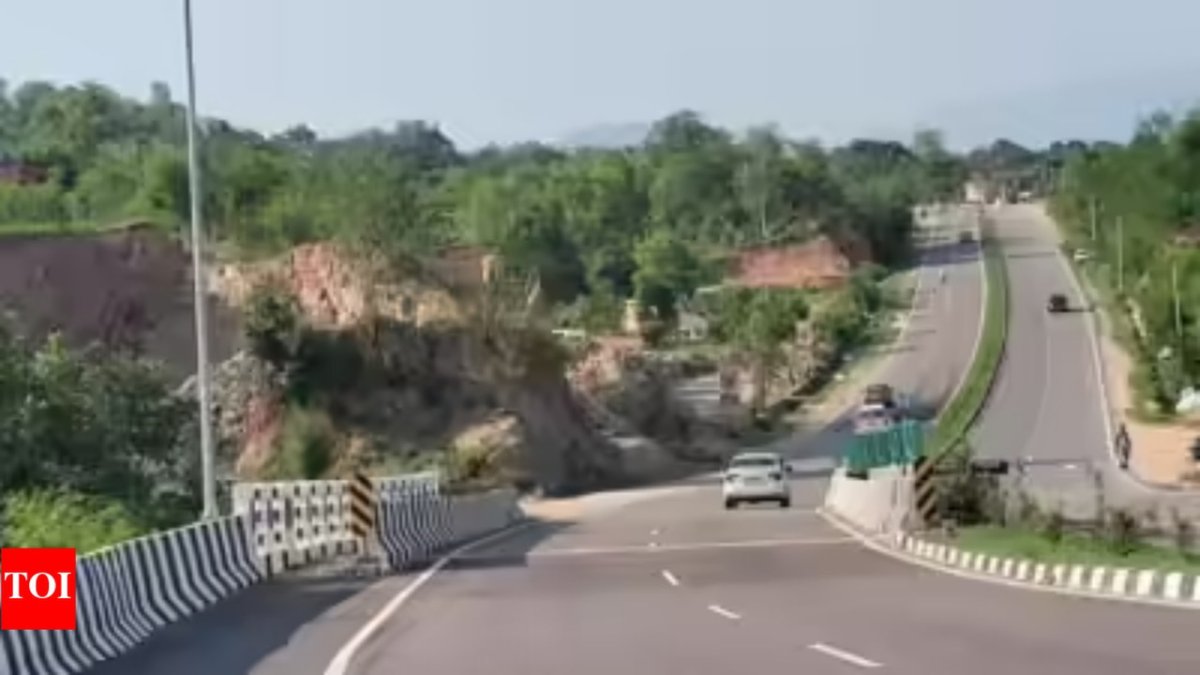
The Collapse on Bagipul–Jao Road
The landslide occurred when a large section of the hillside suddenly gave way onto the Bagipul–Jao road, a critical rural connector in the foothills of the western Himalayas. The 200-metre stretch of roadway is now completely blocked, severing access for local communities in the Nirmand area of Kullu district. While the initial video report confirmed no casualties, the incident has once again isolated villages that depend on this route for daily supplies, medical access, and transport.
This is not an isolated event. The Bagipul–Jao road is part of a network of mountain highways and rural links that have proven structurally vulnerable to the annual southwest monsoon. The collapse on September 1 follows a pattern of repeated failures across Himachal Pradesh, where the state's topography—young, tectonically active, and geologically weak—combines with intense seasonal rainfall to produce chronic slope instability.
Why Himalayan Slopes Give Way
The science behind these landslides is well-documented by institutions like the Geological Survey of India (GSI), which maps landslide-prone zones across the country. The Himalayas are among the youngest mountain ranges on Earth, characterised by steep slopes, fractured rock, and weak geology. During the monsoon, prolonged rainfall saturates the soil and rock, reducing cohesion and triggering shallow landslides—particularly on cut slopes created by road construction that lacks adequate retaining walls and drainage systems.
The Indian Meteorological Department (IMD) has been issuing colour-coded alerts for the region, with orange alerts indicating "be prepared" conditions and red alerts signalling "take action." Climate change is increasingly linked to more intense, short-duration rainfall events and cloudbursts in the western Himalayas, which accelerate the saturation process and make slope failures more frequent and unpredictable. The September 1 collapse on the Bagipul–Jao road fits squarely within this scientific framework: a vulnerable slope, saturated by monsoon rain, failing along a poorly engineered road cut.
A Road Network Under Siege
The Kullu landslide is a microcosm of a national infrastructure crisis. Data from the 2026 southwest monsoon shows that 143 kilometres of national highway stretches were damaged across 20 states and union territories. More alarmingly, over 32,000 national highway road fatalities were recorded in the first seven months of 2026 alone—a figure that underscores the human cost of India's deteriorating road infrastructure, particularly in mountainous regions.
In Himachal Pradesh, the situation is acute. On August 11, 2026, 259 roads across the state were shut simultaneously, the Kiratpur–Manali corridor was blocked, and schools in Kullu were closed amid an orange rain alert. The Kiratpur–Manali corridor, which includes the NH-3 and NH-305 stretches, is the lifeline for the region's tourism and horticulture economies. When it fails, the impact cascades: stranded tourists, disrupted apple supply chains, and increased costs for disaster response operations led by the NDRF and SDRF.
The Kiratpur–Manali corridor’s repeated failure is not merely a tourism inconvenience; it is a rupture in the region’s economic circulatory system. The corridor serves as the primary artery for the apple and horticulture economies of Kullu and beyond, with produce moving from high-altitude orchards to national markets via NH-3 and NH-305. When the route is blocked—as it was on August 11, 2026, when 259 roads across Himachal were shut simultaneously—perishable harvests rot in transit, cold-chain logistics collapse, and farmers absorb losses that no compensation mechanism covers. The corridor is equally critical for medical evacuations; patients from remote Nirmand and Banjar blocks depend on this route to reach district hospitals in Kullu or tertiary care in Chandigarh. Each closure forces ambulances onto treacherous detours, adding hours to journeys where minutes determine outcomes. Daily commuters—teachers, government staff, and labourers—face the same gamble, their livelihoods held hostage to a slope that fails with predictable monsoon regularity.
The contrast with other mountain economies is instructive. Switzerland’s cantonal road networks in the Alps are engineered with systematic slope drainage, rockfall netting, and anchored retaining walls, maintained under legally binding geotechnical review cycles. Japan’s mountain highways in the Japanese Alps deploy real-time slope monitoring sensors and early-warning systems that trigger automated road closures before failure occurs, not after. Norway’s fjord-side roads use extensive rock bolting and shotcrete reinforcement as standard practice. India’s approach, by contrast, remains reactive: repair after collapse, reopen after clearance, and repeat. The 143 kilometres of national highway damaged across 20 states in 2026 and the 32,000 national highway fatalities in the first seven months of that year are not random acts of nature—they are the predictable outcome of treating Himalayan geology as an afterthought in road design. Until NHAI adopts the slope-engineering standards of these peer economies as mandatory, not aspirational, the Kiratpur–Manali corridor will remain a seasonal liability rather than a permanent lifeline.
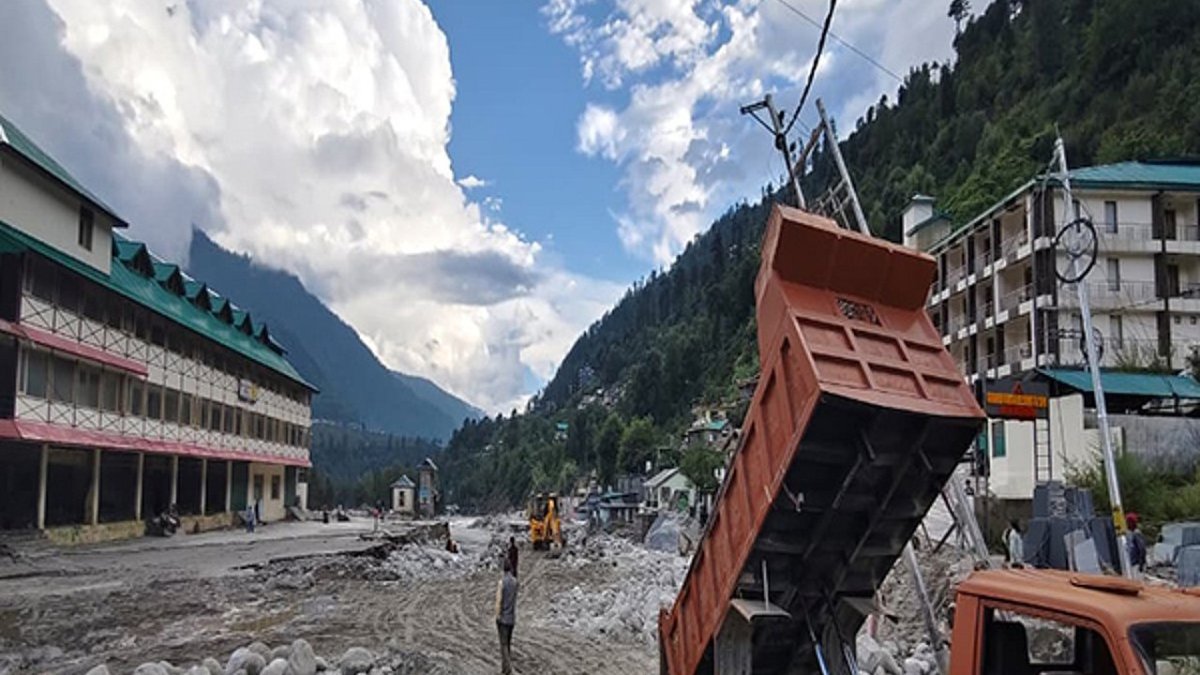
The 2025 Lesson and What Hasn't Changed
Himachal Pradesh's 2025 monsoon season was catastrophic, and the lessons from that disaster have not translated into meaningful infrastructure reform. The 2025 season recorded approximately 355 deaths across the state. In a single September 2025 event, 1,337 roads were blocked and four national highways were disrupted; at one point, 109 people were killed and 226 roads were blocked simultaneously. A temporary bridge over the Manalsu River collapsed in September 2025, severing Kullu–Manali connectivity once again.
A Times of India investigation from August 2025 found that the Kiratpur–Manali highway faces frequent landslides due to unscientific road construction and poor planning by the National Highways Authority of India (NHAI). The investigation highlighted that cut slopes are being created without adequate retaining walls, drainage systems, or geotechnical assessments—a finding that remains relevant a year later. The August 2026 deterioration of the Left Bank Road on the Kullu–Manali stretch, marked by narrow bottlenecks, steep unstable gradients, and massive potholes, further confirms that the systemic issues identified in 2025 have not been addressed.
What This Means for India
The economic implications of these recurring road failures are severe. Kullu and Manali are among India's premier Himalayan tourist destinations, attracting hundreds of thousands of domestic and international visitors annually. Every monsoon, road closures strand thousands of tourists and local residents, disrupt the apple and horticulture supply chains that form the backbone of the region's rural economy, and raise the cost of disaster response. Tourism-dependent livelihoods—hoteliers, taxi drivers, guides, and shopkeepers—bear the brunt of each closure, with no compensation mechanism in place.
The institutional response framework is well-established but reactive. The National Disaster Response Force (NDRF) and State Disaster Response Force (SDRF) lead rescue operations during major events, while the Himachal Pradesh State Disaster Management Authority coordinates the overall response. District administrations issue closure orders and school shutdowns in high-risk zones, as seen in Kullu on August 11, 2026. However, this framework is designed for emergency response, not prevention. The GSI's landslide zonation maps and the IMD's alert systems provide the scientific basis for proactive planning, but they are not being integrated into road construction and maintenance decisions by NHAI and state agencies.
The recurring cost of this reactive approach is borne by the Indian taxpayer twice over. First, through the repeated emergency repair budgets that NHAI and state public works departments allocate each monsoon to clear debris, rebuild washed-out stretches, and patch failed retaining walls—spending that yields no lasting asset, only a temporary restoration of a road that will fail again. Second, through the economic losses that ripple outward: stranded tourists requiring NDRF evacuations, apple supply chains disrupted, and disaster response mobilisations that drain state exchequers. The alternative—proactive slope-stabilisation engineering—is well-understood and costed in global practice. Retaining walls anchored into bedrock, subsurface drainage systems that intercept groundwater before it saturates slope material, bioengineering solutions such as deep-rooted vegetation and geotextiles, and geotechnical surveys conducted before any cut slope is created would add a fraction to initial construction costs. Slope monitoring systems, including inclinometers and extensometers, provide early warning at costs that are negligible compared to a single major landslide’s repair bill. The GSI’s landslide zonation maps already identify the high-risk zones; the IMD’s alert systems already forecast the triggering conditions. What is missing is the political and institutional will to make these tools mandatory design criteria rather than optional recommendations.
Behind the statistics lies a human dimension that infrastructure debates too often obscure. When the Bagipul–Jao road is severed, it is not an abstract stretch of asphalt that is cut off—it is a community. Elderly residents in Nirmand villages who need regular dialysis or cardiac check-ups face the impossible choice of a multi-day trek or forgoing care entirely. Students preparing for board examinations miss school days that compound into educational disadvantage. Pregnant women in labour risk delivering on the roadside when ambulances cannot pass. The 2025 season’s 355 deaths in Himachal Pradesh were not all landslide victims; many were people whose access to timely medical care was severed by road closures. The September 2025 collapse of the Manalsu River bridge, which cut Kullu–Manali connectivity, stranded not just tourists but also residents needing hospital access. Every monsoon, mountain communities are asked to accept this risk as a fact of life. It is not. The engineering solutions exist, the scientific data exists, and the economic case for prevention over repair is overwhelming. What is missing is the recognition that for the people of Kullu, Manali, and every Himalayan district, road infrastructure is not a convenience—it is a matter of life, livelihood, and basic dignity.
The Bottom Line
The September 1, 2026 landslide on the Bagipul–Jao road is a 200-metre reminder of a 32,000-fatality national problem. India's mountain infrastructure is failing because it is being built against the grain of Himalayan geology—without the retaining walls, drainage systems, and geotechnical oversight that the terrain demands. The data is unambiguous: 143 kilometres of national highways damaged across 20 states in 2026, 259 roads shut in Himachal on a single day in August, and a 2025 season that killed 355 people in one state alone.
Until NHAI and state public works departments adopt the scientific recommendations of the GSI and IMD as mandatory design criteria—not optional guidelines—the cycle of collapse, closure, and economic disruption will continue every monsoon. The Bagipul–Jao road will be repaired, but the next slope failure is already waiting. For the citizens of Kullu, Manali, and every mountain community in India, the question is not whether the road will fail again, but when—and how many more lives and livelihoods will be lost before the infrastructure catches up with the geology.
— By Dr. Raj Patel, Staff Writer
===AI_DISCLOSURE===This article was produced with AI-assisted research and editorial support. Sources: India Today (YouTube), MSN News, The New Indian Express, Livemint, The Hindu, Times of India, NDTV, Hill Post, Mathrubhumi (2025 context).
What's Your Reaction?
 Like
0
Like
0
 Dislike
0
Dislike
0
 Love
0
Love
0
 Funny
0
Funny
0
 Wow
0
Wow
0
 Sad
0
Sad
0
 Angry
0
Angry
0

India/South Asia Correspondent at Global1.News. Analytical voice with a background in science and health journalism. Based in New Delhi, covering Indian politics, education, healthcare, technology, and policy. Breaks down complex data into clear, actionable reporting.















Comments (0)