
Healey's First Budget: A Hundred Pounds for Twenty Million Homes, a Bank Tax and a Cushion That Shrank
Chancellor John Healey's first Budget gives a one-off £100 energy payment to 20 million households in council tax bands A to D, pays for it with a temporary rise in the bank surcharge, and leaves the hard choices on defence and welfare for next year.
Chancellor John Healey has delivered his first Budget. It is a hundred pounds for twenty million homes, a bank tax, and a fiscal cushion that has shrunk since the spring. Here is what matters.
Healey's First Budget: A Hundred Pounds for Twenty Million Homes, a Bank Tax and a Cushion That Shrank
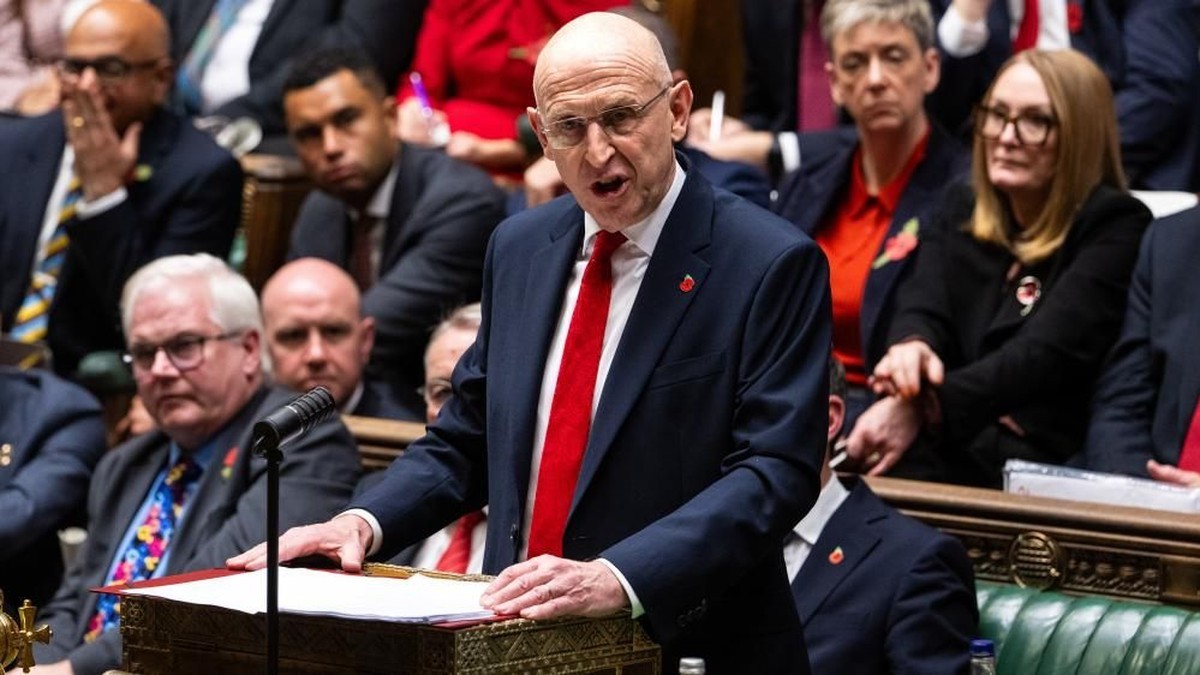
London, United Kingdom — Healey told a packed House of Commons that Britain faces "global economic storms" and that his answer is "breathing space now, hope for the future." The Budget hands a one-off £100 energy payment to twenty million households, raises the bank surcharge, and leaves £15bn of headroom against his own fiscal rule. The pound barely moved.
The Storms He Named
Healey did not open with giveaways. He opened with weather. "Analysts like to speak of economic headwinds," he told the Commons. "But what we face today are global economic storms." The war in the Middle East is the driver, and the Office for Budget Responsibility says so in its forecasts. Oil has climbed from around $70 a barrel to well over $100, and gas prices have nearly tripled since February. Inflation was supposed to be back at 2% this year. Instead it has risen, and Reuters reports UK consumer inflation hit an 11-month high of 3.5% last month. The OBR predicts £14bn more will go on debt interest this year alone. Harry Woolman of Validus Risk Management called that "money spent servicing the past rather than investing in the future".
Breathing Space: A Hundred Pounds and What Comes With It
The headline measure is a one-off £100 payment into the bank accounts of twenty million households. It is a £2.6bn scheme, and Healey said it is there "to take the pressure off in the coldest months and see people through to the Spring." Here is the detail that matters: it is banded by council tax band, not by income. Bands A to D get it. It is not means-tested. Delivery is England-only, and the Scottish, Welsh and Northern Ireland governments receive equivalent funding and decide whether to replicate it. The Resolution Foundation said it is "unacceptable" that 1.4 million of the poorest families, those in bands E and above, miss out. Healey also extended the VAT cut on electricity through to July, taking £50 off the annual price cap, and confirmed gas standing charges will come off household bills next year through Ofgem. He said that saves 60% of homes £45 a year. The minimum wage rises 3.9% in April for 2.3 million workers.
The Banks Pay, for Fifteen Months
The bank surcharge rises to 6%, and Reuters reports it partially reverses a cut from 8% three years ago under Rishi Sunak. Bank shares rose on the day, with Lloyds, Barclays and NatWest up between 1.3% and 1.6%. The revenue estimate is contested. The Guardian reports the rise raises only £1.5bn, while the TUC estimated £2.25bn a year. Both are estimates. JP Morgan, which is still building its £3bn UK headquarters, said it "lacks principle" to single out the industry again. The TUC's Paul Nowak, writing in the Mirror, said "common sense prevailed." The rise starts in January and runs for fifteen months, to April 2028: a temporary levy, and the market priced it that way.
The Cash ISA Cut That Never Happened
This is the reversal that matters for savers. Healey scrapped the plan to cut the tax-free cash ISA limit. "I will not go ahead with the cut to the tax-free amount that people can put into a cash ISA," he said. "The limit will stay at £20,000 per year, tax-free, for people of all ages." That kills the plan announced by his predecessor, Rachel Reeves, to cut the annual limit to £12,000 for under-65s from next year. The Treasury Committee chair, Dame Meg Hillier, called it "a victory for common sense." What replaces it is a new Starter ISA, built with the sector, to reward first-time investors. He also raised tax on income from savings and property by two percentage points from April 2027, to 24% for basic-rate taxpayers, while saying 88% of people will pay no more tax on their savings.
Two Products for a First Home and a Housing Shortage
Healey is building two lanes for first-time buyers. The first is a new First Time Buyer ISA to replace the Lifetime ISA, introduced from April 2029 for new savers, with a 25% government bonus paid on withdrawal toward a first home worth up to £450,000, capped at £20,000. Existing LISA holders keep their rules. From today, the LISA withdrawal penalty falls from 25% to 20%, so if the home costs more than the limit, "you will get back at least what you put in." The second is "Your First Home," an equity loan scheme from next Spring for buyers "who don't have the bank of mum and dad behind them," funded with £4.7bn of government-backed lending. Healey put the scale of the problem plainly: "Since the 1980s, Britain has lost over 2 million council homes."
High Streets Win, the Slot Machines Pay
The high street gets relief and the gambling industry gets the bill. The Small Business Rate Relief threshold for retail, hospitality and leisure rises from £12,000 to £18,000 in England, taking 70,000 more businesses out of paying rates altogether. Healey said that means "half of our shops, restaurants and gyms pay no business rates at all." Other firms in those sectors get rates frozen in real terms for two years. It is paid for by raising Machine Games Duty from 20% to 25% on higher-stakes machines, "whilst protecting pubs and seaside arcades." The Guardian reports that brings in nearly £150m a year. Gambling stocks still gained £240m in combined market value, though Entain said the rise will cost it £25m, which it expects to mitigate including through shop closures.
The Forecast Went the Wrong Way, and the Cushion Shrank
The growth numbers are the quiet problem in this Budget. The OBR upgraded 2026 to 1.2%, but cut 2027 to 1%. Euronews and The Times both report that is down from 1.6%. The forecast then recovers to 1.6% in 2028, 1.8% in 2029, 1.7% in 2030 and 1.6% in 2031. Healey pointed to the first half of this year, when "our economy was the fastest growing in the G7, alongside the US." That is true of the past. The forecast is about the future, and the future got slower. The OBR also flagged that the Employment Rights Act will likely have a negative economic impact, through uncertainty, lost flexibility and higher labour costs. The government's own analysis said the reforms could cost businesses up to £5bn a year. The fiscal arithmetic is the part to watch. Borrowing falls from 4.2% of GDP this year to 3.4%, 2.9%, 2.1% and then 1.8% by 2030-31. Debt runs at 83.2% this year, 83.8% in the following two years, then falls to 83.1%, 82.3% and 81.7%. The £15bn of headroom in 2029-30, rising to £22bn in 2030-31, is what is left after a war-driven energy shock: Reuters puts the March figure at £23.6bn, Dow Jones at £24bn.
What the Watchdog Said About Living Standards
The OBR's living standards numbers are the bleakest in the documents. Real household disposable income per person is rising at a record slow rate. By 2029-30, growth over the prior ten years averages less than 0.1% a year. The OBR says that ten years on from the onset of the pandemic, real household disposable income per person would be just 1% higher than its pre-pandemic level. Its David Miles called it "pretty grim," and said: "If you go back to just before Covid... there is virtually no growth in per person real household disposable income." The OBR forecasts no real earnings growth next year. These are forecasts, not outcomes, but they are the watchdog's own numbers and they set the mood.
Ten Billion for Kyiv, Signed Off Against Advice
Healey committed £10bn of additional economic and military support to Ukraine: "based on loans, Export Finance guarantees, and half a billion in urgent military funding for this winter." He said he and the Prime Minister called President Zelenskyy that morning to tell him. The breakdown is £7bn of economic support over three years, including up to £5.5bn of World Bank guarantees, plus a £3bn increase in UK Export Finance capacity, taking total UKEF support to £6.5bn. That last part needed a ministerial direction. UKEF chief executive Tim Reid warned the "probability of default and expected loss is exceptionally high." Business Secretary Jonathan Reynolds signed it off anyway, citing the UK's "steadfast" support. Zelenskyy's message earlier that day: "My advice to John is don't delay."
The Hard Choices He Deferred
Healey left the hard choices on the shelf. The triple lock will be adjusted from 2030 so the State Pension "rises every year and keeps pace with earnings and inflation," saving £15bn a year by the end of the 2030s and £50bn by 2050. That is paired with a National Care Service that is still to be built. On defence, the row is contested. The red book shows Ministry of Defence spending for 2027-28 revised from £42.6bn to £41.1bn. The Treasury calls the opposition claim of a cut "absolute garbage" and says it is a pension-contribution technicality. Shadow defence secretary James Cartlidge called not reallocating it "a complete dereliction of duty." The spending review comes next year, and so do the answers.
What the Market and the Analysts Made of It
The market shrugged. The 10-year gilt yield fell 2 basis points to around 5.32%, and sterling slipped 0.1% to $1.3295. Kathleen Brooks of XTB said: "The bond market is calling it a very boring budget." Mike Bell of BlueBay said the point was "to really avoid a Liz Truss moment," and that Healey "has been successful." The IFS's Helen Miller said it has "a raft of fiddly measures but very little that will move the dial on growth." The CBI's Rain Newton-Smith said it "lacks the bold moves that would have made it easier for firms to invest, hire and grow." The Resolution Foundation priced the giveaways against the bills: it expects energy bills to average £2,210 across 2027, up £600 or 38% on this year, and says support of up to £116 "will alleviate less than a fifth of this coming rise in bills." Reuters reports markets expect a quarter-point Bank of England rise to 4% next week. Burnham ruled out an election in the next 12 months.
By Jessica Ali, Staff Writer
This article was produced with AI-assisted research and editorial support. Sources: GOV.UK transcript of the Budget 2026 speech as delivered, BBC, Reuters, Dow Jones Newswires, Al Jazeera, Euronews, The Guardian, The Times, the Resolution Foundation, the Institute for Fiscal Studies, parliament.uk and the Debt Management Office. Photographs: AFP via Al Jazeera (cover), Press Association via BBC, and Dietmar Rabich via Wikimedia Commons under CC BY-SA 4.0.
What's Your Reaction?
 Like
0
 Dislike
0
 Love
0
 Funny
0
 Wow
0
 Sad
0
 Angry
0

Editor-in-Chief at Global1.News. Atlanta-based journalist who cuts through the BS and tells it like it is. Lead anchor, host, and the voice you hear when the spin stops and the truth starts.















Comments (0)