
South Korea’s financial industry hit by fresh wave of cyberattacks
South Korea’s financial sector just got hammered again, and the fallout is a wake‑up call for anyone running production infrastructure in Asia. A fresh wave of cyberattacks has hit brokerages Daishin Securities and Mirae Asset Global Investments, plus the crypto exchange Bithumb.
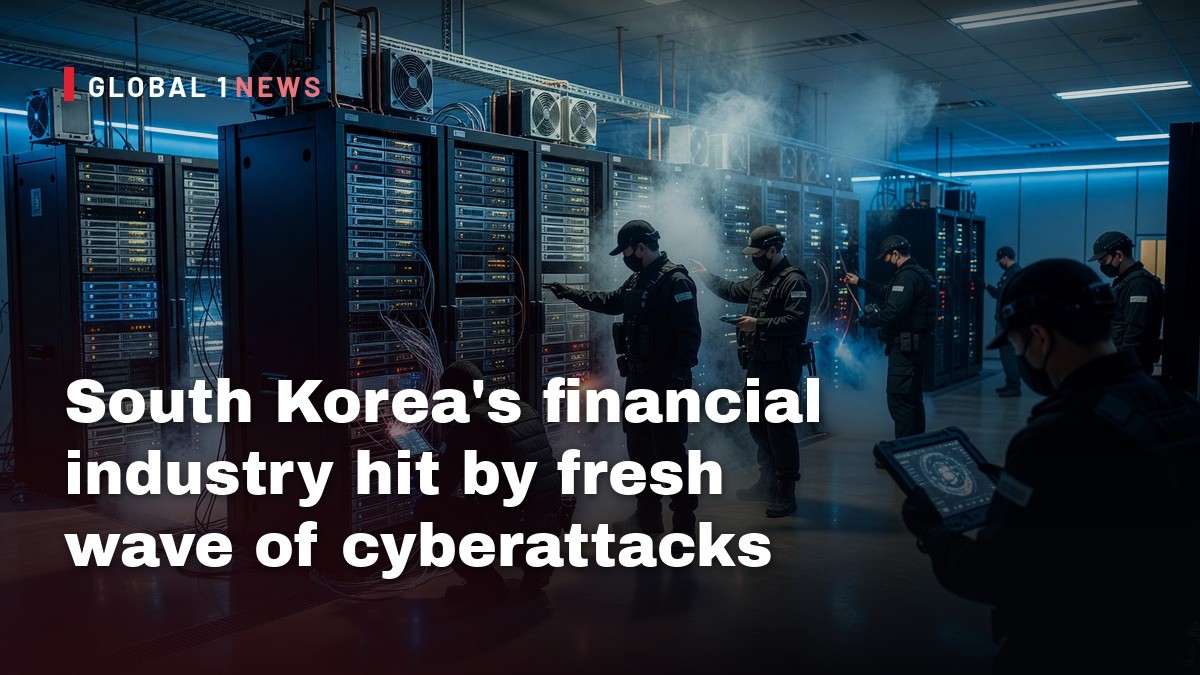
South Korea’s financial sector just got hammered again, and the fallout is a wake‑up call for anyone running production infrastructure in Asia. A fresh wave of cyberattacks has hit brokerages Daishin Securities and Mirae Asset Global Investments, plus the crypto exchange Bithumb. The incidents follow a September onslaught that was traced to a China‑based hacker using an AI‑driven penetration testing tool called Artex. While officials are still hunting the root cause of the latest breaches, the pattern is unmistakable: AI‑enabled threat actors are getting bolder, and the collateral damage is landing squarely on the plates of the firms that host their services.
What actually happened?
Daishin Securities confirmed a breach that exposed the personal data of 38,490 customers – names, email addresses, and mobile phone numbers. The firm has notified the affected users, is cooperating with authorities, and has pledged compensation as required by law. Mirae Asset Global Investments and Bithumb reported separate incidents on the same day, but they have not confirmed whether any customer data was taken. The Korean Financial Services Commission (FSC) has already called for tighter cybersecurity controls across the sector and plans to conduct security checks on dozens of private‑sector IT systems.
The September wave that preceded this round was linked by security researchers to a suspected China‑based hacker who leveraged Artex, an AI‑powered penetration testing framework. That link suggests a growing reliance on AI tools to automate discovery and exploitation, a trend that is spilling over into the financial domain where the stakes are highest.
Why AI matters to us as infrastructure providers
AI‑driven tools like Artex can churn through attack surfaces at a speed that manual pen‑testing simply can’t match. For a hosting provider, that means the traditional “run a patch‑once‑a‑month” playbook is no longer sufficient. The Korean regulator’s push for stronger measures underscores a shift: compliance will soon demand continuous, AI‑aware monitoring, not just periodic audits.
From my own decade of running production servers, I’ve seen the same pattern play out when a new automation tool hits the market – the hype drives adoption, the tool gets weaponised, and the fallout lands on the providers that host the vulnerable workloads. The Korean case is a textbook example of that cycle, and it should make any independent host sit up and take note.
The cost of complacency
When Daishin’s breach exposed nearly 40,000 records, the immediate cost was the breach notification and compensation. But the longer‑term hit is reputational – a loss of trust that can translate into churn and a dip in new business. For a boutique hosting firm, a single high‑profile breach in a client’s environment can be a death knell, especially when the client is a regulated financial institution that will now be under stricter scrutiny.
We’ve seen similar fallout in the region with Japan’s GMO Internet, which suffered its own incident after a series of attacks on financial firms. The ripple effect is real: regulators tighten the screws, insurers hike premiums, and the market demands higher security guarantees. That translates into higher operating costs for providers that are already fighting thin margins.
What the regulators are demanding
The Korean FSC’s response is a clear signal that the regulatory environment is tightening. Their plan to conduct security checks on dozens of private‑sector IT systems means that any hosting provider with Korean financial clients will soon face a formal audit. The audit will likely focus on continuous monitoring, incident response readiness, and proof that AI‑driven attack vectors are being mitigated.
In practice, that means you need to move beyond point‑in‑time scans and adopt real‑time threat detection that can spot the kind of automated probing Artex performs. It also means having a documented response plan that can be activated within hours, not days. The regulator’s language suggests they are no longer satisfied with “best practice” checklists – they want evidence that you can actually stop an AI‑assisted breach in its tracks.
Practical steps for hosting firms
First, inventory every asset that touches a financial client’s data pipeline. That includes not just the obvious servers but also any managed services, APIs, and third‑party integrations. Once you have a clear map, deploy an AI‑aware intrusion detection system that can flag abnormal scanning patterns – the kind of rapid, low‑and‑slow sweeps that tools like Artex generate.
Second, tighten your patch management cadence. In my own operations, a weekly patch window is the bare minimum for any system handling regulated data. Anything less opens a window for automated tools to exploit known vulnerabilities before you have a chance to fix them.
Third, build a “blue‑team‑as‑a‑service” capability if you don’t already have one. The Korean regulator’s push for stronger measures will likely translate into mandatory breach‑response drills. Having a dedicated team that can run tabletop exercises and actually respond to an incident will set you apart from the pack of providers that still treat security as a checkbox.
Risk mitigation for founders
If you’re a founder with a fintech client base, the Korean saga should force you to reassess your risk posture. Diversify your hosting strategy – don’t put all your workloads on a single hyperscaler that promises cheap AI‑enhanced security but often delivers generic controls that don’t meet local regulator expectations. Instead, consider a hybrid approach that blends public cloud elasticity with a private edge that you control.
Second, negotiate service‑level agreements that explicitly cover AI‑driven threat detection and response times. Many contracts still reference “reasonable security measures,” which is vague enough to let providers skate by. Push for language that ties security performance to measurable metrics – for example, “detect and isolate anomalous scanning activity within five minutes.”
Finally, keep an eye on the regulatory chatter. The Korean FSC’s upcoming security checks are a bellwether for other Asian regulators who are likely to follow suit. Early adoption of the controls they’ll soon mandate can give you a competitive edge and spare you the scramble when the next wave hits.
Bottom line for the hosting community
The Korean financial sector’s latest breach is more than a headline; it’s a symptom of a broader shift toward AI‑augmented cybercrime that is catching many providers off guard. The fact that a single AI tool, Artex, was linked to a month‑long campaign shows how quickly threat actors can scale up their operations. For independent hosting firms and founders, the message is crystal clear: the old “patch‑once‑a‑month, hope‑for‑the‑best” playbook is dead.
Invest in continuous, AI‑aware monitoring, tighten patch cycles, and build a robust incident response capability. Align your contracts with measurable security outcomes, and diversify away from hyperscalers that hide behind generic compliance claims. In short, stop treating security as a cost centre and start treating it as a core differentiator – because when regulators tighten the screws, the firms that can prove they’ve got their act together will survive, and the rest will be left picking up the pieces of breached data.
— Allan Ali, Founder
This article was produced with AI-assisted research and editorial support. Reporting is based on the source material cited below. Sources: TechCrunch; techcrunch.com; Global1.News (28 October 2026).
By Allan Ali, Global1.News
What's Your Reaction?
 Like
0
 Dislike
0
 Love
0
 Funny
0
 Wow
0
 Sad
0
 Angry
0

Publisher of Global1.News. Automation architect, systems builder, and the guy making sure the truth gets published.














Comments (0)