
Hamas Reiterates Gaza Deal Commitment, Blames Israel for Stalling
Hamas reaffirms its commitment to the US-backed Gaza peace roadmap while blaming Israel for stalling, as envoy Jared Kushner links reconstruction to full disarmament and eight regional states hold Israel responsible for obstructing peace efforts.
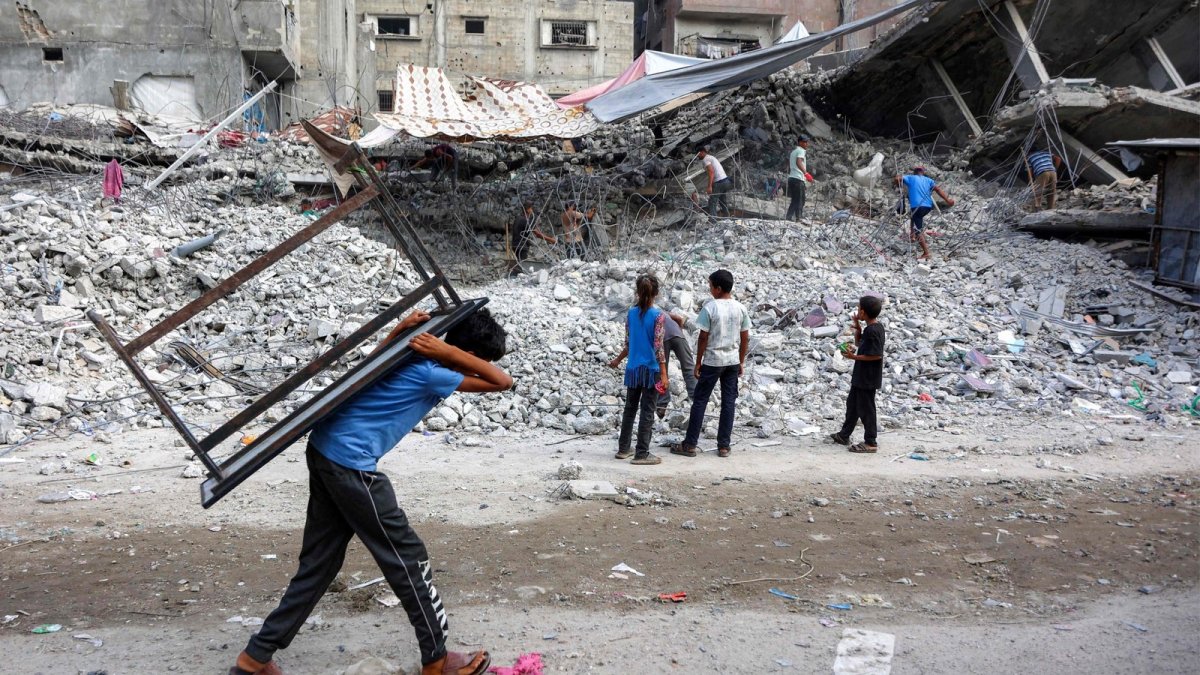
The fragile architecture of the US-brokered Gaza peace process is facing its most severe test yet, as Hamas publicly reaffirms its commitment to the agreed roadmap while blaming Israel for the lack of progress. The renewed friction follows a rare diplomatic shuttle by White House envoy Jared Kushner, who met Hamas leadership in Egypt before traveling to Jerusalem for talks with Israeli Prime Minister Benjamin Netanyahu.
The core of the dispute remains the sequencing of disarmament, Israeli withdrawal, and reconstruction. Hamas insists it has already signed onto the process, while Israeli officials, backed by Kushner's public statements, demand that the group's military capacity be dismantled before any meaningful concessions are made. The result is a diplomatic standstill that threatens the tenuous calm that has held since the ceasefire came into effect.
Hamas's Public Position: Commitment Without Israeli Approval
In a statement to Agence France-Presse on Tuesday, Hamas spokesman Hazem Qassem delivered a pointed message: the group remains fully committed to the US-backed deal, but the ball is firmly in Israel's court. "Hamas is committed to this agreed-upon process. It is clear that, so far, the Israeli side has not given the mediators clear approval of the roadmap," Qassem said, adding that "there are timelines and procedural steps that need to be worked out in detail, but there must first be Israeli approval of the roadmap."
The statement reflects a deliberate strategy by Hamas to position itself as the cooperative party in the negotiations, contrasting its willingness to proceed with what it characterizes as Israeli intransigence. By publicly tying the delay to Israeli approval, Hamas is attempting to shift the burden of proof onto Netanyahu's government, forcing it to either accept the roadmap or be seen as the obstacle to peace.
This messaging was reinforced on Monday in Cairo, where Hamas political bureau chief Khalil al-Hayya met with leaders and representatives of other Palestinian factions. According to a statement from the group, the factions collectively blamed Israel for obstructing the understandings "through its rejection of the roadmap, failure to honor first-phase commitments and continued daily violations of the agreement."
Kushner's Shuttle Diplomacy: A High-Stakes Balancing Act
Jared Kushner's weekend itinerary underscored the complexity of the US role. On Sunday, the envoy held a rare and direct meeting with Hamas officials in Egypt — an engagement that would have been unthinkable in previous US administrations. The following day, he met Netanyahu in Jerusalem, where the Israeli leader has publicly rejected the latest phase of the deal. The juxtaposition highlights the delicate tightrope Kushner must walk: engaging directly with a group the US still designates as a terrorist organization, while reassuring Israel of Washington's unwavering support.
In a Fox News interview following the talks, Kushner outlined the US position with notable clarity. "We have a plan to rebuild Gaza, but we will not allow Gaza to be rebuilt until the demilitarisation occurs," he said, adding that "nobody wants to put more money into a place that's gone on for so long if it's just going to be taken over by terrorists or blown up again." The envoy also suggested that Hamas's disarmament could begin in about 30 days, with the full process potentially extending over a 60-to-90-day window.
Kushner's remarks reveal a significant alignment with the Israeli position, despite his role as a mediator. His statement that the US is "not going to restrict Israel's right to defend itself if there are any imminent threats" in Gaza effectively provides Netanyahu with a security guarantee that could undermine the ceasefire's stability — a notable shift from the neutral posture typically expected of a mediator, raising questions about whether Washington can credibly present itself as an honest broker.
Israel's Red Lines: Full Disarmament Before Withdrawal
Prime Minister Netanyahu has been unambiguous in his demands: Hamas must fully disarm before Israel considers any withdrawal from Gaza. This position was reinforced during his meeting with Kushner, where the two sides reportedly agreed that a US general would oversee the surrender of weapons. The appointment of a senior US military officer to manage the disarmament process is a significant development, suggesting that Washington is prepared to take an operational role in implementation.
Further complicating matters, Trump's "Board of Peace" — the body tasked with implementing the agreement — has reportedly told Netanyahu that Israel does not need to begin withdrawing until full disarmament is achieved. This walk-back of an earlier call for a phased pullout effectively removes the primary incentive Hamas was promised in exchange for giving up its weapons. Without a clear Israeli commitment to withdraw, the group has little reason to proceed.
The Israeli military has continued its operations in Gaza despite the peace push. On Tuesday, the military announced that a strike two days earlier had killed an Islamic Jihad member who was involved in the October 7, 2023, incursion. These ongoing strikes, which Israel frames as necessary counterterrorism operations, are viewed by Palestinian factions as violations of the ceasefire and further evidence of Israeli bad faith.
The Human Cost: Ceasefire Violations and Casualties
The human toll of the continued violence is stark. According to the Gaza Health Ministry, Israeli violations of the ceasefire have killed at least 1,265 Palestinians since the truce came into effect on October 10, 2025. The Israeli army has reported five deaths in its ranks from Gaza operations over the same period. These figures illustrate the asymmetry of the conflict and the fragility of the current arrangement.
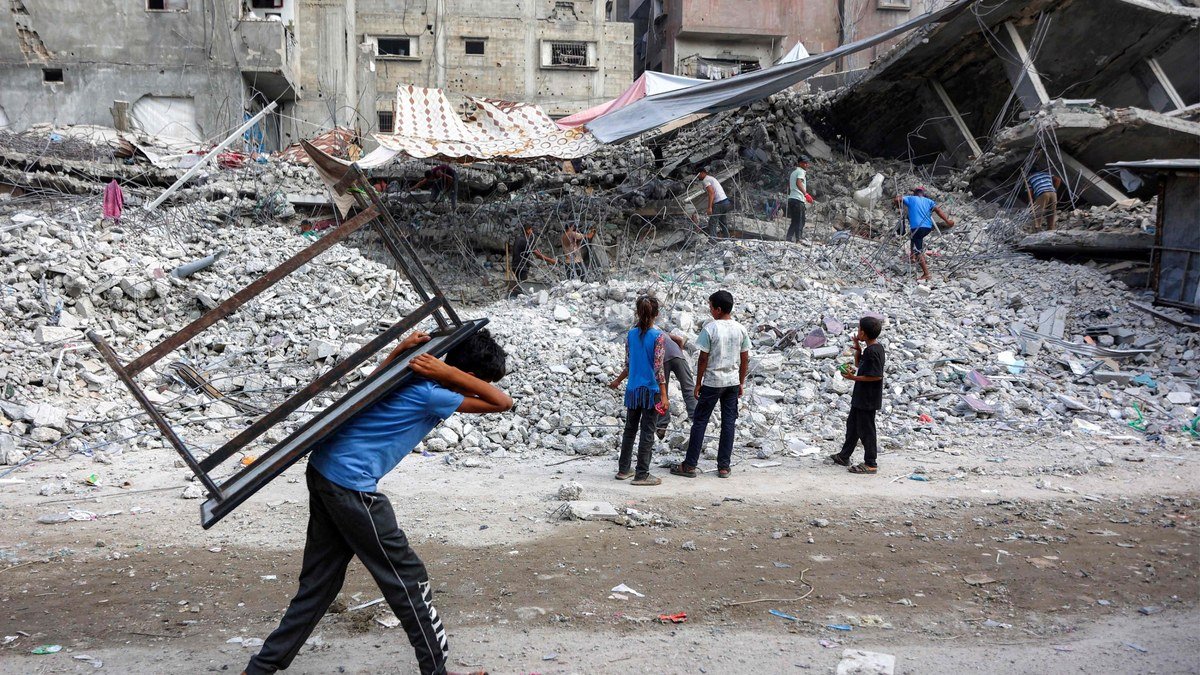
The broader context remains the devastating war that began on October 7, 2023. Israel's offensive has killed more than 73,000 Palestinians and wounded more than 174,000, most of them women and children, according to the Gaza Health Ministry. The campaign has also caused widespread destruction, damaging approximately 90% of the territory's infrastructure. The scale of this devastation makes the reconstruction question not merely a political issue but an urgent humanitarian imperative.
Kushner's insistence that reconstruction will not begin until disarmament is complete creates a difficult dilemma. The US position is designed to prevent Hamas from using reconstruction funds to rebuild its military capabilities, but the delay prolongs the suffering of Gaza's civilian population, who are living amid the rubble of their homes. This tension between security concerns and humanitarian needs is at the heart of the current impasse.
Regional Dynamics: The Joint Arab-Islamic Pressure Campaign
The diplomatic pressure on Israel is not limited to the Palestinian factions. On Sunday, a coalition of eight countries — Türkiye, Egypt, Saudi Arabia, Jordan, Pakistan, Indonesia, Qatar, and the United Arab Emirates — issued a joint statement holding Israel responsible for obstructing efforts to establish peace in Gaza and the rest of the occupied Palestinian territories. This broad coalition, which includes traditional US allies like Saudi Arabia and the UAE alongside regional powers like Türkiye and Egypt, represents a significant diplomatic front against Israel's position.
The inclusion of Gulf states is particularly noteworthy. Saudi Arabia and the UAE have been central to US efforts to broker normalization agreements with Israel, and their willingness to publicly criticize Israel on the Gaza issue signals a shift in regional dynamics. These states are increasingly concerned about the domestic political fallout of appearing to support Israel while Palestinian civilians continue to suffer.
Egypt's role as mediator and guarantor is also critical. Cairo has historically served as the primary intermediary between Israel and Hamas, and its proximity to Gaza gives it a unique stake in the outcome. The Cairo meetings between al-Hayya and other faction leaders, following two days of discussions with Egyptian officials, underscore the centrality of Egyptian mediation.
The West Bank Dimension: Settlements and Palestinian Rights
The discussions in Cairo also addressed the situation in the occupied West Bank, where illegal settlement expansion and Israeli military operations have continued unabated since the Gaza war began. The factions called for efforts "to strengthen Palestinians' resilience, ensure dignified living conditions and accelerate recovery and reconstruction" while pursuing the Palestinian people's full rights in their homeland. They also stressed the need for serious steps to reorganize Palestinian political affairs and uphold the right to self-determination, with East Jerusalem as the capital of a future Palestinian state.
The West Bank issue is often overshadowed by the Gaza conflict, but it remains central to the Palestinian national struggle. The continued expansion of settlements, construction of settlement roads, and increased restrictions on Palestinian movement are eroding the viability of a future Palestinian state. The call for reorganizing Palestinian political affairs also reflects a recognition that the fragmented political landscape is a liability in negotiations — though unity has proven elusive for decades, with deep divisions between Hamas and the Palestinian Authority remaining a fundamental obstacle.
Strategic Calculus: What Each Side Wants and What Leverage They Hold
For Hamas, the primary objective is survival and political legitimacy. The group has agreed to disarm as part of a process that would include Israeli withdrawal and an end to the deadly attacks on the Palestinian territory. By publicly committing to the deal, Hamas is attempting to demonstrate its willingness to engage in diplomacy while positioning Israel as the obstructionist party. The group's leverage lies in its ability to disrupt the process if its demands are not met, a threat that remains credible given its continued military capacity.
For Israel, the primary objective is the elimination of the security threat posed by Hamas. Netanyahu's demand for full disarmament before any withdrawal reflects a deep-seated distrust of Hamas's intentions and a desire to achieve a definitive military victory. Israel's leverage lies in its military superiority and its ability to continue operations in Gaza with US support. However, this leverage comes at a diplomatic cost, as the ongoing strikes and the lack of progress are eroding Israel's international standing.
For the United States, the primary objective is a stable resolution that protects Israeli security while allowing for the reconstruction of Gaza. The Trump administration has invested significant political capital in this process, and a failure would be a major setback for its Middle East policy. However, Kushner's public alignment with the Israeli position may have compromised Washington's ability to act as a neutral mediator.
The second-order effects extend beyond the immediate parties. A collapse of the deal would likely lead to a resumption of full-scale hostilities, with devastating consequences for Gaza's civilian population, and would undermine US credibility as a regional mediator. Conversely, successful implementation could provide a template for resolving other conflicts in the region.
As the 30-day timeline for the start of disarmament approaches, the pressure on all parties will intensify. Hamas has signaled its willingness to proceed, but it requires Israeli approval of the roadmap. Israel, backed by the US, is demanding full disarmament before any concessions. The mediators — Egypt, Qatar, and the US — are caught in the middle, attempting to bridge the gap between these positions. Whether the deal can be salvaged will depend on the willingness of both sides to make compromises that, so far, they have been unwilling to make.
By Malik Hassan, Staff Writer
This article was produced with AI-assisted research and editorial support. Reporting is based on sources cited in the article.
What's Your Reaction?
 Like
0
Like
0
 Dislike
0
Dislike
0
 Love
0
Love
0
 Funny
0
Funny
0
 Wow
0
Wow
0
 Sad
0
Sad
0
 Angry
0
Angry
0

Middle East Correspondent at Global1.News. Based in Beirut, covering politics, conflict, energy, and society across the Middle East. Brings context and depth to a region often reduced to headlines.













Comments (0)