
ExLlamaV2 at Three Years: How Local AI Got Fast, Private, and Free
A 2026 retrospective on ExLlamaV2, the 2023 open-source breakthrough that enabled 70B models on consumer GPUs, democratized local AI, and remains the fastest single-GPU inference engine for privacy-focused users.
Folks, let me take you back to a time when running a 70-billion-parameter AI model on your own computer was a pipe dream, a fantasy reserved for tech giants with server farms the size of football fields. That was 2023. And then, a single open-source breakthrough flipped the script, put the power back in your hands, and started a revolution that’s still roaring in 2026. This is the story of ExLlamaV2, the engine that refused to die, and why it matters more than ever.
THE 2023 LOCAL-AI MIRACLE THAT SHOOK THE INDUSTRY: HOW EXLLAMAV2 MADE 70B MODELS RUN ON A DESKTOP GPU AND KICKED OFF THE PRIVACY REVOLUTION
Atlanta, Georgia - August 18, 2026 - Three years ago this month, a small YouTube channel called Aitrepreneur dropped a video that would become a cornerstone of the local-AI movement. The title was pure nerd hype: "NEW ExLLAMA Breakthrough! 8K TOKENS! LESS VRAM & SPEED BOOST!" But behind the clickbait was a seismic shift. The video showcased ExLlamaV2, an open-source, MIT-licensed inference library by the developer known as turboderp. It wasn't just another tool. It was the key that unlocked the cage, letting everyday people run massive language models on their own NVIDIA GPUs, free from the cloud, free from subscriptions, and free from the prying eyes of data harvesters. Today, we’re looking back at that moment and asking: where would we be without it?
What Just Happened
Let’s set the scene for 2023. The AI world was obsessed with scale, but the hardware to run that scale was locked away in data centers. If you wanted to play with a truly powerful model, you rented access or paid per token. The local-AI community was scrappy, running 7-billion and 13-billion parameter models on their gaming rigs. It was cool, but it wasn't the big leagues. The dream was to run a 70-billion parameter model, something like Llama 2 70B, right on your own desk. That was the holy grail.
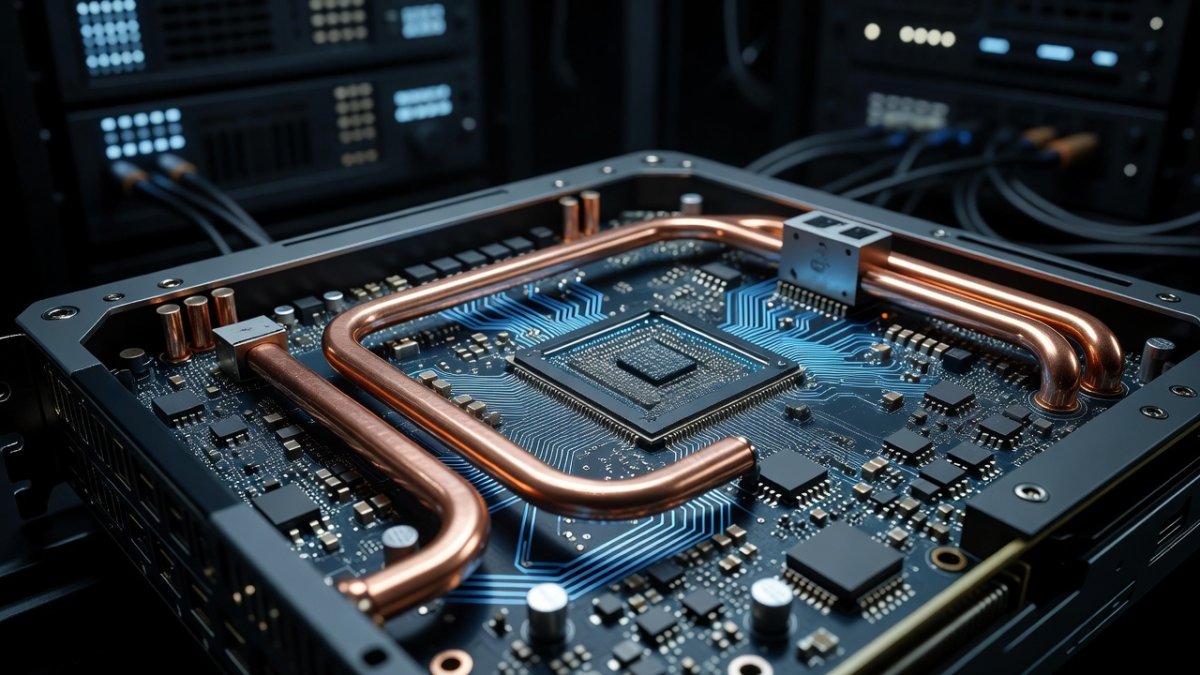
Enter ExLlamaV2. This wasn't just an incremental update. It was a complete rewrite, a CUDA-optimized powerhouse built specifically for modern consumer NVIDIA GPUs. The secret sauce was a new quantization format called EXL2. Instead of using a one-size-fits-all approach to compress the model, EXL2 used a clever, measurement-based calibration to assign mixed bit-widths per layer, ranging from roughly 2 to 8 bits per weight. This meant the compression was smart, preserving quality where it mattered and saving space where it could. The result? A Llama 2 70B model, a beast that previously demanded server-grade A100 hardware, was squeezed into the 24GB of VRAM found on a single RTX 3090 or 4090. At around 2.55 bits per weight, it fit. And it ran fast.
Why the 8K Token Breakthrough Mattered
Now, some folks might hear "8K tokens" and glaze over. Let me tell you why this was a game-changer. In 2023, most consumer setups were stuck with a 4K token context window. That’s roughly 3,000 words of memory. You could have a decent conversation, but the moment you tried to feed it a long document, a chapter of a book, or a complex codebase, it would forget the beginning. It was like talking to someone with severe short-term memory loss.
ExLlamaV2 shattered that ceiling. It pushed the context window to 8K tokens on consumer hardware, doubling the memory and allowing for far more complex, nuanced, and useful interactions. This wasn't just a speed bump; it was a fundamental upgrade in capability. Suddenly, you could have your local AI analyze entire research papers, maintain coherent conversations over long sessions, and process substantial chunks of code without losing the plot. It made local AI a viable tool for real work, not just a toy for tech enthusiasts. That 8K jump was the bridge from "demo" to "daily driver."
The VRAM Miracle
Let’s talk about the elephant in the room: VRAM. In 2023, video memory was the most precious resource in AI. It was the barrier between you and the big models. The genius of ExLlamaV2 wasn't just that it made things faster; it made the impossible possible. By fitting a 70B model into a single 24GB consumer GPU, it democratized access to frontier-level AI. You didn't need a $30,000 server. You needed a $1,600 graphics card that was already sitting in your gaming PC.
This was the "VRAM Miracle." It meant that privacy wasn't just for the wealthy. It meant that a journalist, a student, a small business owner, or a hobbyist could own their AI. They could run it offline, with no data leaving their machine. No cloud servers. No telemetry. No one reading your prompts to train their next model. This was the moment the "ownership" movement in AI truly began. It was a declaration of independence from the subscription economy, and it resonated with anyone who values their digital sovereignty.
Where ExLlamaV2 Stands in 2026
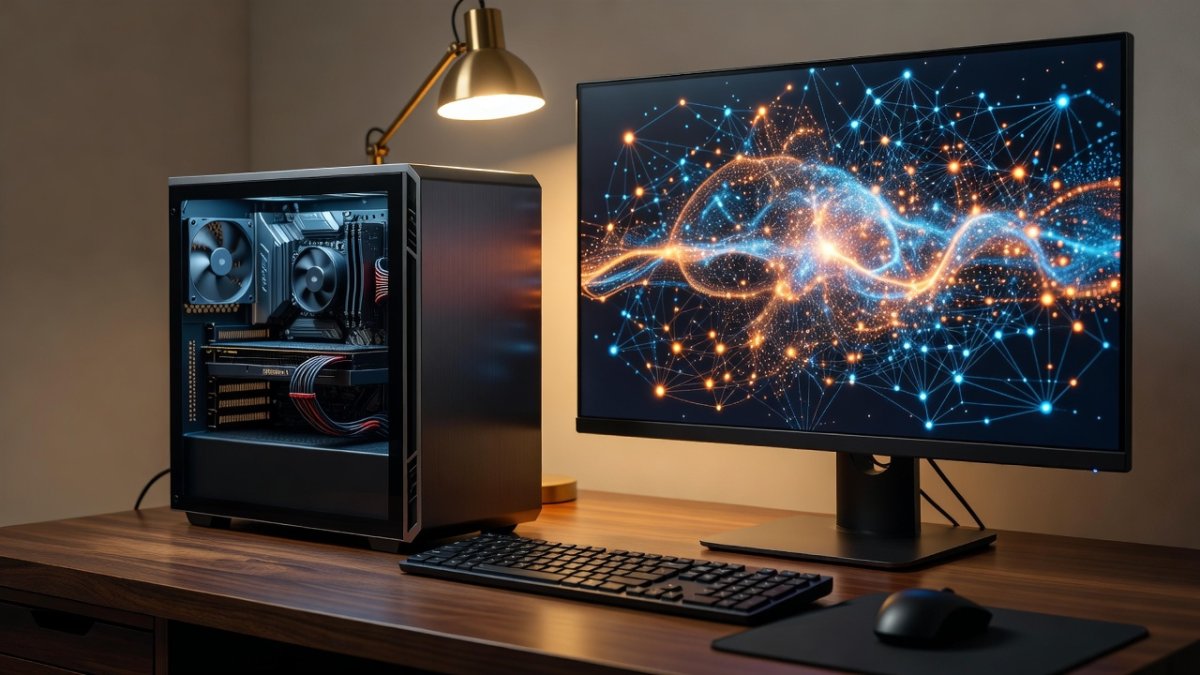
Fast forward to 2026. The AI landscape has exploded. We have new models, new architectures, and new players. But here’s the thing: ExLlamaV2 isn't a relic. It’s a survivor. It remains one of the seven major local inference engines, standing shoulder-to-shoulder with giants like Ollama, llama.cpp, vLLM, MLX, TensorRT-LLM, and Mullama. And it’s not just surviving; it’s thriving. Independent benchmarks still show it running roughly 2x faster than llama.cpp on NVIDIA GPUs when using EXL2 models. That’s not a small margin; that’s a decisive victory for speed.
It has evolved, too. The project is now the backbone of TabbyAPI, its official backend server, which offers a fully OpenAI-compatible API. It’s packed with modern features like Flash Attention 2.5.7+, paged attention, smart prompt caching, and K/V cache deduplication. These aren't just buzzwords; they translate to faster generation, lower memory usage, and a smoother experience. In 2026, if you own an RTX 3090, 4090, or the new 5090, and you want the absolute fastest single-GPU INT4 inference, ExLlamaV2 is still the undisputed champion. It is the speed king, and it refuses to abdicate the throne.
What This Means
So, why does this story matter in 2026? Because the industry has moved in the opposite direction of this open-source ethos. The big players are racing to build walled gardens, charging you per token, per prompt, per API call. They want to own the model, the platform, and the data. They want you dependent on their cloud. ExLlamaV2 is the antidote. It’s a living, breathing testament to the power of open-source development. It proves that a dedicated community, led by brilliant developers like turboderp, can out-innovate and out-perform corporate behemoths.
This is about more than just speed. It’s about control. It’s about privacy. It’s about the fundamental right to own your tools and your data. When you run a model locally with ExLlamaV2, you are not a customer; you are an operator. You are in charge. No one can revoke your access. No one can change the terms of service. No one can mine your conversations for profit. That is the power of local AI, and ExLlamaV2 is its most potent weapon.
The Future Is Yours to Run
Here’s the bottom line, folks. The video from Aitrepreneur in 2023 wasn't just a tutorial; it was a manifesto. It was a call to arms for anyone who believed that AI should be a tool for the people, not just a product to be sold back to them. The revolution it started is still going strong. The hardware is better, the models are smarter, and the tools are more polished. But the core principle remains unchanged: you can own this technology.
So, what can you do? Don't just watch from the sidelines. Get your hands dirty. If you have an NVIDIA GPU, download TabbyAPI, grab an EXL2 quantized model, and see what true speed feels like. Support the developers who make this possible. Contribute to the open-source projects you rely on. And most importantly, spread the word. Tell your friends that they don't have to rent their intelligence. They can own it. The future of AI isn't just in the cloud; it's in your computer, and it's waiting for you to take the wheel.
— Jessica Ali, Global 1 News — cutting through the BS, one story at a time.
This article was produced with AI-assisted research and editorial support. Reporting is based on sources cited in the article.
What's Your Reaction?
 Like
0
Like
0
 Dislike
0
Dislike
0
 Love
0
Love
0
 Funny
0
Funny
0
 Wow
0
Wow
0
 Sad
0
Sad
0
 Angry
0
Angry
0

Editor-in-Chief at Global1.News. Atlanta-based journalist who cuts through the BS and tells it like it is. Lead anchor, host, and the voice you hear when the spin stops and the truth starts.











Comments (0)