
Cat Food Investigation Finds Heavy Metals in Nearly Every Product Tested
An investigation by the nonprofit Clean Label Project found lead in 99 percent of 100 tested cat foods, cadmium in 96 percent and arsenic in 94 percent, with fish-based and dry foods showing the highest contaminant levels.
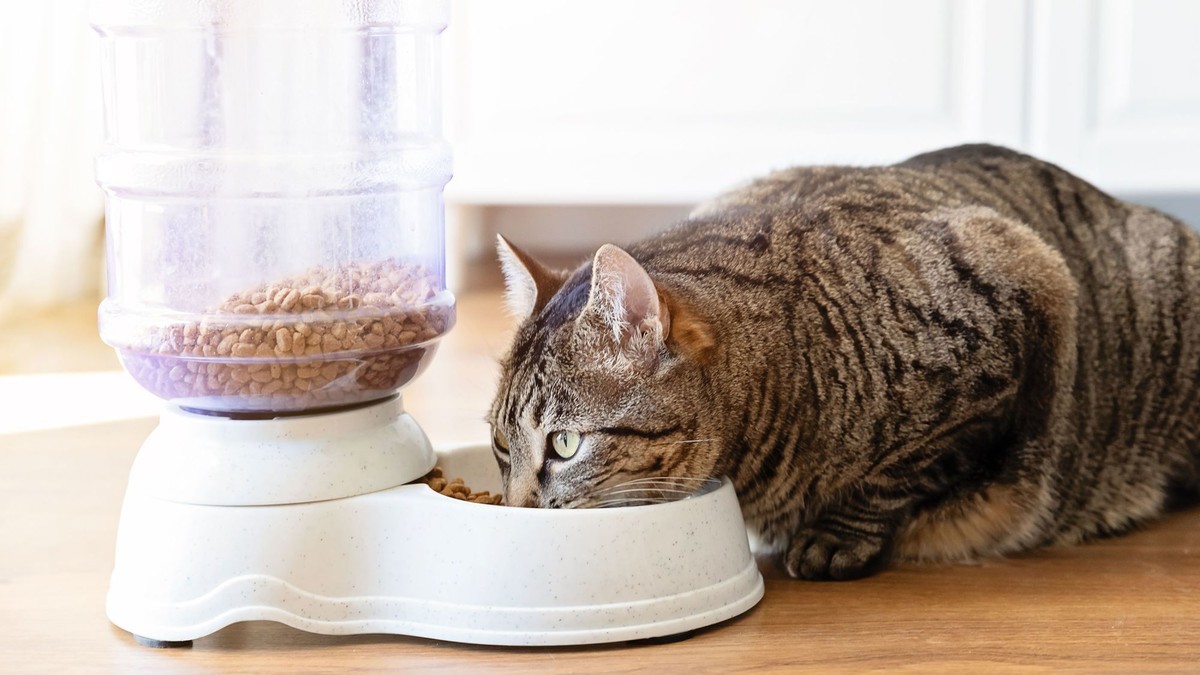
A new investigation has found that the contaminants cat owners worry about are not rare exceptions. They are close to universal.
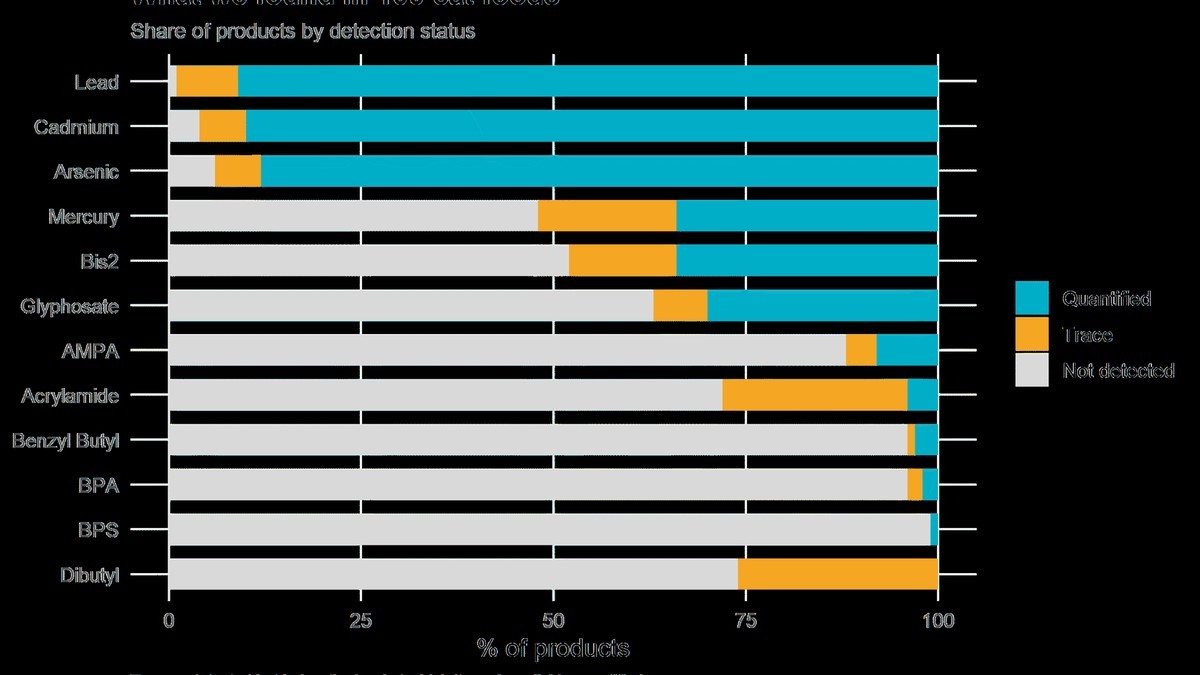
Testing of 100 top-selling cat foods across 62 brands detected lead in 99 percent of the products, cadmium in 96 percent and arsenic in 94 percent. The study, released on Friday and provided exclusively to CNN, also turned up plastic-related chemicals and the herbicide glyphosate in a large share of the products that millions of households buy every week.
Cat Food Investigation Finds Heavy Metals in Nearly Every Product Tested
Washington, United States — The findings do not amount to a recall, and the researchers behind them say so plainly. But they raise a question the pet food industry has largely been allowed to answer on its own: who is checking what actually goes into the bowl?
What the Testing Actually Examined
The Clean Label Project, a Colorado nonprofit that tests consumer products for contaminants and certifies those that meet its standards, bought 100 cat foods from 62 brands at retail. The sample spanned every major format: 31 dry kibbles, 40 wet foods sold in cans or pouches, and 29 air-dried or freeze-dried products.
Every product was tested for more than 122 environmental and industrial contaminants at an independent laboratory holding ISO 17025 accreditation for the methods used. Heavy metals, including arsenic, cadmium, lead and mercury, were measured by inductively coupled plasma mass spectrometry. Bisphenols, acrylamide, glyphosate and its breakdown product AMPA, pesticides and phthalates were measured by liquid chromatography tandem mass spectrometry.
Results were converted to a per-1,000-kilocalorie basis rather than per kilogram of food, a choice the project says is essential because wet food is about a quarter as calorie-dense as dry. Measuring per kilogram, it argues, would have made wet food look several times cleaner than it is purely because of its water content.
The integrity claim is worth stating: every product was bought at retail, no brand had any role in selecting products or analyzing results, and no brand saw the results before publication.
The Numbers Behind the Alarming Headlines
Lead showed up in 99 of the 100 products. Cadmium appeared in 96 and arsenic in 94. Because the metals are so widespread, the project argues the useful question is no longer presence or absence, but relative level.
"Because they are so common, the question is not whether a product contains heavy metals, but whether it contains relatively high or low levels compared with other products," the report states. The worst performers, it adds, were several times more contaminated than the category average.
The sharpest split was by protein. Fish- and seafood-based products carried about 18 times the mercury of other products overall. Among wet foods alone, the gap widened to roughly 28 times compared with wet foods made from other proteins, especially poultry. Nearly half of all fish and seafood products, 48.6 percent, ranked among the highest for mercury. Not a single poultry-based product did.
The purity gap was just as stark. About 85 percent of poultry-based cat foods met the project's purity standard, against 25.7 percent of fish and seafood products, roughly one in four.
Why Fish Is the Biggest Red Flag
The fish finding follows a pathway scientists already understand. Microorganisms in water convert mercury into methylmercury, a form that binds tightly to fish tissue and accumulates up the food chain.
More troubling for shoppers, the project found that products without fish in their name but containing a marine ingredient still tended to carry more mercury than products with no marine ingredients at all. Pulling the fish off the front of the package does not mean pulling it out of the can.
Looking across the current study and its earlier cat food testing, Clean Label Project now holds 541 samples from 87 brands. From that larger pool, it names herring meal, tuna and fish broth as the ingredients most strongly associated with contamination. Products containing herring meal ranked among the most contaminated roughly 17 times more often than chance alone would predict. Turmeric finished fourth, a result the project links to the ingredient's documented history of lead adulteration.
The project's executive director, Molly Hamilton, was careful not to overstate the point. "As the main protein, chicken was better when it came to mercury and cadmium, but we saw higher rates of lead and herbicides in chicken," she said. "It's a whack-a-mole situation — which contaminant do you want to whack?" She added that several fish-based foods did meet the project's standard, meaning the problem is supplier testing as much as protein type.
Dry Food and the Lead Problem
Protein was not the only variable. Dry cat food carried roughly three times more lead than wet or air-dried products, a difference that held after accounting for calories. Unlike mercury and cadmium, lead levels were not tied to a specific protein source, which the project says suggests the format of the food may itself play a role.
The pattern echoes an earlier Clean Label Project assessment of 79 top-selling dog foods released in February. In that study, dry dog food averaged 5.7 times more cadmium, 3.2 times more mercury, 2.7 times more lead and 12.7 times more arsenic than a benchmark drawn from 3,280 human food, beverage and supplement samples the group had tested over a decade.
Lead is the contaminant with the fewest defenders. No level of lead is known to be safe for people, and children absorb up to 50 percent of the lead they ingest compared with about 10 percent for adults. Hamilton notes that cats and other small animals also absorb more of what they eat than larger ones do.
Glyphosate, Phthalates and the Packaging Trail
Glyphosate, agriculture's most widely used herbicide, was detected in 37 percent of the products. Its presence tracked the plant content of the recipe: on average, each additional plant ingredient among the first ten listed was associated with about 40 percent more glyphosate. Five plant ingredients pushed the level to nearly four times that of a comparable food with one.
The plasticizer DEHP was detected in 48 of the 100 products, making it the second most common contaminant after the heavy metals. It appeared at similar rates in wet and dry food, but canned and pouched products carried about five times more than bagged ones, pointing to food contact with packaging and processing equipment.
Not every result was bad. Acrylamide, formed during high-heat cooking, reached measurable levels in just four products and very low levels in another 24. Bisphenol A appeared in only two products and BPS in one, a decline the project attributes to years of packaging changes across the industry.
The First Ingredient Is Not What It Seems
Labels are also less informative than they look. Ingredients must be listed from most to least by weight, so the first name on the list is the industry's biggest selling point. In 35 of the 100 products, however, that first-listed ingredient was outnumbered by ingredients from a different category within the first ten.
The project describes the mechanism as "ingredient splitting," where different parts of a single crop, such as pea protein and pea flour, appear as separate entries and push plant content up the list while making the headline meat or fish look more dominant than it is. Products where plant ingredients outnumbered the named meat or fish within the first ten carried more lead. Products with more plant ingredients near the top carried more herbicide residue.
"We tested and found the first ingredient is not always a reliable indicator of what the food contains, nor does it predict which contaminant may be present at the highest levels," Hamilton said.
What the Industry Says
The Pet Food Institute, which represents manufacturers, said its members run comprehensive safety and quality programs including ingredient specifications, supplier verification, testing protocols, traceability systems and science-based preventive controls. "Cat owners should feel confident that the food they feed their pets is safe and produced according to rigorous regulatory and quality standards," chief executive Elise Fennig told CNN.
The institute made a broader argument after the group's dog food study earlier this year, warning that such reports risk misleading owners because the presence of detectable heavy metals does not by itself indicate a health risk, and complaining that the findings do not disclose sampling methods, analytical protocols or how the levels compare with established safety thresholds. It also said the data appeared to ignore differences in moisture between products.
That last criticism is one the project pre-empted. Its report states that it measures contaminants per 1,000 kilocalories precisely because comparing wet and dry food per kilogram is distorted by water content.
Independent voices were more sympathetic. "Overall, this appears to be a reasonably conducted analysis," said Ryan Babadi, science director at the nonprofit Toxic Free Future. He argued the burden belongs upstream: "Major retailers have the responsibility to require their suppliers to eliminate harmful chemicals from pet food and packaging — chemicals that are already being phased out or banned in many other products."
The Regulatory Gap
Under the Federal Food, Drug and Cosmetic Act, animal foods must be safe to eat, produced under sanitary conditions, free of harmful substances and truthfully labeled, and the Food and Drug Administration regulates pet food much as it does other animal foods. Canned products face additional low-acid processing rules. Labels follow ingredient listings that some states enforce based on a model from the Association of American Feed Control Officials.
What the framework does not set is a hard contaminant ceiling for heavy metals in finished cat food. When the FDA finds a facility out of compliance, it first encourages voluntary corrective action and escalates only afterward to warning letters, recall requests, detention, seizure or court action.
Hamilton makes the case that the gap matters most for the animals least able to tolerate it. "The absence of safety standards does not mean a contaminant is safe," she said. "Most guidelines are designed for farm animals, not kittens or 15-year-old housecats." The same structural gap exists in Canada, where the food inspection agency's pet food oversight centers mainly on import and export requirements rather than contaminant limits.
What Cat Owners Can Actually Do
The project was explicit that this is not a recall and does not establish that any specific product will make a cat sick. Each product was tested from a single batch, so the results cannot show how contamination varies between production runs. Its rankings are cumulative contaminant scores, not an assessment of nutritional adequacy.
That said, the practical guidance is consistent. Vary protein sources, particularly for cats that eat a fish-based food every day, and read the ingredient list rather than the product name, because a food without fish on the label may still list a marine ingredient. Prefer wet or air-dried food over dry for lower lead exposure, and be wary of long strings of similar-sounding plant ingredients near the top of the list.
Owners can also ask manufacturers directly whether they test for heavy metals, pesticides and packaging chemicals, and how often. Keeping the packaging and lot number costs nothing and matters if a safety notice is ever issued. Any cat with kidney, urinary or digestive conditions should have diet changes cleared by a veterinarian first.
What Comes Next
The report lands at a moment when the cat food market has never been bigger. Roughly 49 million United States households now own a cat, up from 40 million in 2023, and households with three or more cats grew 36 percent between 2018 and 2024. Cat food and treat sales reached about $18.4 billion in 2025, up roughly 11 percent, while premium product sales have climbed 6 percent since 2019.
Owners paying more for premium food are being sold a promise the label does not guarantee. Hamilton's summary is blunt: "Cat owners increasingly choose premium meats, organic vegetables and cleaner labels, assuming higher prices and quality ingredients mean healthier food. That's not necessarily the case."
The immediate pressure point is transparency, not recall. The project wants brands to disclose routine contaminant testing, retailers to press suppliers, and owners to ask the question out loud. Five hundred forty-one samples and 87 brands is a large enough sample to make the industry's silence on per-product testing harder to defend.
By Jessica Ali, Staff Writer
This article was produced with AI-assisted research and editorial support. Sources: CNN, Clean Label Project, CTC News, Geo News, Pet Food Institute, U.S. Food and Drug Administration.
What's Your Reaction?
 Like
0
Like
0
 Dislike
0
Dislike
0
 Love
0
Love
0
 Funny
0
Funny
0
 Wow
0
Wow
0
 Sad
0
Sad
0
 Angry
0
Angry
0

Editor-in-Chief at Global1.News. Atlanta-based journalist who cuts through the BS and tells it like it is. Lead anchor, host, and the voice you hear when the spin stops and the truth starts.















Comments (0)