
Government Unveils 100 Walk-In Mental Health Centres but Staffing Shortfall Raises Doubts
The UK government has announced the biggest overhaul of mental health services in a generation, promising 100 new walk-in centres in libraries and banks alongside 59 dedicated emergency departments. The £343 million first-phase investment arrives as demand surges, with one in five people experiencing a common mental health condition each year. Yet questions remain over staffing and whether the plan can deliver timely support across England’s stretched NHS.
The UK government has announced the biggest overhaul of mental health services in a generation, promising 100 new walk-in centres in libraries and banks alongside 59 dedicated emergency departments. The £343 million first-phase investment arrives as demand surges, with one in five people experiencing a common mental health condition each year. Yet questions remain over staffing and whether the plan can deliver timely support across England’s stretched NHS.
The announcement was covered by Channel 4 News on 6 August 2026, with data correspondent Ciaran Jenkins scrutinising the numbers and highlighting that no extra staff have been dedicated to the centres.
Government Unveils 100 Walk-In Mental Health Centres but Staffing Shortfall Raises Doubts
London, UK – 6 August 2026 — The Department of Health and Social Care confirmed today that 159 new NHS mental health facilities will open across England under a £343 million programme. This includes 100 community mental health centres offering walk-in support without referral and 59 mental health emergency departments for same-day crisis care. Health and Social Care Secretary Yvette Cooper described the changes as the “biggest redesign of mental health services probably for a generation” during the announcement from 10 Downing Street, as she visited a community mental health centre in Sheffield — one of six pilot sites already operating in England.
Burnham’s Neighbourhood Gamble Tests NHS Capacity
Prime Minister Andy Burnham’s administration has allocated £187 million to the community centres and £156 million to the emergency departments. Currently six pilot centres operate and 23 mental health emergency departments exist; the rollout will more than double the latter to 82. The first sites are scheduled to open in autumn 2026, with further facilities from March 2027 and full operation expected by 2029. The plan forms the initial phase of the 10 Year Health Plan and will feed into a forthcoming mental health strategy involving schools, employers and local government.
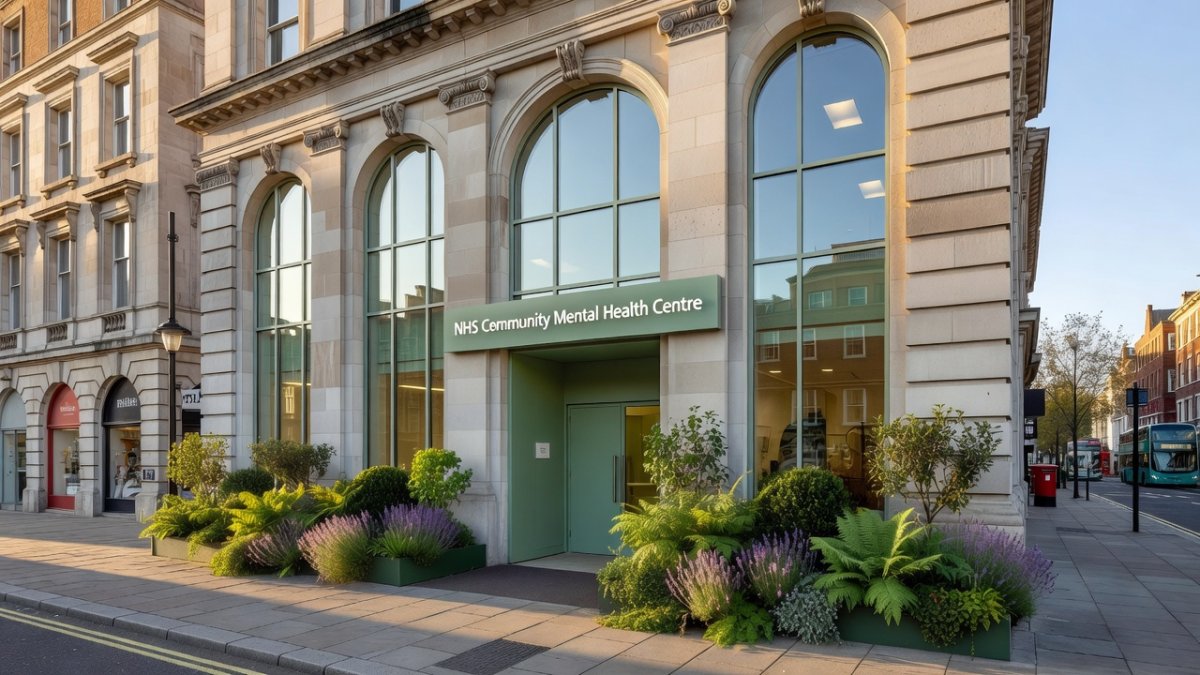
Dr Nick Broughton, NHS National Priority Programme Director for Mental Health, Learning Disability and Neurodevelopmental Conditions, said the rollout strengthens early support and crisis care. The centres will occupy high-street sites in converted banks and libraries to appear less clinical, while mental health emergency departments will sit alongside existing A&E units and coordinate with ambulance and police services. This marks a deliberate move away from hospital-centric models that have dominated for decades.
Prime Minister Andy Burnham said: “Nobody should be left to struggle with their mental health alone. But every day, thousands of people are waiting months for help, then finding the only door open to them is a busy A&E. These new centres will be a lifeline for so many. They will bring NHS services closer to home, making it easier to get support before problems get worse, and ensuring those in crisis get the right care in the right place.” The £156 million for the 59 mental health emergency departments and £187 million for the 100 community centres will support 57 new-builds and 102 conversions of existing sites.
Regional Rollout Spreads Across England’s Cities and Towns
Residents in London boroughs such as Camden, Lambeth and Newham will gain new centres, while the North East sees facilities in Newcastle, Sunderland and Middlesbrough. In the Midlands, Birmingham receives three community centres and Leicester two. The South West gains sites in Devon, Plymouth and Bath. These locations aim to reduce pressure on A&E departments in places like Addenbrooke’s in Cambridge and the Royal London.
For families in deprived areas of County Durham or Stoke-on-Trent, earlier access could prevent problems escalating, though transport links in rural Norfolk and Cumbria remain a barrier for many on low incomes. MHEDs will appear at sites including Barnsley, Lanchester Road Durham, Longley Centre Sheffield and St James’s Leeds. The spread reaches every major region, from Cheshire & Merseyside to Sussex and Somerset.
In the North West the programme includes three mental health emergency departments in Cheshire & Merseyside, three in Greater Manchester and further sites in Lancashire & South Cumbria. The South East will see mental health emergency departments at John Radcliffe Oxford, Medway Maritime and University Hospital Southampton. In the South West, Musgrove Park Somerset, Plymouth with adult and children’s services and Royal Bournemouth are among the named locations. The centres will be placed in libraries and banks on high streets, adopting a welcoming, non-clinical design intended to sit at the heart of neighbourhoods.

Prevention Push Targets Rising Youth Demand
Professor Peter Fonagy’s independent review into prevalence, ADHD and autism will shape the wider strategy. Demand has risen sharply among children and young people, with Barnardo’s noting crisis levels. Lynn Perry, Chief Executive of Barnardo’s, said the mental health of far too many children and young people is at crisis point and urged a shift from response to prevention.
The centres will sit in the heart of neighbourhoods, aiming to catch problems before they require emergency intervention. This approach aligns with the broader mental health strategy that looks beyond the NHS to schools, employers, local government and the voluntary sector. Around 1 in 5 people experience a common mental health condition each year, underlining the scale of need.
Rosie Phillips, Deputy Chief Executive of Bipolar UK, said that for people living with bipolar, preventative care means faster diagnosis, regular medication reviews and better access to talking therapies and peer support. If the new services can deliver that, she argued, they could be a game changer for those with the condition and the people who love them.
Sector Leaders Welcome Move but Flag Structural Risks
Brian Dow of Rethink Mental Illness called the neighbourhood centres “a vital step” building on pilot results. Mark Rowland of the Mental Health Foundation highlighted drivers such as problem debt and poor housing. Tom Pollard of Mind described the move as “promising”, while Rosie Phillips of Bipolar UK stressed the lack of clear pathways that has already cost lives.
Professor Subodh Dave, President of the Royal College of Psychiatrists, welcomed the recommitment to investing in mental health services but warned it will be important to build on past learnings and ensure genuinely joined-up care without compromising quality. The strategy draws on these voices to address fragmentation that has long undermined previous reforms.
Workforce Shortage Casts Shadow Over Ambitious Targets
Channel 4 News data correspondent Ciaran Jenkins has confirmed that no extra staff have been dedicated to the new centres. Stephen Jones of the Royal College of Nursing stated that specialist mental health nurses must sit at the centre of both services for them to succeed. Marjorie Wallace of SANE noted the charity already spends over 800 hours a month on helplines and warned that the expansion will prove lifesaving only “if sufficiently staffed”.
Without dedicated recruitment, existing teams in trusts from Greater Manchester to Sussex face further strain. The 57 new-builds and 102 conversions will require specialist input from day one if they are to avoid repeating the bottlenecks seen in current services. Unions and professional bodies have made clear that bricks and mortar alone will not deliver the promised transformation.
Marjorie Wallace of SANE highlighted that the charity receives calls from people who have nowhere to turn, noting the expansion could prove lifesaving if sufficiently staffed. The Royal College of Nursing has pointed out that the right investment saves the NHS money long term by cutting waiting lists and preventing hospitalisations.
Integration Challenge Links NHS to Wider Society
The forthcoming mental health strategy will extend beyond clinical settings into schools, workplaces and local authorities. Mark Rowland emphasised that many drivers of poor mental health lie outside the health service, including insecure housing and unemployment. Successful delivery will depend on coordination across these sectors rather than isolated NHS investment.
Early sites in places such as Clacton-on-Sea, Milton Keynes and Watford will test whether the non-clinical appearance encourages earlier uptake. The government must now show how these facilities connect with existing community organisations if the redesign is to reach those currently falling through gaps.
The Fonagy review into prevalence and support for mental health conditions, ADHD and autism is informing the strategy, with the aim of helping children stay in education and adults return to work through better coordinated support.

The Bottom Line — What Comes Next
The government must now demonstrate how these facilities will be resourced beyond bricks and mortar. If the 100 centres and 59 emergency departments open on schedule with adequate specialist nurses, they could transform access for thousands in cities from Sheffield to Southampton. Without that workforce commitment, the promise of support before crisis point risks remaining unfulfilled for the very communities the redesign claims to serve. A further wave of facilities is due from March 2027, with all sites expected to be operational by 2029.
By Erica Thornton, Staff Writer
This article was produced with AI-assisted research and editorial support. Reporting is based on sources cited in the article.
What's Your Reaction?
 Like
0
Like
0
 Dislike
0
Dislike
0
 Love
0
Love
0
 Funny
0
Funny
0
 Wow
0
Wow
0
 Sad
0
Sad
0
 Angry
0
Angry
0

US Politics and Policy Correspondent at Global1.News. Based in Washington DC, covering American politics, policy, elections, and the courts. Knows how the system works and tells you what it actually means.















Comments (0)