
Google Is Paying Anthropic's Rent — and Taking a Fifth of the Building
Google is guaranteeing Anthropic's lease payments and power bills on a $15 billion Texas data center campus, taking a 20 percent stake in return. Alphabet's total guarantee exposure has hit $43.8 billion as the AI buildout increasingly finances itself.
Google Is Paying Anthropic's Rent — and Taking a Fifth of the Building
Let me tell you something that's been sitting wrong with me all week. I've been running hosting infrastructure and watching balance sheets for over a decade, and I thought I'd seen every trick in the financing playbook. Then the Wall Street Journal dropped a story Wednesday that made me read it twice. Google — Alphabet, the company that's supposedly locked in an AI war with OpenAI and Microsoft — is guaranteeing the rent and the electric bill for Anthropic's new data centers. Not lending them money. Not selling them a service. Guaranteeing their lease payments. And in return, Google takes about a fifth of the buildings.
Let that sink in. The AI industry's biggest competitors aren't just doing business with each other anymore. They're cosigning each other's mortgages. And the numbers behind this one deal tell you more about where this whole buildout is headed than any earnings call ever could.
The Deal — $15 Billion, One Gas Plant, and No Grid Queue
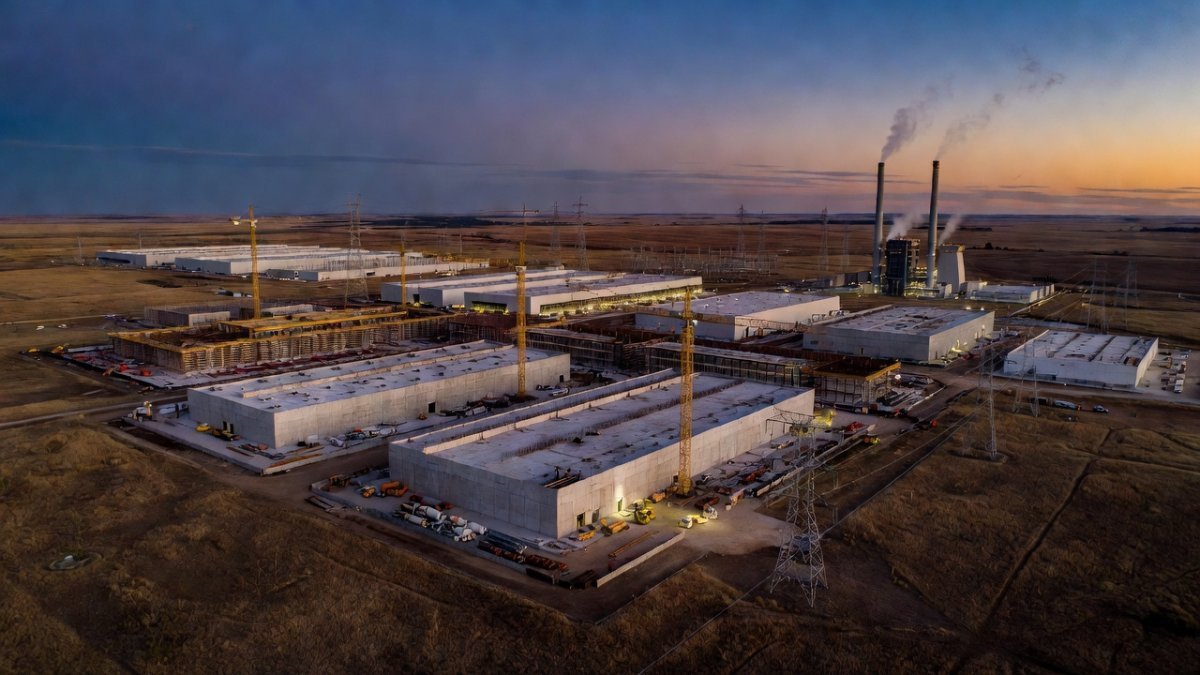
Here's what actually happened, laid out plainly. A Morgan Stanley-led banking consortium is in talks to lend $15 billion to Nexus Data Centers, a developer building an AI campus for Anthropic in Hubbard, Texas. About $14 billion of that is bridge loans and revolving credit facilities. The campus comes with its own 1.6-gigawatt natural gas power plant, built on site, precisely so the project never has to wait in the grid interconnection queue like everybody else.
And why can Nexus borrow $15 billion against a lease from a company that loses money on every dollar of revenue it takes in? Because Google signed on the dotted line. Google has agreed to cover Anthropic's lease payments and power-purchase costs if Anthropic can't. The guarantees span four separate Anthropic data center leases plus the power agreements tied to them. In exchange, Google reportedly takes about a 20 percent equity stake in the data center and power-generation projects.
This isn't a one-off act of charity. Alphabet's own filings show its maximum potential exposure from these credit guarantees hit $43.8 billion at the end of June. Google has already extended similar backstops to projects run by TeraWulf and Hut 8, with Anthropic as the end customer in both cases. This is a financing strategy, and it's been running for a while.
Why Google Would Guarantee Its Rival's Rent
Now, the obvious question — and I've asked it myself — is why the company building Gemini would cosign the loans of the company building Claude. The answer is the most circular thing I've seen in this industry, and I've watched a lot of circular nonsense.
Anthropic is done renting servers from cloud providers. That's the strategy shift at the heart of all of this. The company has signed more than ten preliminary lease agreements with developers across the United States and wants at least 10 gigawatts of data center capacity under its control over the next few years. But a loss-making AI lab can't fund that from cash flow. So the money has to come from somewhere, and the somewhere is the balance sheet of the very hyperscalers it competes with.
Google's interest goes deeper than friendship. Anthropic plans to install Google's TPUs — the chips Google co-designed with Broadcom — in these facilities. The chips themselves get financed through a separate vendor-financing arrangement with Broadcom. So Google guarantees the building, Broadcom finances the silicon inside it, and Anthropic signs the lease that makes the whole stack look like revenue. Everyone is lending to everyone, and the same assets are doing double duty as collateral and as the revenue base that justifies the loan. That's not a market. That's a round-robin.
The Scale Nobody's Adding Up — $1.09 Trillion in Leases That Aren't on Any Balance Sheet
This is where I want every independent hosting provider to stop scrolling and pay attention, because this one deal is just the visible tip of a very large iceberg. Reuters reported this week that the five largest US hyperscalers — Amazon, Microsoft, Alphabet, Meta, and Oracle — have signed facility and land leases that haven't even commenced yet totaling $1.09 trillion. That's nearly four times the $285 billion in lease liabilities they actually recognize on their balance sheets today.
Let me translate that into something real. These are legally binding contracts that exist but don't show up as debt until the buildings come online. Oracle is the most exposed: $260 billion in uncommenced commitments versus just $37.9 billion in recognized lease liabilities. Nearly seven times. Most of those leases start between 2027 and 2029 and run fifteen to nineteen years.
And that's before we talk about the chips. Citadel Securities estimates the market has already absorbed $570 billion in AI-related debt, with more than $500 billion in additional debt expected by 2028 just to finance chip purchases. Add Nikkei's tally of $1.65 trillion in off-balance-sheet obligations across the big five, plus their $1.35 trillion in reported debt, and you get roughly $3 trillion in total obligations propping up this buildout.
The Secondary Bottleneck Nobody's Talking About — When the Same Assets Are Collateral and Revenue
Here's the part that keeps me up at night, and it's the same warning the Bank for International Settlements has been trying to get people to hear. In these circular arrangements — AI labs, hyperscalers, chip suppliers, and developers all investing in each other — the true level of leverage becomes almost impossible to measure. When the same GPUs serve as collateral for one loan and as the revenue base for another contract, nobody can tell you what anything is actually worth.
The European Central Bank has classified the opacity of private credit financing as a financial stability risk. Tech critic Ed Zitron has been hammering the subprime comparison — vast sums raised on unproven future demand, risk dispersed across special-purpose vehicles and off-balance-sheet structures, the burden hidden from view. The ECB's caveat is worth repeating: this isn't 2008, because the money isn't coming from short-term deposits. But the losses, when they come, will still land on pension funds and insurers who bought the yield without reading the fine print.
And don't think the community backlash is a separate story. It's the same story. Projects worth $130 billion have been delayed or halted by opposition and permitting fights, and every month of delay pushes these lease commencement dates closer to the moment when the revenue actually has to show up.
What This Actually Means for Independent Hosting Providers
So what does a founder running his own infrastructure make of all this? Let me give you five things, and I'd stake my own racks on all of them.
First — watch the guarantee stack, not the capex headlines. When Alphabet's filing says $43.8 billion in guarantee exposure, that's a real number with real consequences. Watch hyperscaler guarantee disclosures and the uncommenced commitments footnotes in their quarterly reports. That's where the early-warning signals live, and they're public. Nobody needs an insider to see this coming.
Second — understand that your competitors' cost of capital is about to diverge. A developer with a Google guarantee behind its tenant can borrow at investment-grade rates. A developer without one is paying junk spreads. That gap is going to decide who survives the shakeout and who gets sold for scrap, and it's widening by the week.
Third — stay capital-light, and say it out loud. Every dollar of debt the giants pile on is a dollar of optionality they lose. Independent hosting's whole value proposition just got stronger: no $1.09 trillion lease stack, no special-purpose vehicle, no guarantee exposure. That's not a weakness. That's the pitch.
Fourth — be suspicious of demand that's really just circular contracts. When a lease is signed by a company whose landlord is guaranteed by its competitor, some of that demand is just the industry financing itself. Price your capacity for the demand that's real, not the demand that's a balance-sheet arrangement between three companies that all report to the same investors.
Fifth — get ready for the wholesale market to flood. Every stressed developer, every cancelled lease, every SPV that can't refinance ends up as distressed assets. The people with cash and no leverage are going to pick up hardware and facilities at prices that look obscene today and cheap in eighteen months.
The Structural Reality — Everyone Is Lending to Everyone
Let me be clear about what's structural here. This isn't a scandal and it isn't a fraud — it's the logical endpoint of an industry that decided to build faster than any single company could pay. The hyperscalers have the credit. The AI labs have the ambition. The banks have the appetite. And the developers have the land. So they built a machine where each one guarantees the next, and the whole thing runs on the assumption that the revenue arrives before the bills do.
The BIS warning is the one to remember: if returns on AI investment fall short, funding contracts abruptly, and the capex downturn becomes prolonged. Not a crash — a prolonged, grinding correction. And when it comes, it won't look like 2008. It'll look like a bunch of very polite companies quietly unwinding $3 trillion worth of promises.
The Bottom Line
I'm not telling you the AI buildout is fake. The demand is real, the technology is real, and I've spent enough nights staring at power bills to know the workload is real. What I'm telling you is that the financing has started to feed on itself, and that's always the moment when the smart money starts checking the exits.
Google guaranteeing Anthropic's rent is the single clearest sign yet that this industry has crossed into a phase where the balance sheets are doing the heavy lifting. If you're independent, that's your opening. Keep your leverage low, keep your customers close, and keep watching those footnotes. Because the next big story in this industry isn't going to be a new chip. It's going to be a guarantee that somebody can't honor. Buh trust me on that one.
— Allan Ali, Founder
This article was produced with AI-assisted research and editorial support. Sources: The Wall Street Journal, Reuters, Bloomberg, Nikkei Asia, Seoul Economic Daily, Bank for International Settlements.
What's Your Reaction?
 Like
0
Like
0
 Dislike
0
Dislike
0
 Love
0
Love
0
 Funny
0
Funny
0
 Wow
0
Wow
0
 Sad
0
Sad
0
 Angry
0
Angry
0
Publisher of Global1.News. Automation architect, systems builder, and the guy making sure the truth gets published.










Comments (0)