
Germany Blames Russia for Leipzig Drone Attack and Hits Back With Consulate Closure
In a recent BBC News report, the channel's correspondents examined how Germany's formal accusation against Moscow over the Leipzig airport drone attack has escalated Europe's confrontation with Russian hybrid warfare. The report detailed Berlin's 1 September attribution of the 4 August incident to Russian operatives, the retaliatory diplomatic measures announced by Foreign Minister Johann Wadephul, and the broader European response coordinated in Brussels and EU capitals.
In a recent BBC News report, the channel's correspondents examined how Germany's formal accusation against Moscow over the Leipzig airport drone attack has escalated Europe's confrontation with Russian hybrid warfare. The report detailed Berlin's 1 September attribution of the 4 August incident to Russian operatives, the retaliatory diplomatic measures announced by Foreign Minister Johann Wadephul, and the broader European response coordinated in Brussels and EU capitals. With voters in Saxony-Anhalt heading to the polls on Sunday, the BBC analysis placed the drone attack within a wider pattern of suspected Russian sabotage operations across the continent, and highlighted the domestic political pressures facing Chancellor Friedrich Merz's government as it seeks to balance deterrence with restraint.
Germany Blames Russia for Leipzig Drone Attack and Hits Back With Consulate Closure
Berlin, Germany – 6 September 2026 — Germany formally accused Russia on Tuesday of orchestrating the explosive drone attack on Leipzig/Halle Airport, with Interior Minister Alexander Dobrindt declaring that the assault followed the "well-established pattern of Russian hybrid operations in Europe." Foreign Minister Johann Wadephul simultaneously announced the closure of the Russian consulate in Bonn, the termination of the Russian House cultural centre contract in Berlin, tighter entry controls for Russian nationals, and intensified pressure on Moscow's shadow fleet of oil tankers.
Berlin Names Moscow: A Formal Accusation
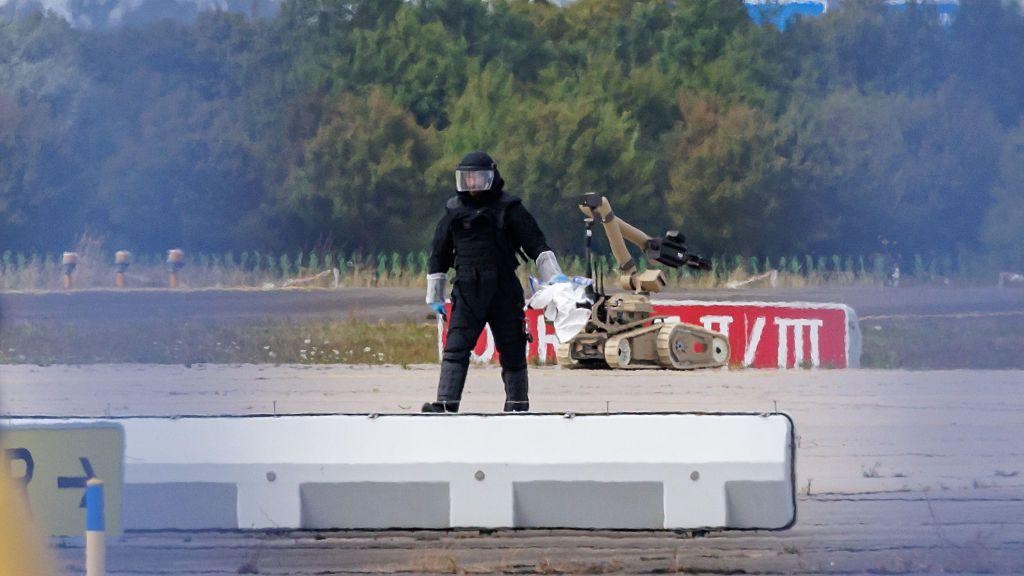
At a Berlin press conference on 1 September, Interior Minister Alexander Dobrindt delivered the German government's formal attribution of the Leipzig drone attack to Russian state actors, ending weeks of cautious public statements from the chancellery. Dobrindt said the attack followed the "well-established pattern of Russian hybrid operations in Europe" and warned that Germany must assume it will be targeted again, according to officials present. He framed the accusation within what he described as a "long series of attempts at destabilisation" targeting German infrastructure and the NATO logistics chain supporting Ukraine. Foreign Minister Johann Wadephul then outlined retaliatory measures: the closure of the Russian consulate in Bonn, the termination of the contract for the Russian House cultural centre in Berlin, stricter entry controls for Russian nationals, and a renewed push to constrain Russia's shadow fleet operating in the Baltic Sea. These measures, Wadephul said, were proportionate responses to an attack on German soil that could have caused catastrophic loss of life.
The formal accusation followed weeks of escalating signals from Berlin. On 7 August, US intelligence had told the Wall Street Journal that it believed Russia was behind the attack, a claim the Russian embassy in Berlin denied the same day. Chancellor Friedrich Merz convened Germany's National Security Council on 8 August to coordinate the response, and on 25 August warned that the attackers would "pay the price." In the intervening weeks, Berlin opened a drone-security research facility at Cochstedt and announced the hiring of 150 new agents and the establishment of four new bases dedicated to drone defence. The timing of the formal accusation was significant, coming one day before European defence ministers gathered in Ireland and days before voters in the eastern state of Saxony-Anhalt head to the polls. The government's decision to name Russia publicly, after weeks of careful investigation and diplomatic consultation, suggested that Berlin had concluded the evidence was sufficiently robust to withstand Moscow's inevitable denial and counter-accusations.
A Bomb on the Tarmac: What Happened at Leipzig
The attack that triggered this diplomatic crisis began in the early hours of 4 August at Leipzig/Halle Airport in eastern Germany, a facility that hosts NATO's Strategic Airlift International Solution (SALIS) hub. An explosive-laden drone, roughly the size of a microwave oven and carrying approximately 800 grams of Semtex-class explosive, struck the wing of an Antonov An-124 cargo aircraft operated by a Ukrainian carrier that had recently transported ammunition from France. The device struck dangerously close to the fuel tank but failed to detonate. A bus driver discovered the drone approximately four hours later, prompting an immediate security response and the closure of the airport for about two hours. Investigators later determined that the drone carried no navigation lights, was equipped with a 5G router and SIM cards that allowed remote control from anywhere in the world, and had been constructed with professional precision. The failure of the explosive to detonate was attributed to a technical malfunction rather than any deficiency in the device's design.
Hours later, in the early morning of 5 August, a second incident occurred that investigators believe was connected to the first. A DHL Boeing 757-23N freighter operated by European Air Transport Leipzig, flight QY9LE inbound from Marseille, struck a suspected second drone at approximately 400 metres while executing a go-around manoeuvre. The crew issued a mayday and diverted to Hanover, where the aircraft landed safely with minor nose damage and no injuries. Investigators believe the second drone may have carried a camera intended to film the planned attack on the Antonov aircraft, potentially for propaganda purposes or operational assessment. The technical sophistication of both devices — the remote-control capability, the absence of navigation lights, the precise targeting of a military logistics aircraft — pointed to a professionally prepared operation rather than the work of amateurs or a loosely affiliated group.
The choice of Leipzig/Halle as a target was no accident. The airport serves as NATO's Strategic Airlift International Solution hub, moving arms and military equipment to eastern NATO members and Ukraine. Security experts have long identified the facility as a sensitive target, given its role in sustaining Ukraine's defence against Russian aggression. The attack on the Antonov aircraft, had it succeeded in detonating the explosive near the fuel tank, could have caused a catastrophic fire and potentially destroyed not only the aircraft but also nearby infrastructure and personnel. Analysts suggest this marked one of the most direct attempts yet by Russian forces to strike alliance supply lines on NATO soil, representing a significant escalation from the espionage, disinformation, and cyber operations that have characterised Russian hybrid warfare in Europe over the past decade.
Europe Closes Ranks: 'Hybrid Attacks Will Not Go Without a Response'
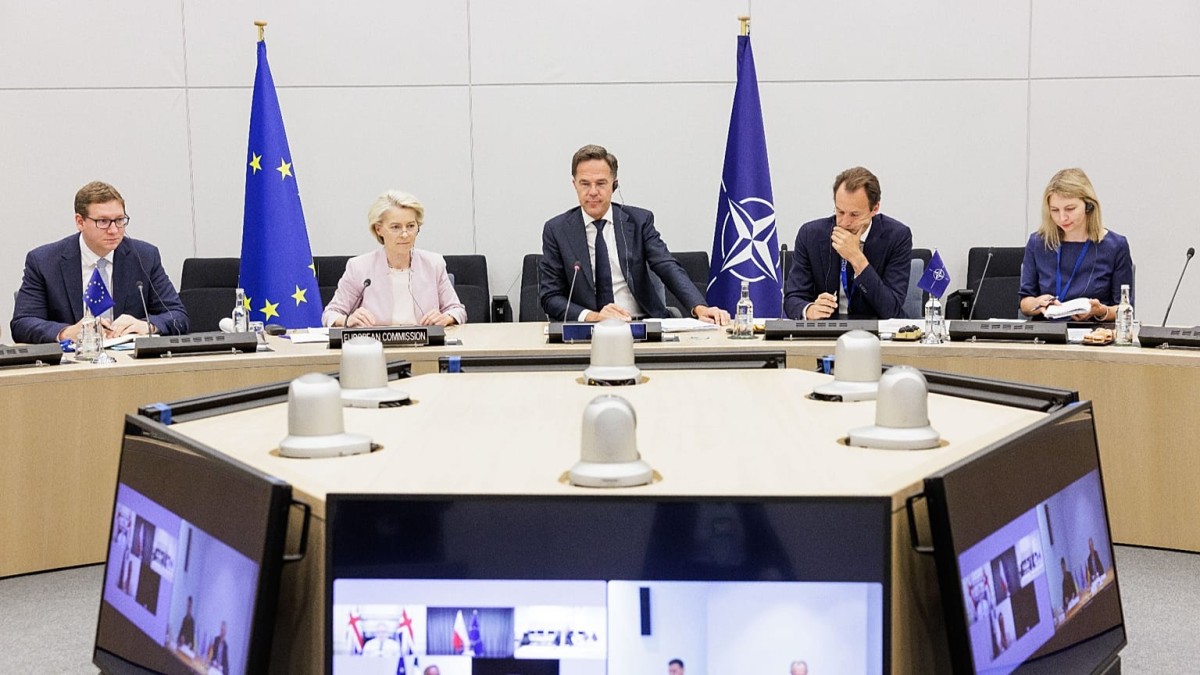
European leaders moved quickly to close ranks behind Germany following the formal accusation. European Commission President Ursula von der Leyen issued a statement declaring that the EU stands in "full solidarity" with Germany and warning that "hybrid attacks will not go without a clear response." Von der Leyen subsequently met with NATO Secretary-General Mark Rutte to coordinate the alliance's response, with Rutte issuing his own statement affirming that NATO stands in solidarity with Germany. The coordinated messaging from Brussels and NATO headquarters reflected a recognition that the Leipzig attack represented not merely a bilateral issue between Germany and Russia, but a challenge to the entire European security architecture. EU foreign ministers were reported to be preparing additional sanctions packages targeting Russian entities and individuals suspected of involvement in hybrid operations across the continent.
EU foreign policy chief Kaja Kallas delivered a more pointed assessment following an EU defence ministerial meeting in Wicklow, Ireland. Kallas said Russia is using "kinetic hybrid" incidents to "scare us away" from supporting Ukraine, adding emphatically: "They will not succeed." She also offered a rare moment of self-criticism, acknowledging that "clearly we are not doing enough to stop this." The context for her remarks was sobering: Ireland's foreign minister Helen McEntee cited incursions reported by Romania, Latvia, Estonia and Germany within the previous 24 hours, painting a picture of coordinated pressure across multiple fronts. The same day that Germany formally blamed Russia for the Leipzig attack, police in Brandenburg discovered improvised explosive and incendiary devices at a power substation, with a power line damaged and causing a temporary outage. The culprit remained unknown, but the timing and location suggested a deliberate attempt to disrupt German infrastructure.
Estonia's defence minister Hanno Pevkur offered a stark assessment of Moscow's strategy, telling reporters: "They are always testing this threshold — where is this red line." His words captured the central challenge facing European leaders: how to respond to attacks that are deliberately designed to remain below the threshold of conventional warfare, allowing Russia to maintain plausible deniability while inflicting cumulative damage on European security and public confidence. The pattern of incidents across multiple countries within a compressed timeframe suggested a coordinated campaign rather than isolated actions, raising questions about whether European intelligence services are adequately sharing information and coordinating responses to what appears to be a systematic Russian strategy of attrition through hybrid means.
Moscow's Denial and a Cultural Counter-Blow
The Kremlin's response to Germany's formal accusation was swift and dismissive. Russian President Vladimir Putin accused Berlin of planting evidence to blame Moscow and of seeking to distract from domestic problems, according to statements carried by Russian state media. The Russian embassy in Berlin called the allegation "absurd," echoing the denial it had issued on 7 August when US intelligence first pointed the finger at Moscow. Russian Foreign Ministry officials complained that Germany had reached its conclusion before the investigation was complete, suggesting that Berlin was driven by political considerations rather than evidence. The categorical nature of the denial, combined with the absence of any offer to cooperate with the German investigation, was consistent with Moscow's established pattern of responding to accusations of hybrid warfare: deny everything, counter-accuse, and seek to portray the accuser as motivated by anti-Russian bias.
On 3 September, Russian Foreign Minister Sergey Lavrov delivered a more substantive response from the Eastern Economic Forum in Vladivostok, announcing that Russia would close Goethe-Institut cultural centres in Moscow, St Petersburg and Yekaterinburg. Lavrov argued that Germany "could not have failed to understand" that closing Russian House in Berlin would "signify the end of their cultural presence in Russia." The reciprocal logic of the exchange was unmistakable: Moscow was signalling that any German action against Russian cultural institutions would be met with symmetrical retaliation against German cultural presence in Russia. The Goethe-Institut, which has operated in Russia for decades promoting German language and culture, became collateral damage in a diplomatic confrontation that had escalated from drone attacks to the realm of soft power and cultural diplomacy.
German media reports, citing investigators from NDR, WDR and Süddeutsche Zeitung, indicated that the investigation into the Leipzig attack was focusing on two men from Belarus and Lithuania who also hold Russian passports. The involvement of individuals with multiple nationalities highlighted the challenge of attribution in hybrid operations, where operatives can move across borders and exploit the complexities of European visa regimes and citizenship laws. Analysts suggest that Russia's use of operatives with Belarusian and Lithuanian connections reflects a deliberate strategy of obscuring the chain of command and complicating any legal or diplomatic response. The difficulty of proving state involvement beyond reasonable doubt, particularly when operatives may have acted through intermediaries, remains a central obstacle to holding Moscow accountable for attacks that European intelligence services believe are orchestrated at the highest levels of the Russian state.
An Election-Day Backdrop: The Far Right Watches
As Germany's political establishment absorbed the implications of the formal accusation against Russia, voters in the eastern state of Saxony-Anhalt prepared to go to the polls on 6 September in an election that could reshape the country's political landscape. The far-right Alternative for Germany (AfD), led in the state by Ulrich Siegmund, is polling near 40 percent, while the incumbent CDU under Sven Schulze trails around 20 percent. An outright AfD majority would make Siegmund the first far-right state premier in Germany's post-war history, a prospect that has sent shockwaves through the political establishment in Berlin. The AfD is classified as right-wing extremist by the state's domestic intelligence service, yet its support has proven resilient, particularly in the former GDR region where economic grievances and cultural identity politics have fuelled its rise.
The AfD's platform in Saxony-Anhalt includes boosting Russian-language learning and re-establishing ties with Russia in the former GDR region, positions that have taken on new significance in the wake of the Leipzig attack. The party has accused the authorities of double standards, pointing to German prosecutors' allegation that a Ukrainian acted on behalf of Ukrainian state authorities in the Nord Stream sabotage — an accusation Kyiv denies. The AfD's narrative of equivalence — that Ukraine and Russia are equally culpable for sabotage operations — resonates with voters who harbour nostalgia for the GDR era and view the current government's support for Ukraine as a betrayal of German interests. Siegmund has also expressed openness to abolishing the state office protecting the constitution, the very institution that classified his party as extremist, raising concerns about the erosion of democratic safeguards if the AfD were to take power.
The drone attack and the Nord Stream double-standards argument have fed the AfD narrative in the election's final hours, with the party portraying itself as the only political force willing to challenge the mainstream consensus on Russia. The firewall question — whether other parties can keep the far right from government — has become the central drama of the campaign, with the CDU, SPD, Greens and Left all ruling out coalitions with the AfD. Yet if the AfD secures an outright majority, the firewall becomes moot, and Germany would face the unprecedented prospect of a far-right state government in a region that was once part of communist East Germany. The election outcome will be watched closely across Europe, where the rise of far-right parties in France, the Netherlands and elsewhere has already complicated the EU's unified response to Russian aggression.
Analysis: Testing the Red Line
The Leipzig attribution reveals how significantly Russia's hybrid toolkit has evolved over the past decade. The shift from espionage, disinformation and cyber operations toward physical sabotage inside NATO territory represents a qualitative escalation, targeting not merely information systems but the logistics chain that sustains Ukraine's defence. The use of sophisticated drones equipped with remote-control technology and military-grade explosives suggests that Moscow has moved beyond deniable operations conducted by proxies toward direct attacks that, while carefully designed to avoid unambiguous attribution, nonetheless carry the hallmarks of state sponsorship. The targeting of Leipzig/Halle, with its role in NATO's Strategic Airlift International Solution, indicates that Russian planners are seeking to disrupt the alliance's ability to supply Ukraine with weapons and ammunition, potentially as part of a broader strategy to weaken Western resolve as the war in Ukraine grinds on.
The European dilemma is how to respond without escalating into direct confrontation with a nuclear-armed state. The sanctions track, consular expulsions and diplomatic measures announced by Germany and coordinated with EU partners represent a calibrated response, but their effectiveness in deterring future attacks remains uncertain. The fundamental problem is that hybrid attacks are designed to be deniable, allowing Russia to maintain a degree of ambiguity that complicates any proportional response. Pevkur's warning that Moscow is probing where the red line lies suggests that Russian planners are deliberately testing the limits of European tolerance, seeking to identify the threshold at which the alliance would be forced to respond with conventional military force. The danger is that Moscow miscalculates, or that European patience wears thin, leading to an escalation that neither side intended.
The domestic German dimension adds another layer of complexity. The Saxony-Anhalt election, taking place days after the formal accusation against Russia, has become a referendum on the government's handling of the crisis and its broader policy toward Moscow. The AfD's rise, fuelled by public anger over security failures and economic anxieties, threatens to destabilise the political consensus that has underpinned Germany's support for Ukraine. The party's platform of re-establishing ties with Russia and dismantling what it calls a "guilt culture" resonates with voters who feel abandoned by the political establishment and resentful of the costs imposed by sanctions and military aid. The drone attack, rather than strengthening public support for a firm line against Moscow, may have inadvertently boosted the far right by exposing the government's inability to protect German citizens from hybrid threats.
Looking ahead, more hybrid incidents are likely. The pattern of attacks across Romania, Latvia, Estonia and Germany within a single 24-hour period suggests that Moscow has developed a playbook for coordinated pressure that can be deployed at will. The question is whether Europe's response will match the scale of the threat, or whether the alliance will continue to react piecemeal to incidents that are deliberately designed to remain below the threshold of conventional warfare. The Leipzig attack may ultimately be remembered not as an isolated incident but as the moment when European leaders were forced to confront the uncomfortable reality that hybrid warfare has become a permanent feature of the continent's security landscape — and that the tools developed for the Cold War era are insufficient to meet the challenges of a new form of conflict that blurs the lines between peace and war, state and non-state actors, and military and civilian targets.
By Irina Volkov, Staff Writer
This article was produced with AI-assisted research and editorial support. Reporting is based on sources cited in the article.
What's Your Reaction?
 Like
0
Like
0
 Dislike
0
Dislike
0
 Love
0
Love
0
 Funny
0
Funny
0
 Wow
0
Wow
0
 Sad
0
Sad
0
 Angry
0
Angry
0

Russia/Eastern Europe Correspondent at Global1.News. Covering Russian politics, energy, security, and the shifting dynamics of the post-Soviet space. Provides clear-eyed analysis on one of the world's most opaque regions.














Comments (0)