
Kremlin Calls Talks With U.S. Envoys 'Highly Useful' as Peace Envoys Head to Kyiv
Kremlin foreign policy aide Yuri Ushakov called Saturday's three-hour Moscow talks with U.S. envoys Steve Witkoff and Jared Kushner 'highly useful' but gave no sign of a breakthrough, as the pair headed to Kyiv to meet Ukrainian President Volodymyr Zelensky on Sunday.
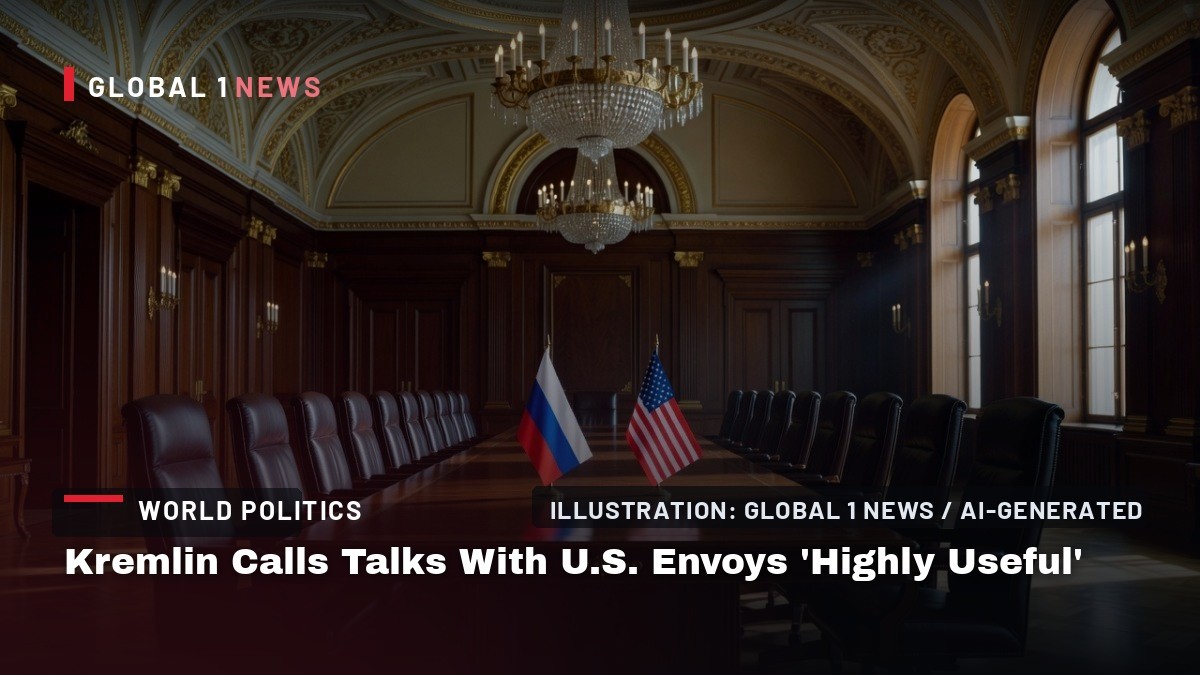
Moscow's diplomatic machinery shifted into high gear this weekend as two senior American envoys sat down with President Vladimir Putin for more than three hours inside the Kremlin, a meeting both sides are now framing as a substantive step forward even as the war grinds into its fifth year with no end in sight. The talks, which Kremlin foreign policy aide Yuri Ushakov described as "highly useful," come against a backdrop of intensified aerial bombardment, Ukrainian drone strikes on Russian infrastructure, and a widening gulf between the two capitals over the terms of any potential settlement.
Kremlin Calls Talks With U.S. Envoys 'Highly Useful' as Peace Envoys Head to Kyiv
Moscow, Russia - The Kremlin on Saturday hosted Steve Witkoff and Jared Kushner, two envoys dispatched by U.S. President Donald Trump, for marathon negotiations that stretched past the three-hour mark. The Americans arrived carrying what Trump described on Friday as a fresh, concrete proposal to end the war, though neither side has disclosed its contents. Following the meeting, the envoys flew directly to Kyiv, where they were scheduled to meet Ukrainian President Volodymyr Zelensky on Sunday in their first joint visit to the Ukrainian capital for negotiations.
Three Hours at the Kremlin
The meeting took place in an atmosphere of carefully choreographed cordiality, with Putin opening the session by praising Trump's persistence. "Understanding that he is entering a difficult situation, he nevertheless does not stop his efforts to help bring about a settlement and to make his contribution to resolving the Russian-Ukrainian conflict," Putin said in televised remarks at the start of the talks, according to Reuters.
Present alongside Putin were Ushakov and Kirill Dmitriev, the president's investment envoy who has emerged as a key back-channel figure in U.S.-Russia contacts. Dmitriev, who helped negotiate U.S. sanction waivers for Russian oil earlier this year, posted on X that the meeting had been an "important peacemaking visit." The presence of both men underscores the dual-track nature of the discussions - diplomatic and economic - that Moscow appears eager to advance simultaneously.
'Useful' - But No Breakthrough
Speaking to reporters after the talks, Ushakov offered a carefully calibrated assessment that signaled progress without promising a breakthrough. "The talks went beyond a mere exchange of views on resolving the Ukrainian crisis," Ushakov said. "Economic issues and potential major, mutually beneficial Russian-American projects were discussed in some detail... Overall, one can say that the negotiations were timely and highly useful for both sides."
Ushakov said the Americans "outlined a number of ideas regarding possible avenues for a settlement," though he declined to specify what those ideas were. He added that Putin told the pair Russia was making "real progress" on the battlefield and was confident of achieving its goals, while stressing the necessity of addressing "all the root causes of the conflict" - a formulation Moscow has repeated since the full-scale invasion began in February 2022.
A White House official, speaking to Reuters on condition of anonymity, described the talks as "substantive" and said next steps would be announced in the coming weeks. The carefully worded responses from both sides suggest that while channels of communication remain open, the fundamental disagreements that have blocked progress for months remain unresolved.
The Economic Track Beneath the Diplomacy
Beneath the surface of the political negotiations lies a parallel economic track that analysts say could prove equally significant. Dmitriev's presence at the talks - and his history of negotiating sanction waivers for Russian oil exports - points to Moscow's interest in leveraging the diplomatic moment to secure economic relief.
Ushakov's reference to "mutually beneficial Russian-American projects" hints at discussions that extend far beyond the battlefield. Dmitriev told Reuters in June that he had stayed in contact with U.S. negotiators during a pause in visits, maintaining a channel that now appears to have borne fruit. For Moscow, the prospect of sanctions relief and renewed economic engagement with Washington represents a tangible prize that could help offset the mounting costs of a prolonged war.
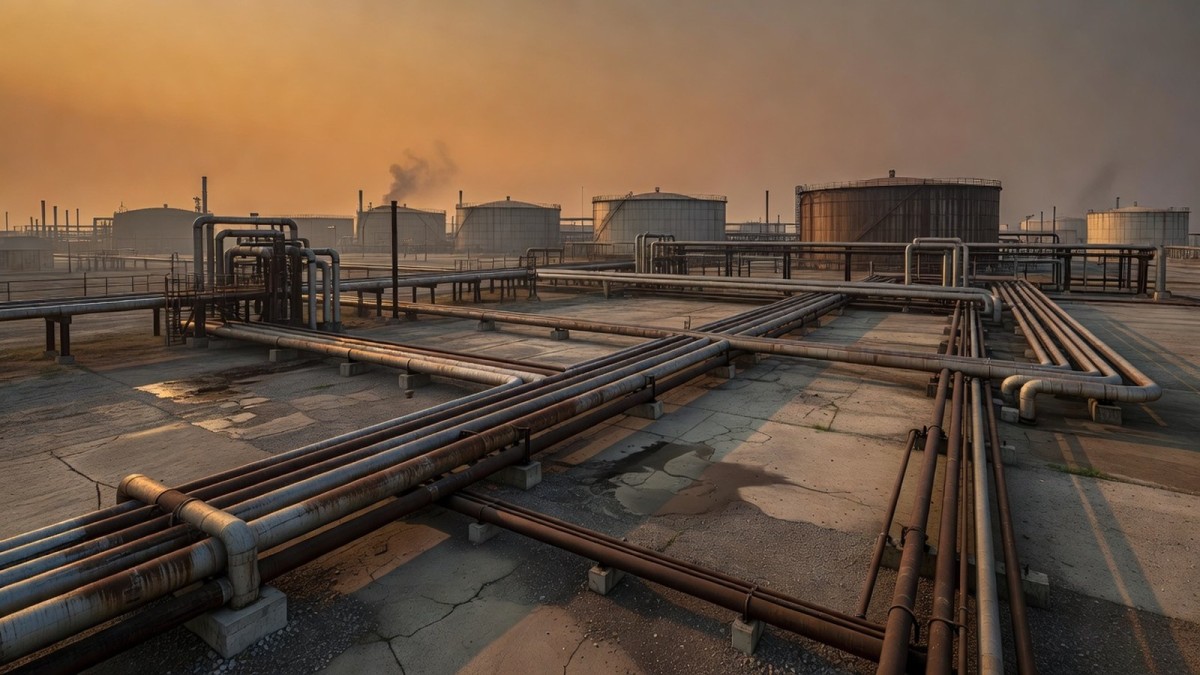
For ordinary Russians, the economic stakes are immediate. Ukrainian drone strikes on Russian refineries, oil terminals and warehouses of the online retailer Wildberries - approximately 30 attacks on Wildberries facilities alone - have driven up fuel prices and created shortages for motorists across the country. Any relaxation of U.S. sanctions could ease some of these pressures, though analysts caution that the economic track remains subordinate to the political impasse.
A 72-Hour Silence Over Kyiv
The diplomatic choreography extended to the battlefield itself. Kremlin spokesman Dmitry Peskov announced that Putin had ordered the Russian military not to strike Kyiv for three days - a 72-hour pause - to ensure the safety of the U.S. negotiators during their visit. Putin promised to guarantee the security of the American envoys, a commitment that temporarily halted the aerial assault on the Ukrainian capital.
The pause came after 10 consecutive days of heavy attacks on Kyiv, including a strike on Friday on the headquarters of the SBU security service. The bombardment had been relentless, with missiles and drones pounding the city day and night. Zelensky, who has ordered a "tangible response" to the attacks, posted on X on Saturday that Russia had hit two Ukrainian airports ahead of the envoys' visit, a move widely interpreted as an attempt to maximize leverage before negotiations began.
The Ukrainian president has vowed retaliation, and the 72-hour pause over Kyiv does little to address the broader pattern of escalation that has defined recent weeks. Both sides have intensified long-range air attacks deep inside each other's territory, and the war at sea has escalated, raising the stakes for any potential settlement.
The Battlefield Reality
On the ground, the front lines remain largely static, with Russia making only gradual gains in its attempt to seize the entirety of Ukraine's Donbas region. The war, now the deadliest in Europe since World War II, has settled into a grinding war of attrition in which territorial advances are measured in meters rather than kilometers.
A source close to the Kremlin, speaking before reports of the U.S. envoys' trip emerged, said Putin remained intent on capturing more territory. "There is no chance of reaching an agreement regarding the front line until Putin finishes securing the remaining part of the Donetsk region," the source said. The source added that Putin was confident, based on commanders' reports, that this would happen by the end of 2026 - a timeline Western military analysts view as remote given Moscow's slow rate of progress.
Ukraine has sought to counter Russian advances on the battlefield with strikes deep inside Russian territory, targeting the economic infrastructure that sustains the war effort. The attacks on refineries and oil terminals have created visible strains for Russian civilians, with fuel shortages and rising prices becoming an increasingly sensitive political issue.
Moscow's 'Unshakeable' Maximalism
The Kremlin's public position remains maximalist. On Friday, the Kremlin reiterated that the stance Putin set out two years ago - that Ukraine should cede the entire territory of the four regions Russia claims and abandon its plan to join NATO - was "unshakeable." This position, repeated through official channels, leaves little apparent room for compromise.
Ushakov's statement that Putin stressed the need to address "all the root causes of the conflict" echoes this maximalist framing, suggesting that Moscow sees the current moment not as an opportunity for concession but as a chance to cement its gains. The reference to root causes is code, analysts say, for Russia's demand that Ukraine's security orientation be fundamentally reordered and that Western military presence in the region be rolled back.
For Kyiv, these terms remain unacceptable. Zelensky has consistently rejected any settlement that would formalize Russian control over Ukrainian territory or compromise Ukraine's sovereign right to determine its own security arrangements. The vast gulf between these positions - and the absence of any indication that either side has moved - suggests that the path to a negotiated settlement remains long and uncertain.
Analysis: Why 'Useful' Is Not a Breakthrough
The carefully chosen language from both Moscow and Washington appears designed to manage expectations while keeping channels open. When Ushakov describes talks as "highly useful," he is signaling that dialogue continues - not that an agreement is imminent. Similarly, the White House's characterization of the talks as "substantive" suggests engagement without commitment.
This framing appears designed to serve multiple purposes. For Putin, the meeting with U.S. envoys provides a platform to project Russia as a global power engaged in serious diplomacy, even as the war continues. For Trump, the visit offers an opportunity to demonstrate progress on a campaign promise to end the conflict. For Zelensky, the envoys' trip to Kyiv provides a chance to ensure that Ukraine's voice is heard in any negotiations that might follow.
The 72-hour pause over Kyiv, while significant in humanitarian terms, also carries symbolic weight. By ordering the military to stand down, Putin signals that he can control the tempo of the war - and that he expects something in return. Whether the United States and Ukraine are prepared to offer the concessions Moscow seeks remains an open question.
What Happens Next
The immediate focus now shifts to Kyiv, where Witkoff and Kushner were due to meet Zelensky on Sunday. This first joint visit to the Ukrainian capital for negotiations will test whether the ideas outlined in Moscow can gain traction with a Ukrainian leadership that has repeatedly insisted on its red lines.
The White House has said next steps will be announced in the coming weeks, leaving room for further diplomatic maneuvering. What to watch in the interim: whether the 72-hour pause over Kyiv is extended or followed by a resumption of strikes; whether Ukraine's promised "tangible response" to the airport attacks materializes; and whether the economic track discussed in Moscow produces any concrete outcomes.
For ordinary Russians, the immediate consequences of this diplomatic activity may be minimal. The war continues, the sanctions remain, and the economic pressures that have built up over years of conflict show no signs of abating. But the fact that senior American envoys spent three hours in the Kremlin - and that both sides emerged speaking of progress - suggests that the diplomatic channel, however fragile, remains very much alive.
By Irina Volkov, Staff Writer
This article was produced with AI-assisted research and editorial support. Sources: The Moscow Times (Reuters), The Hill, Business Times, RNZ.
What's Your Reaction?
 Like
0
Like
0
 Dislike
0
Dislike
0
 Love
0
Love
0
 Funny
0
Funny
0
 Wow
0
Wow
0
 Sad
0
Sad
0
 Angry
0
Angry
0
Russia/Eastern Europe Correspondent at Global1.News. Covering Russian politics, energy, security, and the shifting dynamics of the post-Soviet space. Provides clear-eyed analysis on one of the world's most opaque regions.










Comments (0)