
Gaza Resignation: Ex-Diplomat Speaks Out on US Policy
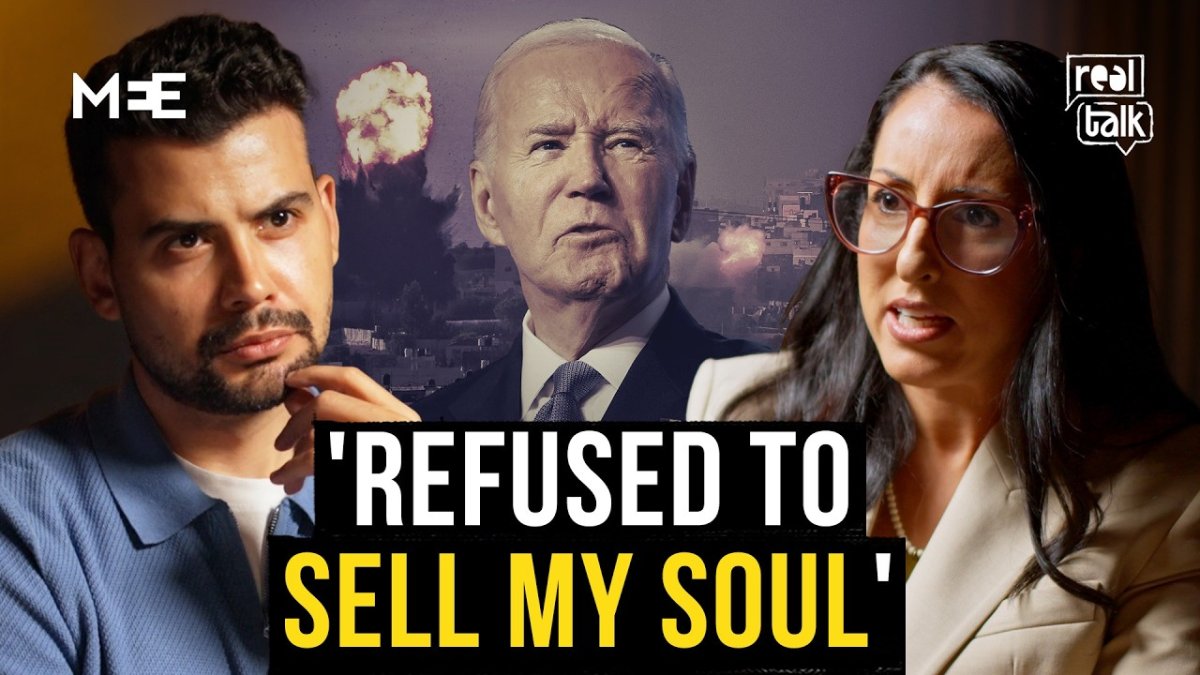
In a recent Middle East Eye interview, former US State Department diplomat Hala Rharrit described the moment she knew she could no longer defend American policy in Gaza — a red line drawn after 18 years of service across five countries and multiple administrations.
In a recent Middle East Eye interview, former US State Department diplomat Hala Rharrit described the moment she knew she could no longer defend American policy in Gaza — a red line drawn after 18 years of service across five countries and multiple administrations. Speaking with host Mohamed Hashem on the outlet's "Real Talk" program, Rharrit offered a rare, unflinching look inside the machinery of US diplomacy during the war, and the personal cost of refusing to be its voice.
Gaza Resignation: Ex-Diplomat Speaks Out on US Policy
Washington, DC – 28 August 2026 — Hala Rharrit, who in April 2024 became the first US Foreign Service officer to publicly resign over the war in Gaza, sat down with Middle East Eye to detail the reports she says were sent to the Biden administration, the talking points she refused to read, and her belief that the administration's Gaza policy cost Vice President Kamala Harris the 2024 presidential election. The interview, published on 26 August 2026, comes as former Biden officials have begun to publicly acknowledge they should have done more to prevent the scale of death and destruction in the enclave.
A Diplomat's Red Line
Rharrit's career in the US Foreign Service spanned 18 years, with postings in Yemen, Hong Kong, Qatar, South Africa, and the United Arab Emirates. Her most recent role was Arabic-language spokesperson for the State Department and deputy director of the Dubai Regional Media Hub — a position that placed her at the frontline of communicating American policy to Arab audiences. It was precisely that role, she told Middle East Eye, that forced her to confront the gap between what she was asked to say and what she knew to be true.
"We have the receipts," Rharrit said in the interview, describing internal reports and assessments that she says were transmitted to the Biden administration warning of the humanitarian consequences of the military campaign in Gaza. She described the decision to resign as agonising — a choice between a career she had built over nearly two decades and her own moral compass. In the end, she said, Gaza was her red line.
The Reports and the Talking Points
Central to Rharrit's account is the claim that she was handed talking points to defend US policy on Gaza to the Arab world — and that she refused to read them. The talking points, she said, were designed to frame the administration's position in a way that she found indefensible. Her refusal was not a spontaneous act of defiance but the culmination of months of internal dissonance, as she watched the gap widen between diplomatic language and on-the-ground reality.
Rharrit told Middle East Eye that reports from within the US government and from international partners painted a far grimmer picture than the public messaging suggested. She did not specify the exact contents of those reports in the interview, and figures were not immediately available, but her broader point was unambiguous: the administration had access to information that should have changed its course. Instead, she said, the policy continued, and she could no longer be the person tasked with explaining it.
Resignations and Dissent Inside the State Department
Rharrit was not alone in her dissent, though she was the first to resign publicly. Annelle Sheline, a State Department official, and Josh Paul, who served in the Bureau of Political-Military Affairs, also stepped down over the administration's Gaza policy. Their resignations, coming in the months after the war began in October 2023, marked an unusual public rupture within a department known for its institutional loyalty and internal discipline.
In the Middle East Eye interview, Rharrit reflected on the significance of these departures, noting that they represented a broader unease within the foreign policy establishment that rarely surfaces in public. She also addressed the recent statements from former Biden officials who have since said they should have done more on Gaza — a development she described as welcome but overdue. For Rharrit, the question is not whether officials now regret their choices, but whether those regrets translate into changed behaviour in the next administration.
Policy and Its Human Cost in Gaza
The interview also touched on specific allegations that have circulated throughout the war, including claims about a US bombing of an elementary school in Gaza. Rharrit did not provide new evidence in the interview, but she used the allegation to illustrate a broader point about the nature of the US role in the conflict. She argued that the provision of weapons and diplomatic cover made the United States a party to the war, not a neutral observer — a position that puts American policy at odds with much of world opinion.
For Palestinians in Gaza, the stakes of this debate are not abstract. The war has displaced nearly the entire population of the enclave, destroyed much of its civilian infrastructure, and created a humanitarian crisis that international agencies have struggled to address. Rharrit's account of internal dissent within the US government offers a rare glimpse into the decision-making that shaped those outcomes — and a reminder that the human cost of policy is borne far from the corridors of Washington.
The Election Reckoning
One of the most striking claims in the interview is Rharrit's assertion that the Biden administration's Gaza policy contributed to Kamala Harris losing the 2024 US election. She pointed to the erosion of support among Arab American voters in key swing states, as well as broader concerns among young voters and progressives who saw the administration's stance as a moral failure. The loss, she suggested, was not a political accident but a direct consequence of choices made in the White House and State Department.
Rharrit's analysis aligns with post-election assessments that identified Gaza as a significant factor in Democratic losses, particularly in Michigan, where Arab American voters played a decisive role. Whether that interpretation holds up to historical scrutiny remains to be seen, but her point is clear: policy has consequences, and those consequences extend beyond the battlefield to the ballot box.
What Comes Next
Looking ahead, Rharrit expressed deep concern about the future of the US-Israel relationship, particularly in light of the war between Israel and Iran that has further destabilised the region. She argued that the United States faces a choice between continuing to back Israeli military action unconditionally and recalibrating its approach to reflect a more balanced understanding of the conflict. The interview did not offer easy answers, but it underscored the urgency of the moment.
For the people of Gaza, the question of what comes next is not academic. They live with the consequences of decisions made in Washington and Tel Aviv every day — in the rubble of their homes, the scarcity of food and water, and the uncertainty of their future. Rharrit's testimony is a reminder that those decisions were not inevitable, and that the voices of dissent inside the US government, however few, were raised in the hope of a different outcome. Whether that hope is realised will depend on whether the lessons of this war are learned — or repeated.
By Fatima Al-Rashid, Staff Writer
This article was produced with AI-assisted research and editorial support. Sources: Middle East Eye, TRT World, Al Majalla, Yale Daily News.
What's Your Reaction?
 Like
0
Like
0
 Dislike
0
Dislike
0
 Love
0
Love
0
 Funny
0
Funny
0
 Wow
0
Wow
0
 Sad
0
Sad
0
 Angry
0
Angry
0

Gulf/MENA Correspondent at Global1.News. Based in Doha, covering Gulf politics, energy markets, diplomacy, and development across the Middle East and North Africa. Tracks the economic transformation of the Gulf states.











Comments (0)