
The $200 Billion Data Center IPO Wave Is Coming — and the Books Are About to Open
Vantage Data Centers is exploring a $100 billion IPO, Switch filed for an $80 billion listing, and DayOne and CyrusOne are close behind. Nearly $200 billion in AI infrastructure is heading for public markets — and the sector's real economics are about to be exposed.
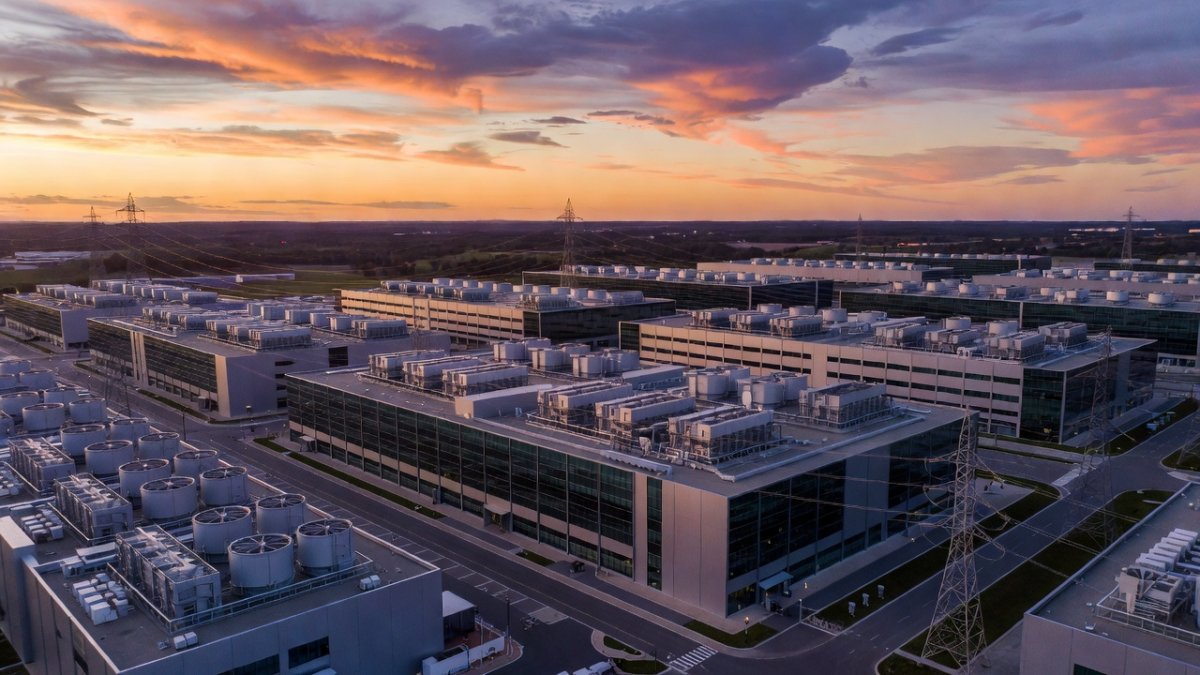
The $200 Billion Data Center IPO Wave Is Coming — and the Books Are About to Open
Let me tell you something that should be on every hosting provider's radar this week. In the last month, four of the biggest private data center companies on the planet lined up to go public: Vantage at a hundred billion, Switch at eighty, DayOne at twenty, and CyrusOne not far behind. Add it up and you're looking at roughly $200 billion in AI infrastructure heading for the public markets — the largest wave of data center listings in history. And almost nobody in the mainstream coverage is asking the question that actually matters: what happens when these private giants are forced to open their books?
I've been running hosting infrastructure for over a decade. I've watched the AI buildout get financed in the dark — private debt, private equity, off-balance-sheet leases, dollar figures that never see a filing cabinet. That era is ending. When Vantage, Switch, DayOne, and CyrusOne land on a public exchange, the sector's real economics become public record for the first time. That's not a footnote. That's the biggest market signal of this entire cycle.
The Wave — Four Giants, One Exit Ramp
Start with Vantage Data Centers. Reuters broke it Thursday: the Denver-based operator — backed by Silver Lake and DigitalBridge, with 40-plus campuses and more than three gigawatts of capacity — is exploring an IPO at a valuation around $100 billion, or a straight-up sale. A listing could raise roughly $10 billion. That would make it the largest data center IPO in history. No data center company has ever gone public at a valuation anywhere near that number. Ent?
Then there's Switch. The Las Vegas operator got taken private in 2022 for $11 billion. Four years later, it has quietly filed for a US IPO that could value it near $80 billion — a near-sevenfold increase. Goldman Sachs and JPMorgan are running it. Bloomberg says the listing could land as soon as the fourth quarter of this year, raising up to $10 billion.
DayOne Data Centers, the Singapore operator spun out of GDS Holdings, confidentially filed in the last two weeks. JPMorgan and Morgan Stanley are leading. Sources put the raise around $5 billion at a valuation near $20 billion, with a listing possible as soon as next quarter. And CyrusOne — the Dallas REIT that KKR and Global Infrastructure Partners took private in 2021 for $15 billion — is already taking pitches from banks for an IPO as early as 2027, a deal that could raise another $5 billion.
Four companies. Four different ownership groups. One exit ramp.
The Exit Clock — Why This Wave Was Always Coming
Here's what the hype coverage won't tell you: this wave isn't about AI demand being so great that these companies suddenly want to share the wealth. It's about the private equity clock. Silver Lake has been in Vantage since 2020. KKR and GIP bought CyrusOne at roughly 25 times EBITDA. Switch went private at $11 billion in 2022. These funds need to return capital to their limited partners, and the only way out is an exit — an IPO or a sale. The AI buildout has been financed by people who need to cash out. That's not a conspiracy. That's just how the machine works.
The problem is timing. This wave is landing at the exact moment the debt market is starting to blink. Meta just paid 7.5% to borrow $12.5 billion. Data center debt issuance hit $334.5 billion year-to-date — and that's before you count the $1.65 trillion in off-balance-sheet obligations nobody can see. Nebius is burning $20 to $25 billion in capex against $3 billion in revenue. The private credit window is still open, but the price of that money keeps going up. So the industry is doing what every leveraged industry does when rates rise: it's trying to refinance from debt to equity. The IPO wave is the refinancing event.
The Transparency Shock — What the S-1s Will Finally Reveal
And this is where it gets interesting for the rest of us. For three years, the AI infrastructure sector has been financed in private markets where nobody sees the actual numbers. The public S-1 filings are about to change that. When Switch and Vantage file, we'll finally see what hyperscalers actually pay per megawatt. We'll see the power contracts, the cancellation clauses, the customer concentration — and believe me, the concentration is going to be ugly. Vantage's whole model is hyperscaler tenancy. A handful of tenants. That's not diversification, that's key-person risk the size of a data center.
We'll also see what these companies book as EBITDA against what they actually spend on power, on construction, on grid interconnection. The phantom gigawatt problem is real — Wood Mackenzie found that only 28% of the 1,066 gigawatts in the interconnection queue is actually committed. The S-1s are where the gap between announced and real starts showing up in audited numbers. When the public market sees the true economics of the AI buildout — the leverage, the concentration, the power costs — the repricing is going to be fast. That's the transparency shock I keep talking about.
Let Me Be Fair to the Bulls
Now let me give you the other reading, because it isn't stupid. A wave of successful listings could mean the sector is maturing. Real companies with real revenue, moving from private gambling to public scrutiny — that's what a healthy capital market does. Equinix and Digital Realty have been public for two decades and the world didn't end. Maybe Vantage at $100 billion is just the market finally pricing in that data centers are the new oil refineries, and the AI buildout has decades of runway left.
I'll grant part of that. The infrastructure is real. The power is real. The demand from hyperscalers is real — for now. But here's the catch: the public market doesn't do patience. It does quarters. These companies are about to trade under the same microscope that punished Google's stock for raising capex to $205 billion, that crushed AI names on any sign of margin compression. The private era hid the bad news. The public era will surface it every single quarter. When your power costs spike, when a hyperscaler cancels 200 megawatts of leases, the market will know before your customers do. That discipline is exactly what the buildout has been missing — and exactly what's about to bite.
What This Means for Independent Hosting Providers
First: read every S-1 when it drops. This is the cheapest market intelligence you will ever buy. When Switch and Vantage file, their prospectuses become public documents — free. You'll finally see the per-megawatt lease rates, the power costs, the cancellation terms that the industry has kept private for years. Price your own colo against those numbers, not against rumors.
Second: watch Switch's fourth-quarter pricing as the canary. It's the first listing in the wave, and it's the test of whether the public market will pay $80 billion for data center equity. If Switch prices below range, or trades down in the first weeks, every other valuation in the sector resets — including the lease rates you can charge.
Third: get your own books clean now. The transparency wave is coming for everyone. When the giants start disclosing power costs and cancellation rates in public filings, your customers will start asking your shop the same questions. Have your numbers ready — your power usage effectiveness, your uptime, your real cancellation history. The operators who look clean in a transparent market win.
Fourth: don't price off the PE-era comps. The private era inflated every number in this sector. The public era will force rate discipline on the giants — they'll need to push prices up to protect public margins, which makes independent hosting more attractive by comparison. Position yourself as the transparent, capital-light alternative while the giants learn to live in the sunlight.
The Structural Reality
This isn't a blip. It's the natural next phase of the AI capital cycle: private debt built the machine, private equity owns the machine, and now the public market is being asked to buy the machine. Nearly $200 billion in listings — Vantage at $100 billion, Switch at $80 billion, DayOne at $20 billion, CyrusOne another $5 billion — is the largest repricing event in the history of this industry. The PE funds need exits, and the IPO window is their only door.
The risk is that the public market doesn't like what it sees when the books open. And the books, my friends, have never been opened.
The Bottom Line
I've said it before and I'll say it again: this isn't a warning about something that might happen. It's happening right now. Four of the biggest names in data centers are heading for public markets within the next twelve months, and with them comes the first real transparency this sector has ever had. For independent hosting providers, that's not a threat — it's the best competitive advantage you've been handed since this whole thing started. The giants are about to operate in the sunlight. You already do. Use it.
— Allan Ali, Founder
This article was produced with AI-assisted research and editorial support. Sources: Reuters (Aug 13, 2026), Bloomberg (Aug 7 and Aug 11, 2026), The Straits Times (Aug 2026), SiliconANGLE (Aug 13, 2026), QZ, Data Center Dynamics, Globest.
What's Your Reaction?
 Like
0
Like
0
 Dislike
0
Dislike
0
 Love
0
Love
0
 Funny
0
Funny
0
 Wow
0
Wow
0
 Sad
0
Sad
0
 Angry
0
Angry
0

Publisher of Global1.News. Automation architect, systems builder, and the guy making sure the truth gets published.














Comments (0)