
FGR Raids Huachicol Sites and Seizes Over 1 Million Liters of Fuel
FGR Announces Coordinated Raids on Four Illicit Fuel Sites The Federal Attorney General's Office announced on Tuesday, August 4, 2026, that it had dismantled four properties used as alleged illicit fuel processing centers in three states.
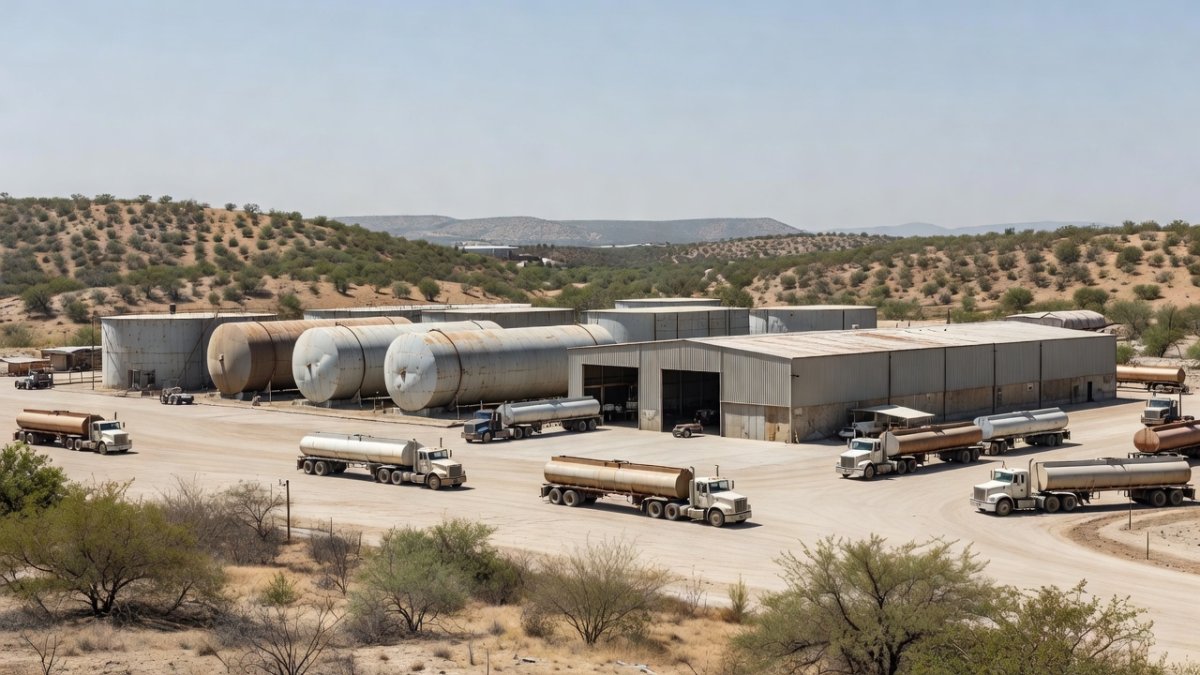
FGR Announces Coordinated Raids on Four Illicit Fuel Sites
The Federal Attorney General's Office announced on Tuesday, August 4, 2026, that it had dismantled four properties used as alleged illicit fuel processing centers in three states. The operation targeted sites in San Luis Potosí, Tizayuca in Hidalgo, and Cuautla in Morelos, striking at networks involved in the illegal fuel trade known locally as huachicol.
Authorities worked in coordination with the federal Security Cabinet and PEMEX Logística to secure the locations. The raids followed a series of anonymous complaints that pointed investigators toward the properties. All four sites appeared abandoned at the time of the operation, and no arrests were reported.
In three of the four facilities, officials located approximately 1,096,000 liters of various petroleum products, mostly diesel. The FGR placed the estimated market value of the seized hydrocarbon at 29.5 million pesos, calculated using an average diesel price of about 27.039 pesos per liter at gas stations.
The announcement highlighted the scale of the recovery by comparing it to everyday supports that reach Mexican households. The value equals roughly 4,619 bimonthly payments of the Pensión del Bienestar for older adults, each worth 6,400 pesos, or about 32,500 basic food baskets valued by Profeco at around 910 pesos each.
Site-by-Site Details Reveal Extensive Storage Infrastructure
In the municipality of San Luis Potosí, agents secured a large warehouse containing between 500,000 and 600,000 liters of diesel. The facility included eight tanks of approximately 80,000 liters each, eight horizontal cylinders without identification, six vertical cylinders, and 894 totems or containers of 1,000 liters. Additional equipment found included an asphalt machine, a diesel generator, a power plant, a pipe-threading machine, computer equipment, and 40 security cinches for tanker-truck hatches, along with documents and a pickup truck.
A second site in Laguna de San Vicente, San Luis Potosí, held 18 vertical tanks and two hydrocarbon production lines. Authorities recovered approximately 40,000 liters of petroleum products that included crude oil and diesel, plus a sulfuric acid sample and documentation.
In Tizayuca, Hidalgo, officials secured 456,300 liters of possible hydrocarbon or chemical product stored in 32 containers of 1,000 liters and 25 containers of 5,000 liters. The fourth property in Cuautla, Morelos, was secured after six samples were taken from containers, along with documentation and check stubs.
Storage Capacity Points to Significant Operational Scale
Analysis of the measurable installed storage capacity across the seized infrastructure reached about 1,691,000 liters. The San Luis Potosí warehouse alone accounted for roughly 1,534,000 liters through its combination of large tanks and smaller totems, while the Tizayuca site contributed about 157,000 liters from its container array.
If filled with regular gasoline at 23.696 pesos per liter, the projected value would reach approximately 40.07 million pesos. With diesel at 27.039 pesos per liter the figure rises to 45.72 million pesos, and with premium gasoline at 28.523 pesos per liter it would total 48.23 million pesos.
These figures illustrate the industrial-level capacity that huachicol networks can assemble when they convert warehouses and rural properties into processing and storage hubs. The presence of specialized equipment such as pipe-threading machines and power plants suggests attempts to refine or blend stolen hydrocarbons on site.
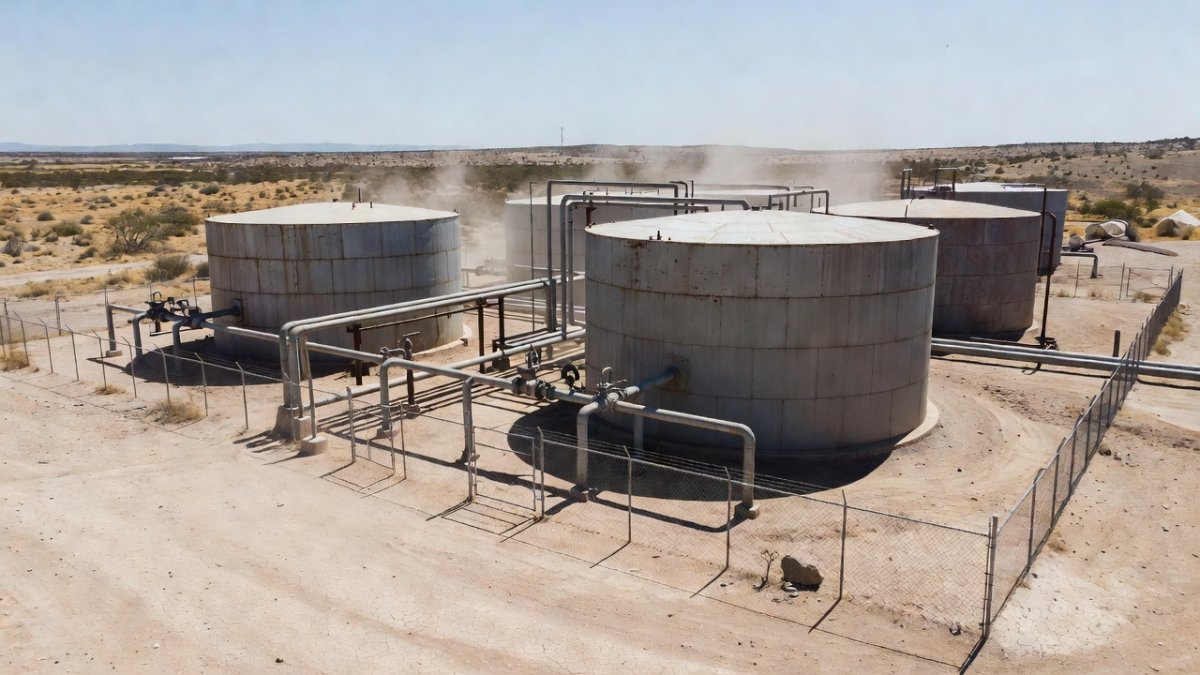
Huachicol Theft Continues to Burden Mexican Public Resources
Fuel theft through pipeline tapping and clandestine processing has long drained public finances in Mexico. Fuel smuggling alone has been estimated to cost the treasury about 9.2 billion dollars a year, diverting funds that could support schools, clinics, and infrastructure projects in colonias and rural communities.
Between 2019 and July 2025, PEMEX's legal department recorded 6,560 arrests for fuel theft in all its forms. Former CRE commissioner Francisco Barnés de Castro estimated real losses from huachicol during 2025 at around 123.5 billion pesos, with cumulative losses during the Fourth Transformation period exceeding 515 billion pesos.
The strategy against these networks began under President Andrés Manuel López Obrador in December 2018 and has continued under President Claudia Sheinbaum through coordinated actions involving the SSPC, SEDENA, SEMAR, the Guardia Nacional, and the FGR. Operations like the one announced this week form part of ongoing efforts to protect PEMEX infrastructure and public revenue.
Fuel theft continues to drain resources that Mexican families count on for everyday stability. The treasury loses billions each year to smuggling, while cumulative huachicol losses have already surpassed 515 billion pesos. These shortfalls hit PEMEX directly, reducing the money available for public budgets that support health clinics, schools, and roads in both rural towns and city neighborhoods. When funds meant for community services are diverted, families feel the pinch through longer waits for care and slower improvements to local infrastructure that everyone relies on. The fight against these operations matters because it protects the shared resources that keep towns running. With thousands of arrests recorded over recent years and coordinated efforts continuing across administrations, authorities are working to limit the damage. Recovering even a portion of the stolen fuel helps redirect value back toward the public good, easing pressure on services that rural and urban communities depend on for a better daily life.Impact on Families, Farmers, and Local Economies
When fuel is stolen and sold outside official channels, ordinary Mexicans feel the effects through higher prices at the pump and occasional shortages that disrupt daily commutes and small business operations. In rural areas, campesinos who rely on diesel for tractors and irrigation pumps face added costs that squeeze already tight household budgets.
Pipeline explosions tied to illegal taps have endangered entire neighborhoods in the past, forcing families in affected colonias to evacuate and leaving long-term environmental damage. The diversion of public resources also means less funding reaches programs such as the Pensión del Bienestar that directly support older adults across the country.
Communities near the raided sites in San Luis Potosí, Hidalgo, and Morelos often depend on stable fuel supplies for local transport and agriculture. When authorities recover large volumes of stolen diesel, it reduces the underground market that undercuts legitimate gas stations and tianguis vendors who need reliable transportation for their goods.
In rural areas across Mexico, clandestine fuel sales often appear in small towns and ejidos where cheaper diesel circulates outside legitimate channels. This undercuts local gas stations and tianguis vendors who follow the rules, making it harder for honest businesses to stay afloat. Campesinos who need diesel for tractors and irrigation systems face higher costs when theft disrupts supply, while families living near pipelines deal with the constant worry of explosions, shortages at the pump, and environmental harm that can affect their land and water. The recent raids in San Luis Potosí, Hidalgo, and Morelos show how these hidden sites threaten nearby communities. Abandoned locations still leave behind risks from stored fuel and equipment, reminding residents that the problem touches everyday safety. By removing these operations, authorities help restore a sense of security so families and farmers can focus on their work without the shadow of theft and its wider costs hanging over their towns.Continued Vigilance Needed to Protect Public Assets
The August 4 announcement underscores that huachicol networks adapt by moving operations to warehouses and rural properties when pipelines become harder to tap. The four abandoned sites still contained sophisticated storage and processing equipment, showing the resources these groups can mobilize.
Residents in the three states where the raids occurred welcomed the removal of potential hazards from their areas. Abandoned industrial setups can pose risks of leaks or fires that threaten nearby homes and farmland, especially in regions where ejidos and small agricultural plots sit close to such facilities.
By recovering over a million liters of fuel and documenting extensive infrastructure, the FGR and its partners delivered a measurable blow to one segment of the illegal trade. Sustained coordination among federal agencies remains essential to limit further losses that ultimately affect every Mexican family through public finances and daily living costs.
Tags: huachicol, FGR, fuel theft, PEMEX, San Luis Potosí, Hidalgo, Morelos, diesel seizure, Pensión del Bienestar, Claudia Sheinbaum
By Rosa Martinez, Staff Writer
This article was produced with AI-assisted research and editorial support. Reporting is based on sources cited in the article.
What's Your Reaction?
 Like
0
Like
0
 Dislike
0
Dislike
0
 Love
0
Love
0
 Funny
0
Funny
0
 Wow
0
Wow
0
 Sad
0
Sad
0
 Angry
0
Angry
0

Latin America/Andes Correspondent at Global1.News. Based in Bogota, covering politics, environment, energy, and social movements across the Andean region. Passionate about environmental journalism and communities protecting their land.















Comments (0)