
UN Rapporteurs Warn Ottawa of Imminent Threat to B.C. Sikh Activist Moninder Singh
Five UN special rapporteurs are urging Ottawa to protect Moninder Singh, a Surrey, B.C., Sikh activist they say faces an imminent threat, after police issued four duty-to-warn letters that most recently named his wife and children.
In a recent CBC News report on Hanomansing Tonight, five UN special rapporteurs detailed an imminent threat to the life of Sikh activist Moninder Singh of Surrey, British Columbia, urging Ottawa to accelerate investigations into alleged transnational repression by Indian authorities. The nine-page letter, released by the UN Human Rights Office over the weekend of August 1-2, 2026, highlights four duty-to-warn notices Singh received from Canadian police and calls on the federal government to fulfil its obligations under the International Covenant on Civil and Political Rights. This development raises urgent questions about public safety for Sikh Canadians and the state of Canada-India relations under Prime Minister Mark Carney.
UN Rapporteurs Warn Ottawa of Imminent Threat to B.C. Sikh Activist Moninder Singh
Surrey, British Columbia – This week — Five UN special rapporteurs have formally notified the government of Canada about serious and escalating threats against Moninder Singh, a 44-year-old leader of the Sikh Federation of Canada who resides in Surrey. The communication, dated June 3, 2026, was published without a response from Ottawa after the standard 60-day period elapsed. Singh has received four explicit duty-to-warn letters from police since July 2022, with the most recent in February 2026 explicitly naming his wife and two children as targets.
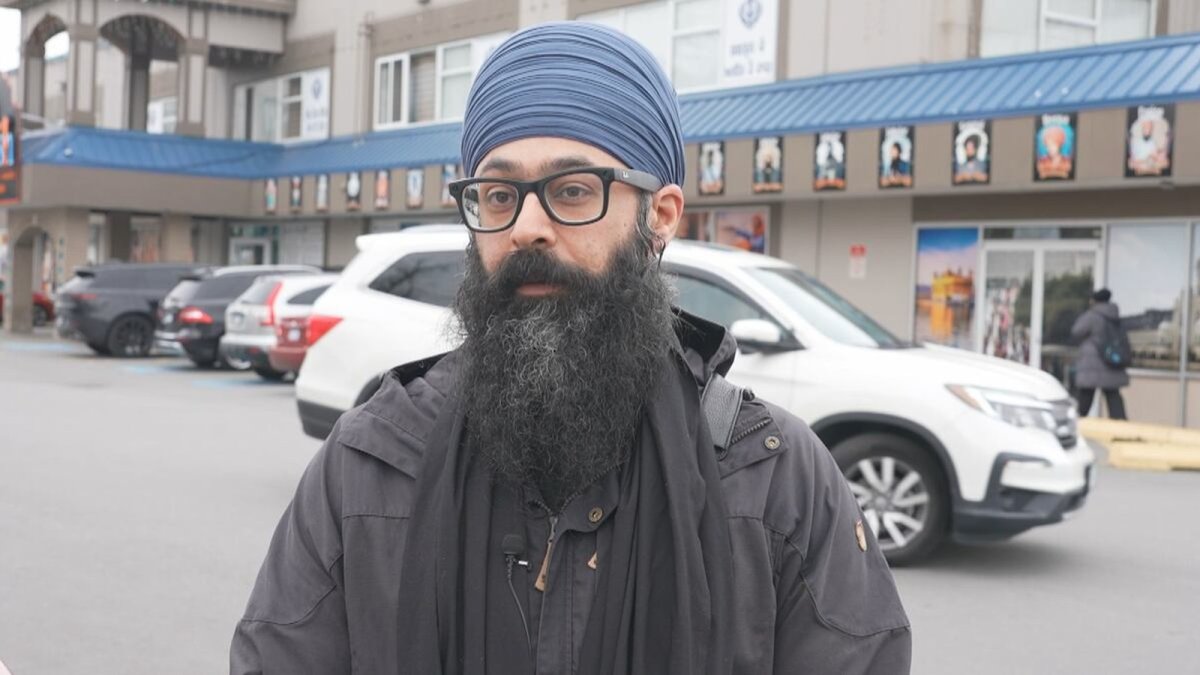
The Story
Moninder Singh, an outspoken advocate for Khalistan self-determination and critic of human rights conditions in India, first learned of the UN inquiry after the Geneva-based International Service for Human Rights forwarded a report to the UN secretary general. He subsequently met with the rapporteurs in Geneva, where they gathered additional evidence of patterns targeting Sikh activists. Singh told CBC News that Canadian law enforcement has remained consistent in checking in with community members, even as political leadership shifted focus toward trade restoration with India following the 2025 federal election. No arrests have been made in connection with any of the threats against him.
Moninder Singh, the 44-year-old leader of the Sikh Federation of Canada and a Surrey, British Columbia resident, has received four duty-to-warn letters from Canadian police detailing threats linked to his advocacy for Khalistan and criticism of Indian human rights practices. The first arrived in July 2022 on the same day his close friend Hardeep Singh Nijjar received a similar notice, followed by another in August 2023. A third came in March 2025 shortly after Singh appeared at the UN Human Rights Council, and the fourth arrived in February 2026 after the Carney government moved to restore normal diplomatic relations with India. The February 2026 letter stood out as the most alarming because it explicitly named a plan to assassinate Singh along with his wife and two children, marking the first time family members were included in such a warning based on police intelligence assessed as sufficiently serious to require direct home notification.
The UN Letter
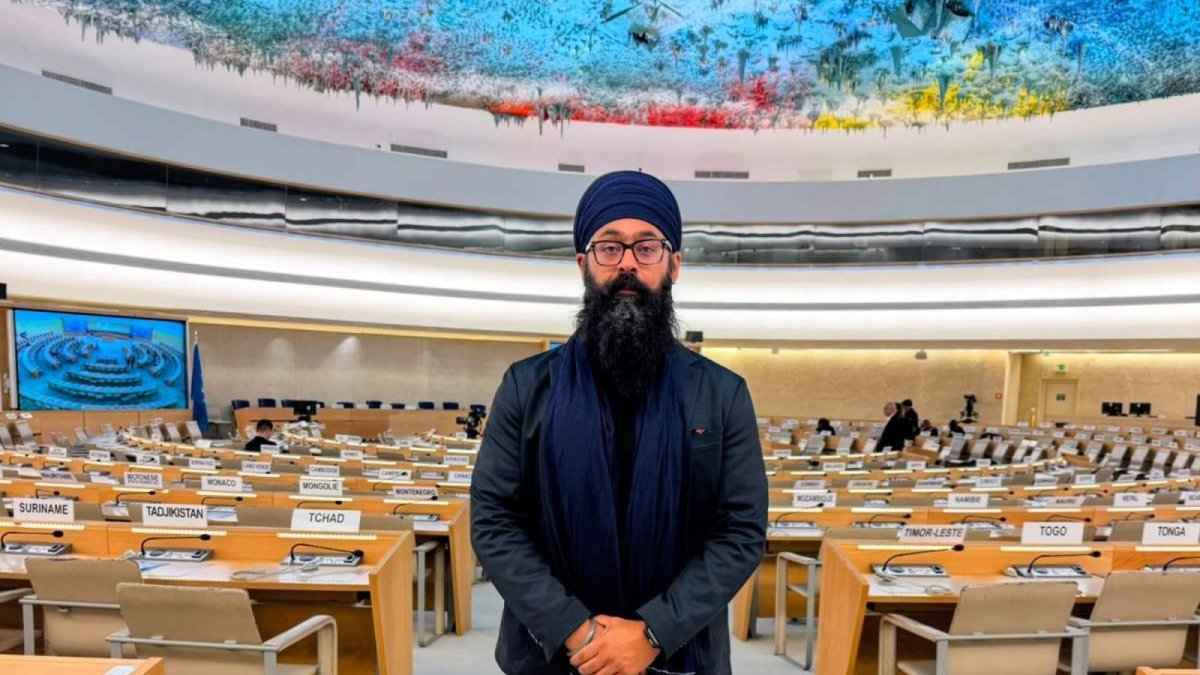
The letter is signed by Ben Saul of Australia, special rapporteur on human rights while countering terrorism; Gina Romero of Colombia, special rapporteur on freedom of peaceful assembly and association; Andrea Bolaños Vargas of Colombia, special rapporteur on human rights defenders; George Katrougalos, independent expert on a democratic international order; and Nazila Ghanea of Britain and Iran, special rapporteur on freedom of religion or belief. The rapporteurs cite articles 6 and 9 of the International Covenant on Civil and Political Rights, ratified by Canada on May 19, 1976, and demand that Ottawa protect Singh and similarly situated individuals from reasonably foreseeable threats. They specifically ask Canada to report steps taken to investigate the allegations, hold perpetrators accountable, and address what they describe as possible reprisals for Singh’s cooperation with UN bodies.
The rapporteurs explicitly remind Canada of its obligations under articles 6 and 9 of the International Covenant on Civil and Political Rights which the country ratified on 19 May 1976 requiring protection of all individuals from reasonably foreseeable threats to life or bodily integrity by governmental or private actors. They state that the threats against the 44-year-old leader of the Sikh Federation of Canada may constitute unlawful intimidation and reprisals in direct retaliation for his cooperation with UN human rights bodies including appearances before the Human Rights Council. The letter further notes that the February 2026 duty-to-warn notification from Canadian police was the first to include Singh's wife and two children and urges the federal government to report back on concrete steps taken to protect Singh his family and similarly situated individuals on Canadian soil.
Canadian Context
The threats to Singh fit a documented pattern that includes the June 18, 2023, assassination of his close friend Hardeep Singh Nijjar outside a Surrey gurdwara. The RCMP has linked that killing to Indian intelligence operating through the Lawrence Bishnoi transnational crime network, a connection later referenced in U.S. federal charges announced in Los Angeles in July 2026. National Security Advisor Nathalie Drouin testified that senior Indian officials directed criminal activity against Indo-Canadians via the Bishnoi network. After Justin Trudeau’s 2023 public accusation of Indian involvement, both countries expelled diplomats; relations later warmed under Prime Minister Mark Carney, who visited India in March 2026 to sign trade deals. The February 2026 duty-to-warn letter to Singh arrived two days before a planned UN appearance and marked the first time his family members were explicitly named.
RCMP assessments linked the Nijjar murder to Indian intelligence working through the transnational crime network of gangster Lawrence Bishnoi, a pattern National Security Advisor Nathalie Drouin described in testimony as senior Indian officials directing serious criminal activities against Indo-Canadians. The FBI later disrupted a separate plot by an Indian intelligence operative targeting another Canadian pro-Khalistan activist, Gurpatwant Singh Pannun, while July 2026 federal charges in Los Angeles tied Bishnoi gang leaders to the Surrey killing. These developments underscored the need for stronger federal-provincial coordination on transnational repression, directly affecting public safety in British Columbia and raising questions about how Canada protects human rights defenders amid diaspora communities advocating for causes tied to Punjab.
Impact on Canadians
For Sikh Canadians and broader South Asian communities, the UN letter underscores ongoing risks to freedom of expression and personal safety when foreign states allegedly extend repression onto Canadian soil. The duty-to-warn system, required under British Columbia law, provides notification but leaves individuals responsible for their own protection afterward, a limitation Singh has publicly criticised. The episode also tests Canada’s commitment to multiculturalism and civic responsibility, as targeted communities question whether federal authorities are prioritising trade relations over the protection of residents exercising lawful advocacy. Public Safety Canada has not responded to questions about the letter, leaving uncertainty about concrete protective measures for those receiving similar warnings.
This case tests Canada's commitment to multiculturalism and the protection of lawful advocacy within South Asian communities, particularly as federal authorities have remained silent on the nine-page UN letter sent to Ottawa on June 3, 2026. Public Safety Canada has not responded to inquiries about the rapporteurs' calls to accelerate investigations and protect Singh and similarly situated individuals on Canadian soil, while Global Affairs Canada referred questions elsewhere without providing answers. The five UN rapporteurs, including Ben Saul and Nazila Ghanea, reminded Canada of its obligations under the International Covenant on Civil and Political Rights, ratified in 1976, to prevent reasonably foreseeable threats from foreign actors. For Canadian readers, the episode highlights tensions in Canada-India relations, where trade priorities under the Carney government appear to have overshadowed consistent enforcement against transnational repression, leaving Sikh activists and their families to question whether human rights commitments will be upheld in practice.
Reactions and Analysis
Singh described the UN communication as a stark reminder of how far the Indian state is willing to go to silence Sikh voices advocating for self-determination. He noted that law enforcement continues to engage with affected community members despite political shifts, yet he expressed disappointment that Ottawa has not yet replied to the rapporteurs. Singh added that he refuses to be intimidated and that his advocacy remains rooted in international law and the lived experiences of his community. Experts point out that the letter’s publication without a Canadian response signals a diplomatic gap at a time when the Carney government has sought to reset ties with New Delhi following the Nijjar case and related expulsions.
Singh told reporters that the letter was a stark reminder of how far the Indian state is willing to go to silence Sikh voices advocating for self-determination. He stated that when a foreign state feels empowered to commit violence in Canada to silence dissent, it signals a profound failure to protect the rights and safety of targeted communities. Singh added that he refuses to be intimidated into silence, noting his leadership and advocacy for Khalistan are rooted in international law, human rights principles and most importantly the lived experiences of his community. He expressed disappointment that Ottawa has not responded to the June 3, 2026 communication from the five special rapporteurs, though he noted the government still has the opportunity to reply through its permanent mission in Geneva. Singh also criticised the duty-to-warn system under British Columbia law, which he said leaves individuals largely on their own after police deliver the initial notification, as seen in the four letters he received between July 2022 and February 2026.
What Happens Next
The UN Human Rights Council process now moves forward with the published letter, and Canada retains the opportunity to submit a formal response through its permanent mission in Geneva. Singh stated he will approach that mission directly to seek answers on the steps Ottawa intends to take. Under the 60-day protocol, any future reply from Canada or India will be published alongside the original communication. The federal government’s handling of this file will shape both domestic confidence in public safety institutions and the trajectory of Canada-India economic engagement in the months ahead.
The case illustrates the tension between Canada’s international human rights obligations and its pursuit of trade opportunities, leaving Sikh activists and their families to navigate heightened personal risk while awaiting concrete federal action.
By Alex Thompson, Staff Writer
This article was produced with AI-assisted research and editorial support. Reporting is based on sources cited in the article.
What's Your Reaction?
 Like
1
Like
1
 Dislike
0
Dislike
0
 Love
0
Love
0
 Funny
0
Funny
0
 Wow
0
Wow
0
 Sad
0
Sad
0
 Angry
0
Angry
0
Canada Correspondent at Global1.News. Based in Toronto, covering Canadian politics, energy, trade, and US-Canada relations. Provides the Canadian perspective on North American and global affairs.












Comments (0)