
Turkish Ships Hit Near Novorossiysk as Black Sea Tensions Rise
Turkish-owned cargo ships Yasar and Nadezhda came under attack near the Russian port of Novorossiysk on Monday evening, prompting Ankara to demand urgent measures to protect commercial shipping in the Black Sea.
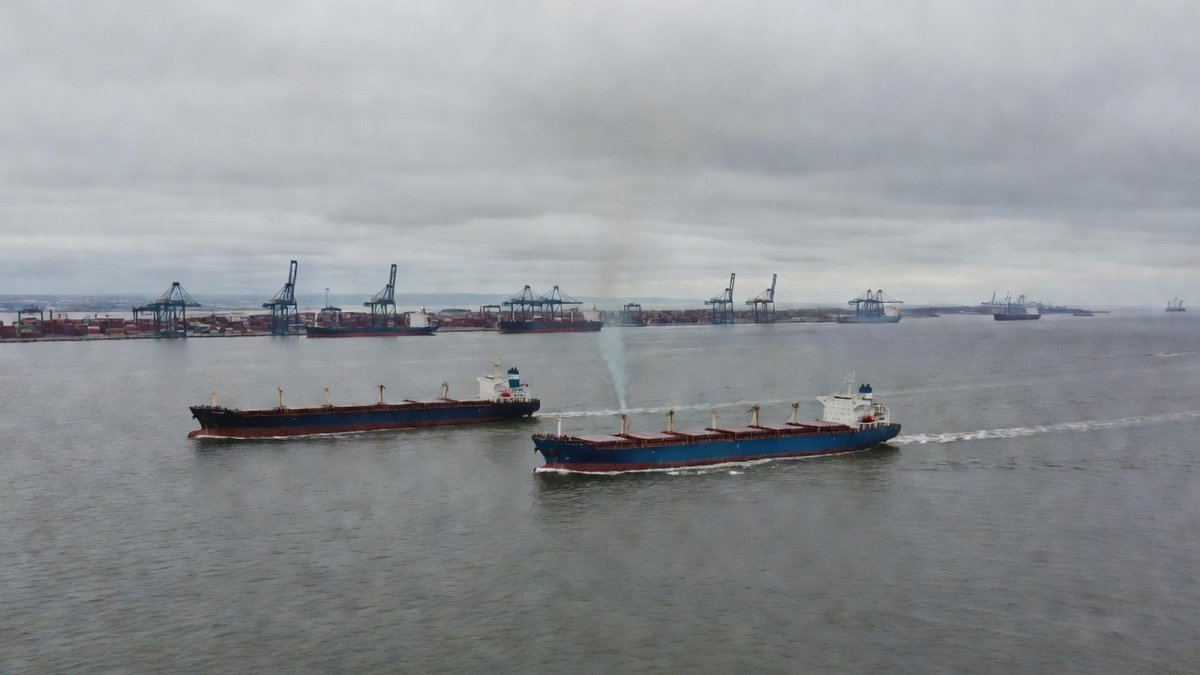
Turkish-owned cargo ships Yasar and Nadezhda came under attack near the Russian port of Novorossiysk on Monday evening, prompting Ankara to demand urgent measures to protect commercial shipping in the Black Sea. The strikes injured several crew members, including Turkish nationals, and occurred amid weeks of escalating exchanges between Russia and Ukraine targeting vessels and ports. Turkey, which maintains ties with both sides, warned of spreading conflict and risks to global food security.
Turkish Ships Hit Near Novorossiysk as Black Sea Tensions Rise
Moscow/Ankara — Two Turkish-owned cargo vessels were struck after leaving the Russian port of Novorossiysk, according to statements from the Turkish Foreign Ministry and Maritime Authority. The incidents follow a pattern of attacks on commercial shipping that has intensified in recent weeks.
Attack on Turkish-Owned Ships
The civilian ships Yasar and Nadezhda were attacked after departing Novorossiysk on Monday evening. The Nadezhda, a Cameroon-flagged roll-on/roll-off cargo ship built in 1978, was sailing toward the Turkish port of Samsun when it came under attack about 20 nautical miles off Novorossiysk.
The Yasar flies the flag of Panama. Both vessels are owned by Turkish companies, according to vessel-tracking data from MarineTraffic. The strikes damaged the Nadezhda's living quarters and bow, with a fire continuing to burn and preventing immediate salvage operations due to risks of further attacks.
All 22 crew members of the Nadezhda, including 13 Turkish nationals, were evacuated to Novorossiysk by Russian maritime units acting in coordination with the local Maritime Rescue Coordination Center. The ship's operator said three crew members were seriously injured, and Turkish officials confirmed that a number of sailors, including Turkish citizens, were wounded in the attacks.
Neither Kyiv nor Moscow has claimed responsibility for Monday's strikes, and Ukrainian officials have not commented on them. Ukraine has frequently claimed attacks on Russian warships and vessels linked to the so-called shadow fleet, but the absence of attribution in this case has left open questions about whether the incidents reflect deliberate targeting of Turkish-owned tonnage or collateral effects of the broader conflict.
Ankara's Diplomatic Response
On Tuesday the Turkish Foreign Ministry called on Russia and Ukraine to ensure the safety of commercial shipping in the Black Sea. The ministry stated that Ankara was seriously concerned the war was spreading across the sea despite prior warnings, and it reiterated demands for concrete measures to protect navigation.
Turkish Maritime Affairs Directorate General coordinated with the local Maritime Rescue Coordination Center to bring all 22 crew members of the Nadezhda to safety in Russia. Among them were 13 Turkish nationals and three seriously injured crew members.
In its statement, the ministry said it was "seriously concerned" that the war was spreading across the Black Sea "despite all of our warnings," warning of "multifaceted negative repercussions, including for food security." It reiterated its call on "all relevant actors, particularly the warring parties, to urgently implement concrete measures to ensure the safety of navigation in the Black Sea."
The ministry said it was closely monitoring the condition of the Turkish citizens injured in the strikes. The incidents have put a spotlight on Ankara's dual position as a NATO member and a state with direct commercial interests in waters where both sides are now striking civilian tonnage.
An Escalating Maritime War
The strikes on the Yasar and Nadezhda follow weeks of exchanges between Russia and Ukraine targeting commercial vessels and port infrastructure. Ukrainian officials have not commented on these specific attacks and issued no claim of responsibility.
Earlier incidents include a Turkish fishing vessel hit off the Crimean coast in late June, which left one dead and four injured, and another Turkish cargo ship attacked in May. In July the Liberian-flagged LPG tanker Gas Lisbon was struck off Romania's coast while bound for Ukraine.
Turkish officials have warned of an "uncontrolled escalation" in the Black Sea as the attacks have multiplied over successive months. The strikes against the Yasar and Nadezhda came as both sides accused each other of jeopardizing grain exports in the region amid the harvesting season.
The absence of attribution for Monday's attacks stands in contrast to Ukraine's previous pattern of claiming strikes on Russian warships and shadow-fleet oil tankers, while Moscow has accused Kyiv of endangering civilian shipping. The ambiguity has complicated efforts by maritime authorities to assess the precise nature and intent of the latest strikes.
Grain Exports Under Threat
Russia is the world's largest wheat exporter while Ukraine ranks among major agricultural exporters. Both countries have accused each other of jeopardizing grain shipments during the current harvesting season.
Russia's main grain exporters union warned that Ukrainian drone attacks on Russian ships and ports could shut down Black Sea grain exports in the near future. Ukraine's largest farming union has warned that Russian strikes near Odesa are restricting Ukrainian exports during the key harvest period.
Novorossiysk is one of Russia's principal grain-export hubs, and the strikes came as both sides sought to protect and disrupt agricultural shipments during the harvest. The attacks underscore that commercial traffic now faces heightened hazards regardless of flag or destination, complicating efforts to keep grain moving through the region.
Russia's grain exporters union has warned that a sustained shutdown of Black Sea routes would push up prices and risk hunger in Africa and the Middle East, which depend heavily on wheat from the two warring exporters.
Food Security Fears From Africa to the Middle East
The Black Sea grain corridor handles about 90 percent of Ukraine's agricultural exports and faces mounting strain from intensified hostilities. Wheat prices climbed more than 3 percent to above $6.80 per bushel, approaching the two-year high reached in late July.
Turkish officials warned of multifaceted negative repercussions, including for food security, and highlighted risks of uncontrolled escalation. Disruptions could push prices higher and affect supplies to Africa and the Middle East.
The 2022 Black Sea Grain Initiative, brokered with Turkish and United Nations involvement, had aimed to stabilize such flows before Moscow withdrew from the deal in 2023. Recent attacks on commercial vessels threaten to reverse whatever progress had been made in keeping grain moving, analysts say.
Analysts note that sustained disruption could widen price volatility and strain food supplies across North Africa and the Middle East, where many nations rely on Black Sea wheat. Turkey's warning of "multifaceted negative repercussions, including for food security" reflects that exposure, as does the market reaction of the past week.
Turkey's Delicate Balancing Act
Turkey, a NATO member, has maintained relations with both Russia and Ukraine throughout the conflict and previously brokered the Black Sea Grain Initiative in 2022. Ankara expressed concern that the war's spread threatens navigation despite its earlier warnings.
The Turkish Foreign Ministry urged all relevant actors, particularly the warring parties, to implement urgent measures for safe passage in the Black Sea.
Ankara has sought to keep lines of communication open with both capitals even as the war grinds on. The Tuesday statement, urging concrete measures to ensure navigational safety, reflects that careful positioning, pressing for restraint without directly naming either side as the aggressor in the latest strikes.
The presence of 13 Turkish nationals among the Nadezhda's crew and the ownership of both stricken vessels by Turkish interests have heightened domestic scrutiny of the war's spillover. Turkish officials have stressed the need for de-escalation to prevent further incidents involving Turkish maritime commerce and regional stability.
Analysis and Implications
Analysts suggest the strikes on Turkish-owned vessels could signal a further broadening of maritime targets, increasing pressure on neutral shipping lanes that have already seen repeated incidents this year. This pattern may complicate efforts to maintain any form of secure export route through the region.
The developments point to sustained strain on global grain supplies as two leading wheat producers remain locked in conflict. Observers note that continued escalation risks higher prices and reduced availability for import-dependent regions in the coming months.
The sequence of strikes on commercial vessels, culminating in Monday's attack off Novorossiysk, illustrates how the conflict has extended beyond military targets into routine shipping lanes. The diffusion of risk complicates efforts to isolate grain exports from broader hostilities, and the lack of clear attribution has made the maritime escalation harder to contain diplomatically.
For Turkey the incidents test its dual role as security partner and commercial intermediary. Sustained threats to navigation could force Ankara to recalibrate its mediation approach while pressing for verifiable safety guarantees. The resulting uncertainty over Black Sea routes carries direct consequences for global wheat supplies and the populations dependent on them.
By Irina Volkov, Staff Writer
This article was produced with AI-assisted research and editorial support. Reporting is based on sources cited in the article.
What's Your Reaction?
 Like
0
Like
0
 Dislike
0
Dislike
0
 Love
0
Love
0
 Funny
0
Funny
0
 Wow
0
Wow
0
 Sad
0
Sad
0
 Angry
0
Angry
0

Russia/Eastern Europe Correspondent at Global1.News. Covering Russian politics, energy, security, and the shifting dynamics of the post-Soviet space. Provides clear-eyed analysis on one of the world's most opaque regions.














Comments (0)