
FDA Upgrades Egg Recall to Class I: 19 Million Eggs Tied to Drug-Resistant Salmonella in 17 States
The U.S. Food and Drug Administration has escalated a nationwide egg recall to its most severe classification, a move that signals a significant public health threat as federal investigators link nearly 19 million eggs to a drug-resistant strain of Salmonella that has already sickened nearly 100 people across more than a dozen states.
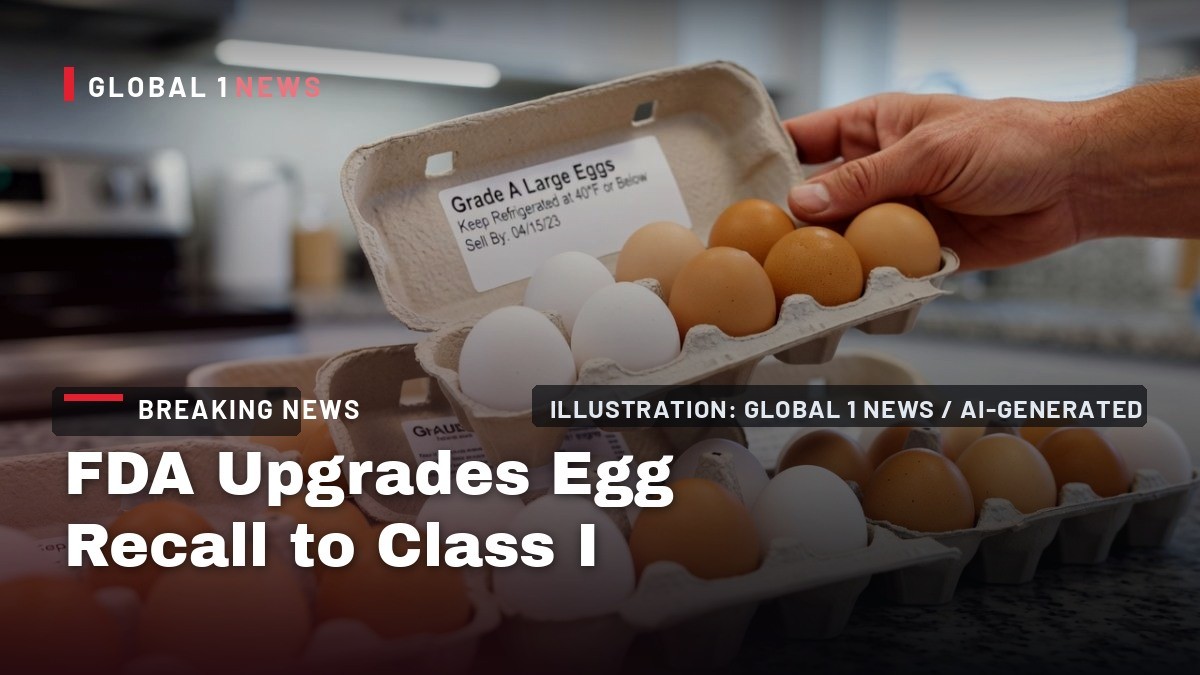
The U.S. Food and Drug Administration has escalated a nationwide egg recall to its most severe classification, a move that signals a significant public health threat as federal investigators link nearly 19 million eggs to a drug-resistant strain of Salmonella that has already sickened nearly 100 people across more than a dozen states. The upgrade, announced during the week of August 17-18, 2026, places the recall at Class I, the agency’s highest-risk designation, indicating a reasonable probability that exposure to the product could cause serious adverse health consequences or death. The action follows weeks of collaborative investigation among the FDA, the Centers for Disease Control and Prevention, and state partners, who have traced the outbreak to a single producer and a specific window of production.
FDA Upgrades Egg Recall to Class I: 19M Eggs Tied to Drug-Resistant Salmonella
Washington, D.C. — August 20, 2026 — The U.S. Food and Drug Administration (FDA) has officially upgraded a nationwide egg recall to Class I status, its highest-risk classification, in response to an ongoing outbreak of Salmonella Enteritidis linked to nearly 19 million eggs produced by Midwest Poultry Services, L.P. The recall, which covers 1,589,577 dozen eggs, was initiated after epidemiological, laboratory, and traceback data connected the shell eggs to at least 98 confirmed infections across 17 states, including 26 hospitalizations reported by the CDC. The outbreak strain has been identified as resistant to ciprofloxacin, a frontline antibiotic commonly used to treat severe Salmonella infections, raising the stakes for public health officials and consumers alike.
Scope of the Recall: What Products Are Affected
The recall encompasses shell eggs produced at farms in Texas between June 6 and July 3, 2026. According to the FDA, the eggs were distributed through both retail and foodservice channels, including under the Kroger brand, reaching consumers across at least 17 states. The affected products include white shell eggs and brown cage-free shell eggs, both of which were produced by Midwest Poultry Services, L.P. during the specified production window.
Consumers are urged to check their refrigerators for cartons bearing the recall codes associated with this production period. The FDA has explicitly advised: "Do not eat, sell, or serve white shell eggs and brown cage-free shell eggs recalled by Midwest Poultry Services, L.P." This directive, posted on the FDA investigation page dated July 24, 2026, underscores the urgency of the situation as investigators continue to work to contain the spread of the pathogen.
The sheer volume of the recall — nearly 19 million eggs — makes it one of the larger egg-related recalls in recent years. The distribution network spans multiple states, and the inclusion of a major retail brand like Kroger means that a significant number of households may have purchased the affected product. The FDA and CDC are advising anyone who believes they may have purchased recalled eggs to verify the carton codes and dispose of the eggs immediately.
Class I Classification: Understanding the Severity
The FDA’s decision to upgrade the recall to Class I is a critical development. Under the agency’s classification system, Class I is reserved for situations where there is a reasonable probability that exposure to the product could cause serious adverse health consequences or death. This is the highest level of risk the FDA can assign, and it reflects the severity of the Salmonella Enteritidis outbreak and the vulnerability of the affected population.
This classification is not issued lightly. It signals to healthcare providers, retailers, and consumers that the risk associated with these eggs is substantial and that immediate action is necessary to prevent further illnesses. The upgrade also intensifies the regulatory scrutiny on Midwest Poultry Services, L.P., and may lead to additional inspections or enforcement actions as the investigation continues.
For consumers, the Class I designation means that the potential consequences of consuming the recalled eggs are severe enough to warrant the highest level of public warning. The FDA’s communication emphasizes that the eggs should not be eaten, sold, or served under any circumstances, and that any surfaces or utensils that came into contact with the eggs should be thoroughly cleaned and sanitized.
The Outbreak: Numbers, Symptoms, and Affected Populations
According to the CDC, the outbreak has resulted in 98 confirmed infections across 17 states, with 26 hospitalizations reported. The affected individuals range in age and health status, but the CDC has highlighted that older adults, young children, pregnant people, and immunocompromised individuals are at the highest risk of developing severe illness. Symptoms of Salmonella infection typically include diarrhea, fever, and stomach cramps, which usually begin 6 hours to 6 days after ingestion of the contaminated product.
While no deaths have been reported in connection with this outbreak, the hospitalization rate — more than 26% of confirmed cases — is a stark reminder of the potential severity of Salmonella Enteritidis infections. The CDC and FDA began their investigation in July 2026, and the traceback data have been instrumental in identifying the source of the contamination. The agencies have worked in tandem with state partners to collect and analyze data from affected individuals, food samples, and distribution records.
The drug-resistant nature of this particular strain adds another layer of concern. Ciprofloxacin is a frontline antibiotic commonly prescribed for severe Salmonella infections, and resistance to this drug limits treatment options for patients who develop serious complications. This finding has prompted experts to emphasize the importance of prevention, as treatment failures could lead to more prolonged illness, higher rates of hospitalization, and potentially worse outcomes for vulnerable patients.
Drug Resistance: A Growing Public Health Concern
The confirmation that the outbreak strain is resistant to ciprofloxacin has raised alarms among public health officials. Antibiotic resistance in Salmonella is not a new phenomenon, but its presence in a large-scale foodborne outbreak complicates clinical management. For patients with severe infections, ciprofloxacin is often the first line of defense; when that drug is ineffective, healthcare providers must turn to alternative antibiotics, which may be less effective, have more side effects, or require intravenous administration.
Experts say the drug-resistance finding raises public-health concerns because it underscores the broader issue of antimicrobial resistance in the food supply. The use of antibiotics in animal agriculture has been linked to the emergence of resistant bacterial strains, and this outbreak serves as a concrete example of how that resistance can reach consumers. The CDC and FDA are likely to continue monitoring the situation closely, and this case may prompt renewed discussions about antibiotic stewardship in poultry production.
For the 98 individuals already infected, the resistance to ciprofloxacin may mean longer recovery times and a greater reliance on supportive care. The 26 hospitalizations reflect the severity of the illnesses, and healthcare providers in the affected states have been alerted to the resistance profile of the strain to guide treatment decisions. The public health message remains clear: prevention through proper food handling and adherence to the recall is the most effective way to avoid infection.
Consumer Guidance: What to Do If You Have Recalled Eggs
The FDA and CDC have issued clear, actionable guidance for consumers who may have purchased the recalled eggs. First and foremost, consumers should check the cartons for the recall codes associated with Midwest Poultry Services, L.P. production dates of June 6 through July 3, 2026. If the codes match, the eggs should be thrown away immediately. It is also recommended that consumers clean and sanitize any surfaces, containers, or utensils that may have come into contact with the recalled eggs to prevent cross-contamination.
Individuals who believe they may have consumed the recalled eggs and are experiencing symptoms of Salmonella infection — diarrhea, fever, and stomach cramps — should contact their healthcare provider. The CDC advises that most people recover without treatment, but those at higher risk, including older adults, young children, pregnant women, and immunocompromised individuals, should seek medical attention promptly. Early diagnosis and treatment can be critical, especially when antibiotic resistance is a factor.
Retailers and foodservice operators are also being urged to remove the recalled products from shelves and menus. The FDA’s directive to "not eat, sell, or serve" the eggs applies to all levels of the supply chain, and compliance is essential to halting the spread of the outbreak. The agency has indicated that it will continue to provide updates as the investigation progresses, and consumers are encouraged to monitor the FDA and CDC websites for the latest information.
Broader Context: International Salmonella Outbreaks in 2026
This domestic outbreak is occurring against a backdrop of heightened Salmonella activity internationally. In Belgium, at least 306 people have been infected with Salmonella in an outbreak linked to eggs from Laerco, a producer based in Geel, Belgium, according to euronews reporting from August 25, 2026. That outbreak, which is significantly larger in terms of case count, has prompted similar recalls and public health warnings across European markets.
In France, four separate Salmonella Enteritidis outbreaks have been linked to Polish eggs between May and July 2026, as reported by Food Safety News. These outbreaks, while distinct from the U.S. situation, highlight a troubling pattern of egg-related Salmonella contamination across multiple countries and producers. The recurrence of Salmonella Enteritidis in egg production facilities suggests that there may be systemic challenges in controlling this pathogen within the poultry supply chain, both in the United States and abroad.
The international dimension of these outbreaks also raises questions about global food safety standards and the need for enhanced surveillance and rapid response mechanisms. The FDA and CDC have noted that they are in communication with international partners, though the current U.S. outbreak has been traced exclusively to domestic production. Nonetheless, the parallel outbreaks serve as a reminder that foodborne pathogens do not respect borders, and that vigilance is required at every stage of production and distribution.
Analysis: What This Means for Consumers and the Food Supply
The upgrade to Class I status and the confirmation of drug resistance have significant implications for consumers. First, it underscores the importance of heeding recall notices and checking product codes, even for items as common as eggs. Many consumers may not routinely check the packaging of perishable goods, but this outbreak demonstrates that the consequences of oversight can be severe. The FDA’s guidance is straightforward, and following it is the most effective way to protect oneself and one’s family.
Second, the drug-resistant nature of the strain is a wake-up call about the broader issue of antimicrobial resistance. For the general public, this means that foodborne illnesses are becoming more difficult to treat, and the emphasis must shift toward prevention. Proper cooking, handwashing, and kitchen sanitation are critical, but so too is the responsible use of antibiotics in agriculture. This outbreak may fuel calls for stricter regulations on antibiotic use in poultry production, a topic that has been debated for years.
Finally, the scale of the recall — nearly 19 million eggs — and its distribution across 17 states highlight the complexity of the modern food supply chain. A single producer’s contamination can affect consumers in dozens of states within weeks. The FDA and CDC’s rapid response, including the traceback investigation and the Class I upgrade, demonstrates the importance of robust food safety systems. However, it also reveals vulnerabilities that may require ongoing attention from regulators, producers, and consumers alike.
For those who have already purchased eggs, the message is simple: check the codes, and when in doubt, throw them out. The cost of discarding a carton of eggs is minimal compared to the potential health consequences. For those who have fallen ill, seeking medical care promptly is essential, particularly given the antibiotic resistance profile of this strain. The outbreak is a stark reminder that food safety is a shared responsibility, and that vigilance at the consumer level is a critical line of defense.
By Jessica Ali, Staff Writer
This article was produced with AI-assisted research and editorial support. Sources: FDA, CDC, Fortune, US Reporter, TechTimes, Food Safety News, euronews.
What's Your Reaction?
 Like
0
Like
0
 Dislike
0
Dislike
0
 Love
0
Love
0
 Funny
0
Funny
0
 Wow
0
Wow
0
 Sad
0
Sad
0
 Angry
0
Angry
0

Editor-in-Chief at Global1.News. Atlanta-based journalist who cuts through the BS and tells it like it is. Lead anchor, host, and the voice you hear when the spin stops and the truth starts.















Comments (0)