
Nepal Flash Floods: Death Toll Passes 389 as Rescue Teams Scramble in Rasuwa and Nuwakot
A catastrophic flash flood tore through the Bhotekoshi River gorge in central Nepal on Wednesday morning, August 26, 2026, sweeping away border infrastructure, hydropower plants, and entire settlements in a matter of hours. By Thursday afternoon, the official death toll had surpassed 389 people, with hundreds more still unaccounted for, making this one of the deadliest flood disasters to hit the Himalayan nation in recent memory.
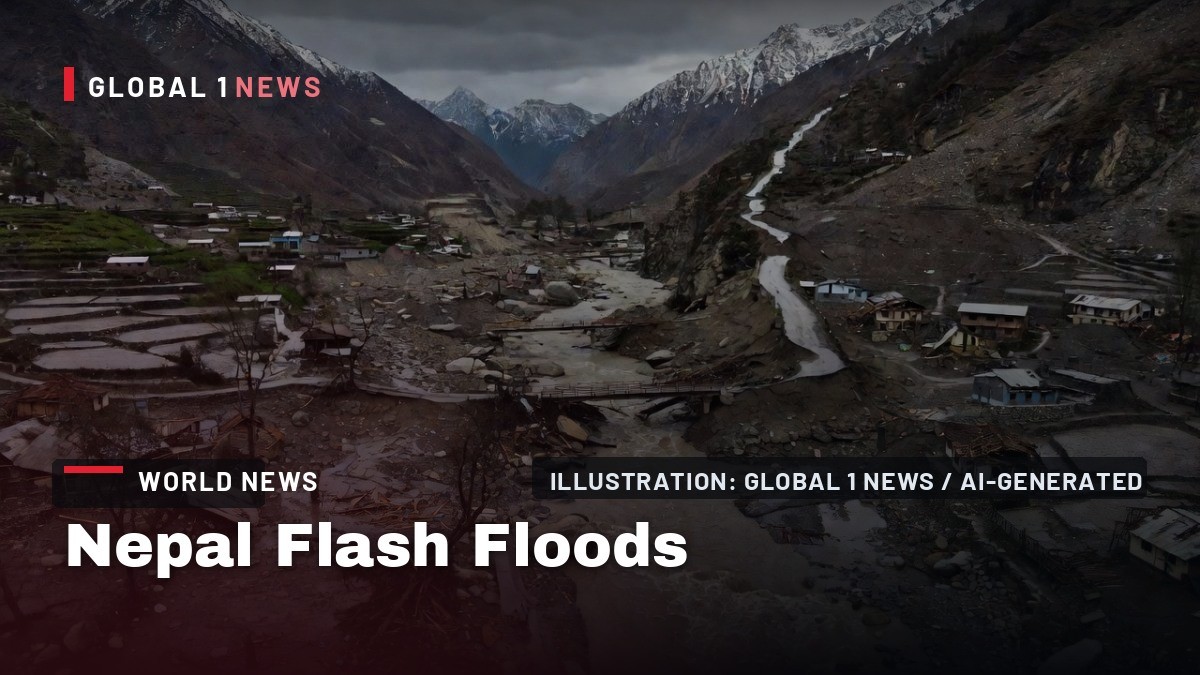
A catastrophic flash flood tore through the Bhotekoshi River gorge in central Nepal on Wednesday morning, August 26, 2026, sweeping away border infrastructure, hydropower plants, and entire settlements in a matter of hours. By Thursday afternoon, the official death toll had surpassed 389 people, with hundreds more still unaccounted for, making this one of the deadliest flood disasters to hit the Himalayan nation in recent memory.
Nepal Flood Death Toll Tops 389 as Rescue Efforts Intensify
Kathmandu, Nepal — August 28, 2026 — The floodwaters surged from the Tibet side of the border, overwhelming the Bhotekoshi River basin and the Trishuli corridor with little warning. Dozens of settlements in Rasuwa District and neighboring Nuwakot District were inundated, as was the Gyirong Port area on the China-Nepal border. The flash flood swept away the Rasuwagadhi border post, multiple bridges, at least two hydropower plants, and entire stretches of the only road linking Kathmandu to Tibet overland, effectively severing a critical trade artery.
Rescue Operations Underway in Remote Mountain Districts
Rescue teams are scrambling to reach survivors in the hardest-hit areas of Rasuwa and Nuwakot, where the terrain remains treacherous and access is limited. Nepalese army helicopters have been airlifting survivors from isolated pockets of the disaster zone, with footage showing dazed residents departing a Nepalese army helicopter in Nuwakot district on Wednesday, August 26. The aerial operations are focused on villages that have been completely cut off by the destruction of roads and bridges.
Prime Minister Balendra Shah personally inspected the affected areas and oversaw rescue operations on Thursday, according to official reports. His visit underscored the severity of the crisis, as government agencies work to coordinate a response across two districts that have been largely reduced to mud and debris. The army has been deployed in force, but the scale of the destruction is hampering ground-based rescue efforts.
One flood survivor in Devighat Village, Nuwakot district, described the scene to the BBC in stark terms: "Everything is under mud." The village, like many others along the Bhotekoshi corridor, was buried under a thick layer of sediment and rock that the surging waters deposited as they receded. Rescue workers are using shovels and bare hands in some areas, waiting for heavy equipment to be airlifted in.
Death Toll Climbs as Hundreds Remain Missing
By Thursday afternoon, August 27, 2026, Nepal's flood death toll had climbed to at least 389 people, according to official counts reported by India Today and BBC News. The number is expected to rise further as search teams reach more remote settlements. Hundreds remain missing, with officials reporting 384 tourists unaccounted for, according to Wikipedia and ReliefWeb. The Kathmandu Post reported that nearly 400 people are missing in total, including foreign tourists who were traveling in the region when the flood struck.
The high number of missing tourists has raised concerns about the vulnerability of travelers in Nepal's mountain regions during the monsoon season. The Bhotekoshi River gorge is a popular route for trekkers and overland travelers heading to the Tibet border, and the Rasuwagadhi border point is a key gateway for cross-border movement. The sudden nature of the flood gave little time for evacuation, and many tourists were reportedly swept away while staying in riverside lodges or traveling along the highway.
Officials have not released a breakdown of the missing tourists by nationality, but Canada's government has said it is closely following the situation for Canadian nationals. Other embassies in Kathmandu are expected to issue similar statements as the search and identification process continues. The disaster has disrupted cross-border trade and movement between Nepal and China's Tibet region, with the border point now completely non-functional.
Infrastructure Destroyed Along the Bhotekoshi Corridor
The flash flood caused catastrophic damage to infrastructure along the Bhotekoshi River, which forms a natural boundary between Nepal and Tibet in its upper reaches. The Rasuwagadhi border post, a major customs and immigration facility, was completely swept away by the force of the water. Multiple bridges along the Arniko Highway, the only overland route connecting Kathmandu to Tibet, were destroyed, leaving entire communities isolated.
At least two hydropower plants were also destroyed in the flood, raising concerns about power supply disruptions in the region. The plants, located along the Bhotekoshi and Trishuli rivers, were part of Nepal's efforts to expand its hydroelectric capacity. Their destruction represents a significant economic setback, as these facilities were key contributors to the national grid. The full extent of the damage to the power infrastructure is still being assessed.
The destruction of the highway is particularly concerning for the Nepalese economy, as the Rasuwagadhi border point is a vital trade gateway for goods moving between Nepal and China. The overland route has been a major alternative to the longer sea route through Indian ports, and its closure is expected to cause significant disruptions to imports and exports. The government has not yet announced a timeline for rebuilding the road, but officials have acknowledged that it could take months or even years.
Previous Floods in the Same Region Had Not Fully Recovered
This is not the first time the Bhotekoshi River has wreaked havoc on this stretch of the Himalaya. Last year, on July 8, 2025, a flood on the Lhende River killed at least 11 people along this same corridor. The destroyed areas from that event had not yet returned to normal when the new disaster struck, compounding the misery for local residents who were still rebuilding their lives.
The Bhotekoshi River also experienced a previous deadly flood event in July 2016 that killed more than a dozen people and destroyed the Kodari highway and border area. That event was caused by a glacial lake outburst, and the region has been considered high-risk ever since. The 2026 event is being described as one of the worst flash-flood disasters in the region in years, surpassing the scale of both the 2016 and 2025 events.
The repeated flooding in this area highlights the chronic vulnerability of mountain communities to sudden hydrological events. The fact that the 2025 damage had not been fully repaired suggests that recovery efforts have been slow and underfunded, leaving the region exposed to the next disaster. Local residents have repeatedly called for better early warning systems and more resilient infrastructure, but progress has been limited.
Experts Point to Glacial and Monsoon-Driven Surge
Experts attribute the disaster to a sudden glacial or monsoon-driven surge in the mountain river system. The monsoon season in Nepal runs from June to September and has been particularly intense in 2026, with above-average rainfall across the Himalayan foothills. The combination of heavy rain and potential glacial meltwater release created a surge of water and debris that traveled down the Bhotekoshi gorge with devastating force.
The exact cause of the surge is still under investigation, but satellite imagery and preliminary field reports suggest a massive mudflow and rockflow event. ReliefWeb, the UN OCHA platform, published satellite-detected mudflow and rockflow extent analysis for Rasuwa District in Bagmati Province, with imagery dated August 26-27, 2026. The analysis shows the scale of the debris field, which extends for kilometers along the river valley.
Al Jazeera published an explainer on what happened, what caused it, and who is missing, noting that the disaster has raised new questions about the impact of climate change on high-altitude environments. Glacial lakes in the Himalayas are known to be unstable, and the warming climate has increased the risk of outburst floods. The 2026 event may serve as a wake-up call for regional governments to invest in monitoring and early warning systems.
What This Means for Residents and the Broader Region
For the residents of Rasuwa and Nuwakot districts, the immediate priority is survival. Thousands of people have been displaced, and many have lost their homes, livestock, and livelihoods. The mud that now covers their villages is not just a physical obstacle but a symbol of the destruction of their way of life. The psychological toll of surviving a second or third flood in the same decade is immense, and long-term mental health support will be needed alongside physical reconstruction.
The economic impact of the disaster extends far beyond the immediate flood zone. The closure of the Rasuwagadhi border point will disrupt trade between Nepal and China, affecting businesses in Kathmandu and beyond. The destruction of hydropower plants will reduce electricity generation capacity, potentially leading to power cuts in the capital and other urban centers. The cost of rebuilding the highway, bridges, and power infrastructure will run into hundreds of millions of dollars, straining Nepal's already limited budget.
For international travelers, the disaster serves as a stark reminder of the risks of mountain travel during the monsoon season. The high number of missing tourists has prompted calls for better safety protocols and more stringent regulations for trekking and overland travel in high-risk areas. Tour operators may face increased scrutiny, and travelers may need to reconsider their itineraries during the June-September monsoon period.
Recovery Efforts Face Significant Challenges
The recovery effort in Rasuwa and Nuwakot will be a long and difficult process. The terrain is extremely rugged, and the destruction of roads and bridges means that many areas are only accessible by helicopter. The monsoon is still ongoing, and further rainfall could trigger additional landslides and floods, complicating rescue and recovery operations. The Nepalese army is working around the clock, but the scale of the disaster is stretching resources thin.
The government has not yet announced a comprehensive reconstruction plan, but Prime Minister Shah's visit suggests that the issue is a top priority. International aid agencies, including those coordinated through ReliefWeb and UN OCHA, are beginning to mobilize. The satellite-detected mudflow analysis will be crucial for planning where to focus search efforts and where to rebuild infrastructure. However, the sheer volume of debris and the instability of the terrain mean that some areas may be uninhabitable for the foreseeable future.
The human cost of the disaster is immeasurable. Families have been torn apart, and entire communities have been erased from the map. The survivors who were airlifted to safety in Nuwakot are now facing an uncertain future, with no homes to return to and no clear path forward. The international community has expressed condolences and offered support, but the real work of rebuilding lives and livelihoods will fall on the Nepalese people, who have shown remarkable resilience in the face of repeated natural disasters.
As the search for the missing continues, the focus will gradually shift from rescue to recovery. The bodies of the deceased will need to be identified and returned to their families, a process that could take weeks or months given the condition of the remains and the remote locations involved. The missing tourists will be the subject of intense diplomatic efforts, as embassies work to determine the fate of their citizens. The full scale of this tragedy is only beginning to be understood, and the coming weeks will bring more grim news as the waters recede and the mud is cleared.
By Jessica Ali, Staff Writer
This article was produced with AI-assisted research and editorial support. Sources: BBC, Al Jazeera, Kathmandu Post, India Today, ReliefWeb, euronews.
What's Your Reaction?
 Like
0
Like
0
 Dislike
0
Dislike
0
 Love
0
Love
0
 Funny
0
Funny
0
 Wow
0
Wow
0
 Sad
0
Sad
0
 Angry
0
Angry
0

Editor-in-Chief at Global1.News. Atlanta-based journalist who cuts through the BS and tells it like it is. Lead anchor, host, and the voice you hear when the spin stops and the truth starts.











Comments (0)