
Father of Putin’s Reported Partner Takes Stake in Rosneft Arctic Contractor – Investigation
The purchase, made in the spring of 2026, was revealed by the investigative outlet Sistema and offers a rare glimpse into the network of beneficiaries surrounding the Kremlin’s most ambitious energy venture.
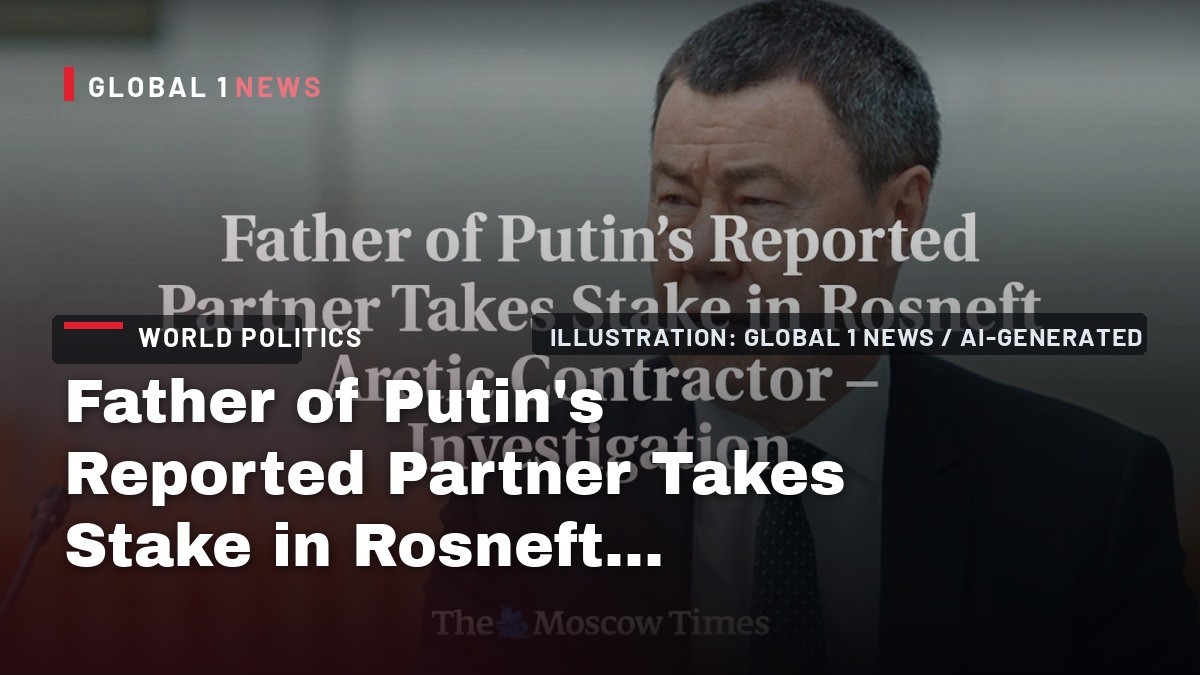
Marat Kabaev, the father of former Olympic gymnast Alina Kabaeva—widely reported in the media as President Vladimir Putin’s partner and the mother of his youngest children—has entered the financial landscape of Russia’s Arctic oil expansion by acquiring a 25 percent stake in Taimyr Invest, a logistics firm that services Rosneft’s flagship Vostok Oil project. The purchase, made in the spring of 2026, was revealed by the investigative outlet Sistema and offers a rare glimpse into the network of beneficiaries surrounding the Kremlin’s most ambitious energy venture.
Stake acquisition and its timing
The transaction took place after Taimyr Invest was hit with substantial tax claims in 2024. Court documents indicated that the company had evaded taxes through a web of shell entities, prompting tax authorities to order the payment of more than 3 billion rubles in additional taxes and roughly 800 million rubles in fines. Kabaev’s entry as a co‑owner followed these penalties, a sequence that raises questions about the motivations behind the timing of the investment.
Kabaev told Sistema that his decision was prompted by a conversation with Nikolai Patrushev, a former head of the Federal Security Service and a close aide to President Putin. He framed the purchase as a move to help his partners build a “strong and socially responsible business.” The claim ties the investment directly to a senior security figure, suggesting that the deal may have been facilitated—or at least endorsed—by individuals within the Kremlin’s inner circle.
The strategic importance of Taimyr Invest
Taimyr Invest provides logistics services for Vostok Oil, the massive development that Rosneft launched in early September 2026. The project is slated to require trillions of rubles in capital and to tap billions of metric tons of oil and gas reserves in Russia’s Far North. As a logistics hub, Taimyr Invest is essential for moving equipment, personnel, and extracted hydrocarbons across the remote Arctic terrain.
Financial data cited by RBC shows that Taimyr Invest’s revenue surged to 55.3 billion rubles in 2024, up from 13.2 billion rubles the previous year. Net profit in the same period reached 1.6 billion rubles. The dramatic growth aligns with the acceleration of Vostok Oil activities, underscoring the firm’s central role in the supply chain that underpins the Kremlin’s Arctic ambitions.
Vostok Oil’s scale and state backing
Rosneft’s Vostok Oil project, inaugurated in September 2026, represents the most ambitious Arctic oil development in Russia’s recent history. The company has already begun shipping crude through the newly built Bukhta Sever terminal and completed a 790‑kilometer pipeline to connect the field to existing infrastructure. In 2023, Rosneft CEO Igor Sechin estimated that the venture would demand roughly 12 trillion rubles in investment and would rest on a resource base of 6.5 billion metric tons of oil and 10 trillion cubic meters of gas.
The sheer scale of Vostok Oil makes the logistics network that supports it a strategic asset. Companies that secure contracts with Rosneft for this project stand to benefit from long‑term, high‑value agreements, positioning them as key intermediaries in the Kremlin’s drive to expand Arctic production.
Contractual landscape and the role of private contractors
One private contractor, Sinarastroikomplekt, has been identified in media reports as linked to billionaire Dmitry Pumpyansky and as a Rosneft contractor. While Sistema could not independently verify the connection in publicly available records, it calculated that Sinarastroikomplekt received contracts worth nearly 900 billion rubles from Vostok Oil between June 2021 and April 2026, making it the project’s largest private contractor.
The concentration of contracts in a handful of firms suggests a tightly controlled procurement environment, where political connections and state endorsement play decisive roles in determining which companies receive lucrative assignments. The involvement of high‑profile individuals—such as Kabaev’s daughter, Alina Kabaeva—adds another layer to this patronage network.
Potential benefits for the Kabaev family
By securing a quarter‑ownership stake in Taimyr Invest, Marat Kabaev positions his family to profit directly from the flow of state‑backed oil revenues. The logistics firm’s revenue growth and profitability indicate that even a minority share could translate into substantial financial returns, especially as Vostok Oil ramps up production and expands its logistical demands.
The timing of the acquisition—post‑tax penalties but before the full operational launch of Vostok Oil—suggests an opportunistic entry that could capitalize on the project’s escalation. Moreover, the reported conversation with Nikolai Patrushev implies that the investment may have been facilitated by a senior security official, potentially smoothing regulatory hurdles and securing preferential treatment in future contract allocations.
Kremlin implications and broader patronage patterns
The Kabaev transaction fits a broader pattern of Kremlin‑linked individuals and families gaining stakes in strategic sectors, particularly energy and infrastructure. Such arrangements reinforce the intertwining of political power and economic advantage, creating a privileged class that benefits from state‑driven projects while also providing the regime with loyal financial backers.
When senior security figures like Patrushev are cited as intermediaries, the line between state authority and private enrichment becomes increasingly blurred. This dynamic consolidates the Kremlin’s control over key economic levers while simultaneously rewarding those within its inner circle, thereby strengthening the patron‑client relationships that undergird Putin’s governance model.
International perception and the risk of sanctions
The involvement of individuals closely associated with President Putin in high‑value energy contracts is likely to attract scrutiny from foreign governments and multilateral bodies. While the source material does not mention any sanctions, the pattern of linking family members of the president to lucrative state projects has historically prompted punitive measures from the United States, the European Union, and other jurisdictions.
Should Western authorities interpret the Kabaev stake as a conduit for illicit enrichment, they may consider expanding existing sanctions regimes to target Taimyr Invest, its shareholders, or related logistics firms. Such actions could complicate the company’s ability to engage with international partners, increase compliance costs, and potentially slow the progress of Vostok Oil if critical equipment or financing becomes restricted.
This article was produced with AI-assisted research and editorial support. Reporting is based on the source material cited below. Sources: The Moscow Times; themoscowtimes.com; Global1.News (18 September 2026).
By Irina Volkov, Staff Writer
What's Your Reaction?
 Like
0
Like
0
 Dislike
0
Dislike
0
 Love
0
Love
0
 Funny
0
Funny
0
 Wow
0
Wow
0
 Sad
0
Sad
0
 Angry
0
Angry
0
Russia/Eastern Europe Correspondent at Global1.News. Covering Russian politics, energy, security, and the shifting dynamics of the post-Soviet space. Provides clear-eyed analysis on one of the world's most opaque regions.












Comments (0)