
Danish Parliament adopts "emergency plan" for electricity grid, puts data centers at the back of queue
Denmark just threw a wrench in the grid for big data‑center operators, and it’s a move that should make every independent hosting founder sit up straight.
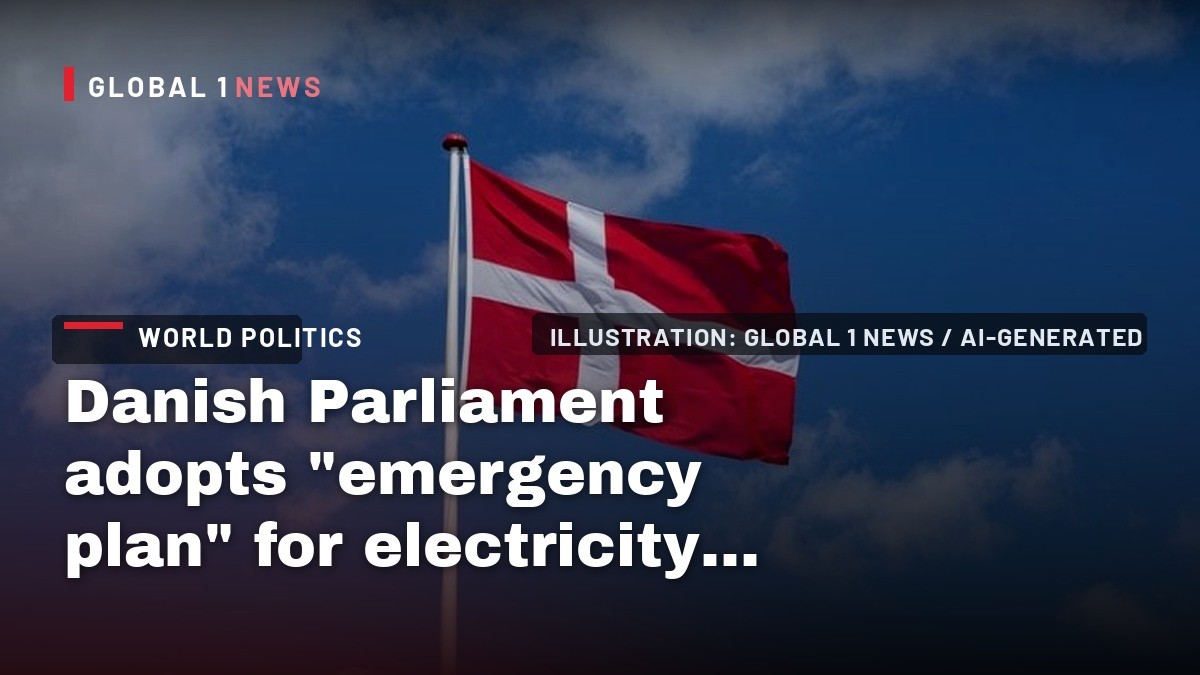
Denmark just threw a wrench in the grid for big data‑center operators, and it’s a move that should make every independent hosting founder sit up straight. The parliament voted on an “emergency plan” on October 1, 2026, and it kicks in on October 12. The new rule scrubs the old first‑come, first‑served model and hands the grid operators—Energinet and the regional utilities—more leeway to decide who gets power when the wires are tight. For us running real infrastructure, that means the hyperscale giants are now sitting at the back of the line, and the risk profile for any data‑center project in Denmark has just shifted dramatically.
What the tiered grid plan actually does
The plan splits connection requests into four categories. Category 1 gets the top priority and covers “standard load growth for existing customers, new households, small businesses (e.g., in transport), and critical societal functions such as defense, healthcare, and emergency services, including data centers linked to critical societal functions.” In practice, a handful of data‑center projects that can argue they support those critical services will still get fast‑track access.
Category 2 is earmarked for projects that push the green transition and electrification forward. Category 3 is for energy‑storage facilities and “energy storage capacity in co‑located facilities” that exceed the user’s normal consumption. The agreement explicitly says that, in principle, Category 3 will include data centres because they are “typically not geographically bound” and can strain the grid. The only escape hatch is to be classified under Category 1 by proving a direct link to critical societal functions.
Why the move matters to independent providers
For a founder who has spent a decade wrestling with power contracts, the shift from a predictable queue to a discretionary model is a red‑flag. The new system gives Energinet and the utilities the power—pun intended—to push back on large‑scale, non‑critical builds. That translates into longer lead times, higher uncertainty, and a potential need to re‑engineer power‑intensive workloads to fit tighter caps.
In Denmark the data‑centre market isn’t huge; most sites sit around Copenhagen. Yet the presence of Microsoft’s cloud region, under development since 2020, shows that even a modest market can attract the big players. Those hyperscale operators have the clout to lobby for priority, but the new plan explicitly puts them at the back of the queue unless they can claim a critical function. That creates a clear hierarchy that independent providers can leverage—if you can demonstrate essential services, you can still get a seat at the table.
The political driver behind the policy
Anna Bjerre, the climate, energy and supply spokesperson for the Alternative party, framed the plan as a way to “reject the gigantic, hyperscale data centres and tech giants” and put “critical societal functions” first. Her statement underscores a broader European trend: governments are increasingly willing to use grid access as a lever to push greener, more locally beneficial projects.
The political narrative is simple—protect cheap, green, and stable energy prices by limiting the appetite of power‑hungry, non‑essential data‑centre builds. For us, that means any future expansion must be justified not just on ROI but on how it aligns with national priorities like defense, healthcare, or renewable integration.
How this mirrors moves elsewhere
Denmark isn’t acting in a vacuum. Finland is flirting with a similar tiered approach, planning to push back projects that need more than 10 MW. The consultation runs until October 9, indicating that the Nordic region is collectively re‑thinking how to allocate scarce grid capacity. If Finland adopts a comparable scheme, the ripple effect could tighten the market for large‑scale builds across the whole area, forcing providers to rethink their location strategies.
That regional alignment means the pressure on hyperscale operators will only increase. Independent hosts that already operate on a leaner power footprint will find themselves in a comparatively better position—provided they can articulate the societal value of their services.
Practical fallout for current and future projects
Any data‑centre seeking a new connection after October 12 will now have to file under one of the four categories. If you’re a small‑to‑mid‑size operator with a focus on hosting services for local enterprises, you can argue that you support “small businesses” and therefore belong in Category 1. That gives you a stronger case than a pure‑play hyperscale cloud provider that can’t point to a critical societal function.
However, the plan also means you can’t assume a smooth rollout. The discretionary element introduces a layer of bureaucracy that can delay connection by months. You’ll need to prepare robust documentation of how your workload supports critical services, and you may have to negotiate power‑capped contracts that reflect the new priority hierarchy.
Actionable steps for founders and operators
First, audit your power demand and map it against the four categories. Identify any service you provide that touches healthcare, emergency response, transport, or other critical sectors, and be ready to make that case to the grid operators. Second, diversify your power sources. If you can blend on‑site renewables or battery storage, you can shift part of your load into Category 3 and reduce reliance on the grid’s discretionary allocation.
Third, keep a close eye on Finland’s consultation process. A similar rule there could tighten the market across the Nordics, and early engagement will give you a leg up in shaping the final rules. Finally, factor the new risk into your financial models. The uncertainty around connection timing should be baked into project budgets and timelines, or you’ll end up with a half‑finished build and a stack of unpaid invoices.
Bottom line for the independent hosting community
Denmark’s emergency plan is a clear signal: governments will no longer tolerate unchecked power grabs by the tech giants. For founders who run real hosting infrastructure, that’s both a warning and an opportunity. The warning is that you can’t rely on “first‑come, first‑served” any longer; the opportunity is that a well‑positioned, socially aligned operation can still secure the grid access it needs.
In the end, the battle for power is as much about politics as it is about kilowatts. Align your business with the societal priorities that the new rule champions, diversify your energy mix, and stay ahead of the regulatory curve. Those who do will keep the lights on and the servers humming, while the hyperscale behemoths learn to wait their turn.
— Allan Ali, Founder
This article was produced with AI-assisted research and editorial support. Reporting is based on the source material cited below. Sources: Data Center Dynamics; datacenterdynamics.com; Global1.News (08 October 2026).
By Allan Ali, Global1.News
What's Your Reaction?
 Like
0
Like
0
 Dislike
0
Dislike
0
 Love
0
Love
0
 Funny
0
Funny
0
 Wow
0
Wow
0
 Sad
0
Sad
0
 Angry
0
Angry
0

Publisher of Global1.News. Automation architect, systems builder, and the guy making sure the truth gets published.













Comments (0)