
Russia Weaponizes Winter as Ukraine Unleashes Record Drone Barrages
Russia struck Naftogaz facilities 13 times in a week and killed 10 civilians in Pechenihy, while Ukraine launched a record 620 drones at Moscow. With 1,550 Russian drones fired weekly and winter approaching, both sides escalate toward a brutal cold-season campaign.
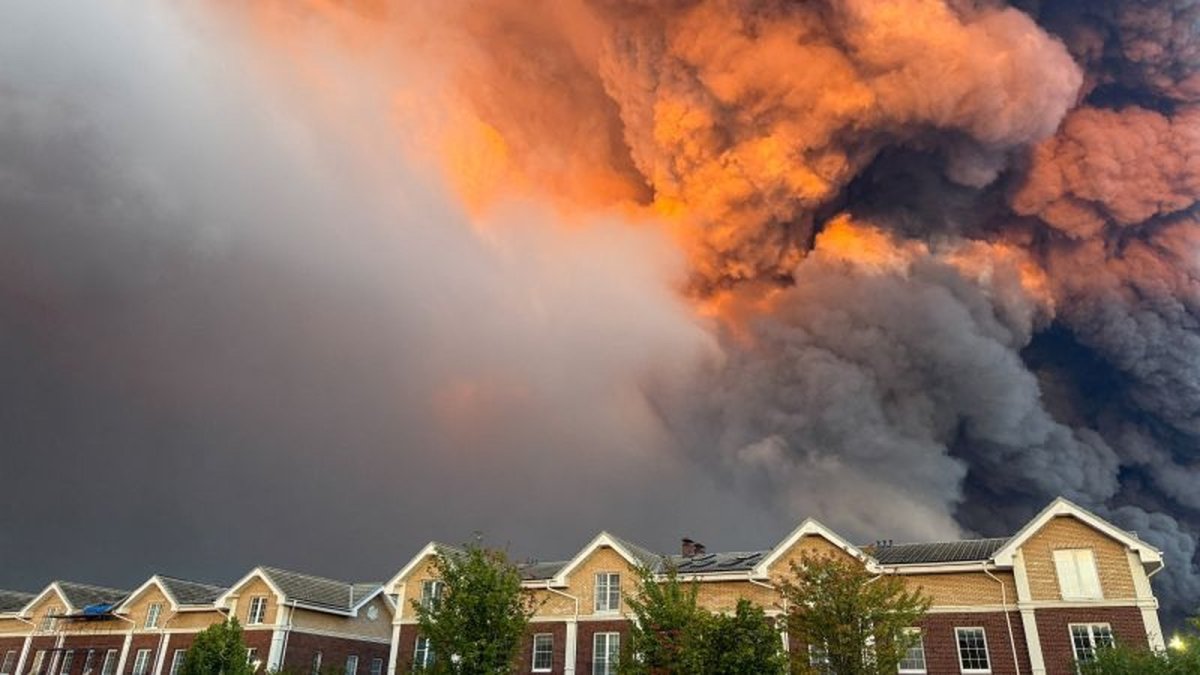
Naftogaz Under Siege: 13 Strikes in a Week
The Kremlin's campaign to break Ukraine's will through energy terror is entering its most dangerous phase yet. Russia attacked facilities of Ukraine's state energy company Naftogaz 13 times over the past week, according to the company, bringing the total number of strikes on its premises to nearly 300 since the start of the year. The latest barrage caused serious damage to equipment and production capacity, though officials confirmed no injuries in those specific attacks.
This is not random violence. This is a calculated strategy. Ukrainian officials say Moscow is deliberately "weaponising" the coming winter, targeting the very infrastructure that keeps millions of Ukrainians warm and powered as temperatures plummet. The timing is no accident — Russia is stockpiling misery for the coldest months, when the damage to the grid will be felt most acutely by civilians who have already endured 1,637 days of war.
The human cost extends beyond the energy sector. DTEK, Ukraine's largest private energy company, reported that a Russian attack sparked a fire at one of its coal mines, killing a 52-year-old man. Every strike on critical infrastructure is not just an act of sabotage against machines — it is an assault on the people who operate them and the communities they serve.
Pechenihy Massacre: A Deliberate Strike on Civilians
Tuesday, August 18 brought one of the most brutal illustrations yet of Russia's tactics. A missile slammed into a crowded intersection in the small town of Pechenihy, 30 miles southeast of Kharkiv, killing at least 10 people and injuring eight others, according to Kharkiv Governor Oleh Syniehubov. The target was not a military installation — it was a civilian hub where residents gather for daily life.
"This morning, the Russians brutally struck a crowded intersection in Pechenihy, where the post office and shops are located, and around where there are only residential buildings," Syniehubov said. The strike damaged 10 private houses, a cafe, a post office, a shop and at least seven cars. President Volodymyr Zelensky condemned the attack in stark terms, vowing: "We will definitely respond to this Russian strike."
The Pechenihy attack was part of a broader wave of violence that killed at least 19 people and injured at least 53 across six Ukrainian oblasts overnight and into the morning, according to local authorities. In Zaporizhzhia Oblast, Russian attacks killed at least three people and injured six others, including a 72-year-old man killed when a Russian FPV drone struck his car, per Governor Ivan Fedorov. The toll is staggering: two killed and 10 injured in Kherson Oblast, three killed and three injured in Sumy Oblast, and five injured in Odesa Oblast including two 16-year-old boys.
Record Drone Barrages: Moscow Under Siege
While Russia pounds Ukrainian cities, Ukraine is answering in kind — and the scale is unprecedented. Moscow Mayor Sergey Sobyanin reported that 620 Ukrainian drones approached the capital and surrounding region between Monday, August 17 evening and 5 a.m. local time Tuesday, August 18, of which 180 were downed by air defenses. TASS, the Russian state news agency, calculated this as the largest attack in two years, eclipsing an assault overnight Saturday that saw 600 drones bear down on Moscow with 201 destroyed in the air.
The psychological impact on Moscow is undeniable. Russian organisers cancelled the Spasskaya Tower military music festival, an "international" event due to be held in Red Square from Friday, postponing it until next year. When the Kremlin starts cancelling its propaganda spectacles, you know the message is landing. Flights were suspended at Domodedovo, Vnukovo and Zhukovsky airports, according to Rosaviatsia, as drones continued to menace the capital overnight.
Ukraine's Air Force reported launching 147 drones overnight on August 18 alone, with air defenses downing or suppressing 111 of them. Strikes were recorded at 19 locations, and debris from intercepted drones fell at three sites. This is a sustained, three-day campaign of pressure that has brought the war home to Russian civilians.
Rostov Rocket Fuel Plant: Hitting the Arsenal
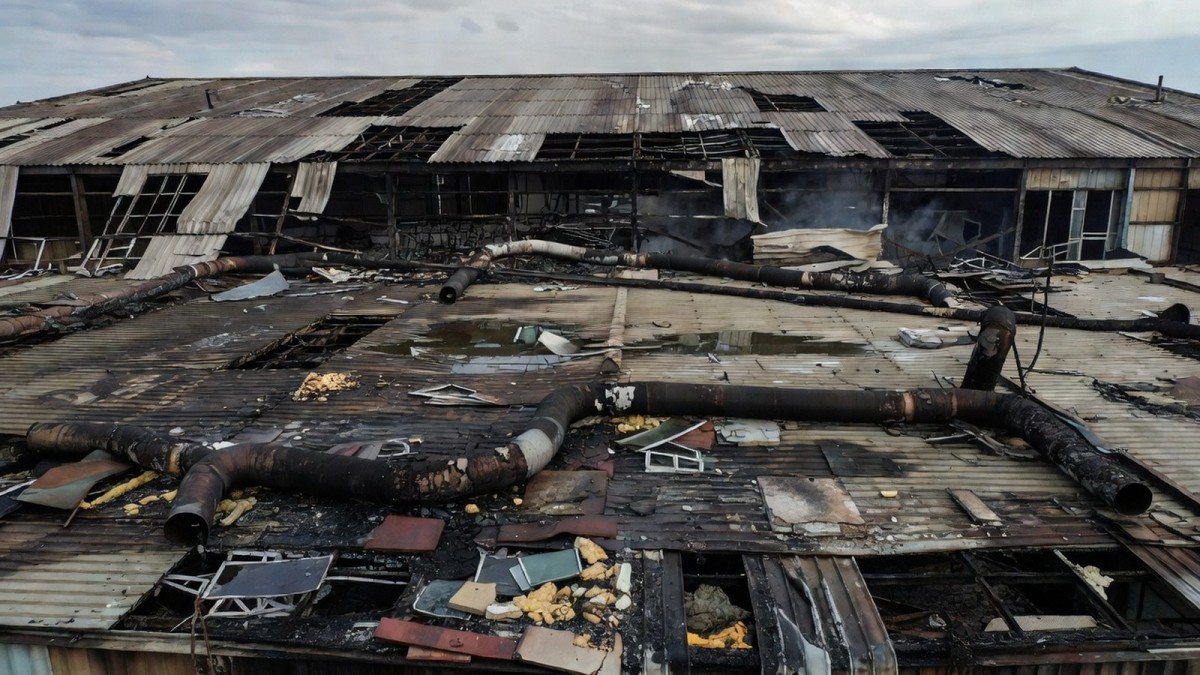
Ukraine's military general staff released pictures showing a strike that blew up rocket fuel and explosives workshops in Russia's Rostov region. The strike on the night of August 16 hit the Kamensky Combine in Kamensk-Shakhtinsky, destroying two workshops and damaging four more. This is not a symbolic gesture — it is a direct assault on Russia's ability to wage war.
"The Kamensky Combine is a Russian military-industrial complex enterprise that produces solid rocket fuel for the munitions of the Uragan, Smerch, and Tornado-S multiple-launch rocket systems (MLRS), as well as for a range of missile systems and air-delivered munitions," the general staff said. By targeting the fuel that powers Russia's most feared artillery systems, Ukraine is attacking the supply chain that enables the daily bombardment of its cities.
The strikes extend beyond Rostov. A warehouse outside Moscow belonging to Russian e-commerce giant Wildberries was hit and damaged, and an aluminum plant in Filimonovo, 40 miles northwest of Moscow, was set ablaze. Ukraine says it has struck seven out of Wildberries' ten largest logistics centers — a direct hit on Russia's civilian economy and a demonstration that nowhere is safe.
The Wider Toll: 1,550 Drones, 1,560 Bombs, 62 Missiles
The scale of Russia's aerial assault on Ukraine is almost incomprehensible. President Zelensky revealed that Russia fired more than 1,550 attack drones, nearly 1,560 guided aerial bombs and 62 missiles at Ukraine over the last week. These are not precision strikes on military targets — they are indiscriminate weapons of terror aimed at breaking civilian morale.
"European interceptors cannot simply be allowed to sit in storage. Lives need to be protected. Russia must be stopped," Zelensky said, in a direct appeal to NATO allies who have been slow to deliver air defense systems. The numbers back his urgency: seven people, including a 9-year-old boy, were injured in Russian attacks on Kharkiv Oblast alone. In Donetsk Oblast, one person was killed and four injured. One person was injured in Dnipropetrovsk Oblast.
The collateral damage extends beyond Ukraine's borders. A Russian drone crashed and exploded in Moldova near the settlement of Talmaza, setting grass on fire but leaving no casualties. The Institute for the Study of War reported it was a Russian Banderol, a winged cruise missile cum loitering munition. Moldova condemned the violation of its airspace, but the message is clear: Russia's war is spilling into neighboring countries with increasing frequency.
Weaponizing Winter: The Coming Crisis
Russia is weaponizing winter, according to the CEO of Ukraine's largest energy company, who is urging Europe and NATO to take the Kremlin's relentless attacks on Ukraine's energy infrastructure seriously. The strikes are forcing millions to cope without power in sub-freezing temperatures. Overnight, the major eastern city of Zaporizhzhia saw its electrical infrastructure pummeled by Russian drones and missiles, leaving 11,000 households without power.
The scenes reflect Russia's systematic targeting of Ukraine's thermal power plants and high-voltage substations — vital links that connect nuclear plants to the national grid. Nuclear power remains Ukraine's lifeline, and Moscow appears intent on severing it. Until spring, many Kyiv residents will rely on mobile apps to check rationed electricity schedules, a grim daily ritual that has become a fact of life.
This is not a side effect of war — it is the strategy. Russia is deliberately destroying the infrastructure that keeps Ukrainians alive through winter, betting that the cold will do what its military cannot. The strikes on Naftogaz facilities, the missile attacks on civilian intersections, the relentless drone barrages — all of it is designed to break the will of a nation that has refused to surrender.
Britain's Warning and the West's Dilemma
Russia threatened Britain with "consequences" over reports that British drones, including a stealth model, were used to strike targets on Russia's mainland. The Sunday Times cited a UK defense source delivering a blunt message: "Russia has been very effective at keeping the west nervous about hitting it too hard. These attacks mean the UK is effectively signalling to Russia and our allies that we're not [nervous] any more."
This is a pivotal moment in the war. For months, Western allies have hesitated to provide weapons that could strike deep into Russian territory, fearing escalation. But as Russia's winter campaign intensifies, that calculus is shifting. The UK's apparent willingness to allow its drones to hit Russian soil represents a significant escalation — and a signal that the West is finally taking the threat seriously.
The diplomatic fallout is spreading. NATO air policing missions are now actively engaging Russian drones: an unidentified drone was shot down Sunday in Romanian airspace by a Spanish F-18 fighter jet pilot, the fourth drone shot down this year over Romania. Fragments fell in an uninhabited area between two villages. The war is no longer contained to Ukraine — it is increasingly a direct confrontation between Russia and the NATO alliance.
What Comes Next: A Winter of Reckoning
As day 1,637 of the war draws to a close, both sides are preparing for a brutal winter campaign. Russia is stockpiling missiles and drones to continue its assault on Ukraine's energy grid, while Ukraine is demonstrating an unprecedented ability to strike deep into Russian territory. The record drone barrages on Moscow are not just retaliation — they are a strategic message that Ukraine can and will bring the war home to Russia.
The human cost is mounting on both sides. Russia reported at least six people killed in the recent drone attacks, including an 83-year-old man killed by a drone attack in the Moscow region on Sunday. Five people were killed in the Rostov region. The drones were intercepted over 17 regions of Russia, a testament to the geographic reach of Ukraine's new capabilities.
Meanwhile, the political repression inside Russia continues unabated. A court gave senior opposition politician Lev Shlosberg 11 years and one month in prison for speaking out against the war, and the Yabloko party was banned from upcoming elections with its appeal denied by Russia's supreme court on Monday. Amnesty International denounced the verdict: "His arbitrary prosecution and sentencing are blatant reprisals for exercising his right to freedom of expression to call for peace," said Marie Struthers, Amnesty eastern Europe and central Asia director.
The coming months will test Ukraine's resilience like never before. With 11,000 households in Zaporizhzhia already without power and winter approaching, the stakes could not be higher. Russia is betting that the cold will finish what its missiles started. Ukraine is betting that its drone campaign will force Moscow to reconsider. The only certainty is that the suffering will continue — unless the West finally delivers the air defenses and long-range weapons Ukraine has been demanding. The time for hesitation is over.
This article was produced with AI-assisted research and editorial support. Sources: CNN, The Guardian, UPI, Kyiv Independent, Scripps News, AP.
By Jessica Ali, Staff WriterWhat's Your Reaction?
 Like
0
Like
0
 Dislike
0
Dislike
0
 Love
0
Love
0
 Funny
0
Funny
0
 Wow
0
Wow
0
 Sad
0
Sad
0
 Angry
0
Angry
0

Editor-in-Chief at Global1.News. Atlanta-based journalist who cuts through the BS and tells it like it is. Lead anchor, host, and the voice you hear when the spin stops and the truth starts.












Comments (0)