
England's Rivers Fail Chemical Tests as Sewage Crisis Deepens
Every surface water body in England has failed chemical status tests, according to the Environment Agency's six-yearly assessment published on 6 August 2026. The findings reveal a deepening crisis driven by persistent pollutants, sewage discharges and agricultural runoff that directly affects communities from the River Wye to the Lake District.
Every surface water body in England has failed chemical status tests, according to the Environment Agency's six-yearly assessment published on 6 August 2026. The findings reveal a deepening crisis driven by persistent pollutants, sewage discharges and agricultural runoff that directly affects communities from the River Wye to the Lake District.
England's Waterways Face Total Chemical Failure as 2027 Targets Slip Away
London, UK – 6 August 2026 — The Environment Agency's Water Framework Directive classification has delivered a stark verdict on England's rivers, lakes and estuaries. No waterway passed the separate chemical pollution test, leaving communities across the country with waterways that remain fundamentally unsafe.
Complete Chemical Status Failure Across All Surface Waters
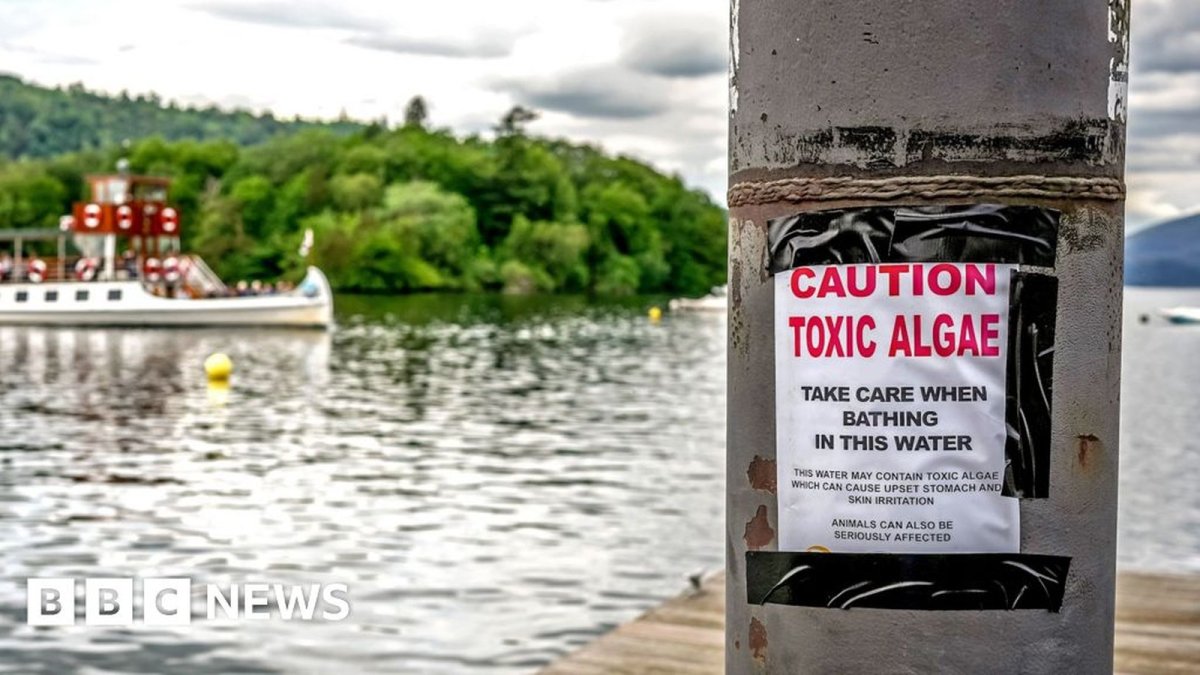
The Environment Agency reported that every surface water body in England failed chemical status. This failure stems almost entirely from mercury, PFOS and PBDEs, persistent chemicals that accumulate in the environment. The agency stated that England's water bodies are not predicted to reach good chemical status until 2063.
The human health implications of this universal chemical failure extend far beyond abstract classifications. Mercury, still permitted in dental fillings in Britain unlike most developed nations, acts as a potent neurotoxin that bioaccumulates through food chains, while PFAS compounds contaminate drinking water catchments serving millions. The twenty-three enforcement notices currently served on water companies to reduce PFAS levels underscore the direct regulatory recognition of risks to public health, yet enforcement remains patchy and the chemicals continue to enter supplies unchecked.
Persistence defines the scale of the problem. These substances do not break down in the environment, meaning the 2063 prediction for good chemical status reflects not merely slow progress but the fundamental reality that once released, they remain in sediments, fish and water for decades. This timeline clashes directly with the Water Framework Directive's statutory deadline of December 2027, creating a widening gap between legal obligation and environmental reality that the Office for Environmental Protection is already probing.
The combination of legacy pollutants and ongoing inputs leaves catchments locked into failure. Without source control measures that match the persistence of these chemicals, the 2063 horizon risks becoming a permanent deferral rather than a deliverable target.
Ecological Status Declines and Missed Legal Targets
Only 14.3% of England's surface waters achieved good ecological status, down from 16.3% in 2019. The Environment Agency noted that datasets are not directly comparable due to methodological changes. Around 85% of England's rivers failed a water quality measure, with 15% of rivers classed as good and fewer than 7% of lakes reaching that level.
The legally binding target requires restoring 77% of England's waters to good ecological status by 2027. The Office for Environmental Protection has warned this will be missed by a considerable margin and is investigating both the government and the Environment Agency over possible rule breaches.
Phosphate Pollution and Fish Population Impacts
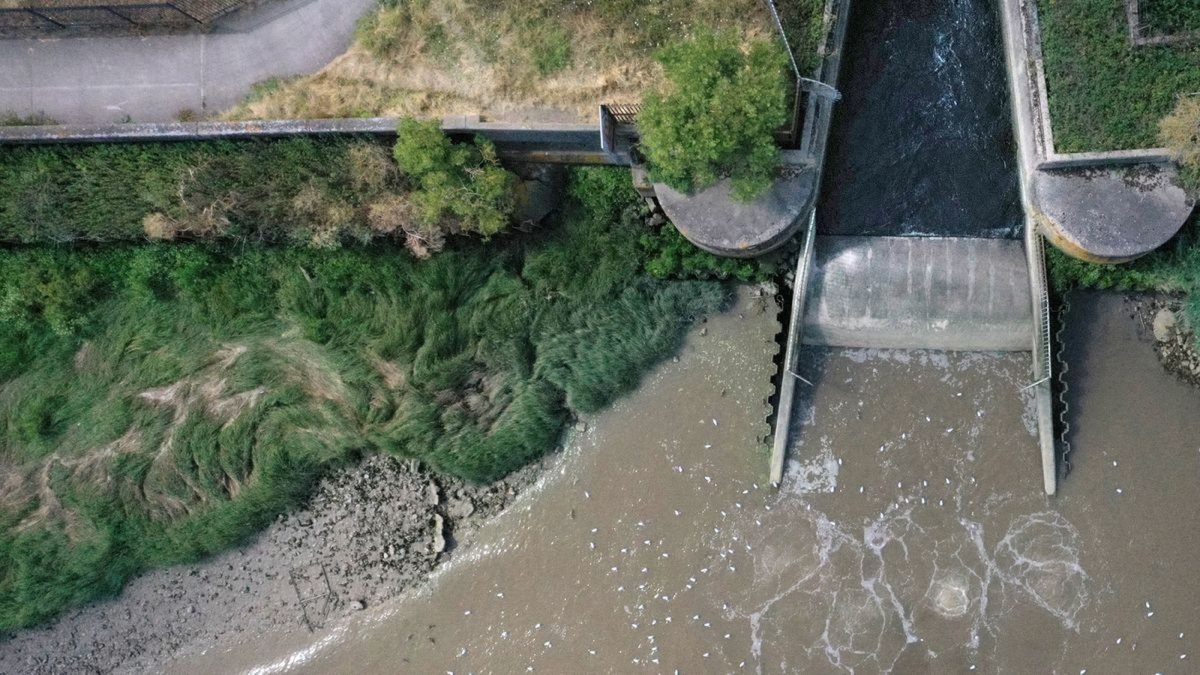
Phosphate from sewage and farm runoff remains the biggest individual problem, with around half of rivers still exceeding safe levels. Just over 48% of rivers tested contained phosphates above safe thresholds. Nearly 58% of fish-linked tests in rivers were classed as moderate or worse.
Phosphate enrichment triggers rapid algal proliferation that blankets river surfaces, blocking sunlight from reaching submerged plants and triggering their decay. As bacteria break down the resulting organic matter they consume dissolved oxygen, creating hypoxic zones where fish suffocate and invertebrate communities collapse. In the South West and Midlands catchments this process has turned once-clear channels into turbid, lifeless stretches, directly threatening the viability of recreational angling and deterring wild swimmers who encounter skin irritation and visible scum.
The same nutrient load originates from two linked sources: treated effluent from sewage works that still carries residual phosphates, and fertiliser runoff from arable fields where excess application exceeds crop uptake. Under the Water Framework Directive’s strict assessment logic a single parameter breach nullifies an entire water body’s classification, concentrating regulatory attention on these catchments. The resulting ecological damage therefore extends beyond abstract targets, eroding both biodiversity and the everyday amenity value that communities expect from their local rivers.
Sewage Spills and Water Company Accountability
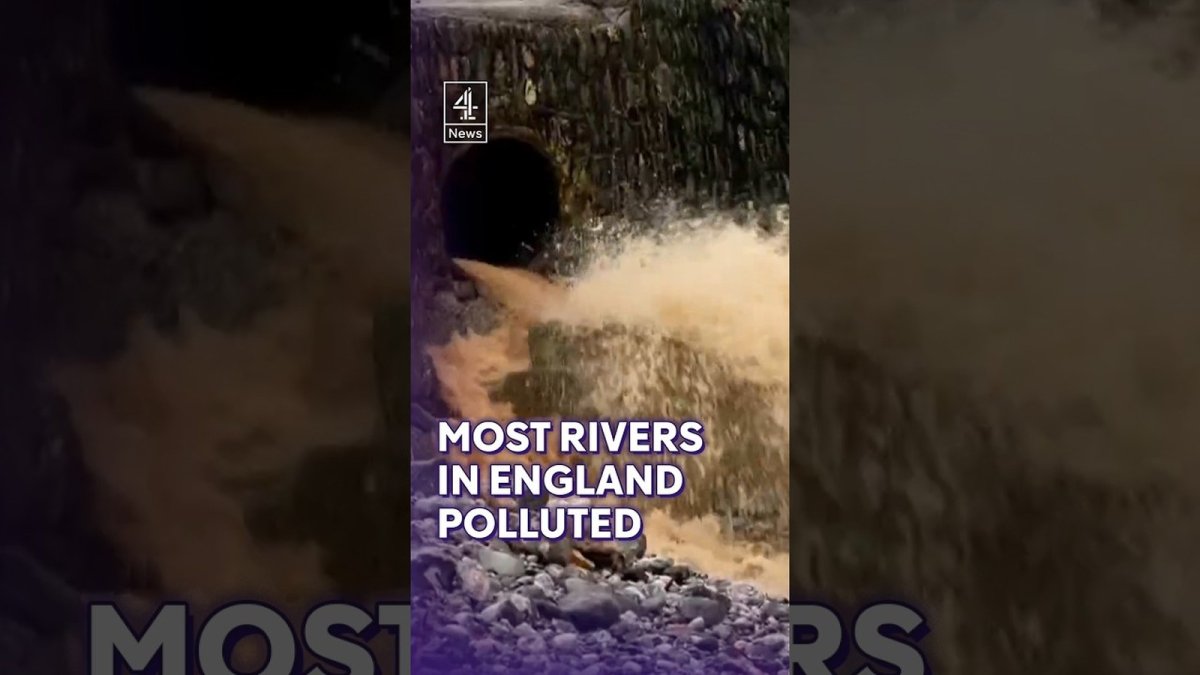
Sewage spilled from storm overflows for more than 1.87 million hours in 2025, with nearly 300,000 incidents recorded even in drier weather.
Channel 4 News investigations have laid bare the systemic evasion that allows such volumes to persist. The May 2026 "Rivers in crisis – how water companies dodge prosecution" report exposed how operators exploit regulatory loopholes, while the Dirty Business docu-drama brought the human tragedy into focus through the story of eight-year-old Heather Preen, who died after contracting E.coli at Dawlish Warren. Southern Water's ongoing High Court battle over alleged sewage data fraud and Cornwall's no-confidence vote in South West Water illustrate how accountability mechanisms are being tested and found wanting.
That total must be set against the record 3.61 million hours logged in 2024. Far from representing improvement, the lower figure still signals routine discharge rather than exceptional weather-driven events, raising questions about whether infrastructure upgrades are keeping pace with the scale of the problem or merely managing public perception.
These patterns suggest that without stronger enforcement powers and genuine deterrence, water companies will continue to treat fines and notices as operational costs rather than catalysts for change.
Agricultural Runoff and Intensive Farming Pressures
Campaigners and scientists identify agriculture as an equally large pollution source that attracts far less public attention than water companies. River Action chief executive described England's rivers as among the filthiest in Europe, poisoned by sewage from profit-driven water companies and industrial-scale agriculture including chicken manure runoff from intensive poultry units.
Erica Popplewell of River Action highlighted the growing threat to rivers such as the Wye and Severn. She stated there is a lot of poo that comes out of the chickens, and if it goes straight into a river it causes eutrophication, damaging the whole ecology and killing the river.
Along the Wye and Severn, clusters of intensive poultry units now house hundreds of thousands of birds whose manure is routinely spread on surrounding land. Heavy rainfall washes this nutrient-rich waste into tributaries, accelerating the same eutrophication cycle that strips oxygen from the water column and smothers aquatic life. These case studies illustrate how concentrated livestock production has intensified pressure on catchments already struggling with multiple stressors, yet the scale of the operations remains less visible to the public than the more frequently reported failings of water companies.
The National Farmers’ Union has been approached for comment but has not responded, leaving open the question of how the sector intends to address its contribution. Agriculture receives comparatively little scrutiny because its pollution arrives diffusely through soil and drainage rather than through dramatic overflow events. Effective support could involve targeted incentives for nature-friendly practices such as buffer strips, precision fertiliser application and covered manure storage, measures that would reduce runoff while maintaining farm viability and restoring ecological balance to these pressured rivers.
Expert Assessments and International Context
Professor Penny Johnes has been particularly damning about the assessment regime itself. She argues that measuring too few pollutants too infrequently, while omitting nitrogen entirely, renders the scheme not fit for purpose. The true state of England's waters is almost certainly worse than reported, and the data provide no credible evidence that rivers and lakes are healthier than six or seven years ago. This methodological narrowness masks the cumulative impact of multiple stressors on aquatic ecosystems.
European comparisons are frequently invoked to soften the picture, yet they prove misleading because of inconsistent methodologies across member states. Only 8% of German and 1% of Dutch waterways achieve good status under their own systems, but England's failure rate on chemical status remains total. Meanwhile, the current official drought, with more than 20 million people facing hosepipe bans, has reduced river flows and concentrated pollutants further, an effect climate change is expected to intensify through hotter, drier summers.
Lower flows do not merely highlight existing problems; they actively worsen them by limiting the dilution capacity that has historically masked the true load of contaminants entering the system.
The Bottom Line — What Comes Next
Environment Secretary Angela Eagle was unequivocal: "Our local communities deserve to have clean local rivers and lakes. These results underline the need for wholesale change across the water sector." She added that the government has "already introduced landmark legislation to hold water companies to account, secured record investment to help fix infrastructure, and are laser focused on long term reforms that will prevent future failures," insisting the system must put "the public interest first with higher standards, better performance and cleaner water."
Alan Lovell, chair of the Environment Agency, acknowledged that "The results show that too many water bodies are still not achieving the standards we want to see," while committing to transformation through "better data, stronger powers and our largest ever enforcement workforce." Ami McCarthy of Greenpeace described the findings as "sobering" and called for "urgent action to turn off the chemicals that are destroying our land at the source."
Water UK pointed to £22 billion of investment by 2030 and renewed its call for a PFAS ban. Yet the combination of persistent chemicals, sewage discharges and agricultural pressures suggests that investment alone will not deliver the scale of change required without parallel regulatory and behavioural shifts across both the water and farming sectors.
By Erica Thornton, Staff Writer
This article was produced with AI-assisted research and editorial support. Reporting is based on sources cited in the article.
What's Your Reaction?
 Like
0
Like
0
 Dislike
0
Dislike
0
 Love
0
Love
0
 Funny
0
Funny
0
 Wow
0
Wow
0
 Sad
0
Sad
0
 Angry
0
Angry
0

US Politics and Policy Correspondent at Global1.News. Based in Washington DC, covering American politics, policy, elections, and the courts. Knows how the system works and tells you what it actually means.














Comments (0)