
Egypt, US discuss Sudan crisis and efforts to end conflict
The latest high‑level dialogue between Egypt and the United States underscores the deepening humanitarian catastrophe in Sudan and the urgent need for a political settlement that respects the rights of the Sudanese people.
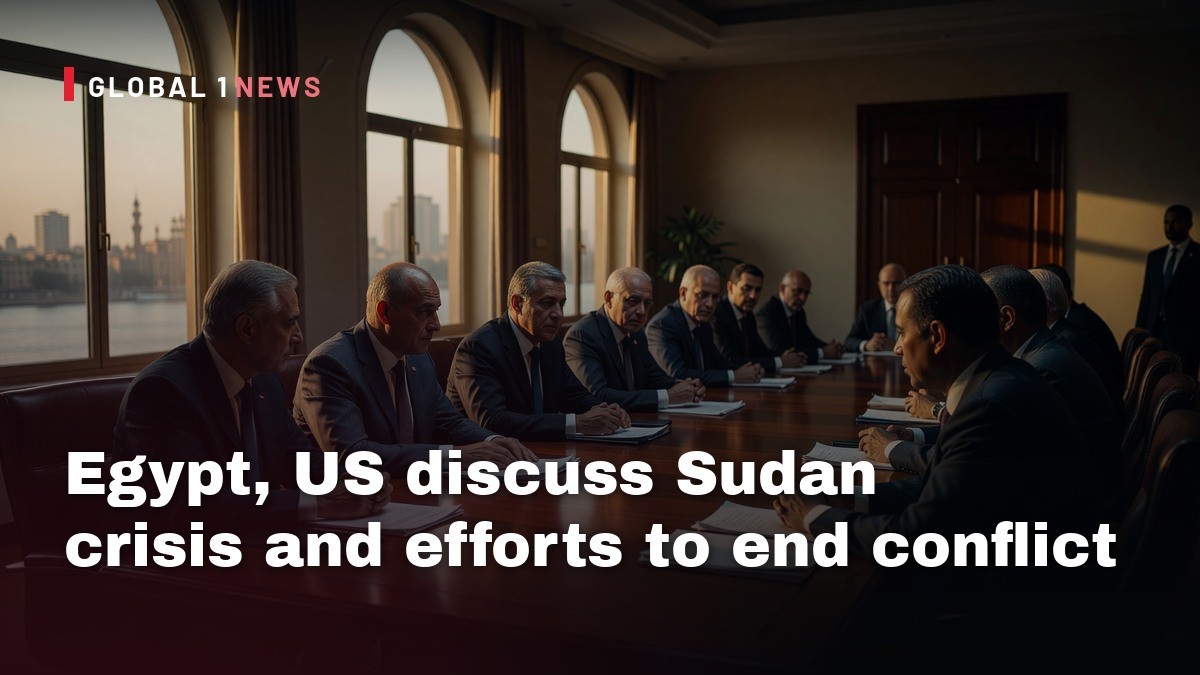
The latest high‑level dialogue between Egypt and the United States underscores the deepening humanitarian catastrophe in Sudan and the urgent need for a political settlement that respects the rights of the Sudanese people. In a phone call on Wednesday, Egyptian Foreign Minister Badr Abdelatty spoke with Massad Boulos, the senior adviser to President Donald Trump for Arab and African affairs. The conversation, announced in a statement by the Egyptian Foreign Ministry on Thursday, was framed as part of ongoing consultations on issues of mutual regional interest, with a clear focus on promoting security and stability across the Horn of Africa. While the call itself was brief, the language used by both officials reveals the gravity of the crisis and the diplomatic stakes involved.
Egypt’s reaffirmation of Sudan’s sovereignty
Minister Abdelatty used the opportunity to reiterate Egypt’s “firm support for Sudan’s unity, sovereignty and territorial integrity.” This phrasing signals a steadfast commitment to the principle that Sudan’s borders and central institutions must remain intact, even as the nation is torn apart by internal conflict. By emphasizing the need to preserve “national institutions,” the Egyptian foreign minister highlighted the broader regional concern that the disintegration of Sudan’s state structures could spill over into neighboring countries, destabilising an already fragile geopolitical environment.
The call also reflected Egypt’s long‑standing policy of backing the existing state framework in Sudan, a stance that aligns with international law’s respect for territorial integrity. In doing so, Abdelatty positioned Egypt as a regional guarantor of Sudan’s legal continuity, a role that carries both diplomatic weight and moral responsibility given the scale of human suffering on the ground.
The United States’ role in the diplomatic push
Massad Boulos, representing the Trump administration, engaged in the discussion as part of a broader U.S. strategy to coordinate with regional partners on the Sudan crisis. Although the statement does not detail specific U.S. proposals, the inclusion of a senior adviser for Arab and African affairs signals Washington’s intent to remain actively involved in seeking a “comprehensive political settlement.” This aligns with the United States’ historical engagement in African conflict resolution, where diplomatic pressure is often paired with humanitarian assistance.
The call’s framing as “ongoing consultations and coordination” suggests that the United States is not acting unilaterally but is seeking to synchronize its efforts with Egypt and other regional actors. Such coordination is essential for any credible peace process, as it ensures that diplomatic overtures are reinforced by on‑the‑ground realities and that any settlement enjoys broad regional backing.
The human cost of the Sudanese war
Since the conflict erupted in April 2023, the war between the Sudanese army and the paramilitary Rapid Support Forces (RSF) has inflicted a staggering toll on civilians. The source material notes that “tens of thousands of people” have been killed—a figure that, while imprecise, conveys the scale of loss. More starkly, around 13 million people have been displaced, a number that represents a substantial portion of Sudan’s pre‑war population.
Beyond displacement, the conflict has precipitated famine and a deepening humanitarian crisis. The combination of armed violence, food insecurity, and mass displacement has created a perfect storm of suffering, with families forced to flee their homes, children facing malnutrition, and basic services collapsing across the country. The human dimension of the crisis is central to any discussion of political solutions, as the ultimate goal must be to restore safety, dignity, and the right to a livelihood for Sudan’s citizens.
Regional implications of a protracted conflict
The war’s persistence threatens to destabilise the wider region. Egypt, sharing a border with Sudan, is directly affected by the flow of refugees and the potential for cross‑border violence. Moreover, the conflict’s proximity to the Red Sea and the Suez Canal—vital arteries of global trade—means that any escalation could have far‑reaching economic repercussions.
By calling for intensified “regional and international efforts,” Abdelatty highlighted the necessity of a collective response. Such a response would need to address not only the immediate ceasefire but also the underlying power struggle between the army and the RSF, whose rivalry stems from a disputed integration process. Without a coordinated regional approach, the risk remains that the conflict could ignite further tensions, drawing in neighboring states and complicating any peace initiative.
International law and the right to self‑determination
The call for a “comprehensive political settlement that ends the crisis and meets the Sudanese people’s aspirations for security and stability” invokes the principle of self‑determination enshrined in international law. While the statement does not detail the content of such a settlement, the language suggests that any agreement must be rooted in the wishes of the Sudanese populace, rather than imposed by external powers.
Respecting Sudan’s sovereignty while ensuring that the settlement reflects the aspirations of its citizens is a delicate balance. International law obliges states to protect civilians in conflict, to facilitate humanitarian access, and to support political processes that are inclusive and representative. The emphasis on “national institutions” further underscores the need to rebuild state capacity in a manner that safeguards human rights and the rule of law.
Humanitarian imperatives amid diplomatic talks
Any diplomatic breakthrough must be accompanied by robust humanitarian action. The displacement of 13 million people has created an urgent need for shelter, food, water, and medical care. International agencies, already stretched by the scale of the crisis, require unhindered access to deliver aid. The statement’s reference to “efforts to promote security and stability” implicitly acknowledges that without security guarantees, humanitarian assistance cannot reach those most in need.
In practice, this means that any ceasefire or political agreement must include clear provisions for humanitarian corridors, protection of aid workers, and the rapid restoration of basic services. The human cost of the conflict—tens of thousands dead and millions displaced—must remain at the forefront of negotiations, ensuring that peace is not merely a cessation of hostilities but a pathway to recovery and justice for the victims.
Prospects for a political settlement
While the phone call between Abdelatty and Boulos signals continued diplomatic engagement, the path to a lasting settlement remains fraught. The core dispute—over the integration of the army and the RSF into a single military institution—has proven intractable, fueling a conflict that has already caused massive loss of life and displacement. Nevertheless, the joint emphasis on “intensifying regional and international efforts” offers a glimmer of hope that a broader coalition of actors may press the warring parties toward dialogue.
For any settlement to be viable, it must address the power imbalance between the army and the RSF, guarantee the protection of civilians, and lay out a roadmap for rebuilding Sudan’s national institutions. The involvement of Egypt and the United States, as highlighted in the recent call, could provide the diplomatic leverage needed to bring both sides to the negotiating table. Yet, the ultimate success of such efforts will hinge on the willingness of Sudanese leaders to prioritize the aspirations of their people over factional ambitions, and on the international community’s commitment to uphold the principles of sovereignty, human rights, and humanitarian aid.
This article was produced with AI-assisted research and editorial support. Reporting is based on the source material cited below. Sources: Middle East Monitor; middleeastmonitor.com; Global1.News (31 October 2026).
By Fatima Al-Rashid, Staff Writer
What's Your Reaction?
 Like
0
 Dislike
0
 Love
0
 Funny
0
 Wow
0
 Sad
0
 Angry
0

Gulf/MENA Correspondent at Global1.News. Based in Doha, covering Gulf politics, energy markets, diplomacy, and development across the Middle East and North Africa. Tracks the economic transformation of the Gulf states.










Comments (0)