
Ebola Outbreak Spreads to Sixth Province in DR Congo as Death Toll Tops 2,100
Folks, we have to talk about what is happening in the Democratic Republic of the Congo, because the numbers are moving in the wrong direction, and the window to get ahead of this thing is closing fast. The Ebola outbreak that has already claimed more than 2,100 lives has now breached a sixth province, and the people tasked with stopping it are telling us, in plain terms, that they are losing ground.
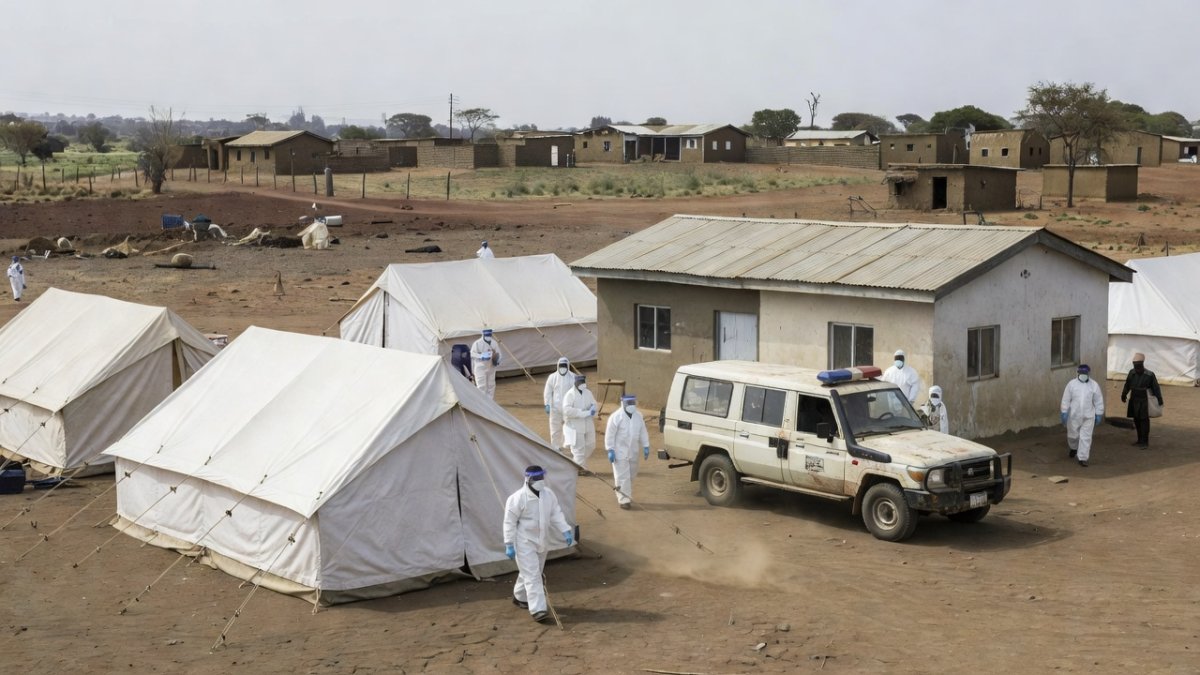
Folks, we have to talk about what is happening in the Democratic Republic of the Congo, because the numbers are moving in the wrong direction, and the window to get ahead of this thing is closing fast. The Ebola outbreak that has already claimed more than 2,100 lives has now breached a sixth province, and the people tasked with stopping it are telling us, in plain terms, that they are losing ground. This is not a drill, and this is not a distant problem—this is a global health security alarm that we all need to hear loud and clear.
Ebola Outbreak Spreads to Sixth Province in DR Congo as Death Toll Tops 2,100
Kinshasa, Democratic Republic of Congo — article continues... The Ebola outbreak that has ravaged the eastern Democratic Republic of the Congo has now officially spread to a sixth province, Bas-Uele, according to the head of the Africa Centres for Disease Control and Prevention (Africa CDC). The confirmation comes just one day after the World Health Organization’s chief admitted that the response is being outstripped by the virus’s relentless advance. And folks, the data we are seeing this week suggests that the worst may still be ahead of us.
The Sixth Province: Bas-Uele Confirms Its First Case
Jean Kaseya, the head of the Africa CDC, confirmed this week that the outbreak has spread to Bas-Uele province after a death was recorded there. The case was identified in the Buta health zone, and the patient had a travel history to Haut-Uele, with symptom onset on 4 August. This is not a random occurrence—this is a clear sign that the virus is moving along the roads and through the communities that connect these provinces.
The fact that Bas-Uele is now on the map is deeply concerning because it represents a geographic expansion of the outbreak at a time when health authorities are already struggling to contain the virus in the provinces where it has been burning for months. Every new province means new logistics, new community engagement challenges, and new opportunities for the virus to find vulnerable populations.
The Numbers: 4,665 Confirmed Cases and a 46.8 Percent Fatality Rate
Let’s put the raw data on the table, because that is what we do here at Global 1 News. As of 12 August 2026, the World Health Organization reports a total of 4,665 confirmed cases, including 2,184 deaths. That gives us a case fatality ratio of 46.8 percent. Nearly half of the people confirmed to have contracted this virus have died. That is not a statistic—that is a tragedy unfolding in real time.
And here is the kicker, folks: Jean Kaseya himself has said that the reported figures and deaths could be underreported. That means the true toll may be even higher than what we are seeing in the official counts. When the people in charge are telling you the numbers might be worse than they look, you need to pay attention.
Ituri Province: The Epicenter of the Outbreak
Ituri province remains the epicenter of this outbreak, accounting for a staggering 86.9 percent of all confirmed cases, according to the Africa CDC briefing. That means the vast majority of the suffering is concentrated in one region, and that region is also one of the most volatile and difficult to reach in the entire country.
The concentration of cases in Ituri is a double-edged sword. On one hand, it means that a focused response could theoretically have a major impact. On the other hand, it means that the virus has established a deep foothold in a population that is already dealing with displacement, conflict, and a collapsing local economy. Residents in Bunia, the capital of Ituri, are struggling with both a worsening health crisis and a shrinking local economy as the outbreak surpasses 2,000 deaths. People are not just fighting for their lives—they are fighting for their livelihoods.
The Response Is Being Outstripped: What the WHO Chief Is Saying
The head of the World Health Organization has been blunt about the situation: the outbreak is on track to outpace the response. That is not a vague warning—that is a direct admission that the current efforts are not sufficient to stop the spread. The Guardian reported that the outbreak spread to a sixth province a day after the WHO chief made these remarks, which tells you just how quickly the situation is evolving.
UN News reports that health authorities are tracking a growing share of people exposed to Ebola, but the epidemic in the country's restive east continues to outpace their ability to find and isolate the sick. This is the core problem: the virus is moving faster than the contact tracers, the community health workers, and the response teams can move. And when you cannot find and isolate the sick, the virus keeps finding new hosts.
The Gaps in the System: No Treatment Centers, No Referral Options
Let’s talk about the infrastructure, or the lack thereof. North Kivu lacks sufficient options to refer patients to specialized facilities, and none of the six affected health zones in Haut-Uele yet has a treatment centre meeting required standards. That is a massive gap in the response. You cannot treat Ebola patients effectively if you do not have the facilities to treat them.
And it is not just the facilities that are under pressure—it is the people. Response teams themselves are under pressure, according to UN News. These are the brave men and women who are going into communities, often at great personal risk, to try to stop this virus. They are working without the resources they need, and they are being asked to do more with less. That is a recipe for burnout, and burnout leads to mistakes.
The Virus Itself: Bundibugyo Species with No Proven Vaccine
Here is something that is not getting enough attention, folks: this outbreak is caused by the Bundibugyo species of Ebola. That is a different strain than the Zaire species that we saw in the 2014-2016 West Africa outbreak. And critically, there is NO proven vaccine or specific treatment for this species, though work is ongoing to test promising candidates, according to the WHO.
This changes the calculus entirely. With the Zaire strain, we had a vaccine that could be deployed to ring-vaccinate contacts and break the chain of transmission. With Bundibugyo, we do not have that tool. We are fighting this virus with one hand tied behind our back. The lack of a proven vaccine means that the response has to rely even more heavily on the basics: finding cases, isolating them, and tracing their contacts. And as we have already established, those basics are not keeping up.
The Context: Conflict, Displacement, and a Humanitarian Crisis
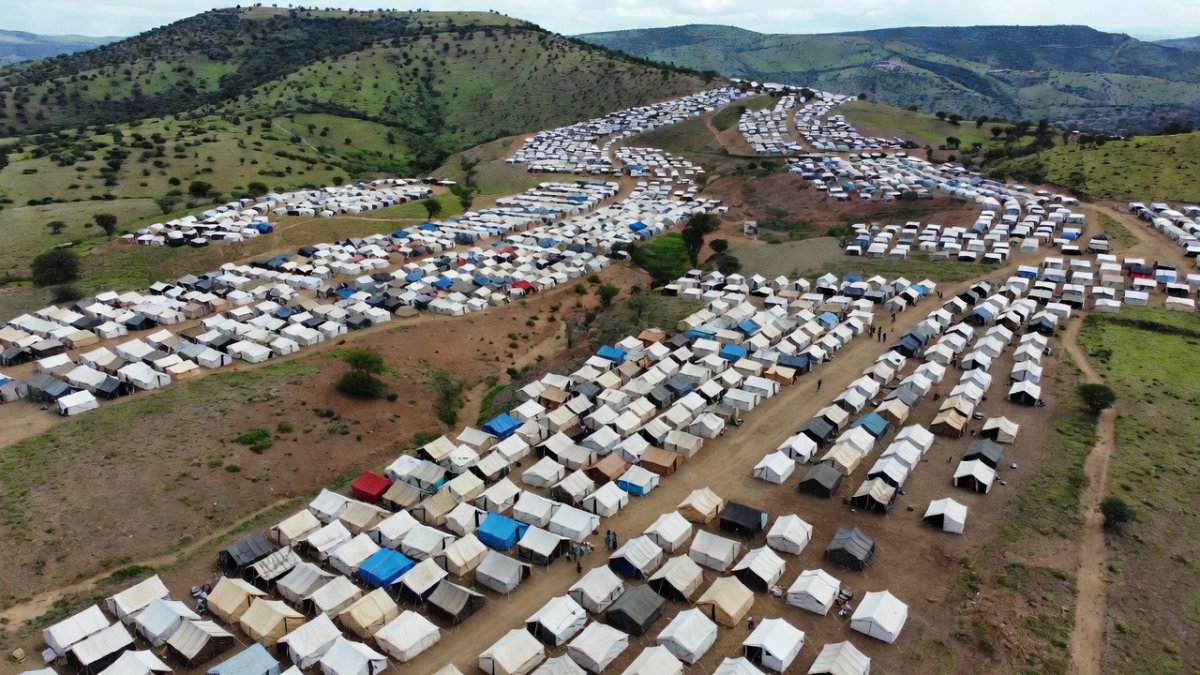
We cannot talk about this outbreak without talking about the context in which it is occurring. The WHO describes it as a challenging context: a humanitarian crisis and a remote and densely populated area, combined with insecurity and conflict in the east. Nearly one million people have been displaced in the region, according to the UN. That is one million people who are moving, who are living in crowded camps, who may not have access to clean water or basic healthcare.
Displacement is a fuel for this virus. When people are on the move, they come into contact with new populations. When they are living in crowded conditions, the virus can spread more easily. And when they are already dealing with the trauma of being displaced, they may be less likely to trust or engage with health authorities. This is not just a medical emergency—it is a humanitarian emergency with a medical crisis at its core.
Analysis: What This Means for You and for Global Health Security
So what does all of this mean for you, folks? It means that we are watching a potential regional catastrophe unfold, and the world is not responding with the urgency that this moment demands. The fact that this outbreak has spread to a sixth province is a clear signal that the current strategy is not working. The fact that the WHO chief has admitted the response is being outstripped is a clear signal that we need a new approach.
For global health security, this is a wake-up call. The Bundibugyo species of Ebola is a reminder that we do not have all the tools we need to fight every threat. We need to invest in research and development for vaccines and treatments for all Ebola species, not just the ones that have caused the biggest outbreaks in the past. We need to strengthen health systems in the DRC and across the region, so that they can respond to outbreaks before they spiral out of control.
And we need to address the root causes: the conflict, the displacement, the poverty that make it so difficult to contain this virus. You cannot vaccinate your way out of a crisis if you cannot reach the people who need the vaccine. You cannot trace contacts if the contacts are on the move. You cannot build trust if the community has been let down by authorities time and time again.
What happens next is not predetermined. The outbreak can still be contained, but it will require a massive scale-up of resources, a coordinated international response, and a commitment to reaching the most vulnerable populations. It will require political will from the DRC government, from neighboring countries, and from the global community. And it will require all of us to pay attention, to demand action, and to hold our leaders accountable.
Folks, this is the moment where we decide what kind of world we want to live in. Do we want a world where a virus can spread unchecked through a vulnerable population because we did not act fast enough? Or do we want a world where we come together, pool our resources, and stop this outbreak in its tracks? The choice is ours. And the time to make that choice is now.
Stay informed. Stay engaged. And demand better from those who have the power to make a difference. Because the people of the DRC deserve nothing less, and our collective global health security depends on it.
By Jessica Ali, Staff Writer
This article was produced with AI-assisted research and editorial support. Sources: World Health Organization, UN News, Al Jazeera, The Guardian, Africa CDC, Reuters.
What's Your Reaction?
 Like
0
Like
0
 Dislike
0
Dislike
0
 Love
0
Love
0
 Funny
0
Funny
0
 Wow
0
Wow
0
 Sad
0
Sad
0
 Angry
0
Angry
0

Editor-in-Chief at Global1.News. Atlanta-based journalist who cuts through the BS and tells it like it is. Lead anchor, host, and the voice you hear when the spin stops and the truth starts.













Comments (0)