
Russia and Ukraine Trade the War's Heaviest Blows in a Single Night
In a recent BBC News report, the scale of the mutual escalation was laid bare: Russia's defence ministry claimed Ukraine had launched its "largest-scale" attack of 2026, while in Kyiv a beloved second-hand market burned after an overnight Russian strike. The same hours brought the largest Ukrainian drone barrage Moscow has faced this year, and a NATO fighter jet scrambling over Romania.
In a recent BBC News report, the scale of the mutual escalation was laid bare: Russia's defence ministry claimed Ukraine had launched its "largest-scale" attack of 2026, while in Kyiv a beloved second-hand market burned after an overnight Russian strike. The same hours brought the largest Ukrainian drone barrage Moscow has faced this year, and a NATO fighter jet scrambling over Romania. It was, in short, a night that tested every assumption about how this war is being fought — and who is paying the price.
Russia and Ukraine Trade the War's Heaviest Blows in a Single Night
Kyiv, Ukraine – 16 August 2026 — The two capitals woke to smoke and sirens on Sunday as Russia and Ukraine traded some of the heaviest strikes of the year. Moscow's mayor said more than 600 drones were intercepted heading for the Russian capital, while Kyiv mourned a market destroyed by Russian fire. At least eight people were killed and 39 injured in Ukraine, and at least six were killed in Russia, according to official and media reports.
Moscow Under the Largest Drone Barrage of 2026
The Russian capital has grown accustomed to the distant thud of air defences, but the overnight assault on Sunday was of a different order entirely. Russia's defence ministry stated that Ukraine had launched its "largest-scale" attack of 2026, with a total of 822 drones shot down across the country in a single night. Moscow's mayor, Sergei Sobyanin, reported that more than 600 of those were intercepted while heading for the Russian capital, a figure that, if accurate, would represent a significant escalation in the range and volume of Ukraine's deep-strike capabilities.
Moscow regional governor Andrey Vorobyov described the event as "one of the most massive drone attacks in recent memory," a sentiment echoed by residents who reported hours of continuous explosions and the glow of interceptor missiles over the city's outskirts. While Russian air defences have proven increasingly effective at downing incoming drones, the sheer scale of this barrage raises questions about the sustainability of such defence. Analysts suggest this could indicate a shift in Ukrainian strategy, moving from sporadic symbolic strikes to saturation attacks designed to overwhelm Russian air defence systems and force a reallocation of military resources away from the front lines. The psychological effect on Moscow's civilian population, long shielded from the worst of the war's realities, should not be underestimated; the Kremlin has consistently sought to project normalcy in the capital, and nights like this one undermine that narrative.
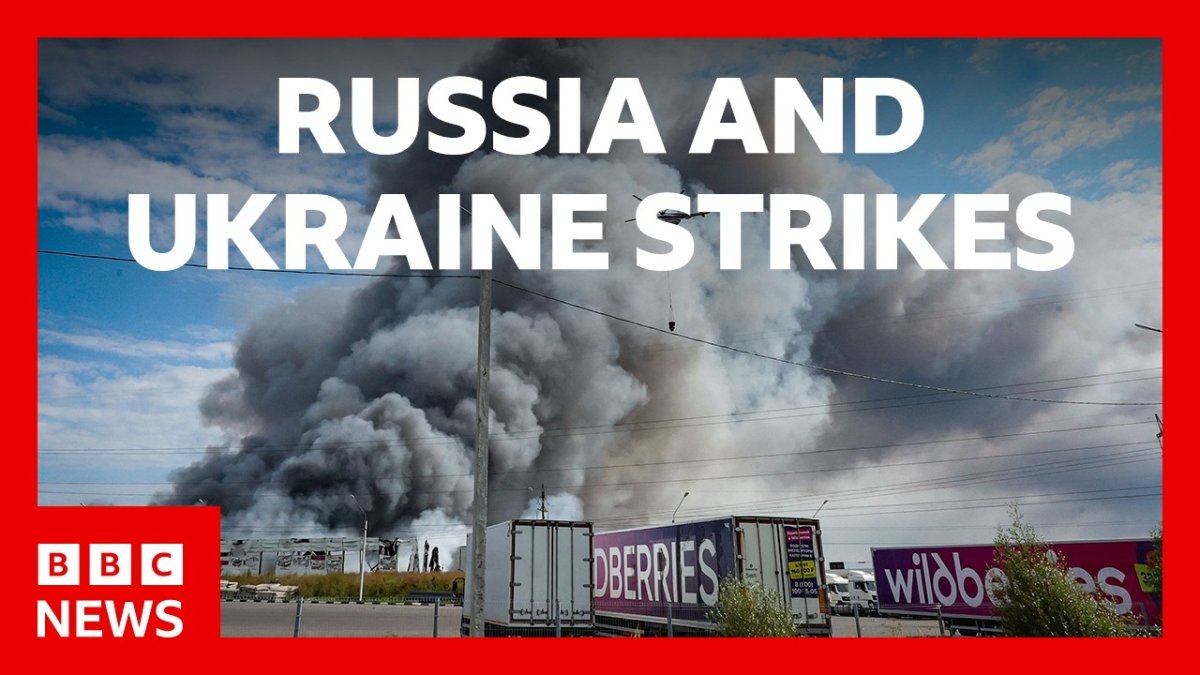
Wildberries: Ukraine Targets "Russia's Amazon"
In a coordinated move that underscores the expanding definition of legitimate military targets, Ukraine struck another Wildberries warehouse overnight. The company, often described as Russia's Amazon, operates the largest e-commerce logistics network in the country, and Ukraine's defence ministry claims it has now disabled seven of the company's ten largest logistics centres in recent weeks. The ministry asserts that these warehouses supply the Russian military with equipment, including drones, communications gear, and other matériel, effectively making them part of the military supply chain.
The Kremlin has categorically denied these claims, stating that Wildberries is a purely civilian enterprise and that attacks on it constitute strikes on civilian infrastructure. However, the strategic logic behind Ukraine's campaign is clear: by targeting logistics nodes deep inside Russian territory, Kyiv aims to disrupt the flow of supplies to Russian forces in Ukraine and to impose economic costs on the Russian state. The civilian economic cost is substantial — thousands of workers are employed at these centres, and the destruction of goods represents a significant financial blow to the company and its suppliers. This campaign fits a broader pattern of Ukrainian deep strikes against oil refineries, ammunition depots, and now logistics hubs, a strategy that military analysts suggest is designed to degrade Russia's war-fighting capacity over the long term, even if it cannot decisively alter the situation on the front lines overnight.
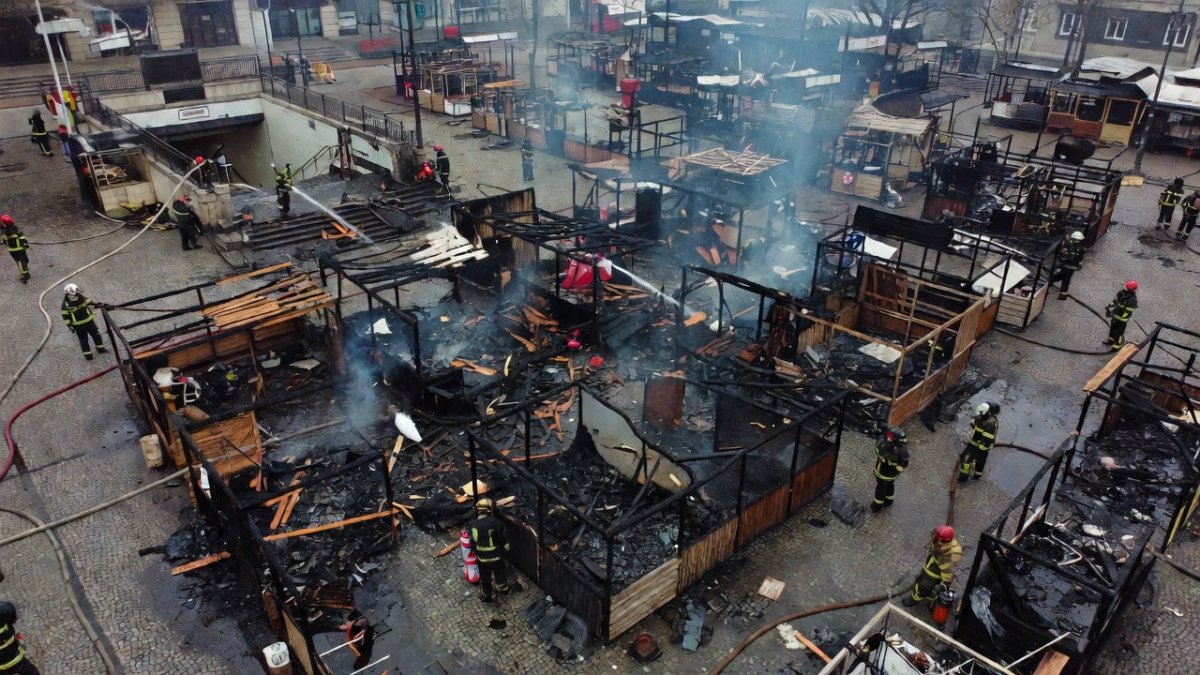
Kyiv's Book Market: A Civilian Landmark Reduced to Rubble
While Moscow faced the sky full of drones, Kyiv woke to a different kind of devastation. A sprawling second-hand market near the Pochayna metro station, a beloved institution that had operated for around 30 years, was set alight by an overnight Russian strike. The market, which primarily sold Russian-language books alongside records, posters, toys, and tools, was reduced to hundreds of smouldering stalls. Russia's defence ministry stated that it was targeting sites supplying Ukraine's military, a claim that traders and local officials vehemently reject, pointing to the market's purely civilian character.
The human cost was immediate and visceral. One stall owner, who asked to remain anonymous, told the BBC that "this business was my baby," estimating she had lost around 500,000 hryvnias (£8,262) worth of stock in a single night. Oleksandr Krasovitsky, founder of the Ukrainian publishing house Folio, which had a significant presence at the market, described the scene as a cultural and economic catastrophe. "Everyone who was there lost everything, except for the section of the market selling second-hand books," he said, noting that around 500 traders worked at the site. Krasovitsky estimated his own company's losses at between 1.5 and 3 million hryvnia (£24,800-49,600). The destruction of a market that was a hub for Russian-language literature in Kyiv carries a symbolic weight, highlighting the cultural erasure that has accompanied the physical destruction of the war.
Across Ukraine: Sumy, Odesa, Donetsk and Kherson
The night's strikes were not confined to the capital. In the northeastern city of Sumy, a 59-year-old man was killed after a Russian drone struck his car, one of at least eight civilian deaths reported across Ukraine in the latest wave of attacks. In Odesa, the southern port city, Governor Oleh Kiper reported that three people were injured after two residential buildings were struck by a UAV, and four more were hurt in an attack on a post office on the city's outskirts. The victims in Odesa included a woman and three men aged between 32 and 43, a stark reminder that the war's toll is measured in individual lives disrupted and destroyed.
In the Russian-occupied city of Donetsk, the situation was reversed, with the Russia-appointed mayor, Alexey Kulemzin, claiming that a Ukrainian drone had destroyed a local hypermarket. Ukraine has not commented on the strike, and the claim could not be independently verified. Strikes were also reported in Kherson, a city that has endured near-constant shelling from Russian forces across the Dnipro River. The cumulative effect of these attacks, spread across a front line stretching hundreds of kilometres, paints a picture of a war that remains intensely lethal for civilians on both sides. The Ukrainian government's plea for more air defence systems grows more urgent with each passing night, as the country's cities and critical infrastructure remain exposed to Russian missiles and drones.
NATO's Eastern Flank: The Romanian Airspace Incident
The war's spillover onto NATO's eastern flank became impossible to ignore on Sunday when a Spanish F-18 fighter jet, on a NATO air-policing mission, shot down a drone that breached Romanian airspace after entering from Moldova. Romanian Foreign Minister Oana Toiu confirmed that this was the third drone shot down in the past three weeks, a worrying trend that underscores the proximity of the conflict to alliance territory. Toiu stated that Romanian radars had monitored attacks of more than 100 drones outside its border, targeting Ukrainian Danube ports, which she described as an attempt to "stop international food trade."
Her framing is significant: Romania, a NATO and EU member, sees itself as "on the front line defending the NATO and European Union border." The incursions, while likely unintentional, test the alliance's resolve and its ability to protect its airspace. The downing of the drone by a Spanish jet demonstrates NATO's commitment to defending its territory, but it also raises the risk of a direct confrontation between NATO forces and Russian assets. The targeting of Ukrainian Danube ports, which are crucial for grain exports, is a deliberate strategy by Moscow to choke off Ukraine's economy and global food supplies, a move that Ukraine's Foreign Minister Andrii Sybiha called a "direct threat to freedom of navigation, international trade, and global food security."
Analysis: Escalation Without an Exit
The events of the past 24 hours represent a dangerous new phase in a war that has already lasted over two years. Ukraine's Foreign Minister Andrii Sybiha, in a call with his Greek counterpart George Gerapetritis, reiterated that stronger air defences are an "urgent priority," a plea that has become a constant refrain from Kyiv. The attacks on Ukrainian ports, the deep strikes on Russian logistics, and the incursions into NATO airspace all point to a conflict that is expanding in both geographic scope and intensity, with no active mediation efforts visible on the horizon.
Analysts suggest this escalation could indicate that both sides are preparing for a prolonged winter campaign, seeking to inflict maximum damage before any potential negotiations. Russia's continued advances in eastern Ukraine, where it claims to have taken two more villages, are matched by Ukraine's increasingly bold strikes on Russian soil. The absence of a diplomatic off-ramp, combined with the mutual perception that time is on one's own side, creates a volatile dynamic. For ordinary Russians and Ukrainians, the cost is measured in disrupted lives, destroyed homes, and a pervasive sense of insecurity. As the war enters its third autumn, the prospect of a decisive breakthrough on the battlefield appears as distant as ever, while the risk of a wider European conflagration grows with each passing night. The world watches, and waits, for a sign that either side is willing to step back from the abyss.
By Irina Volkov, Staff Writer
This article was produced with AI-assisted research and editorial support. Reporting is based on sources cited in the article.
What's Your Reaction?
 Like
0
Like
0
 Dislike
0
Dislike
0
 Love
0
Love
0
 Funny
0
Funny
0
 Wow
0
Wow
0
 Sad
0
Sad
0
 Angry
0
Angry
0
Russia/Eastern Europe Correspondent at Global1.News. Covering Russian politics, energy, security, and the shifting dynamics of the post-Soviet space. Provides clear-eyed analysis on one of the world's most opaque regions.













Comments (0)