
Hamas Leadership and Kushner to Meet in Egypt Over Gaza Plan
Hamas Leadership and US Envoy Kushner Set for High-Stakes Meeting in Egypt Over Stalled Gaza Plan The expected face-to-face meeting between Hamas leadership and US envoy Jared Kushner in Egypt marks a pivotal, if fragile, moment in the Trump administration's push to salvage a Gaza peace plan that has largely stalled since the October cease-fire.
The expected face-to-face meeting between Hamas leadership and US envoy Jared Kushner in Egypt marks a pivotal, if fragile, moment in the Trump administration's push to salvage a Gaza peace plan that has largely stalled since the October cease-fire. With Hamas publicly committing to disarmament and Israel's Prime Minister Benjamin Netanyahu rejecting the agreement, the diplomatic choreography unfolding between Cairo, Jerusalem, and Washington reveals deep fault lines in a process that both sides view as existential.
Kushner and Hamas Leadership to Meet in Egypt as Gaza Plan Stalls
Beirut, Lebanon — August 16, 2026 — Two weeks after Hamas publicly signed on to the latest phase of the Gaza cease-fire agreement, US envoy Jared Kushner is expected to hold a direct meeting with Hamas leadership in Egypt, a move that underscores Washington's unprecedented shift from decades of refusing contact with the group. The meeting, set to take place in the presence of Egyptian and Qatari officials, comes as the Trump administration seeks to advance a post-war plan that Israel has openly rejected, leaving the cease-fire teetering between fragile calm and renewed escalation.
A Diplomatic Gamble in El-Alamein
Hamas sources told AFP that mediators informed the group that Kushner would meet with its leadership before traveling to Jerusalem to see Prime Minister Benjamin Netanyahu. Hamas chief Khalil al-Hayya traveled late Saturday to the Egyptian Mediterranean city of el-Alamein in his first trip since taking over the Gaza-based movement last month. The meeting, confirmed by multiple regional outlets, marks Kushner's first direct engagement with Hamas leaders since the October cease-fire agreement was negotiated.
The choice of el-Alamein as the venue is symbolically significant. The Egyptian coastal city has become a favored location for high-stakes regional diplomacy, offering a neutral, secure setting away from the intense media scrutiny of Cairo. Egyptian intelligence chief Hassan Rashad met with al-Hayya on Sunday, with Egypt's state-run Middle East News Agency reporting that the Hamas delegation "reaffirmed commitment" to the Trump plan. A Hamas official told AFP the delegation would also brief Egypt on Israeli violations of the cease-fire agreement.
The Disarmament Question: Genuine or Symbolic?
At the heart of the stalled plan lies the contentious issue of Hamas disarmament. A second Hamas source said the United States had sought clarifications from Hamas on several points, including on "genuine, rather than merely symbolic, collection, consolidation and storage of weapons, as well as Hamas' complete relinquishment of governance of Gaza." This language reflects Washington's growing impatience with what it perceives as a lack of concrete progress on the ground.
Hamas on July 30 said it would hand over its weapons to a new Palestinian governing body as part of the latest stage in the cease-fire declared by Trump, who hailed their agreement as a "major milestone." However, the practical implementation of this commitment remains opaque. The United States and Israel agree on the end state—a demilitarised Hamas—but the pathway to that outcome has become a point of acute friction between Washington and Jerusalem.
Netanyahu's Rejection and the Board of Peace
Prime Minister Netanyahu, a longtime hawk facing a tough re-election fight in October, has voiced opposition to the plan even after receiving assurances from Nickolay Mladenov, the Gaza high representative in Trump's "Board of Peace" set up to implement the deal. The board had initially said that Israel would start a phased withdrawal in tandem with Hamas' disarmament, but Mladenov assured Netanyahu that Israel would not need to pull troops out of the Gaza Strip until complete disarmament by Hamas.
This reversal highlights the inherent tension in the US approach. By shifting the sequencing to favor Israel's security demands, Washington has effectively conceded to Netanyahu's position, yet the Israeli leader remains publicly skeptical. His rejection of the agreement, despite the assurances, suggests a deeper political calculus: with elections looming, Netanyahu cannot afford to appear soft on Hamas, even if the deal on the table aligns with Israel's long-term security interests.
US-Israel Dynamics: A Shared End State, Divergent Tactics
A Board of Peace official earlier said that Kushner and Mladenov hoped for "constructive conversations" with Netanyahu, adding that "the United States and Israel agree on the end state, which is a demilitarised Hamas." This unity on the final objective, however, masks significant tactical disagreements. The Trump administration, eager to deliver a foreign policy victory, has increasingly established direct contact with Hamas—a group the US had refused to engage for years—in hopes of ending Israel's war in Gaza and securing the release of remaining Israeli hostages.
Kushner's meeting with Egyptian President Abdel-Fattah el-Sissi "emphasized the need for all parties to fulfill their obligations under the Gaza Strip cease-fire agreement," according to presidential spokesperson Mohamed el-Shennawy. The Egyptian role is critical: Cairo has long served as the primary security broker between Israel and Hamas, and its intelligence services have the operational relationships necessary to verify any disarmament process.
The Fragile Cease-Fire: Violence Continues
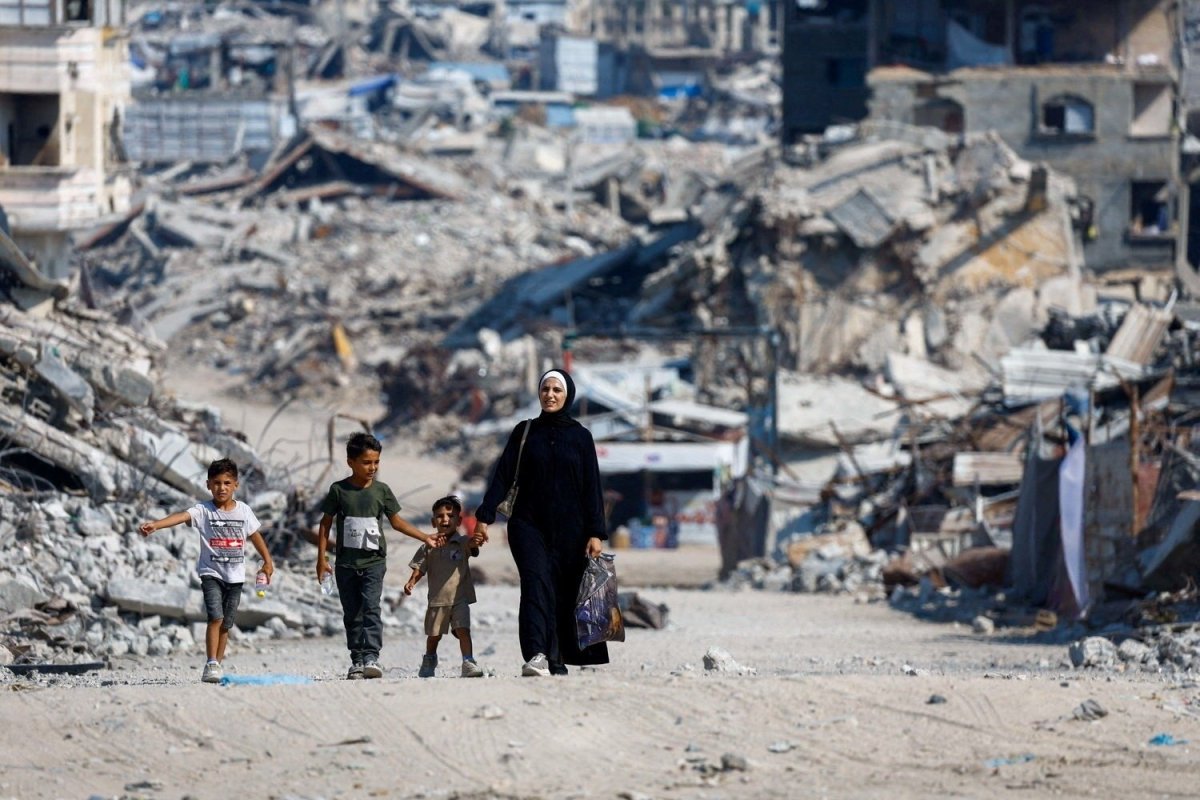
Despite the diplomatic activity, the October cease-fire has never fully halted the violence in the Strip. Israel has resumed airstrikes in Gaza after a lull following Trump's promotion of the peace plan. Several people were injured Sunday after Israeli aircraft targeted a house west of Nuseirat, said Mahmoud Bassal, spokesman for Gaza's civil defense agency. The Israeli military claimed it was responding to a threat by the Islamic Jihad group and that it tried to mitigate civilian casualties.
Several others were injured after Israeli forces opened fire on tents housing displaced people west of Khan Younis, where separately the body of a child, Suhail Shallouf, was recovered after he was killed by Israeli fire Saturday, the civil defense agency said. Israeli operations have killed at least 1,262 Palestinians since the cease-fire came into effect on Oct. 10, according to figures by Gaza's Health Ministry. The Israeli army has reported five deaths in its ranks during the same period. These numbers underscore the grim reality that the cease-fire, while reducing the intensity of the conflict, has not brought an end to the killing.
Regional Mediation: Egypt and Qatar's Balancing Act
The presence of Egyptian and Qatari officials at the Kushner-Hamas meeting highlights the indispensable role of regional mediators. Qatar, which has long provided financial support to Hamas and hosted its political leadership, has been instrumental in brokering previous cease-fires. Egypt, with its control over the Rafah crossing and its deep intelligence ties to both Israel and Hamas, offers a unique channel for verification and enforcement.
For Cairo, the stakes are high. A collapse of the cease-fire could trigger a new wave of Palestinian refugees into Sinai, a scenario Egypt has repeatedly sought to avoid. For Doha, the challenge is balancing its relationship with Washington—which hosts a major US military base—with its patronage of Hamas. Both mediators have a vested interest in seeing the Trump plan succeed, but they also recognize that Netanyahu's political survival may take precedence over the deal's implementation.
Strategic Calculus: What Each Side Wants
For Hamas, the meeting with Kushner represents a significant legitimization. The group, which has governed Gaza since 2007, seeks to transition from a resistance movement to a political actor with international recognition. Its commitment to disarmament, even if conditional, is a calculated gamble: by appearing cooperative, Hamas hopes to secure reconstruction funding, the lifting of the blockade, and a role in Gaza's future governance—without fully surrendering its military capabilities.
For Israel, the calculus is more complex. Netanyahu's rejection of the plan may be driven by domestic politics, but it also reflects a genuine security dilemma. A demilitarised Hamas is Israel's stated goal, yet the Israeli leader fears that any perceived concession could embolden other militant groups and weaken his position ahead of the October election. The Israeli military's continued strikes, even amid cease-fire negotiations, signal that Jerusalem is unwilling to fully commit to a process it does not control.
For the United States, the stakes are reputational. The Trump administration has invested significant political capital in the Gaza plan, and a failure would be a major foreign policy setback. Kushner's direct engagement with Hamas, a group the US once designated as a terrorist organization, represents a pragmatic—if controversial—shift in American diplomacy. The administration's willingness to deal directly with Hamas reflects a broader trend in US Middle East policy: a focus on transactional outcomes over ideological purity.
Second-Order Effects for the Region
The outcome of this meeting will reverberate well beyond Gaza. A successful disarmament process could pave the way for Arab-Israeli normalization efforts, with Saudi Arabia and other Gulf states watching closely. The Gulf states, particularly the UAE and Saudi Arabia, have their own economic diversification agendas and are keen to see regional stability. A functioning Gaza peace plan would remove a major obstacle to further normalization and could unlock significant reconstruction investment.
Conversely, a collapse of the talks would likely trigger a new round of violence, with unpredictable consequences for the region. The continued Israeli strikes and Palestinian casualties suggest that the cease-fire is already under severe strain. The meeting between Kushner and al-Hayya, while historic, is no guarantee of progress. The fundamental issues—disarmament, governance, and the future of Gaza—remain unresolved, and the window for a negotiated settlement is narrowing.
By Malik Hassan, Staff Writer
This article was produced with AI-assisted research and editorial support. Sources: Daily Sabah, AFP, AP, Axios, Al Jazeera.
What's Your Reaction?
 Like
0
Like
0
 Dislike
0
Dislike
0
 Love
0
Love
0
 Funny
0
Funny
0
 Wow
0
Wow
0
 Sad
0
Sad
0
 Angry
0
Angry
0

Middle East Correspondent at Global1.News. Based in Beirut, covering politics, conflict, energy, and society across the Middle East. Brings context and depth to a region often reduced to headlines.














Comments (0)