
DreamOmni2: Free Open-Source AI Image Editor Challenges Google Nano Banana
Keywords: DreamOmni2, Nano Banana, open source AI, HKUST, image editing, multimodal AI, text to image, style transfer, free AI model, GitHub AI, Professor Jia Jiaya, local AI, AI generation In a direct challenge to Google’s proprietary tools, a new open-source multimodal AI model is emerging as a serious contender in image editing and generation. DreamOmni2, developed at Hong K
In a direct challenge to Google’s proprietary tools, a new open-source multimodal AI model is emerging as a serious contender in image editing and generation. DreamOmni2, developed at Hong Kong University of Science and Technology, delivers professional-grade capabilities without requiring cloud access or expensive hardware. The release positions the project as a “Nano Banana killer,” offering users a free alternative that runs entirely locally.
RIP Nano Banana? Free Open-Source AI Image Editor DreamOmni2 Challenges Google's Dominance
Hong Kong – June 18, 2026 — A team led by Professor Jia Jiaya has released DreamOmni2, a free multimodal AI that matches or exceeds Google’s Nano Banana in instruction-based editing while remaining fully open source and runnable on modest hardware.
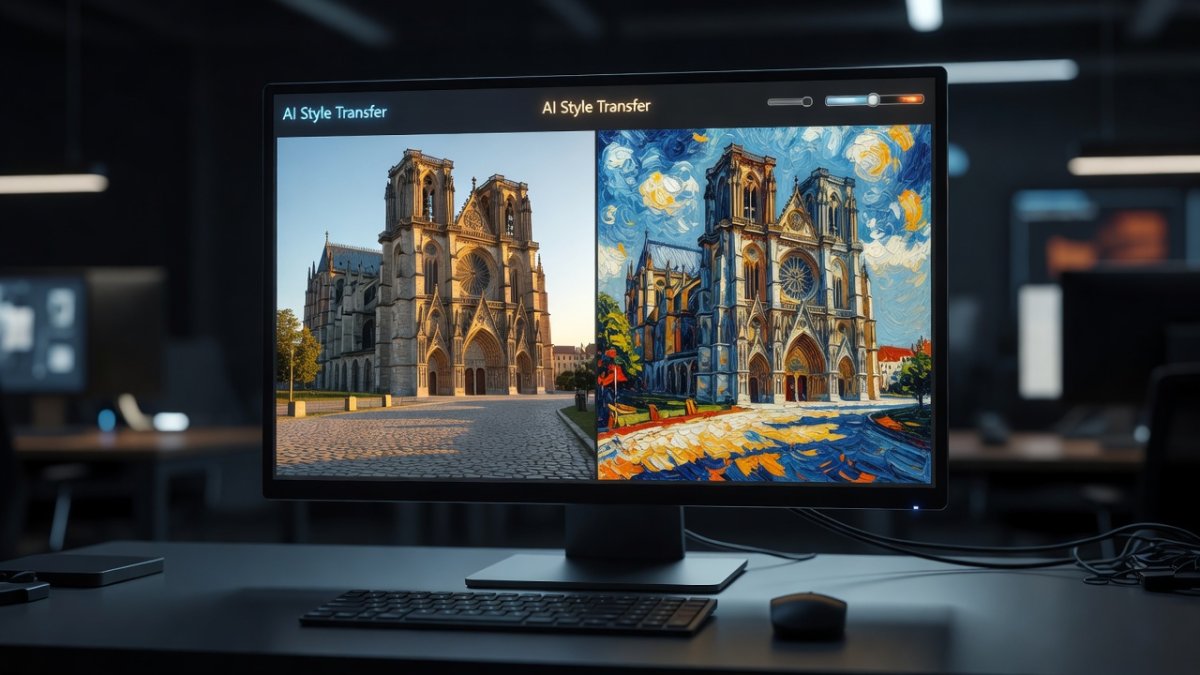
AI image editing with DreamOmni2 shows before-and-after style transfer capabilities. (Global 1 News)
The Nano Banana Killer Arrives
DreamOmni2 has quickly earned the nickname “Nano Banana killer” among developers for its ability to deliver comparable results to Google’s closed system. The model supports multimodal prompts combining text and images, allowing precise control without subscription fees or data-sharing requirements.
What DreamOmni2 Can Do
The model excels at instruction-based image editing, subject-driven generation, style transfer, and text-to-image creation. Users can refine existing photos, transfer artistic styles, or generate new visuals from detailed prompts, all within a single unified framework.

HKUST researchers developed DreamOmni2 as an open-source multimodal AI model. (Global 1 News)
Open-Source and Accessible
DreamOmni2 is available on GitHub and runs locally with less than 16GB of VRAM, removing barriers that typically limit access to advanced AI tools. Its open-source nature enables community contributions and transparent development, ensuring broad compatibility across consumer hardware.
The HKUST Connection
Professor Jia Jiaya and his research team at the Hong Kong University of Science and Technology designed DreamOmni2 to push the boundaries of efficient multimodal AI. Their focus on accessibility and performance has produced a model that operates effectively without reliance on large-scale cloud infrastructure.
What This Means for the AI Image Editing Space
The arrival of a capable, free competitor is accelerating innovation in the image-editing sector. Developers and creators now have a viable local alternative that reduces dependence on proprietary platforms while maintaining high output quality across multiple creative tasks.
What to Know
DreamOmni2 supports multimodal inputs, requires modest VRAM, and is distributed under open-source licensing. Early adopters report strong results in both editing and generation workflows, positioning the model as a practical daily tool for professionals and hobbyists alike.
By Jessica Ali, Staff WriterThis article was produced with AI-assisted research and editorial support. Reporting is based on sources cited in the article.
What's Your Reaction?
 Like
0
Like
0
 Dislike
0
Dislike
0
 Love
0
Love
0
 Funny
0
Funny
0
 Wow
0
Wow
0
 Sad
0
Sad
0
 Angry
0
Angry
0

Editor-in-Chief at Global1.News. Atlanta-based journalist who cuts through the BS and tells it like it is. Lead anchor, host, and the voice you hear when the spin stops and the truth starts.













Comments (0)