
JCB Hydromax Smashes Hydrogen Land Speed Record at Bonneville
The JCB Hydromax has smashed the hydrogen land speed record at Bonneville with a 406.320 mph average, driven by RAF legend Andy Green. The record validates hydrogen power for South Africa's green economy and echoes the Bloodhound tests at Hakskeen Pan.
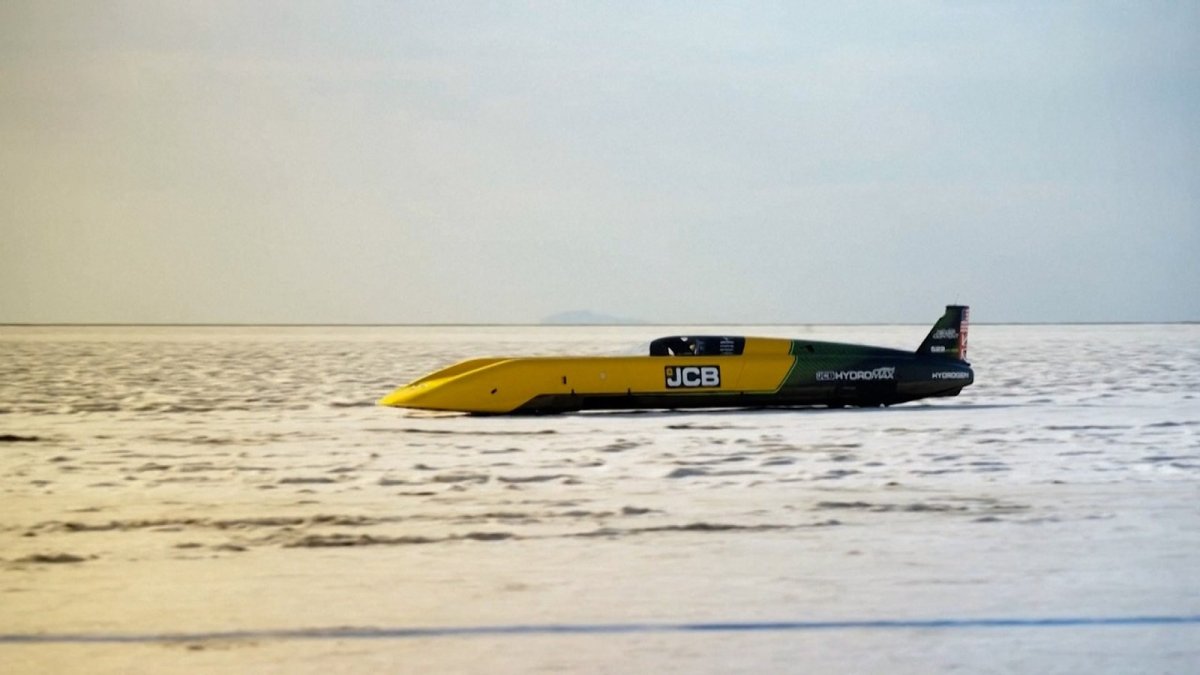
There are moments in motorsport that transcend the sport itself — moments that redefine what is mechanically possible and shine a light on the road ahead for the entire planet. On Tuesday 11 August 2026, on the blinding white expanse of the Bonneville Salt Flats in Utah, we witnessed exactly that. The JCB Hydromax, a 32-foot twin-engine machine powered by hydrogen combustion engines derived from production diggers, smashed the FIA world land speed record for hydrogen-powered cars with a two-way average of 406.320 mph (653.91 km/h). This isn't just a British engineering triumph; it's a global statement about the viability of hydrogen power, and it carries profound echoes for South Africa's own green hydrogen ambitions and our deep-rooted love affair with speed.
JCB Hydromax Smashes Hydrogen Land Speed Record at Bonneville
Bonneville Salt Flats, Utah — The numbers are staggering. On the first run, the Hydromax clocked 400.623 mph (644.74 km/h). On the second run, in the opposite direction as required by FIA rules, it thundered to 412.135 mph (663.27 km/h). The resulting two-way average of 406.320 mph (653.91 km/h) didn't just break the previous hydrogen combustion record of 185.5 mph (298.5 km/h) set by BMW's H2R back in 2004 — it more than doubled it. In doing so, the JCB machine also eclipsed the fastest hydrogen fuel-cell record (303 mph / 488 km/h, Venturi Buckeye Bullet 2, 2009) and the fastest electric vehicle record (341 mph / 549 km/h, VBB3, 2016), making it the fastest hydrogen-powered vehicle of any kind in the history of the world.
A Driver Forged in History
At the wheel was 64-year-old RAF Wing Commander Andy Green OBE, a name synonymous with the absolute limits of terrestrial velocity. Green is the only person ever to break the sound barrier on land, having piloted Thrust SSC to 763.035 mph (1,227.985 km/h) at Black Rock Desert, Nevada, back in 1997. But his connection to this specific patch of salt runs deeper. Twenty years ago, in August 2006, Green set the diesel land speed record of 350.092 mph (563.4 km/h) at Bonneville in the JCB Dieselmax — a record that still stands to this day.
Returning to the scene of that triumph with a new powertrain was a poetic full-circle moment. "Bonneville is the spiritual home of the world land speed record, and JCB Hydromax has just written itself into that history," Green said after the run. "The car was terrific — stable, strong, and fast. Setting a world land speed record with hydrogen power, twenty years after Dieselmax, is a huge privilege." For South African fans who remember the sheer audacity of the Thrust SSC programme, seeing Green back in the cockpit is a reminder of the relentless pursuit of engineering excellence that defines the sport's greatest icons.
The Heart of the Beast: A Digger Engine at 3,800 RPM
Here is where the story gets truly fascinating, and where it connects to the everyday reality of construction sites from Johannesburg to Cape Town. The Hydromax is powered by two production-based hydrogen digger engines from JCB's own hydrogen engine programme, which began in 2020 after the company concluded that fuel cells were simply too expensive and fragile for the harsh realities of construction sites. These are not bespoke, one-off racing engines built in a secret lab; they are modified versions of the same engines that power JCB's production machines right now, as part of the company's £100 million hydrogen programme.
The engineering team, led by JCB Engineering Director Ryan Ballard, took these workhorse engines and transformed them. They added double overhead camshafts, direct fuel injection, and dry-sumping. They installed ice tanks to cool turbocharger air from a scorching 392F (200C) down to below 50F (10C). They doubled the engine speed to 3,800 rpm, extracting a monstrous 800 horsepower from each unit. Combined, the twin engines produce 1,600 bhp (1,193 kW) and a staggering 2,600 lb-ft (3,525 Nm) of torque, all routed through an all-wheel-drive system. "This record belongs to the engineering team which took a hydrogen digger engine and made it the fastest of its kind on earth," Ballard stated, and he's absolutely right.
Why This Matters for South Africa's Green Hydrogen Future
This is where the story hits home for Mzansi. While the record was set on the salt flats of Utah, its implications ripple directly into the South African economy and our environmental strategy. South Africa has been making significant moves to position itself as a global leader in green hydrogen. In March 2026, a R100 million Wits-South Africa Hydrogen Localisation Initiative hub was announced at Wits University, designed to boost local research and industrial capacity. The Vaal Hydrogen Hub in Gauteng is a flagship project, and our abundant platinum group metals are critical inputs for electrolysers and hydrogen catalysts.
JCB Chairman Lord Anthony Bamford made the point explicitly: "Twenty years ago we came to Bonneville with JCB Dieselmax and showed what British engineering could do with diesel power. Today we have done it again — this time with engines powered by hydrogen. This record was set by production-based engines, the same engines powering JCB diggers right now. That is the point of JCB Hydromax: it shows hydrogen works, and it works today at the highest level with zero emissions." For South Africa, where analysts see Southern Africa as a potential green hydrogen export hub — with one study suggesting the region could produce roughly 17.5 million tonnes annually — this demonstration of hydrogen's raw capability is a powerful validation of our own investment thesis.
The Bloodhound Connection: From Hakskeen Pan to Bonneville
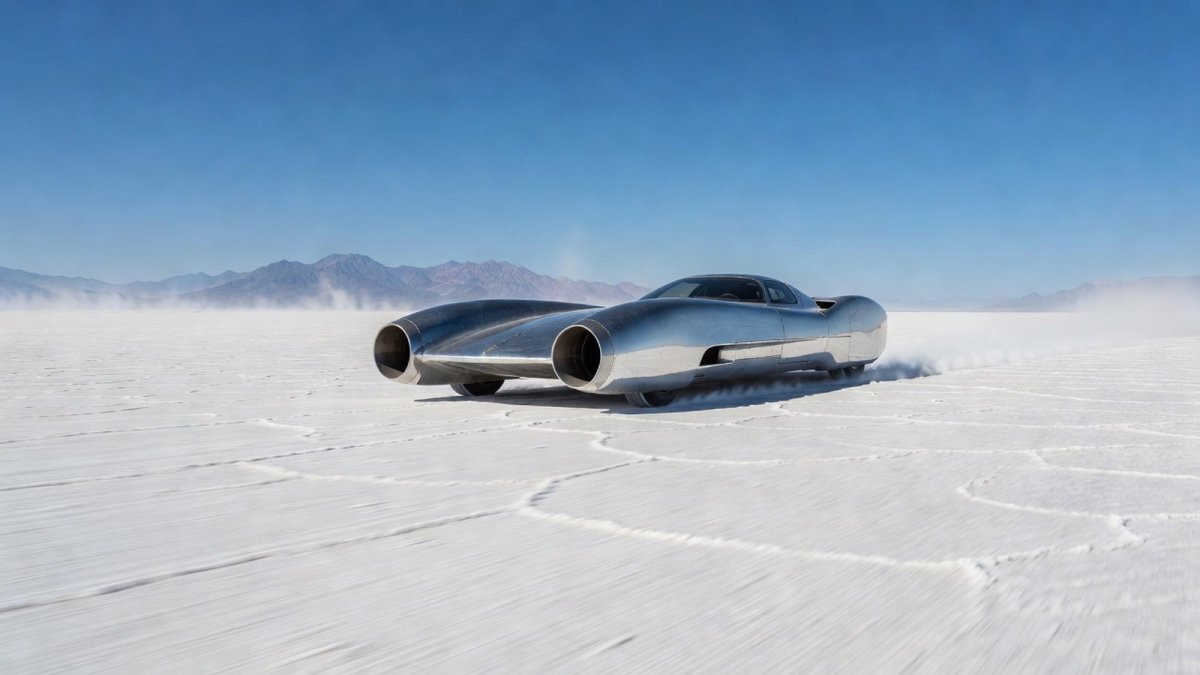
For South African motorsport enthusiasts, Andy Green's presence in this record-breaking run carries a special resonance. Green was also the designated driver of the Bloodhound LSR supersonic car, which conducted its high-speed testing on South African soil at Hakskeen Pan in the Northern Cape during October and November 2019. That 12-mile (19 km) pan, near the Namibian border in the Mier area of the Dawid Kruiper municipality, was painstakingly cleared of rocks by hand to prepare for the record attempt. During those tests, Bloodhound reached speeds of over 500 mph (with some reports citing 491 mph / 790 km/h on the sixth run).
That project ultimately ran out of funding before it could make its 1,000 mph assault, meaning Thrust SSC's 1997 record still stands. But the spirit of that endeavour lives on. The fact that Green returned to Bonneville to conquer a new frontier with hydrogen power, after pushing the boundaries in the Northern Cape, is a testament to the global nature of this pursuit. It also reminds us that South Africa has the terrain and the will to host world-class speed record attempts — we just need the investment and the political will to back such projects.
SA Motorsport Heritage and the Underdog Spirit
South Africans have a special affinity for underdog engineering stories, and JCB's journey from construction equipment to world land speed record holder is the ultimate underdog tale. Our own motorsport heritage is rich — from the historic Kyalami Grand Prix Circuit that hosted Formula 1, to our strong Dakar Rally pedigree. We understand the dedication, the late nights in the workshop, and the sheer bloody-mindedness required to get a machine to perform at the absolute edge of its capabilities.
JCB machines are a common sight on South African construction sites and farms, a familiar part of our industrial landscape. Seeing the same brand that builds the diggers that shape our roads and buildings take on the world's fastest cars is a source of genuine pride and inspiration. It bridges the gap between the blue-collar world of construction and the glamour of international motorsport, proving that world-beating technology doesn't have to come from a sterile laboratory — it can come from the factory floor.
The Technical Challenge: Heat, Salt, and Speed
Let's not underestimate the physical and technical challenge of what was achieved. Bonneville is about 100 miles (160 km) west of Salt Lake City, a prehistoric lakebed where racing has taken place since 1914. The 10-mile (16-kilometre) straightaway sits atop a shallow aquifer that keeps the salt cool and helps cool the tires at extreme speeds. But the cockpit is another story entirely. Green trained for four months to withstand temperatures above 122F (50C) inside the car, using gym work and hot baths to acclimatise his body to the brutal conditions.
The run was part of the Southern California Timing Association's Bonneville Speed Week, and earlier in the week, the Hydromax had already broken 368.347 mph in the Blown Gas Streamliner class. The FIA record itself is classified under Category A, Group XIV - Class 7 World Flying Record Start Land Speed Record for hydrogen internal combustion. FIA President Mohammed Ben Sulayem called it "a truly historic milestone for motorsport showcasing how innovation, performance, speed, and sustainability can go hand in hand." For a sport often criticised for its environmental impact, this is a significant moment of redemption.
The Road Ahead: From Salt Flats to San Antonio and Beyond
This record is not just a vanity project. It comes ahead of JCB's new $500 million factory in San Antonio, Texas, which will create 1,500 jobs. It's a commercial statement that hydrogen is ready for prime time. The company has also signed a deal to buy green hydrogen, positioning itself at the forefront of the transition away from fossil fuels. The main barrier remains cost — as University of Michigan professor Greg Keoleian, co-director of the MI Hydrogen initiative, points out, most hydrogen today is produced from fossil fuels, and green hydrogen from renewables is still a tiny fraction of global production.
But records like this change perceptions. They show investors, governments, and the public that hydrogen isn't just a theoretical concept — it's a technology that can deliver 400 mph on the salt flats and, more importantly, power a digger on a construction site in Soweto or a tractor on a farm in the Free State. The challenge now is to scale up production and bring costs down, and that's where South Africa's platinum resources and renewable energy potential come into play. We have the resources; we have the ambition; and now we have the proof that hydrogen can perform at the highest level.
As the sun set over the Bonneville Salt Flats on Tuesday, Andy Green climbed out of the Hydromax having etched his name into the history books once again. Twenty years after Dieselmax, he's done it with hydrogen. For South Africa, the message is clear: the future is green, it's fast, and it's powered by hydrogen. The question is whether we're ready to seize the opportunity.
This article was produced with AI-assisted research and editorial support. Sources: Al Jazeera English, JCB, Ars Technica, Associated Press.
By Dante Williams, Staff Writer
What's Your Reaction?
 Like
0
Like
0
 Dislike
0
Dislike
0
 Love
0
Love
0
 Funny
0
Funny
0
 Wow
0
Wow
0
 Sad
0
Sad
0
 Angry
0
Angry
0

Breaking News and Investigations Correspondent at Global1.News. Based in London, covering global breaking news, security, and investigative stories. Known for digging deeper and connecting the dots across continents.














Comments (0)