
Day 15 of VP Sara Duterte Impeachment Trial: COA Auditor Grilled Over P450 Million in Disallowed Funds
In a recent ANC 24/7 special coverage, the Senate impeachment court in Pasay City resumed its proceedings on Wednesday, August 12, 2026, marking Day 15 of the historic trial of Vice President Sara Duterte. The day's focus centered on the meticulous cross-examination of state auditor Xylene del Campo, whose testimony on the alleged misuse of confidential funds has laid bare a paper trail of disallowed expenses totaling nearly P450 million.
In a recent ANC 24/7 special coverage, the Senate impeachment court in Pasay City resumed its proceedings on Wednesday, August 12, 2026, marking Day 15 of the historic trial of Vice President Sara Duterte. The day's focus centered on the meticulous cross-examination of state auditor Xylene del Campo, whose testimony on the alleged misuse of confidential funds has laid bare a paper trail of disallowed expenses totaling nearly P450 million. For ordinary Filipinos watching from their living rooms and sari-sari stores, this is more than a political spectacle — it is a test of whether public funds meant for their welfare were spent with accountability.
Day 15 of Impeachment Trial: COA Auditor Faces Grilling as P450 Million in Disallowed Funds Take Center Stage
Manila, Philippines – August 12, 2026 — The Senate impeachment court in Pasay City resumed the trial of Vice President Sara Duterte on Wednesday, with state auditor Xylene del Campo returning to the witness stand for the third time. The defense team continued its cross-examination on Article I of the Articles of Impeachment, which alleges the misuse and misappropriation of confidential funds. Court spokesperson Atty. Regie Tongol said cross-examinations of previous witnesses typically take two sessions, and Del Campo's testimony could bleed into the following week, underscoring the painstaking pace of the proceedings.
Auditor's Testimony: A Trail of Disallowed Expenses
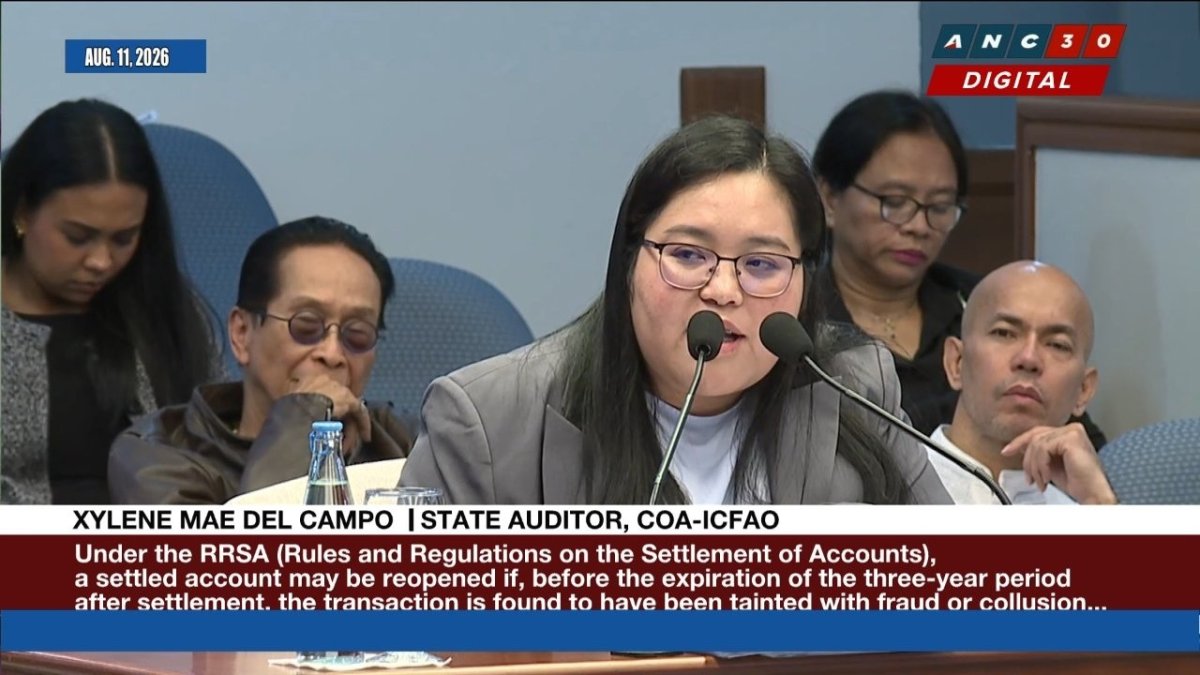
On Tuesday, August 11, Del Campo testified that Vice President Duterte and two other OVP officials are liable for the disbursement of P73 million out of the P125 million in confidential funds the Office of the Vice President (OVP) received in December 2022. State auditors disallowed the amount for violating confidential fund use guidelines. Del Campo named the head of agency, Vice President Sara Duterte; special disbursing officer Gina Acosta; and chief accountant Julieta Villadelrey as the persons liable. In her testimony, she stated in Filipino: "Wala po itong mga resibo. Ang mga persons po na liable or responsible is, first po, the head of agency, Vice President Sara Duterte, the special disbursing officer, si Ms. Gina Acosta, at ang chief accountant po, na si Ms. Julieta Villadelrey."
The disallowed December 2022 spending items paint a detailed picture of the alleged irregularities. These include P10 million for reward payments, P34.857 million for payment of rewards through various goods, P24.93 million for payment of rewards through medicines, and P3.5 million for tables, chairs, desktop computers, and printers. Del Campo also pointed out a critical discrepancy: the OVP's submitted documents for December 2022 covered activities dated December 13, 15, and 17 — days before the budget was actually released. The OVP's accomplishment report to the Commission on Audit (COA) covered utilization only from December 21 to 31, 2022, leaving activities from December 13 to 18, including youth campaigns on patriotism, Christmas parties, and a partners appreciation night, outside the covered period.
The P375 Million Question: A Transfer That Violated the Rules
Del Campo's testimony extended beyond the December 2022 disallowance. She also held Duterte, Acosta, Villadelrey, and former Vice Presidential Security and Protection Group (VPSPG) head Colonel Raymund Dante Lachica liable for P375 million in OVP confidential funds disbursed in the first three quarters of 2023. The disallowance stemmed from Acosta's admission in a House hearing that she handed the cash over to Lachica. This transfer directly violated the joint circular on confidential funds, which states that "under no circumstance shall it be used for liquidation of the previous cash advance or be transferred from one accountable officer to another." The admission was so significant that COA skipped a notice of suspension and proceeded directly with a notice of disallowance for the full P375 million.
Combined, the disallowed amounts total nearly P450 million — a staggering sum that could have funded classrooms, health programs, or disaster relief for Filipino communities. Del Campo, who has 12 years in COA's Intelligence and Confidential Funds Audit Office (ICFAO), noted that the OVP submitted a total of 2,668 acknowledgment receipts as evidentiary documents supporting confidential fund disbursement from December 2022 through the third quarter of 2023. She emphasized that official receipts or sales invoices were required to ascertain that the funds were spent accordingly. Among the named recipients in these acknowledgment receipts was Ralph Jason Bacon, who received P150,000 for the purchase of information.
'Superman Ba Sila?': The Physical Impossibility of Receipts
Prosecution counsel Atty. Lorna Kapunan highlighted a particularly damning detail during the proceedings. Acknowledgment receipts submitted by the Department of Education showed that the special disbursing officer was in different locations in Luzon, Visayas, and Mindanao on the same day. Kapunan asked incredulously, "Superman ba sila?" (Are they Superman?), flagging the receipts as physically impossible. This line of questioning strikes at the heart of the prosecution's case: that the documentation supporting confidential fund disbursements was fabricated or, at best, carelessly assembled.
For Filipino taxpayers, this detail resonates deeply. It suggests that the systems meant to safeguard public money were bypassed, and that the paper trail was designed to obscure rather than clarify. The prosecution's ability to present such concrete evidence is a testament to the thoroughness of COA's audit work, which has become a cornerstone of the impeachment case.
Senate President Escudero Chides Defense Over 'Ghosting'
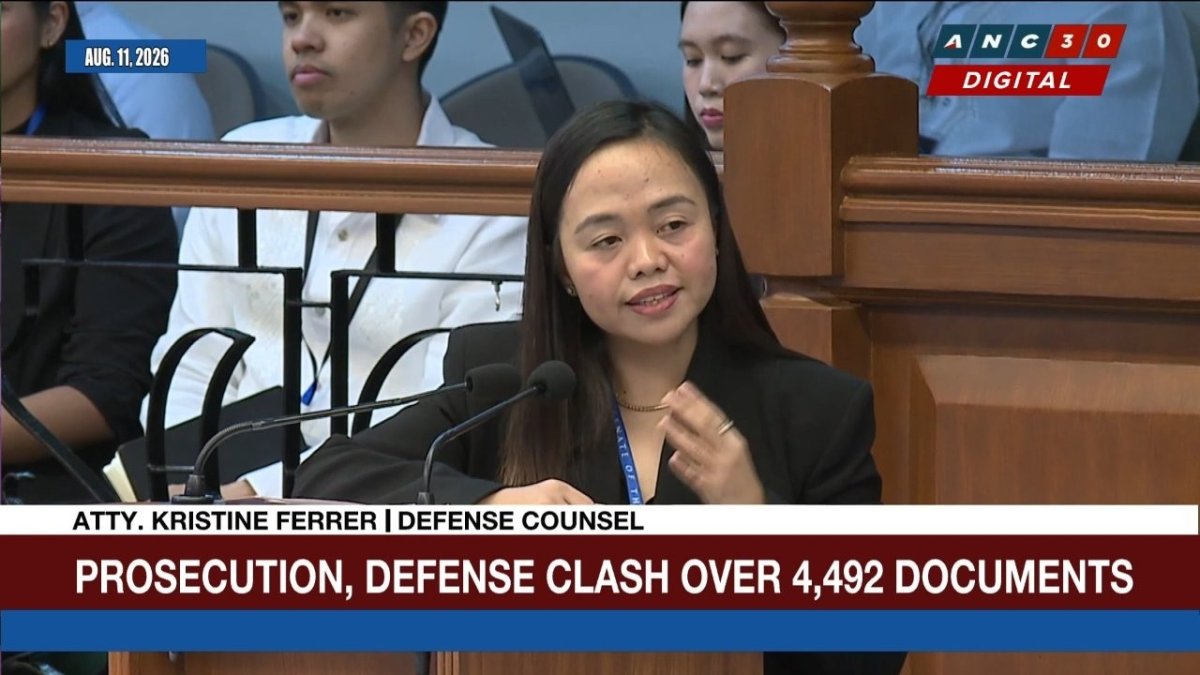
The day's proceedings also saw Senate President Francis "Chiz" Escudero, presiding officer of the impeachment court, chide Duterte's defense team for "ghosting" the prosecution over the stipulation of documents. The defense had refused to stipulate to 4,492 acknowledgment receipts submitted by the OVP, prompting Escudero to order a joint re-examination of the documents. The rebuke underscores the tension between the defense's strategy of challenging every piece of evidence and the court's desire to move the trial forward efficiently.
This procedural wrangling has significant implications for the trial's timeline. The impeachment court is composed of the 24-member Senate acting as judges, with senators taking an oath as senator-judges. The trial is expected to run up to 92 days and could extend into early 2027. For a nation accustomed to swift political resolutions, the slow, methodical pace of the proceedings is a reminder that accountability, when pursued seriously, takes time.
DOJ Files Grave Threats Charge: A Parallel Legal Battle
While the impeachment trial dominated headlines, the Department of Justice (DOJ) filed a separate criminal case against Vice President Duterte on Tuesday, August 11. The DOJ filed one count of grave threats under Article 282 of the Revised Penal Code, in relation to the Cybercrime Prevention Act, with the Office of the Clerk of Court of the Quezon City Regional Trial Court at 1:30 p.m. The charge stems from Duterte's remarks during an online press briefing in November 2024, when she said she had instructed someone to kill President Ferdinand Marcos Jr., First Lady Liza Araneta-Marcos, and then-Speaker Martin Romualdez if she herself were killed.
The National Bureau of Investigation (NBI) had recommended the filing of a complaint against Duterte over these remarks in February 2025. Defense lawyer Paul Lawrence Lim argued that Duterte, as a sitting impeachable officer, cannot be prosecuted for an alleged offense that is also the subject of impeachment proceedings. He stressed that Duterte remains presumed innocent and "will exercise all available legal remedies in due course." DOJ spokesperson Polo Martinez countered that the criminal case should not be affected by the ongoing impeachment proceedings, stating, "Procedurally speaking, the conduct of a criminal case in the RTC QC should not be affected by the ongoing impeachment proceeding, and that applies vice versa."
A Historic Impeachment: Twice Impeached, First Vice President
The gravity of the situation cannot be overstated. Duterte was impeached for a second time by the House of Representatives on May 11, 2026, making her the first Philippine official impeached twice and the first vice president to face impeachment. The trial, which began July 6, 2026, covers four articles of impeachment: alleged misuse of confidential funds, unexplained wealth, bribery of Department of Education officials, and grave threats against President Marcos Jr. Earlier prosecution witness, COA auditor Roderick Wamil, covered irregularities in P612.5 million in confidential funds of the OVP and DepEd in 2022 and 2023.
For the Filipino public, this trial is a watershed moment. It tests the resilience of democratic institutions and the rule of law. The detailed testimony of auditors like Del Campo and Wamil provides a rare glimpse into how public funds are handled — and mishandled. The acknowledgment receipts, the disallowed expenses, and the physical impossibilities all point to a systemic failure that goes beyond one individual.
What to Watch For
As the trial enters its third week, several key developments bear watching. First, whether Del Campo's testimony concludes on Day 15 or bleeds into the following week, as court spokesperson Tongol suggested. Second, how the defense responds to Escudero's order to submit marked evidence and re-examine the 4,492 acknowledgment receipts. Third, the progress of the separate grave threats case in the Quezon City Regional Trial Court, which could proceed in parallel with the impeachment trial.
The stakes could not be higher. For the families who rely on government services, the P450 million in disallowed funds represents lost opportunities for education, healthcare, and infrastructure. For the senators acting as judges, the trial is a test of their independence and commitment to accountability. And for Vice President Duterte, the proceedings will determine not just her political future, but her legacy.
In the barangays of Manila, the jeepney drivers of Quezon City, and the students of Cebu, the question on everyone's mind is simple: will justice be served? The answer lies in the careful, deliberate work of the Senate impeachment court, one witness at a time.
By Bella Reyes, Staff Writer
This article was produced with AI-assisted research and editorial support. Reporting is based on sources cited in the article.
What's Your Reaction?
 Like
0
Like
0
 Dislike
0
Dislike
0
 Love
0
Love
0
 Funny
0
Funny
0
 Wow
0
Wow
0
 Sad
0
Sad
0
 Angry
0
Angry
0

Philippines/Southeast Asia Correspondent at Global1.News. Manila-based journalist covering Philippine politics, environment, maritime security, and social issues. Passionate about marine conservation and the communities protecting the Philippines' natural heritage.













Comments (0)