
Cuba's National Grid Collapses Again, Leaving Millions Without Power
Cuba's national electrical grid suffered a total collapse on Friday, leaving millions without power and only five percent of Havana restored by dusk, as a U.S. energy blockade and the island's aging plants drive a deepening crisis.
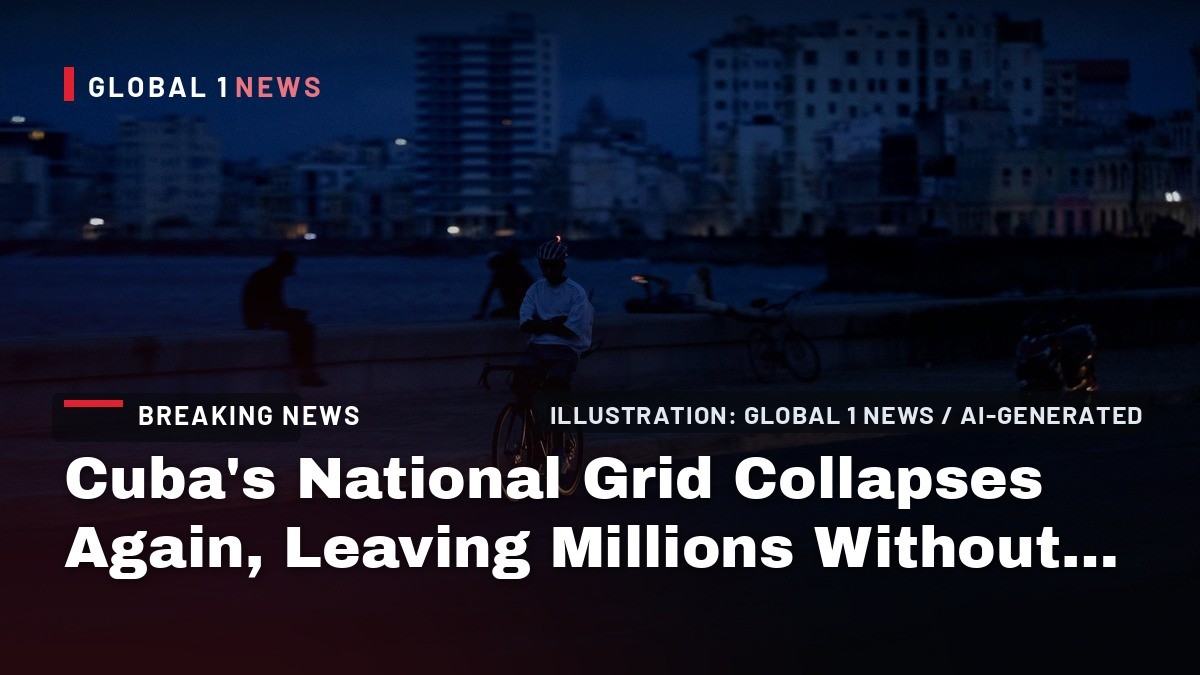
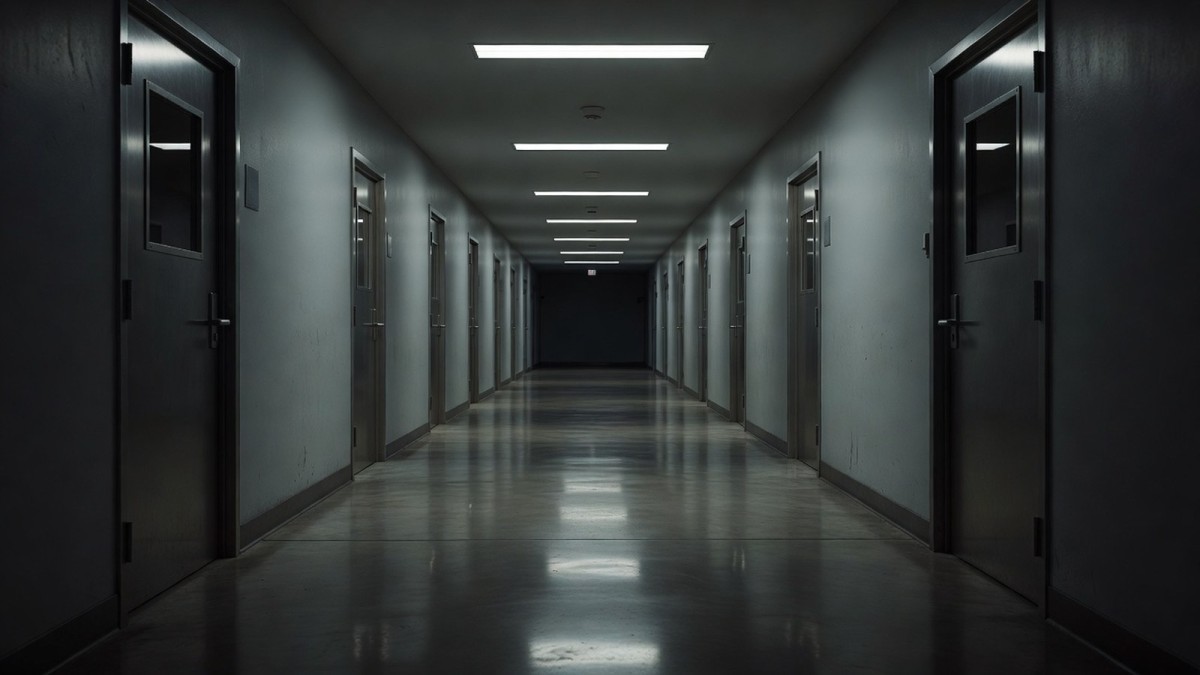
Cuba's national electrical grid collapsed on Friday afternoon, cutting power to millions across the island and leaving Havana dark under cloudy skies and rain. It was the latest in a series of nationwide failures that have shaped daily life on the island since January. By dusk, officials said power had returned to just five percent of the capital.
Cuba's National Grid Collapses Again, Leaving Millions Without Power
HAVANA, Cuba — Cuba's national electrical grid suffered a total collapse on Friday, 18 September 2026, leaving millions of people across the island without electricity, according to the Ministry of Energy and Mines. The ministry announced the island-wide outage on its official X account and said officials had begun activating service-restoration protocols. It gave no cause. By nightfall only a fraction of Havana had power, and the timeline for full restoration remained unknown.
The Collapse at Two in the Afternoon
The failure struck around 2 p.m. local time. In its post on X, the Ministry of Energy and Mines wrote that "a total disconnection of the electrical system has occurred," and added that officials had begun "activating service-restoration protocols." It offered no cause. State-run utility UNE blamed a failure in the transmission lines combined with unstable weather conditions. The official newspaper Granma reported that "unstable" weather had further aggravated the situation. The U.S. Embassy in Havana put the event more bluntly, saying Cuba had "experienced a total power failure on Friday" because of the collapse of its electrical grid. The ministry did not put a number on how many of the island's more than nine million people lost supply. The reason for the collapse is under investigation, and the timeline to restore power is unknown, according to Cuban state media cited by the embassy.
What the Ministry Said, and What It Left Out
The announcement named the fact and nothing else. It did not say how many people were affected, which provinces lost power first, or when the lights would come back. Felix Estrada, an official with Cuba's National Electrical Union, gave the only official account of progress: "Protocols are now in place to begin the gradual restoration of the system." The U.S. Embassy in Havana told Americans on the island that "the reason for the collapse is under investigation and the timeline to restore power is unknown," and warned that "there are reports of cellphone and internet outages." "All U.S. citizens in Cuba or planning to travel to Cuba should be aware and plan accordingly," the embassy said. It described the grid as "increasingly unstable," adding that "scheduled power cuts occur daily, and unscheduled outages persist throughout Cuba."
Two Accounts of Where It Started
The two wire services that cover Cuba most closely do not agree on where the failure began. Reuters, in reporting carried by France 24 and The Straits Times, said the collapse was triggered by a failure in high-voltage transmission lines in central Cuba around 2 p.m. local time. The Associated Press, CBS News and the New York Post, drawing on Cuban authorities, placed the failure in "the western part of the country," with the system collapsing in that area as far as Matanzas province and the eastern section of the island disconnecting afterwards. Both accounts trace to officials. Neither the transmission line nor the substation involved has been identified, and Cuban officials have not reconciled the two versions.
Five Percent of Havana
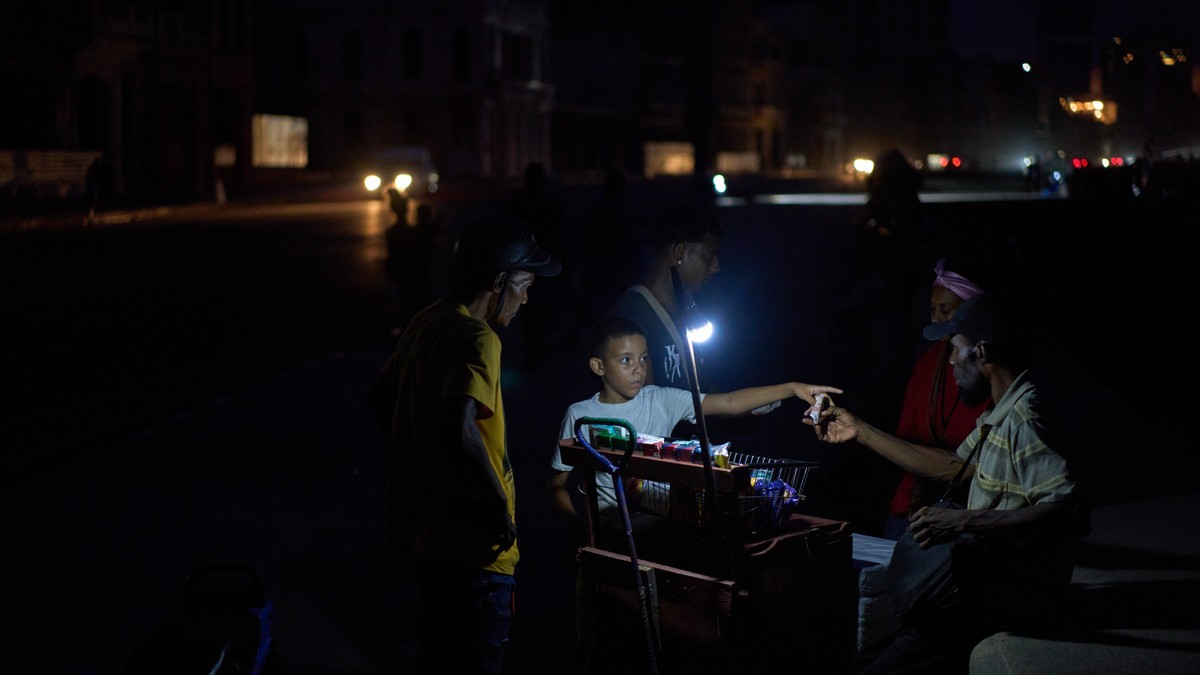
By dusk on Friday, power had been restored to five percent of users in Havana, a city with about 862,000 customers, according to official figures. Crews began establishing small power-distribution "micro-islands" in the provinces of Camaguey, Pinar del Rio and Granma, self-contained pockets of supply cut off from the national system. Some circuits serving hospitals and other emergency facilities were switched back on first, and Reuters reported that a handful of scattered Havana neighbourhoods had light by late evening, mostly around hospitals, while much of the capital stayed dark under cloudy skies and rain. DW put the restored share of Havana at five percent. No full restoration timeline has been given.
A Count That Nobody Agrees On
The counts do not line up. The Associated Press, CBS News and the New York Post reported that Friday's collapse was "at least the sixth time" the grid has gone down since President Donald Trump cut off fuel to the island in January. Reuters, in material carried by France 24 and The Straits Times, called it "the latest of at least six partial or total grid collapses since January." DW and Firstpost count differently: the seventh blackout of 2026, and the twelfth since late 2024. Fox News also put it at the seventh of the year, saying the last national outage came "just last month." What is not disputed is the recent rhythm. The two previous nationwide blackouts came in early August, after others in July and March, and the grid collapsed three times in July alone. Reuters put the rolling blackouts since then at 30 hours or more across most of the country.
January, and the One Tanker That Came in March
Grid collapses have worsened since January, when the United States imposed an energy blockade aimed at forcing a change in Cuba's political system, according to the Associated Press. The restrictions stop Cuba from importing the fuel its thermoelectric plants run on, along with the replacement parts needed to maintain infrastructure that in many cases has become obsolete. CBS News reported that Trump signed an executive order that would impose tariffs on countries that sell or provide oil to Cuba. Since then, one tanker of fuel has reached the island, a Russian vessel in March. Firstpost, citing AFP, reported that the island of more than nine million people was already enduring constant power cuts because of the poor state of its aging thermoelectric plants, and that the situation has worsened significantly since January, when Washington imposed what AFP described as a de facto energy blockade in a bid to pressure Havana's communist government. A severe lack of fuel now makes it hard to supply both the plants and the diesel generators that back them up. Havana blames U.S. sanctions for the shortages. Washington says the outages reflect the failures of a state-run economic model.
Thirty Hours, Sixty Hours, and the Water That Stops
Even when the grid is working, Cubans go without power for more than 30 consecutive hours, according to the Associated Press. In Havana, 30-hour blackouts have become routine; in some provinces they stretch past 60 hours, per DW and AFP. The effects cascade well beyond lighting. Transportation limitations, shortened work hours, cancelled flights and what the AP and CBS News described as serious public health consequences follow the grid down. Cooking, water supply, internet and telephone service all stall with it. "It's no longer just the electricity. We're having problems with water and gas as well," Lazaro Reyes, 60, told AFP. Frank Lorenzo, 23, in Havana, told Reuters: "Yesterday I'd gone without power for 24 hours. They turned the lights on for an hour, and then the grid collapsed."
Sixty-Six Percent
An independent study released this week estimated that 66 percent of Cuba's population now lives in poverty, up from 45 percent in mid-2025, with rising food prices the main driver. The research is by the Christian Center for Reflection and Dialogue. "The findings give an indicative picture that the problem is growing," the study's coordinator, Mayra Espina, told AFP. Firstpost, citing AFP, reported that an economic crisis has engulfed the Caribbean island. DW noted that Cuba, home to more than nine million people, is also facing a deepening economic crisis, and that United Nations human rights experts have condemned the U.S. oil blockade as a violation of international law, warning that Cuba risks becoming a "silent Gaza" as shortages and blackouts deepen. Havana blames the crisis on U.S. punitive measures. Washington attributes the hardship to poor internal management.
Washington's Two Tracks
Washington is pressing on two tracks at once. CBS News reported that the administration has quietly examined options for possible military action against the island, including an Army-led air assault, while officials stressed the briefings were not an indication that Trump or the Pentagon have decided to act. Secretary of State Marco Rubio has said the United States prefers a diplomatic path to a transition government led by technocrats willing to make economic reforms, but that process has stalled under the pressure campaign. Trump has pointed to the U.S. overthrow and arrest of Venezuela's Nicolas Maduro, and the installation of a friendly successor, as a potential blueprint for what he would like to achieve in Cuba. DW noted he has made scarcely veiled threats to take over the island. Neither track has produced a publicly stated timetable.
The Wait in Havana, and the Questions Still Open
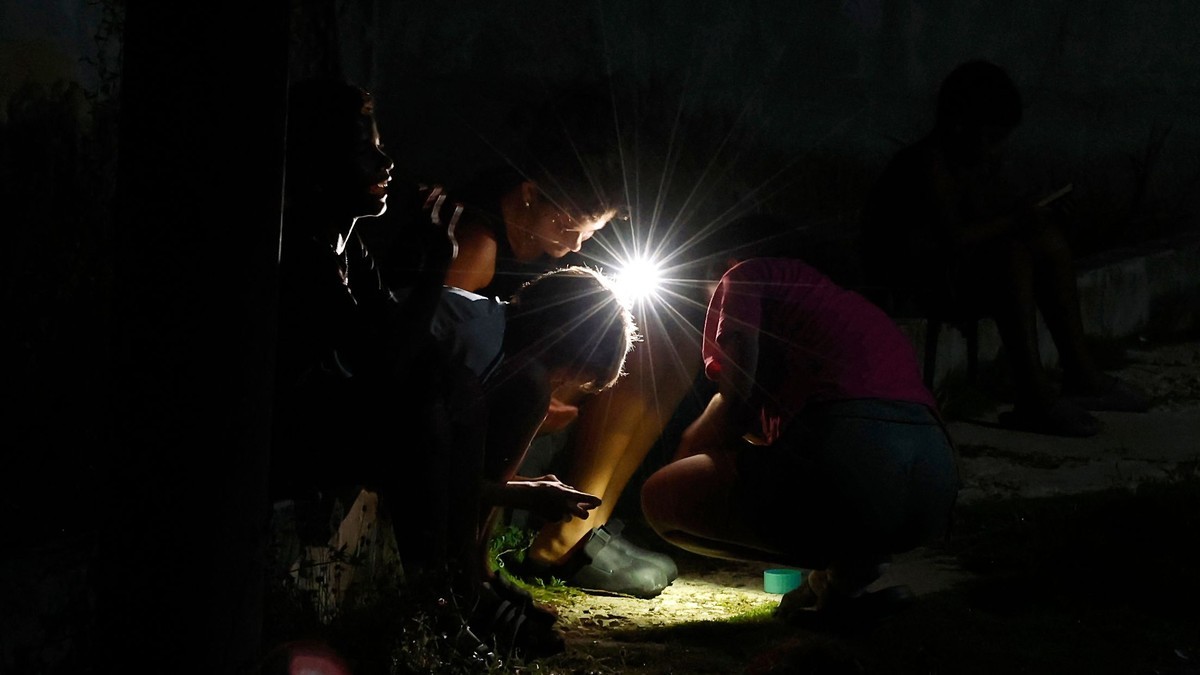
On the streets of Havana, the wait continued through Friday night. "No one can stand these constant blackouts. There isn't enough food, there's no water, there's no electricity, you have no idea," Mercedes Rodriguez, 60, told the Associated Press as she waited for public transport. "The country is in such a sad state, and there are no words for what we're going through." Abilen Marrero, a homemaker, sat at the entrance to her building in central Havana. "Maybe it'll come back this afternoon or tomorrow, there's no way to know," she said. "We just have to wait." Lidia Fernandez, 36, a schoolteacher, told AFP: "It's one thing after another: no water, no gas for cooking, no electricity. Honestly, I don't know how we haven't gone crazy." Francisco Rodriguez, 78, said his home had already gone 28 hours without power. Zunilda Garcia, 60, came outside to charge a small lamp with solar energy. "We have to wait and stay calm," she said. "We can't lose hope." In New York, Cuba's ambassador to the United Nations, Ernesto Soberon Guzman, called the outages "a collective punishment."
By Jessica Ali, Staff Writer
This article was produced with AI-assisted research and editorial support. Sources: AP, Reuters, DW, AFP, CBS News, Fox News, Firstpost, Granma, UNE, the Cuban Ministry of Energy and Mines and the U.S. Embassy in Havana.
What's Your Reaction?
 Like
0
Like
0
 Dislike
0
Dislike
0
 Love
0
Love
0
 Funny
0
Funny
0
 Wow
0
Wow
0
 Sad
0
Sad
0
 Angry
0
Angry
0

Editor-in-Chief at Global1.News. Atlanta-based journalist who cuts through the BS and tells it like it is. Lead anchor, host, and the voice you hear when the spin stops and the truth starts.











Comments (0)