
Confidential Funds as 'Trojan Horse' for Corruption: Renee Co Sounds Alarm at VP Trial
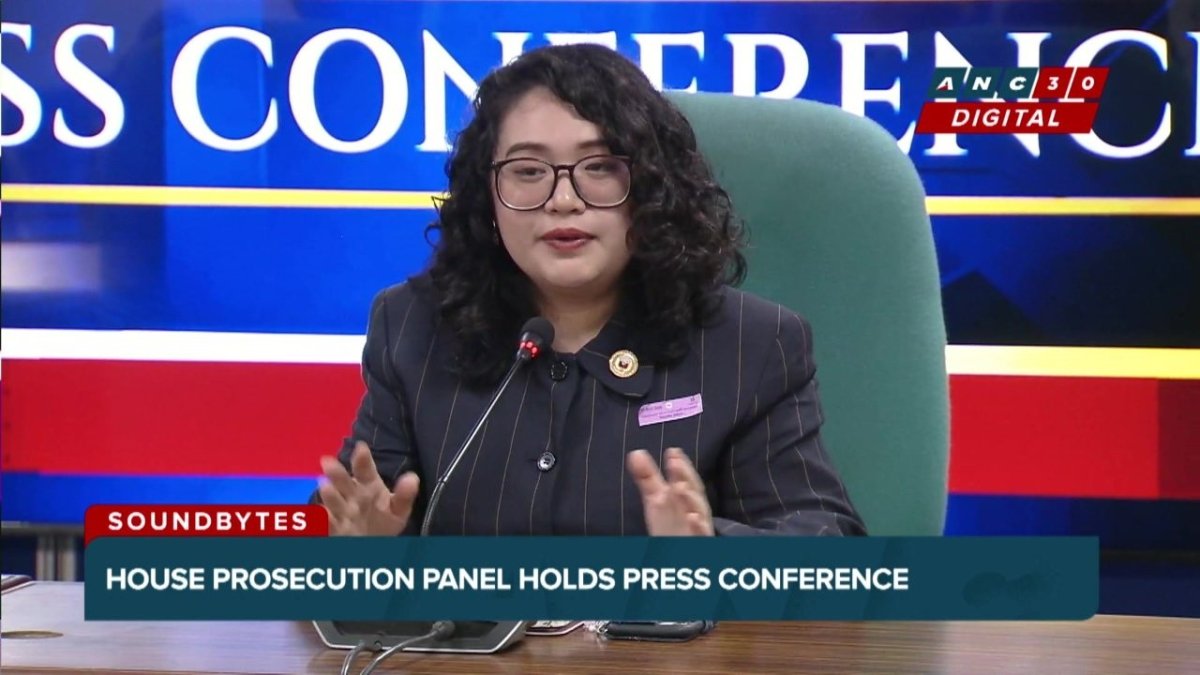
In a recent ANC 24/7 report, Kabataan party-list Rep. Renee Co, the spokesperson for the House prosecution panel in the impeachment trial of Vice President Sara Duterte, delivered a stark warning that struck a chord with many Filipinos watching from their living rooms and sari-sari stores: confidential and intelligence funds (CIF) should never become a "Trojan horse" for agency corruption.
In a recent ANC 24/7 report, Kabataan party-list Rep. Renee Co, the spokesperson for the House prosecution panel in the impeachment trial of Vice President Sara Duterte, delivered a stark warning that struck a chord with many Filipinos watching from their living rooms and sari-sari stores: confidential and intelligence funds (CIF) should never become a "Trojan horse" for agency corruption. As the trial entered its 15th day at the Senate impeachment court, Co's words cut through the legal jargon to address a concern that resonates deeply with ordinary citizens who pay taxes and send their children to public schools — is public money being used for its intended purpose, or is it being funneled into shadowy operations that benefit a select few?
Confidential Funds as 'Trojan Horse' for Corruption: Renee Co Sounds Alarm at VP Trial
Manila, Philippines – August 12, 2026 — The impeachment trial of Vice President Sara Duterte took a sharp turn on Tuesday as the House prosecution panel zeroed in on what it calls the "longest and most complex" article of impeachment: the alleged misuse of P612.5 million in confidential funds. Speaking on the sidelines of the proceedings, Rep. Renee Co of Kabataan party-list warned that these funds, which are meant for intelligence gathering and security operations, could easily become a cover for systemic corruption within government agencies. The trial, presided over by Senate President Francis "Chiz" Escudero, has now consumed 15 days of what promises to be a historic and contentious process.
The P612.5 Million Question: Where Did the Money Go?
At the heart of the confidential funds charge is a staggering sum: P612.5 million allocated to two offices headed by Vice President Duterte. This breaks down to P500 million in confidential funds for the Office of the Vice President (OVP) and P112.5 million in similar funds for the Department of Education (DepEd), which Duterte also headed before her resignation. The Commission on Audit (COA) has already ordered the return of P448 million, a figure that the prosecution says represents expenditures that failed to meet even the most basic standards of accountability.
For ordinary Filipinos, this is not just a political squabble among elites. This is money that could have built classrooms, hired more teachers, or funded school feeding programs for millions of students. Instead, the prosecution alleges, it was disbursed with alarming speed and minimal documentation. The House prosecution panel has indicated that this particular article of impeachment will take at least 31 of its 62 allotted trial dates, making it the longest and most detailed portion of the case. Prosecution legal spokesperson Benjamin Tolosa Jr. explained that tracing the money trail requires examining numerous documents and calling multiple witnesses, a process that demands patience and thoroughness.
COA Auditor Stands Firm: Irregular Spending Exposed
On Day 15, the prosecution called COA-ICFAO (Intelligence and Confidential Funds Audit Office) state auditor Xylene del Campo to the witness stand for the third time. Del Campo, who has become a key figure in the trial, maintained her position that the OVP's 2023 confidential fund spending was irregular. She rejected the defense's assertion that details of expenditures using confidential funds should automatically be treated as confidential, arguing that supplier details are not inherently secret and that receipts or invoices should have been submitted to prove purchases.
Del Campo's testimony on Tuesday was particularly damning. She stated that Vice President Duterte and two other OVP officials are liable for the disbursement of P73 million out of the P125 million confidential funds that state auditors disallowed for violating confidential fund use guidelines. Even more striking was her revelation that Duterte directed the transfer of cash advance disbursements to Colonel Raymund Dante Lachica, the former head of the Vice Presidential Security and Protection Group (VPSPG). Del Campo said this directive violated the joint circular on confidential funds, which specifies who may handle such disbursements and under what conditions.
Beyond the Numbers: The Human Cost of Counter-Insurgency Programs
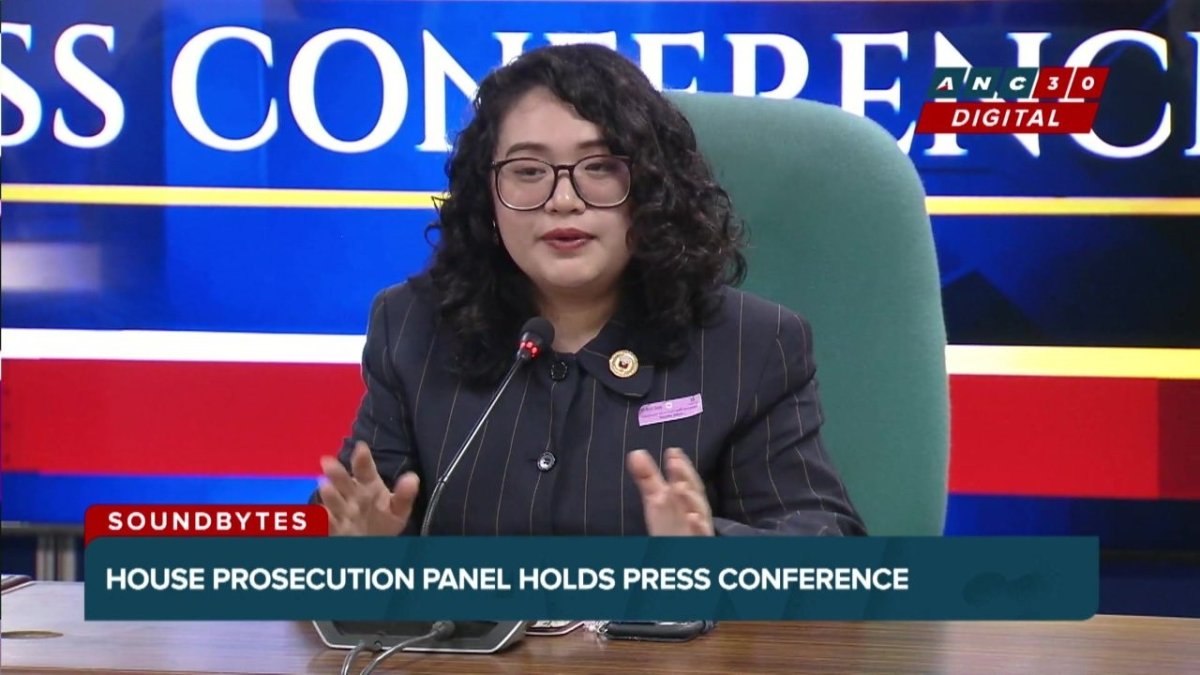
Rep. Co's warning about the "Trojan horse" nature of confidential funds goes beyond mere accounting irregularities. She pointed out that DepEd is not mandated to be part of counter-insurgency operations, yet the agency's funds were allegedly used in ways that suggest otherwise. This raises troubling questions about the militarization of education and the potential use of public schools as instruments of political or military agendas. For teachers and students in conflict-affected areas, this is not an abstract concern — it affects their safety, their learning environment, and their trust in the institutions meant to protect them.
The prosecution has also presented evidence involving recipients such as Mary Grace Piatos, whose name appeared in acknowledgment receipts for confidential fund disbursements. Philippine Statistics Authority (PSA) records have raised questions about the identities of some individuals listed in these receipts, suggesting that some may not exist or may have been used without their knowledge. This is a deeply personal issue for many Filipinos who have seen their names or identities used in schemes they knew nothing about, often with devastating consequences for their reputations and livelihoods.
A Question of Accountability: The Acknowledgment Receipt Controversy
The acknowledgment receipt controversy has become a focal point of the prosecution's case. These receipts are supposed to document who received confidential funds and for what purpose. But the prosecution alleges that many of these receipts are questionable, with names that do not match PSA records or signatures that appear inconsistent. House prosecutor Rep. Terry Ridon of Bicol Saro said the prosecution will present evidence involving recipients like Piatos, along with PSA records that raise serious doubts about the authenticity of these documents.
For the average Filipino, this strikes at the heart of good governance. If acknowledgment receipts cannot be trusted, then how can citizens have confidence that their tax money is being spent wisely? The prosecution's meticulous examination of these documents sends a message that accountability matters, even — or especially — for the highest officials in the land. It also highlights the importance of institutions like COA and PSA in safeguarding public trust, even when their findings are inconvenient for those in power.
Madriaga's Testimony: Not a 'Star Witness' But a Crucial Piece
Former Duterte aide Ramil Madriaga, who claimed to have personally handled and transferred P125 million in confidential OVP funds within less than 24 hours, is not expected to be a "star witness" in the trial. However, his testimony could prove crucial in establishing the timeline and mechanics of how the funds were moved. The speed with which such a large sum was transferred raises eyebrows and invites questions about whether proper protocols were followed or whether this was a deliberate attempt to obscure the money trail.
The prosecution's decision not to elevate Madriaga to "star witness" status suggests a strategic approach — they are building a comprehensive case rather than relying on any single dramatic testimony. This methodical approach may be more effective in convincing the senator-judges, who will ultimately vote on whether to convict or acquit the Vice President. It also demonstrates that the prosecution is taking its responsibility seriously, recognizing that the stakes are too high for shortcuts or sensationalism.
Escudero's Call for Civility: Generational Gap or Deeper Divide?
As the trial progresses, presiding officer Senate President Escudero has had to step in to maintain decorum. On Tuesday, he urged private prosecutor Lorna Kapunan and defense counsel Kristine Ferrer to temper their words, noting that their apparent generational gap should not fuel tension in the proceedings. This moment of friction highlights the emotional intensity of the trial, where legal arguments often give way to personal animosity and political posturing.
For Filipinos watching the trial unfold, this is a reminder that the impeachment process is not just about facts and evidence — it is also about how those facts are presented and received. The Senate, acting as an impeachment court, must balance the pursuit of truth with the need for fairness and due process. Escudero's intervention serves as a reminder that the credibility of the entire process depends on the conduct of all parties involved, from the prosecutors to the defense to the senator-judges themselves.
The Grave Threats Case: A Parallel Legal Battle
While the impeachment trial continues, a parallel legal battle is unfolding in the regular courts. The Department of Justice (DOJ) filed grave threats charges against Vice President Duterte before a Quezon City court on Tuesday, stemming from her remarks that she had hired a person to kill President Ferdinand Marcos Jr. and others if she dies. Palace Press Officer Claire Castro addressed the apparent contradiction, saying, "Magkaiba po kasi ang criminal case, magkaiba din po ang impeachment" — a criminal case and an impeachment case are different in nature.
Duterte's camp has argued that she cannot be prosecuted while her impeachment trial is ongoing, citing constitutional protections. This legal battle adds another layer of complexity to an already fraught political situation. For ordinary Filipinos, the simultaneous proceedings raise questions about the rule of law and whether the justice system can handle multiple high-profile cases involving the same individual without compromising fairness or due process.
What to Watch For
As the trial moves forward, several key developments bear watching. First, the continuation of COA auditor del Campo's cross-examination will likely yield more details about the specific violations and the extent of liability. Second, the grave threats case in Quezon City could proceed independently, potentially creating a parallel narrative that influences public opinion. Third, the prosecution may seek subpoenas for bank and tax records to further trace the money trail, a move that could significantly strengthen their case.
With 31 trial dates dedicated to the confidential funds article alone, the proceedings are expected to stretch well into the coming months. The senator-judges will eventually vote on each article of impeachment, and their decisions will shape the political landscape for years to come. For now, the focus remains on the evidence and the witnesses, as the prosecution works to prove that confidential funds were used not for national security but for personal and political gain.
The impeachment trial of Vice President Sara Duterte is more than a legal proceeding — it is a test of the Philippines' democratic institutions and their ability to hold powerful officials accountable. For the teachers, students, farmers, and jeepney drivers who make up the fabric of Filipino society, the outcome will determine whether public funds are protected from abuse or whether the "Trojan horse" of confidential funds will continue to undermine trust in government. As Rep. Co and the prosecution panel press their case, they carry with them the hopes of millions who believe that accountability is not just a slogan but a fundamental right.
By Bella Reyes, Staff Writer
This article was produced with AI-assisted research and editorial support. Reporting is based on sources cited in the article.
What's Your Reaction?
 Like
0
Like
0
 Dislike
0
Dislike
0
 Love
0
Love
0
 Funny
0
Funny
0
 Wow
0
Wow
0
 Sad
0
Sad
0
 Angry
0
Angry
0

Philippines/Southeast Asia Correspondent at Global1.News. Manila-based journalist covering Philippine politics, environment, maritime security, and social issues. Passionate about marine conservation and the communities protecting the Philippines' natural heritage.













Comments (0)