
Supreme Court: Illegally Dismissed Workers Entitled to Backdated SSS Contributions
The Supreme Court ruled that illegally dismissed workers are entitled to SSS contributions for the entire period of their unlawful dismissal, on top of full backwages. The ruling stemmed from four Lopez Sugar Corporation employees who were ordered reinstated.
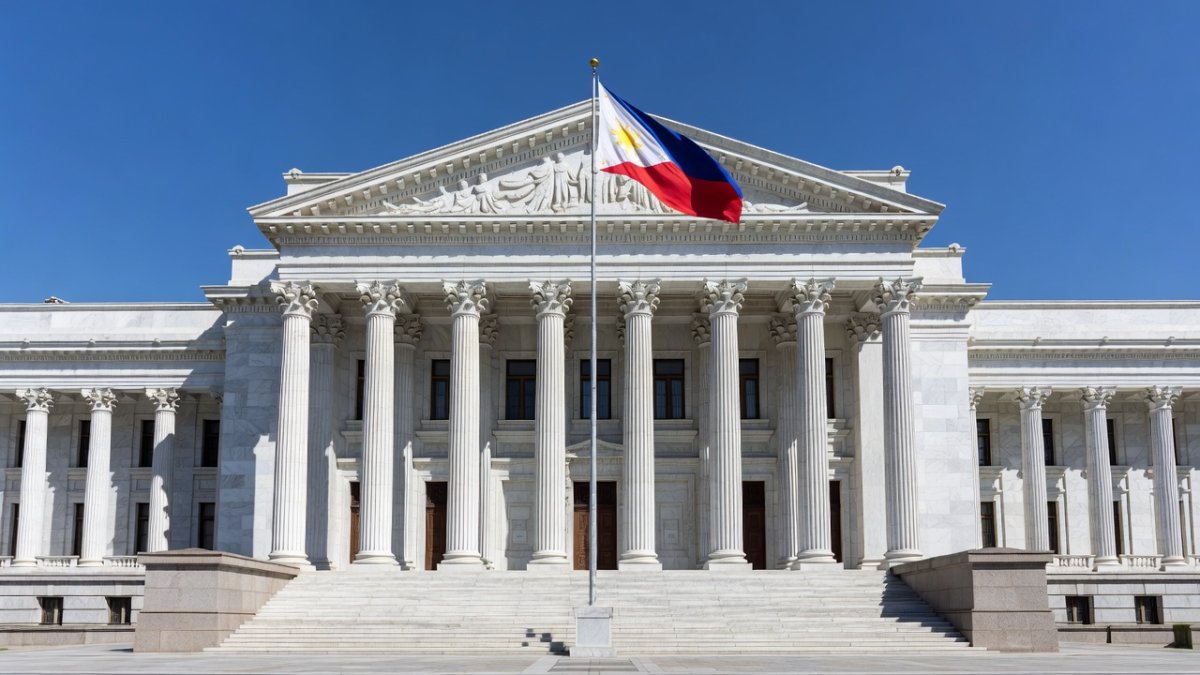
The Supreme Court has ruled that employees who are illegally dismissed from their jobs are entitled not only to full backwages but also to the remittance of their Social Security System (SSS) contributions for the entire duration of their unlawful termination. This means that for every month a worker was unjustly barred from their post, their employer must now pay the corresponding SSS premiums, ensuring that their retirement and other social security benefits remain intact.
The landmark Decision was penned by Associate Justice Maria Filomena D. Singh of the Supreme Court's Third Division, dated Feb. 5, 2026. The case, docketed as G.R. No. 260447, Lopez Sugar Corporation v. Romeo Perrin, Jr. et al., stemmed from the illegal dismissal of four employees of Lopez Sugar Corporation (LSC). The ruling, which was reported by Philstar.com on Aug. 12, 2026, and detailed in a Supreme Court press release issued Aug. 11, 2026, closes a significant loophole that allowed employers to escape their social security obligations by simply terminating workers unlawfully.
A Victory for Security of Tenure
At the heart of this case is the fundamental principle of security of tenure, a right enshrined in the Philippine Labor Code. The four employees of Lopez Sugar Corporation were found to have been illegally dismissed, a finding that was affirmed all the way up the judicial ladder. The National Labor Relations Commission (NLRC) initially ruled that the employees were illegally dismissed. This was subsequently affirmed by the Court of Appeals and, finally, by the Supreme Court. As a result, LSC was ordered to reinstate the workers to their former positions and pay them full backwages.
The legal battle, however, did not end there. After the ruling became final, the employees took the next logical step: they asked LSC to remit their SSS contributions for the period covered by their backwages. Their goal was simple and deeply personal—they needed those months of contributions to qualify for their retirement benefits. For workers who have spent decades in a company, every single month of contribution counts toward the total credited years of service required to receive a monthly pension in their golden years.
LSC, however, refused. The company argued that under the Social Security Act of 1997, its obligation to pay SSS contributions ended upon the employees' separation from employment, regardless of whether the dismissal was legal or illegal. It was a technical argument that, if accepted, would have created a perverse incentive for employers to dismiss workers unlawfully, knowing they could save on the employer's share of SSS contributions.
The Social Security Commission and the Court of Appeals Weigh In
The Social Security Commission (SSC), the quasi-judicial body that hears and decides cases involving SSS matters, rejected LSC's position. The SSC ruled that because the employees were illegally dismissed, the employer-employee relationship was deemed to have continued during the period they were prevented from working. In essence, the law treats the workers as if they never left their posts. The Court of Appeals affirmed this ruling, setting the stage for the Supreme Court's final word on the matter.
The Supreme Court's Decision is a resounding affirmation of the SSC's stance. The High Court explained that under Article 294 of the Labor Code, illegally dismissed employees are entitled to full backwages and other benefits. The Court clarified that these workers are considered to have remained employed during the period covered by their backwages and are therefore entitled to the rights and benefits that would have accrued during that period. This includes the employer's obligation to remit SSS contributions.
The Supreme Court's Reasoning: Deemed Never to Have Left
In its ruling, the Supreme Court laid out the legal fiction that underpins the entire decision. The Court stated, "Here, there is no dispute that Perrin et al. were illegally dismissed, as ruled by the NLRC and affirmed by the CA and the Court. Thus, they are deemed to have never left their employment. Consequently, LSC's obligation to remit Perrin et al.'s social security contributions did not cease with respect to the period during which Perrin et al. were illegally dismissed."
This is a powerful statement. The phrase "deemed to have never left their employment" is not just legal jargon; it is a recognition of the injustice that illegal dismissal inflicts. When a worker is unlawfully separated from their job, they lose their livelihood, their source of income, and their sense of security. But under the law, they are also stripped of the very contributions that would secure their future. The Supreme Court has now closed that gap, ensuring that the period of illegal dismissal is treated as continuous employment for social security purposes.
The Court did not stop there. It also addressed the consequences of LSC's failure to remit the contributions. The High Court imposed a penalty of three percent (3%) per month on LSC for its failure to remit the contributions, reckoned from the date they became due until full payment. This penalty is mandated by Section 22 of the Social Security Act of 1997. As the Court stated, "Since LSC failed to remit Perrin et al.'s social security contributions, LSC is liable to pay a penalty thereon of three percent (3%) per month from the date the contribution falls due until paid, pursuant to Section 22 of the Social Security Act of 1997."
What This Means for the Filipino Worker
For the average Filipino worker—whether you are a factory worker in Laguna, a call center agent in Makati, a sales clerk in a mall in Cebu, or a sugar plantation worker in Negros—this ruling is a shield. It tells you that your employer cannot simply terminate you without just cause and then wash their hands of their obligations to you. The SSS is the state-run pension and social insurance fund for private-sector employees in the Philippines, providing retirement, disability, sickness, maternity, and death benefits. These are not optional perks; they are the safety net that catches you when you can no longer work.
SSS contributions are deducted from wages and matched by employers. The number of months of contribution is a critical factor in determining whether a member qualifies for retirement benefits. For a worker who has been with a company for 20 or 30 years, a gap of even a few months can delay or reduce their pension. This ruling ensures that an illegal dismissal cannot be used by employers to create such gaps. It protects the integrity of the SSS system and upholds the principle that workers who are unlawfully prevented from working should not be penalized for their employer's wrongdoing.
This is particularly significant for workers in industries where illegal dismissal is a real threat. In the sugar industry, where the case originated, workers often face precarious employment conditions. The same can be said for workers in construction, domestic work, and other sectors where labor rights are sometimes overlooked. This ruling sends a clear message: the law is on the side of the worker.
A Deterrent Against Unscrupulous Employers
Beyond the immediate relief it provides to the four employees of Lopez Sugar Corporation, this ruling serves as a deterrent to other employers who might be tempted to use illegal dismissal as a cost-saving measure. By imposing a three percent monthly penalty on unpaid contributions, the Supreme Court has made it financially painful for employers to withhold SSS remittances. This penalty, which accrues from the date the contribution falls due until it is fully paid, can quickly balloon into a significant amount, making it more expensive for an employer to ignore their obligations than to simply comply with the law.
The ruling also reinforces the importance of the Social Security Commission as a protector of workers' rights. The SSC's role in this case was crucial. It was the SSC that first recognized that the employer-employee relationship was deemed to have continued during the period of illegal dismissal. The Supreme Court's affirmation of the SSC's ruling strengthens the Commission's authority and its ability to hold employers accountable.
For labor unions and workers' groups, this decision is a powerful tool. It provides a clear legal basis for demanding SSS remittances in cases of illegal dismissal. It also underscores the importance of documenting all aspects of employment, including the payment of SSS contributions, as these records can be crucial in pursuing claims.
Looking Ahead: Protecting Your Future
For ordinary Filipino workers, this ruling is a reminder to be vigilant about your SSS contributions. It is always wise to regularly check your SSS records online or through the SSS mobile app to ensure that your employer is remitting your contributions on time. If you find discrepancies, you should immediately report them to the SSS or the Social Security Commission. This ruling gives you the legal backing to demand that your contributions be paid, even if you have been dismissed from your job.
The ruling also highlights the importance of the Labor Code's protection of security of tenure. Article 294 (formerly Article 279) of the Labor Code protects workers' security of tenure, and illegally dismissed workers are entitled to reinstatement and full backwages. This new ruling extends that protection to the realm of social security, ensuring that the benefits that accrue from employment are not lost due to an employer's illegal actions.
In a country where many families rely on the SSS pension for their daily needs in retirement, this ruling is a significant victory. It ensures that the contributions you and your employer have made over the years are not put at risk by an unjust termination. It is a reminder that the law, while sometimes slow, ultimately works to protect the rights of the working man and woman.
The Supreme Court's Decision in Lopez Sugar Corporation v. Romeo Perrin, Jr. et al. is more than just a legal precedent. It is a statement of values. It says that in this country, a worker's dignity and future cannot be sacrificed for an employer's convenience. It says that the bayanihan spirit—the tradition of helping one another—extends to the halls of justice. And it says that for the Filipino worker, the promise of a secure retirement is a right that must be honored, not a privilege that can be revoked.
By Bella Reyes, Staff Writer
This article was produced with AI-assisted research and editorial support. Sources: Philstar.com, Supreme Court of the Philippines press release, Daily Tribune.
What's Your Reaction?
 Like
0
Like
0
 Dislike
0
Dislike
0
 Love
0
Love
0
 Funny
0
Funny
0
 Wow
0
Wow
0
 Sad
0
Sad
0
 Angry
0
Angry
0

Philippines/Southeast Asia Correspondent at Global1.News. Manila-based journalist covering Philippine politics, environment, maritime security, and social issues. Passionate about marine conservation and the communities protecting the Philippines' natural heritage.















Comments (0)