
Trump Imposes 15% Tariff on Polysilicon in Escalation of US-China Tech War
Trump Imposes 15% Tariff on Polysilicon in Escalation of US-China Tech War Washington has drawn a new line in the sand over critical technology supply chains.
Trump Imposes 15% Tariff on Polysilicon in Escalation of US-China Tech War
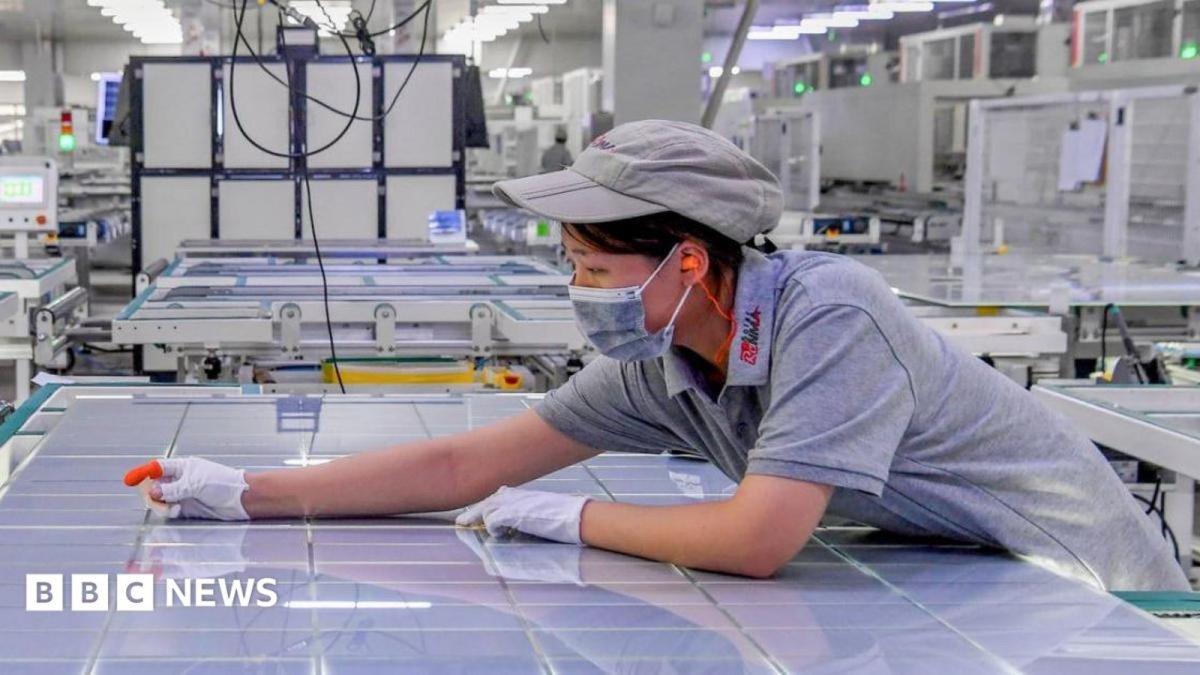
Washington has drawn a new line in the sand over critical technology supply chains. On Thursday, President Donald Trump signed an executive order imposing a 15% tariff on imported products made from polysilicon—the foundational material for semiconductors and solar panels—alongside the establishment of minimum import prices for the material and related goods. The move, which follows a national security investigation into overseas production, targets China’s near-monopoly on a substance that sits at the heart of both the global energy transition and the artificial intelligence (AI) arms race. The Chinese embassy in Washington responded swiftly, stating that the action "seriously disrupts" bilateral trade and that Beijing will act to protect its companies, accusing Washington of "abusing state power to go after Chinese businesses."
The Strategic Logic Behind the Polysilicon Tariff
The executive order is not a random act of protectionism; it is a calculated intervention in a market where the United States has ceded ground for two decades. President Trump’s order explicitly accepts recommendations from Secretary of Commerce Howard Lutnick to impose both the 15% tariff and minimum import prices, with measures due to take effect in December. The administration’s stated rationale is blunt: for decades, the US has allowed "foreign firms to weaken United States producers in the polysilicon sector." The data cited in the order underscores the severity of the decline—US share of global polysilicon production has fallen from 50% in 2005 to less than 2% in 2024. This is not merely an economic statistic; it is a national security vulnerability, given that the material is critical in military equipment and electronics. The tariff is designed to create a price floor that makes domestic production viable again. By setting minimum import prices, Washington is attempting to counteract the cost advantages of Chinese producers, who benefit from economies of scale and state support. The order is likely to benefit Hemlock Semiconductor and Wacker Chemie, the main US-based producers of the material. This is a classic infant-industry protection strategy, but with a geopolitical twist: it is explicitly framed as a response to China’s dominance in a sector that underpins both the digital economy and the green energy transition.China’s Near-Monopoly: The Polysilicon Market Context
China’s position in the polysilicon market is not a matter of marginal advantage; it is a structural near-monopoly. As the world’s biggest producer of polysilicon, China controls the upstream input for two of the most strategically important industries of the 21st century: semiconductors and solar panels. This dual-use nature makes polysilicon uniquely sensitive. In the solar sector, China’s dominance has already reshaped global supply chains, driving down costs but also creating dependency. In the semiconductor sector, polysilicon is the starting point for the ultra-pure silicon wafers that power everything from smartphones to AI data centers. The US response reflects a broader recognition that the race to secure critical minerals and materials is as important as the race to secure advanced chip manufacturing equipment. The 15% tariff is a relatively modest figure compared to the 100% tariffs imposed on Chinese electric vehicles, but the minimum import price mechanism is arguably more significant. It signals that Washington is moving beyond simple tariff escalation toward managed trade—a system where prices are set by policy rather than market forces. This is a departure from traditional free-market orthodoxy and a clear acknowledgment that the US considers polysilicon a matter of national security, not just commerce.The Semiconductor and AI Race: Why This Matters Now
The production of computer chips is central to the race between the US and China to develop artificial intelligence. Polysilicon is the raw material that begins the chip manufacturing process, and any disruption in its supply chain cascades through the entire semiconductor ecosystem. The Trump administration’s move is part of a broader strategy to limit China’s role in critical technology supply chains, a strategy that has already included export controls on advanced chips and chipmaking equipment. By targeting polysilicon, Washington is moving upstream, addressing the vulnerability at the source rather than at the point of assembly. This is a strategic escalation because it attacks China’s comparative advantage in the early stages of the supply chain. While the US and its allies have focused on cutting-edge chip design and manufacturing equipment, China has built an unassailable position in the more mundane but essential materials. The tariff is an attempt to rebalance this equation, but it carries risks. If China retaliates by restricting polysilicon exports or raising prices, the global semiconductor industry—including US firms—could face immediate supply shocks. The interdependence of the two economies means that this is not a one-way lever; it is a double-edged sword.The Trade War Truce: A Fragile Pause Under Strain
This new tariff arrives against the backdrop of a tit-for-tat trade war that has been on hold since May 2025. The truce, which followed months of escalating tariffs and counter-tariffs, was seen as a de-escalation of the most intense phase of economic conflict between the world’s two largest economies. However, the polysilicon order suggests that the pause was always conditional. Washington has continued to chip away at China’s technological ambitions through sector-specific measures, even as broader tariff levels have remained static. The timing is notable. Beijing announced a range of countermeasures this week, including tighter export controls on drones and a national security review into imported printers and copiers. These moves indicate that China is not waiting for the December implementation date to respond. The pattern is familiar: each US action in a critical technology sector is met with a calibrated Chinese response in another area of strategic importance. The truce, therefore, is not a peace treaty but a ceasefire that can be broken at any moment by either side.Beijing’s Response Levers: From Export Controls to Market Power
The Chinese embassy’s statement that Beijing will act to protect its companies is not an empty threat. China holds significant leverage in this confrontation. As the dominant producer of polysilicon, China could impose its own export controls, restricting the supply of the material to US buyers and exacerbating the very supply chain vulnerabilities the tariff is meant to address. The recent tightening of drone export controls demonstrates that Beijing is willing to use its market power as a weapon. Beyond direct retaliation, China has broader options. It can accelerate its own domestic semiconductor self-sufficiency programs, reducing its reliance on US technology and markets. It can also deepen its economic ties with other partners in the Global South and Europe, creating alternative markets that dilute the impact of US tariffs. The national security review into imported printers and copiers is a signal that Beijing is prepared to mirror Washington’s tactics, using regulatory mechanisms to pressure US companies operating in China. The strategic calculus for Beijing is clear: absorb the short-term cost of the tariff while positioning China for long-term technological independence.Global Supply Chain Implications: A New Era of Fragmentation
The polysilicon tariff is a significant step in the fragmentation of the global technology supply chain. For decades, the industry operated on the assumption of efficiency and comparative advantage—China produced polysilicon cheaply, the US and others bought it, and everyone benefited. That assumption is now obsolete. The tariff, combined with minimum import prices, effectively creates a two-tier market: one for the US, where domestic production is incentivized, and one for the rest of the world, where Chinese polysilicon continues to flow. This has profound implications for the solar industry, which relies heavily on polysilicon. US solar developers may face higher costs as domestic production ramps up, potentially slowing the energy transition. For the semiconductor industry, the impact is more complex. US chipmakers may need to source polysilicon from higher-cost domestic or allied producers, increasing their input costs at a time when they are already investing heavily in new fabrication plants. The order also sends a signal to other countries: the era of open, rules-based trade in critical materials is ending, replaced by a system where national security considerations override market efficiency.Strategic Implications for the Asia-Pacific and the Global Order
The broader strategic implications of this move extend far beyond the US and China. For the Asia-Pacific region, which hosts much of the world’s semiconductor manufacturing capacity, the tariff creates a new source of uncertainty. Countries like South Korea, Japan, and Taiwan must now navigate a landscape where the US is actively reshaping supply chains to exclude Chinese inputs. This could force them to choose sides, a politically and economically costly proposition. The order may also accelerate the trend toward "friend-shoring," where US allies are incentivized to build domestic or regional production capacity for critical materials. For the Global South, the implications are equally significant. Many developing countries view China as a key partner in their own industrialization efforts, particularly in solar energy. US tariffs on Chinese polysilicon could raise the cost of solar projects in these countries, slowing their energy transitions. At the same time, the US is offering incentives to boost domestic production, but these are unlikely to benefit developing nations. The result is a world where critical technology supply chains are increasingly divided along geopolitical lines, with the Global South caught in the middle. This is not just a trade dispute; it is a reordering of the global economic order, where the tools of globalization are being repurposed as instruments of strategic competition. By Prof. Marcus Chen, Staff WriterThis article was produced with AI-assisted research and editorial support. Reporting is based on sources cited in the article.
What's Your Reaction?
 Like
0
Like
0
 Dislike
0
Dislike
0
 Love
0
Love
0
 Funny
0
Funny
0
 Wow
0
Wow
0
 Sad
0
Sad
0
 Angry
0
Angry
0

Marcus Chen
World Politics Analyst at Global1.News. Based in Beijing, covering US-China relations, global trade, and geopolitical strategy. Brings deep analytical perspective to the power dynamics shaping international affairs.














Comments (0)