
Colombia's New Right-Wing President: Implications for Mexico
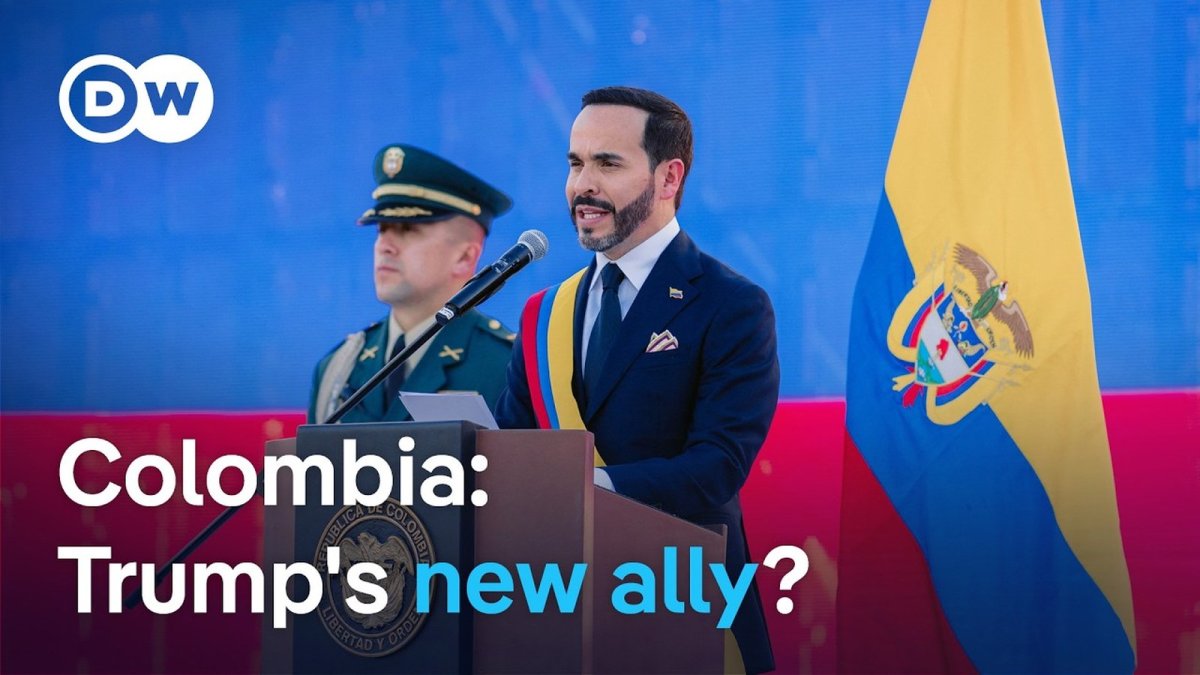
In a recent DW News report on Colombia's new right-wing president, viewers saw Abelardo de la Espriella sworn in on Friday in Cali rather than Bogotá. The ceremony at Universidad Santiago de Cali and his 75-minute speech at the Pichincha Battalion base highlighted promises to defeat narco-terrorism.
In a recent DW News report on Colombia's new right-wing president, viewers saw Abelardo de la Espriella sworn in on Friday in Cali rather than Bogotá. The ceremony at Universidad Santiago de Cali and his 75-minute speech at the Pichincha Battalion base highlighted promises to defeat narco-terrorism. For families in Mexican border colonias like those in Tijuana and Ciudad Juárez, this shift raises questions about how US-backed security packages will affect cross-border drug flows and migration routes through Mexico.
Colombia's Right-Wing Inauguration Raises Stakes for Mexico's Security Strategy
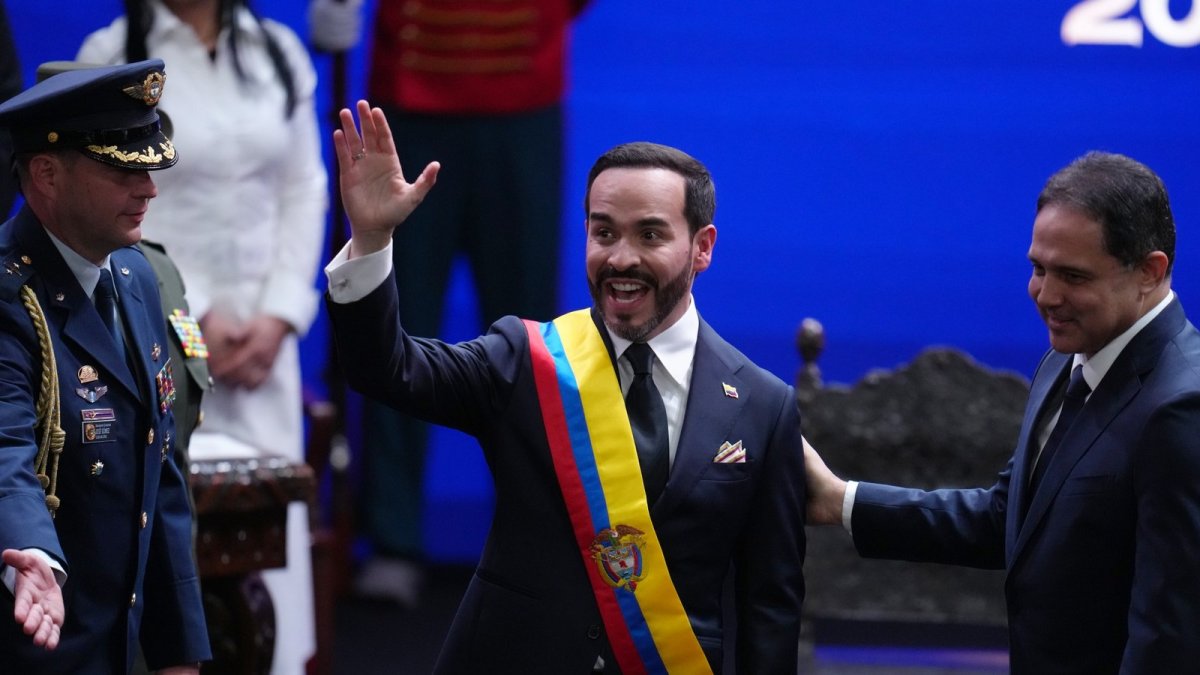
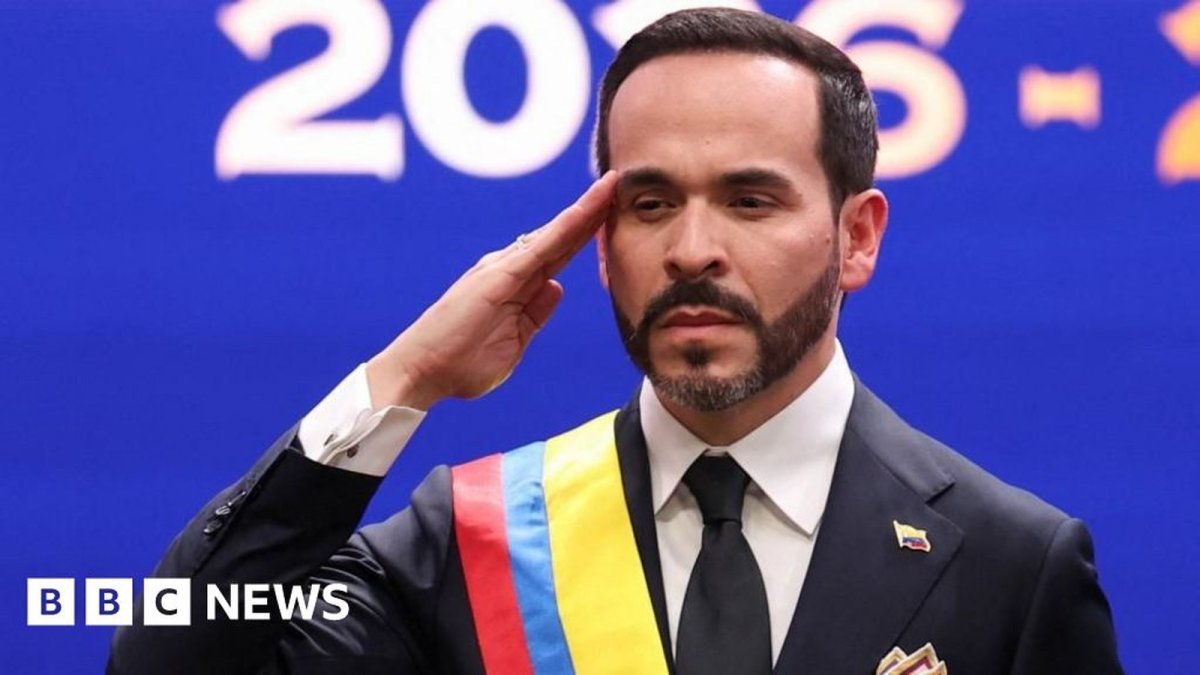
Mexico City, Mexico – August 2026 — Abelardo de la Espriella, 48, took office as Colombia's president after winning a tight June runoff against leftist Senator Ivan Cepeda. The self-financed lawyer and US citizen since 2023 broke tradition by holding the event in volatile southwest Colombia. His pledges to cut government spending by up to 40 percent, revive oil and gas through fracking at Ecopetrol, and build mega-prisons now draw direct comparisons in Mexico to debates over the Sheinbaum administration's approach versus the AMLO legacy of "abrazos, no balazos."
The Story Unfolds — Ceremony and Speech Details
De la Espriella, known to supporters as "El Tigre," delivered his inaugural address after receiving the sash before Congress in Cali. He told troops that dialogue with armed groups was exhausted and that criminals faced two choices: submit to the rule of law or confront the state's security forces. The speech came amid heavy security with soldiers and armored vehicles along roads and police checkpoints screening for explosives in areas contested by dissident FARC factions, the Clan del Golfo cartel, and the ELN rebel group.
The southwest region where the ceremony unfolded remains one of Colombia's most contested zones, with armed groups that expanded during the prior "total peace" talks displacing tens of thousands along the Colombia-Venezuela border last year. Mexican families watching from states like Sinaloa and Michoacán see echoes of how such volatility can reroute trafficking networks northward, placing added strain on the Guardia Nacional and SEDENA as they manage flows tied to both cocaine and fentanyl precursors.
Mexican Context — Security Debates and US Pressure
Mexico's own institutions, including the Guardia Nacional and SEDENA, have long balanced militarized operations against calls for social programs. De la Espriella's rejection of Petro's "total peace" negotiations echoes criticisms heard in Mexico's Congreso de la Unión about the expansion of armed groups under previous strategies. The incoming Colombian leader's plan to join the US-backed "Shield of the Americas" coalition against drug trafficking directly parallels US demands on Mexico for closer coordination on fentanyl routes that pass through Mexican territory before reaching the United States.
Under the Sheinbaum administration, officials at the SSPC and FGR continue to navigate these pressures while honoring the AMLO-era focus on addressing root causes of violence. The Colombian shift toward a US-led coalition could intensify calls in Washington for Mexico to align more closely on joint operations, much as the $1 billion security package now proposed for Colombia ties assistance to measurable results on organized crime and border enforcement.
Critics within Mexico's political circles argue that closer alignment with US-led initiatives risks repeating patterns seen under prior strategies where armed group influence expanded despite negotiations. This dynamic places additional scrutiny on how the Sheinbaum government balances domestic priorities with external pressure for measurable enforcement outcomes.
Impact on Mexican Communities — Families and Migration Flows
Ordinary Mexican households in states like Sinaloa and Michoacán already feel the effects of organized crime tied to cocaine and precursor chemicals. De la Espriella's pledge to use aerial herbicides for coca eradication and his focus on border security coordination could intensify US expectations that Mexico increase seizures at its southern border with Guatemala. Migrant workers traveling through Mexican territory toward the US now face potential new enforcement layers if the $1 billion US security package to Colombia sets a precedent for similar aid tied to results on illegal immigration.
Communities in border colonias from Tijuana to Ciudad Juárez understand that any tightening of routes through Colombia may simply redirect flows, leaving Mexican families to absorb the immediate costs in both security and humanitarian terms. The Sheinbaum government must weigh these regional dynamics against domestic priorities at the INM and FGR, where migration management and anti-trafficking efforts already stretch resources thin.
Supply chains for cocaine and fentanyl precursors already intersect communities across Sinaloa, Michoacán, and Guerrero, where local economies feel the ripple effects of shifting trafficking patterns. Any intensification of eradication efforts in Colombia could push additional pressure northward, affecting family stability in these regions as enforcement resources are redirected.
Migrant caravans moving through Mexico toward the northern border may encounter heightened scrutiny if US aid conditions emphasize results on illegal immigration flows. This could alter traditional routes and increase humanitarian demands on southern border communities near Guatemala.
The remittance economy that supports many Mexican households could face indirect strain if tighter border enforcement measures, modeled on the Colombian package, lead to changes in migration enforcement priorities at Mexico's southern frontier.
Reactions and Responses — Protests and Analyst Views
Protests erupted in Cali, Bogotá, and Barranquilla on inauguration day. In Cali's Puerto Resistencia neighborhood, 25-year-old Sebastian Ocampo described residents defending their dignity against the new hardline stance. Senator Ivan Cepeda led a march in Barranquilla calling for peaceful civil disobedience. Jorge Restrepo, economics professor at Javeriana University in Bogotá, noted the speech contained many intentions but lacked detail on how de la Espriella would deliver the promised transformation without creating a "miracle nation."
Regional Shifts and Foreign Policy Reversals
De la Espriella's promises to restore ties with Israel while severing relations with Cuba and Nicaragua mark a clear break from Petro's positions. This rightward turn across Latin America, including leaders in Argentina, Chile, and Peru, leaves Mexico's Morena-led government as one of the remaining left-of-center administrations in the region. Bilateral meetings before the ceremony with Argentina's Javier Milei and Chile's Jose Antonio Kast underscored the conservative network now influencing regional policy on trade and security.
With seven right-wing leaders elected across the hemisphere since President Trump's return to the White House in January 2025, Mexico now finds itself navigating a more conservative neighborhood where economic weakness and rising crime have shifted voter priorities in countries from Peru to Ecuador. For Mexican communities, this realignment raises questions about how trade under USMCA/T-MEC and shared security goals will evolve when neighbors favor harder enforcement lines.
Morena's position as a left-of-center government stands out amid this regional rightward shift, potentially complicating diplomatic coordination on shared issues like trade under USMCA/T-MEC. Mexican officials may need to navigate differing priorities when engaging with neighbors who favor stricter enforcement approaches.
Existing Mexican diplomacy with Colombia could face new tests as the two nations assess how their contrasting political orientations affect cooperation on migration and security matters.
What to Watch For — US Aid and Policy Implementation
The US State Department announced plans for $1 billion in security assistance pending US Congress approval, with acting Attorney General Todd Blanche leading the US delegation. If implemented, the package will target organized crime and border security in ways that could influence US-Mexico talks on the same issues. De la Espriella's early moves on fracking at Ecopetrol and mega-prison construction will be tracked by Mexican energy officials at PEMEX and security planners at SSPC for signs of similar policy experiments north of the border.
Colombia's new direction tests whether aggressive state responses can reduce violence where negotiation strategies fell short. Mexican communities along drug corridors will watch closely as the Sheinbaum administration weighs similar US-backed options against domestic priorities at the SSPC and FGR. The coming months will show whether de la Espriella's forceful approach produces measurable drops in trafficking or simply shifts routes through Mexican territory.
Timelines for the US aid package hinge on congressional approval, with early implementation steps likely to set benchmarks that could later apply to Mexico-related discussions. Mega-prison precedents in Colombia may prompt Mexican security planners to evaluate comparable infrastructure options through the lens of SSPC operations.
Comparisons between Ecopetrol's fracking plans and PEMEX strategies could emerge as Mexican energy officials monitor outcomes, while migration enforcement measures tied to the aid may influence southern border policies in the months ahead.
By Rosa Martinez, Staff Writer
This article was produced with AI-assisted research and editorial support. Reporting is based on sources cited in the article.
What's Your Reaction?
 Like
0
Like
0
 Dislike
0
Dislike
0
 Love
0
Love
0
 Funny
0
Funny
0
 Wow
0
Wow
0
 Sad
0
Sad
0
 Angry
0
Angry
0
Latin America/Andes Correspondent at Global1.News. Based in Bogota, covering politics, environment, energy, and social movements across the Andean region. Passionate about environmental journalism and communities protecting their land.












Comments (0)