
Lebanon-Israel Talks Stall in Rome as Hezbollah and the Lebanese State Collide
Folks, the seventh round of US-sponsored talks between Lebanon and Israel just crashed in Rome without a single breakthrough, and while diplomats were still sitting at the table, Hezbollah chief Naim Qassem and Lebanese Prime Minister Nawaf Salam lit into each other with the kind of public fury that screams this peace process is hanging by a thread.
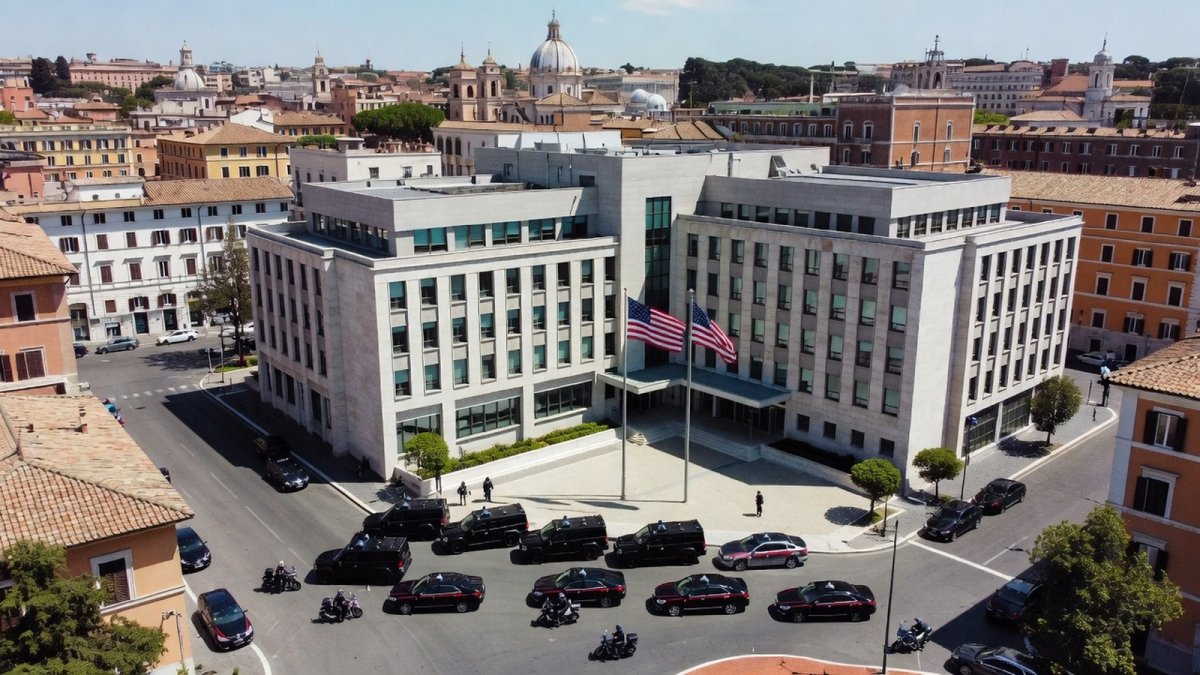
Folks, the seventh round of US-sponsored talks between Lebanon and Israel just crashed in Rome without a single breakthrough, and while diplomats were still sitting at the table, Hezbollah chief Naim Qassem and Lebanese Prime Minister Nawaf Salam lit into each other with the kind of public fury that screams this peace process is hanging by a thread. Strikes resumed in southern Lebanon mid-negotiation, proving once again that words on paper mean nothing when rockets and accusations fly. This is the fragile mess we are watching in real time.
Beirut, Lebanon — The latest US-brokered effort to lock in a lasting ceasefire between Lebanon and Israel ended in deadlock after three days in Rome, leaving the region staring at renewed violence and deepening political fractures inside Lebanon itself.
The Seventh Round in Rome
Lebanon and Israel wrapped up their seventh round of direct talks August 4 through 6 at the US Embassy in Rome. The agenda touched military, political, legal, and prisoner issues, yet the core sticking point remained Israel’s phased withdrawal from southern Lebanon. No new pilot zone was agreed upon, and talks over a verification mechanism dragged on without resolution. Further rounds are expected, but the absence of progress shows how little trust exists on either side right now.
Reuters and AFP both reported the same outcome: discussions continued, yet the key disputes stayed frozen. That lack of movement came as no surprise to anyone tracking the ground reality, where Israeli forces still occupy positions and Hezbollah maintains its armed presence. The talks were meant to build on earlier momentum, but they exposed how quickly the process can stall when neither side feels secure enough to concede ground.
Qassem’s Televised Assault
Hezbollah Secretary-General Naim Qassem used a live Al-Mayadeen broadcast on August 4 to torch the entire negotiation track. He declared that all direct negotiations would bring Lebanon nothing but shame, humiliation, disappointment, and successive concessions. Qassem went further, accusing President Joseph Aoun of abandoning any pretense of neutrality and becoming biased and divisive instead. He urged Lebanese authorities to halt what he called dangerous concessions that weaken the country.
The timing was deliberate, coming on the same day the Rome talks opened. Qassem’s words were not aimed only at Israel; they were a direct shot at Lebanon’s own political leadership for even sitting down with the Americans and Israelis. That kind of public broadside from Hezbollah’s top figure makes any diplomatic progress look shaky at best and impossible at worst.
Salam’s Sharp Counterpunch
Prime Minister Nawaf Salam did not stay silent. He fired back that Hezbollah is not fit to lecture anyone on patriotism. Salam accused the group of serving Israel’s interests rather than protecting Lebanon’s sovereignty and of dragging the country into reckless wars that have already cost thousands of lives. The exchange escalated days after Qassem signaled openness to dialogue with Damascus in his August 4 Arbaeen speech, adding another layer of regional complication.
Salam’s response highlighted the widening rift inside Lebanon’s government. While the prime minister pushes for a deal that restores state authority, Hezbollah continues to operate as a parallel power with its own foreign policy and military decisions. That internal clash is now playing out in public, and it is making Washington’s job of brokering anything sustainable far harder.
Violence Erupts on the Ground
Even as the Rome talks were underway, Israel resumed strikes in southern Lebanon on August 5, citing a Hezbollah ceasefire violation. The Lebanese health ministry reported at least one person killed and eleven injured in one of the strikes. Israel said two of its soldiers were killed in southern Lebanon the same day, and Lebanese authorities confirmed that Israeli retaliatory attacks killed at least one person. The back-and-forth made clear that the battlefield is not waiting for diplomats to catch up.
These incidents during the negotiation window show how fragile any temporary calm remains. One violation triggers immediate retaliation, and the cycle restarts before any verification mechanism can even be tested. The violence undercuts whatever small confidence the talks might have built and keeps civilian casualties climbing on both sides of the border.
The Human Cost Behind the Headlines
While diplomats traded positions in Rome, the reality on the ground in southern Lebanon tells a far grimmer story. More than 4,300 people have been killed since the March 2026 fighting began, and entire villages have been hammered by repeated strikes that leave families with nowhere safe to return. The August 5 attacks that killed at least one civilian and injured eleven others, according to the Lebanese health ministry, are only the latest reminder that daily life has collapsed into a cycle of displacement and fear. Hospitals already stretched thin are treating wave after wave of wounded while trying to keep basic services running for those who remain.
Displaced civilians crowd into temporary shelters farther north, watching their homes and fields turn into contested zones. The strain shows in every report of fresh casualties: medical facilities operating under constant pressure, supply lines disrupted, and communities fractured by the knowledge that one more violation can restart the shelling. These are the conditions the Rome talks were supposed to ease, yet the violence continued even as negotiators sat at the table.
Tracing Back to the March 2026 War
The current standoff traces directly to March 2, 2026, when Hezbollah launched rockets into Israel in retaliation for the killing of Iran’s late supreme leader Ali Khamenei. Israel answered with heavy airstrikes and a ground invasion. Lebanon now counts more than 4,300 people killed in the fighting. Israel has lost 38 soldiers and one civilian contractor since early March. Those numbers frame every conversation in Rome and explain why both sides remain so deeply distrustful.
The war’s toll has left Lebanon’s south devastated and its political class fractured. Hezbollah’s decision to open that front in solidarity with Iran set off a chain reaction that still has not ended. Until the underlying triggers are addressed, any new framework risks collapsing under the weight of those unresolved grievances and the fresh casualties they keep producing.
The June Trilateral Framework
On June 26, 2026, the United States, Israel, and Lebanon signed a 14-point Trilateral Framework Agreement in Washington, brokered by the Trump administration. Secretary of State Marco Rubio, Israeli Ambassador Yechiel Leiter, and Lebanese Ambassador Nada Hamadeh Moawad put their names to the document. The deal was presented as a path to permanently end the state of conflict through coordinated steps on withdrawal, deployment, and disarmament.
That agreement was supposed to give the Rome talks a concrete roadmap. Instead, the seventh round revealed how many details still need hammering out before any of those 14 points can move from paper to reality. The framework exists, yet the political will and security conditions required to implement it remain missing.
What the Deal Actually Requires
Under the June framework, Israeli forces are to withdraw from southern Lebanon and hand positions over to Lebanese Armed Forces units. Those LAF troops would then oversee the disarmament of Hezbollah’s armed units. The goal is a permanent end to the conflict, with the Lebanese state reasserting full control over its territory. Every element depends on the others: no withdrawal without deployment, no deployment without disarmament.
The sequencing is delicate and leaves little room for error. If any single step slips, the entire chain breaks. That is why the Rome discussions spent so much time on verification mechanisms and pilot zones; both sides want guarantees before they risk the next move. Without those guarantees, the framework stays aspirational rather than operational.
Prisoners and the Other Sticking Points
The Rome agenda was never limited to withdrawal timelines. Military, political, legal, and prisoner issues all sat on the table, and the lack of movement on any of them helped sink the seventh round. Prisoner exchanges and related legal tracks remain frozen alongside the core disputes over verification and phased pullbacks. Reuters reporting made clear that these secondary files were discussed but produced no visible progress, leaving another set of grievances to fester while the main framework stalls.
Without breakthroughs on the prisoner file or the political and legal mechanisms meant to underpin any deal, the risk is that future rounds will simply repeat the same deadlock. Each unresolved track adds weight to the distrust already visible in public statements from both sides, turning what should have been incremental steps into another round of accusations and delays.
Why Implementation Is So Hard
Long War Journal analysis points out that significant parts of the deal may be difficult or impossible to implement under Lebanon’s current domestic conditions. Hezbollah’s parallel military structure, the weakness of state institutions, and ongoing political divisions all complicate the required steps. Asharq Al-Awsat noted that the seventh round ended without agreement on a new pilot zone, and tensions continue to simmer across south Lebanon.
These obstacles are not abstract. They reflect real power realities on the ground where Hezbollah still controls territory and maintains its arsenal. Until Lebanon’s central government can enforce its own decisions across the south, any withdrawal or disarmament plan faces immediate resistance. That domestic constraint is the quiet reason the Rome talks produced no breakthrough.
Regional and Washington Ripples
The failure in Rome sends ripples far beyond Lebanon’s borders. A collapsed process risks pulling Syria, Iran, and other regional actors back into active confrontation. For Washington, the stalled talks test the Trump administration’s ability to convert the June framework into lasting results. Every delay weakens the credibility of US mediation and raises the chance that future rounds will face even steeper obstacles.
Al Jazeera and The Guardian have both highlighted how quickly local clashes can escalate into wider conflict when diplomatic channels stall. The United States still holds leverage through security guarantees and reconstruction aid, but that leverage shrinks each time the parties return to fighting instead of negotiating.
What Washington Stands to Lose
The Trump administration brokered the June 26 framework that was meant to give these talks a workable roadmap, with Secretary of State Marco Rubio, Israeli Ambassador Yechiel Leiter, and Lebanese Ambassador Nada Hamadeh Moawad signing the 14-point document. Washington has leaned on security guarantees and the promise of reconstruction aid as its main levers, yet the Rome failure tests how much influence those tools still carry. Every stalled round chips away at the credibility of that leverage and raises the odds that future mediation will face even steeper resistance from all parties.
If the framework cannot move from paper to implementation, the United States risks watching its investment in the process evaporate while regional actors draw their own conclusions about American staying power. The same aid and security commitments that were pitched as incentives now hang in the balance, tied directly to whether the next round can deliver what the seventh round could not.
The Bottom Line
This is a peace process under maximum strain, and the public war of words between Qassem and Salam only makes the next steps harder. The numbers from the March war, the lack of progress in Rome, and the fresh strikes on August 5 all point to the same reality: without serious movement on implementation, the framework risks becoming another piece of paper. Folks, keep your eyes on southern Lebanon and the next round of talks. Stay informed, track what the Lebanese Armed Forces actually do on the ground, and hold every side accountable for the choices they make next. The region cannot afford another round of escalation dressed up as diplomacy.
By Jessica Ali, Staff Writer
This article was produced with AI-assisted research and editorial support. Reporting is based on sources cited in the article.
What's Your Reaction?
 Like
0
Like
0
 Dislike
0
Dislike
0
 Love
0
Love
0
 Funny
0
Funny
0
 Wow
0
Wow
0
 Sad
0
Sad
0
 Angry
0
Angry
0

Editor-in-Chief at Global1.News. Atlanta-based journalist who cuts through the BS and tells it like it is. Lead anchor, host, and the voice you hear when the spin stops and the truth starts.









Comments (0)