
Colombia's 7.4 Earthquake: A Nation Shaken, A New President's First Test
Good morning, folks. If you’re just waking up and grabbing that first cup of coffee, I need you to sit down for this one. Yesterday morning, at 7:34 a.m. local time, the earth decided to remind western Colombia exactly who is in charge.
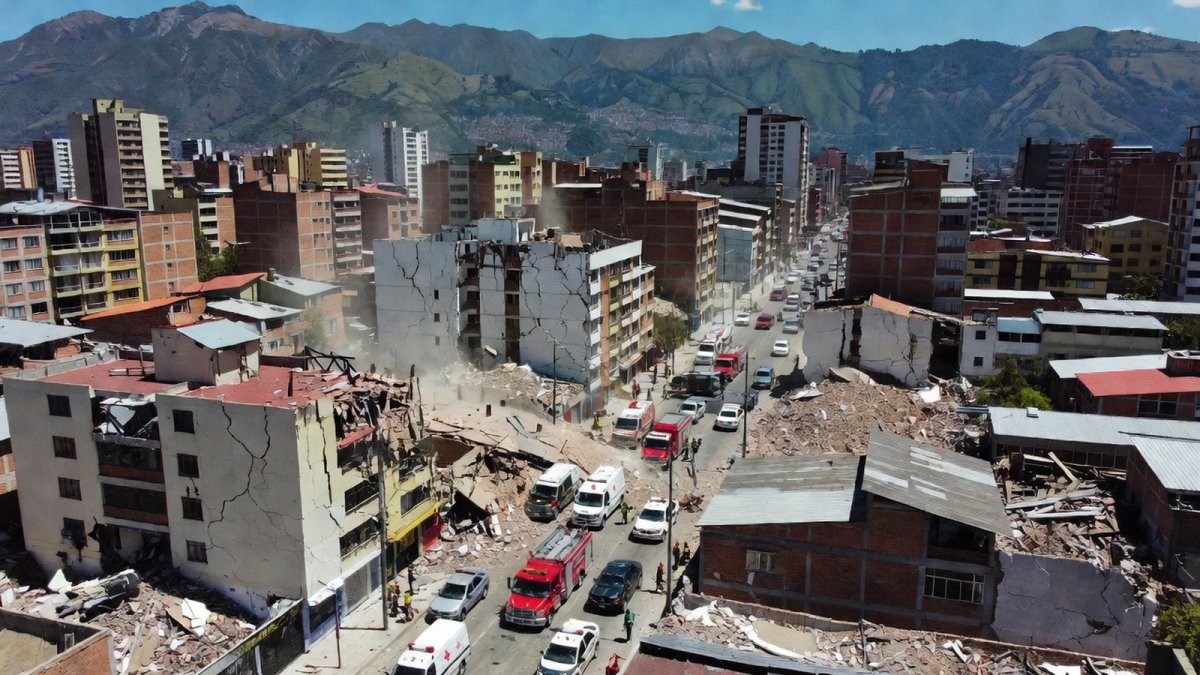
Good morning, folks. If you’re just waking up and grabbing that first cup of coffee, I need you to sit down for this one. Yesterday morning, at 7:34 a.m. local time, the earth decided to remind western Colombia exactly who is in charge. A massive 7.4 magnitude earthquake ripped through the Pacific coast, and the ground hasn’t stopped moving since. We are looking at a catastrophe of staggering proportions, and the numbers are climbing by the hour. This isn’t just a news story; this is a living, breathing emergency, and we are going to break it down for you right now.
We’re talking about a quake so violent that it was felt hundreds of miles away, from the capital of Bogota to the streets of Medellin, and even rattling nerves across the border in Ecuador. But the epicenter, the heart of the destruction, is in a place called Choco—one of the most beautiful, yet most forgotten, corners of this planet. And as the sun sets on this tragedy, we are looking at a death toll that has already surpassed 100, with thousands more unaccounted for. This is a story about the raw power of nature, the fragility of infrastructure, and the resilience of a people who are facing this nightmare with a brand-new leader at the helm. Let’s get into it.
The Moment the Earth Split: What We Know About the Quake
Let’s get the facts straight, because in a crisis, misinformation is the enemy. According to the United States Geological Survey (USGS), the earthquake struck at 7:34 a.m. local time on Monday, August 10, 2026. The epicenter was pinpointed at just 5 kilometers south of San Jose del Palmar, a municipality nestled in the Choco department on the Pacific side of the country. That puts it roughly 280 kilometers—or about 175 miles—west of Bogota. This wasn’t a shallow, surface-level crack; this was a deep, powerful rupture. The USGS places the depth at approximately 110 kilometers, with the primary mechanism being strike-slip faulting.
Now, here is where it gets interesting, and a little confusing, because the science is still catching up to the reality. Colombia’s own Geological Service initially estimated the quake at a magnitude of 6.7 with a depth of 82 kilometers. But as the data poured in, they revised that number upward significantly, landing on a 7.4 magnitude. That revision is critical, folks. It takes this from a "strong" earthquake to a "major" one, the kind that can level cities if the conditions are right. And the conditions were tragically right. The USGS issued an Orange Alert for the quake, which is their way of saying, "This is going to hurt." They estimated that roughly 34 million people were exposed to strong shaking. Let that number sink in for a second. 34 million people felt this thing. That is more than the entire population of Canada.
This is being called Colombia’s strongest earthquake in years, and the shaking didn’t discriminate. It traveled hundreds of kilometers, turning skyscrapers in Bogota into swaying giants and sending office workers scrambling into the streets. In Cali, Pereira, and Manizales, the story was the same: buildings groaning, windows shattering, and a collective scream of terror as the earth rolled beneath their feet. This wasn't a localized event; it was a national trauma broadcast in real-time.
The Human Toll: Counting the Cost in Lives and Missing
Now, we have to talk about the numbers, and I want to be very careful here because these are not just statistics. These are mothers, fathers, children, and neighbors. As of the latest reports we are receiving, the death toll stands at a heartbreaking 111 people, according to early official counts confirmed by President De la Espriella. But I have to tell you, the situation is fluid, and it is grim. Later reports citing the National Unit for Risk and Disaster Management and coverage by The Guardian put the figure at 132 dead, with more than 620 injured. And here is the number that should chill you to the bone: more than 2,000 people are reported missing.
Two thousand people. That doesn’t mean they are gone, but it means they are unaccounted for. They are the faces on missing posters, the names being shouted into the rubble, the silent hopes of families waiting by their phones. The injured are overwhelming local hospitals, which are themselves damaged. We are seeing a public health crisis unfolding on top of a structural one. The official counts are coming from the president’s office and local disaster agencies, but the reality on the ground is that these numbers are likely to rise as rescue teams reach the most remote areas.
I want you to imagine the scene in Pereira, where the Matecana Airport terminal collapsed. One minute, people are sipping coffee, waiting for flights, and the next, they are buried under concrete and steel. Or in Manizales, where a commercial store simply folded in on itself, trapping shoppers inside. The human toll is not just in the death count; it is in the agonizing wait of those who are listening for taps from beneath the debris, hoping against hope that their loved ones are still alive. It is a race against time, and time is not on our side.
Ground Zero: The Damage on the Ground
Let’s talk about the physical destruction, because it is staggering. We are looking at a preliminary estimate of around 1,600 buildings damaged across the affected regions. Of those, at least 61 have collapsed completely. Completely, folks. They are piles of rubble where homes and businesses used to be. The images coming out of Cali, Pereira, and Manizales are reminiscent of a war zone, not a natural disaster. The Matecana Airport in Pereira is a total loss in terms of its terminal structure, which is going to hamper relief efforts significantly because that is a major logistical hub for the region.
The damage is not just confined to the big cities. In the rural areas of Choco, the situation is even more dire. We are talking about communities that are already isolated by poverty and geography, now completely cut off by landslides and destroyed roads. The infrastructure in Choco was fragile before this quake; now, it is virtually non-existent. Bridges have fallen, power lines are down, and clean water is a luxury. The 1,600 damaged buildings figure is likely a low-ball estimate, as damage assessments in remote areas are still pending. We are looking at a reconstruction effort that will take years, not months.
And it’s not just the buildings. It’s the roads, the water systems, the electrical grid. When you knock out the infrastructure, you knock out the ability to respond. Aid can’t get in, and the injured can’t get out. The damage on the ground is a logistical nightmare that is compounding the human tragedy. We are seeing a region that has been set back decades in a matter of seconds.
A New President’s First Crisis: De la Espriella Takes the Helm
Now, I want to shift focus to the political landscape, because this is where the story takes an interesting turn. The man tasked with leading this response is President Abelardo de la Espriella. Here is the kicker: he was sworn in just three days ago, on Friday, August 7, 2026. Three days. He hasn’t even had time to hang pictures in the presidential palace, and he is facing the worst natural disaster to hit Colombia in years. This is a trial by fire, literally.
President de la Espriella is not your typical politician. He is a former criminal defense lawyer with no previous political experience, who founded the Defensores de la Patria movement. He ran on a platform of change, of shaking up the establishment. And now, he has to shake up the disaster response. He has declared a state of national disaster, which is the right call, and it unlocks federal funds and resources. But declaring a disaster and managing one are two very different things.
He has already met with the mayors and governors of the affected areas at the National Unit for Risk and Disaster Management headquarters in Bogota. That is a good first step. He has also announced a rent subsidy for people displaced in Choco, which shows he is thinking about the long-term displacement, not just the immediate rescue. But the pressure is immense. The world is watching, the Colombian people are watching, and they are looking for leadership. They are looking for someone who can cut through the bureaucracy and get help to the people who need it most. This is his moment to define his presidency, and we are watching it unfold in real-time.
The Rescue Effort: Digging for Life Amidst the Aftershocks
Let’s talk about the heroes in this story: the rescue teams. These are the men and women who are crawling into unstable structures, listening for heartbeats, and working around the clock to pull people out of the wreckage. Search and rescue operations are underway in all the major affected cities, but they are facing an enemy that won’t quit: aftershocks. The ground is still moving. We have already recorded a magnitude 5.0 aftershock near San Jose del Palmar, and there will be more. Every aftershock threatens to bring down the very structures that rescuers are working in, making their jobs incredibly dangerous.
Aid organizations are mobilizing, including groups like Americares, which is sending medical supplies and personnel to the region. But getting those supplies to the people who need them is a challenge. The airport damage in Pereira is a major setback. They are having to use helicopters and overland routes that are compromised by landslides. It is a slow, painstaking process, and every hour that passes decreases the chances of finding survivors trapped in the debris.
The rescue effort is not just about the professionals. It is about the neighbors, the family members, the everyday citizens who are digging with their bare hands, using shovels and crowbars, trying to reach the sounds of crying beneath the concrete. This is a community coming together in the worst of circumstances. But they need help. They need heavy machinery, they need sniffer dogs, they need medical triage units. The international community is starting to respond, but we need to move faster. The clock is ticking for those 2,000 missing people.
Why This Quake Hit So Hard: The Science of Suffering
So, why did this earthquake cause so much damage? It’s a question that demands an answer. First, the geology. Colombia sits on the Pacific Ring of Fire, that horseshoe-shaped area around the Pacific Ocean where tectonic plates collide. Here, the Nazca plate is diving beneath the South American plate, creating immense pressure and, ultimately, earthquakes. This is a known seismic zone, but the depth and the specific fault mechanics of this quake made it particularly efficient at transferring energy to the surface.
But the geology is only half the story. The other half is poverty and geography. Choco is one of Colombia’s poorest, most remote regions. It is a region that has been historically neglected by the central government. Buildings are not constructed to seismic code. They are made of adobe, unreinforced brick, and cheap concrete. When the earth shakes, these structures crumble like cookies. In wealthier areas, like parts of Bogota, the building codes are stricter, and the damage is less severe. But in Choco, and in the poorer neighborhoods of Pereira and Manizales, the buildings are death traps.
We have seen this before in Colombia. The 1999 Armenia earthquake, which killed about 1,190 people, was a wake-up call about the dangers of substandard construction. And the 1906 Ecuador-Colombia megathrust quake, which was an 8.8 magnitude, showed the sheer destructive power of this region. We know the risks, but the investment in resilience has never matched the threat. This is a story about how inequality amplifies natural disasters. The rich feel a tremor; the poor lose everything.
What Happens Next: How You Can Help and Stay Prepared
Alright folks, we’ve covered the tragedy, the science, and the politics. Now, we have to talk about the future. What happens next? First, the immediate priority is rescue and recovery. The search for survivors must continue, and the injured need medical care. The displaced need shelter, food, and water. This is a marathon, not a sprint. The relief effort will take weeks, and the reconstruction will take years.
For those of you who are as fired up as I am and want to do something, I urge you to act. But be smart about it. Do not send random supplies to the region; that creates a logistical burden. Instead, donate money to vetted, established aid organizations that are already on the ground, like Americares, the Red Cross, or Doctors Without Borders. They know how to get the resources where they are needed most. Be wary of crowdfunding scams that pop up after tragedies. Do your research, and give to organizations with a proven track record.
And finally, let’s talk about preparedness. If you live in an earthquake-prone area, or even if you don’t, take this as a wake-up call. Do you have an emergency kit? Do you have a plan for your family? Do you know where to go if your home is compromised? Earthquakes don’t give warnings. They just happen. The best thing you can do is be ready. Secure your heavy furniture, learn how to drop, cover, and hold on, and make sure your community is advocating for stricter building codes. We cannot prevent earthquakes, but we can prevent them from becoming human catastrophes.
This is a devastating moment for Colombia, but it is also a moment for the world to show its solidarity. The Colombian people are resilient. They have faced violence, economic hardship, and natural disasters before, and they have rebuilt. They will rebuild again. But they need our help. They need our attention. Don’t let this story fade from the headlines. Keep watching, keep caring, and keep pushing for a better, safer world. That is how we honor the memory of those we have lost. That is how we build a future where the ground beneath our feet is not a source of fear, but a foundation for hope. Stay safe, stay informed, and stay engaged. We will be here, watching, and reporting, every step of the way.
By Jessica Ali, Staff Writer
This article was produced with AI-assisted research and editorial support. Sources: BBC, The Guardian, CNBC, USGS, Colombia Reports, The New York Times, Reuters.
What's Your Reaction?
 Like
0
Like
0
 Dislike
0
Dislike
0
 Love
0
Love
0
 Funny
0
Funny
0
 Wow
0
Wow
0
 Sad
0
Sad
0
 Angry
0
Angry
0

Editor-in-Chief at Global1.News. Atlanta-based journalist who cuts through the BS and tells it like it is. Lead anchor, host, and the voice you hear when the spin stops and the truth starts.












Comments (0)