
Indonesia Drought Reveals Submerged Village in Karian Reservoir
In the parched basin of Indonesia's Karian Reservoir, a spectral skyline has clawed its way back into the sunlight. After four months without a single drop of rain, the receding waters have surrendered a ghost: the submerged village of Somang, its skeletal houses and a weathered mosque now standing as stark monuments to a climate in crisis.
In the parched basin of Indonesia's Karian Reservoir, a spectral skyline has clawed its way back into the sunlight. After four months without a single drop of rain, the receding waters have surrendered a ghost: the submerged village of Somang, its skeletal houses and a weathered mosque now standing as stark monuments to a climate in crisis. This is not merely a curiosity of drought; it is a visceral, high-definition warning from the Earth, one that echoes with terrifying clarity across the Pacific in the reservoirs of Latin America.
A Ghost Village Rises From a Thirsty Reservoir in Indonesia
Jakarta, Indonesia – August 11, 2026 — The ruins of Somang, submerged for years beneath the Karian Reservoir in Indonesia's Banten province, have clawed their way back into the sunlight as a punishing dry season drains the water that once buried them. Drone footage captured by AP's Andi Jatmiko and broadcast by Al Jazeera English this week shows skeletal houses and a weathered mosque emerging from the receding reservoir — a stark, high-definition warning about water security that resonates far beyond the archipelago.
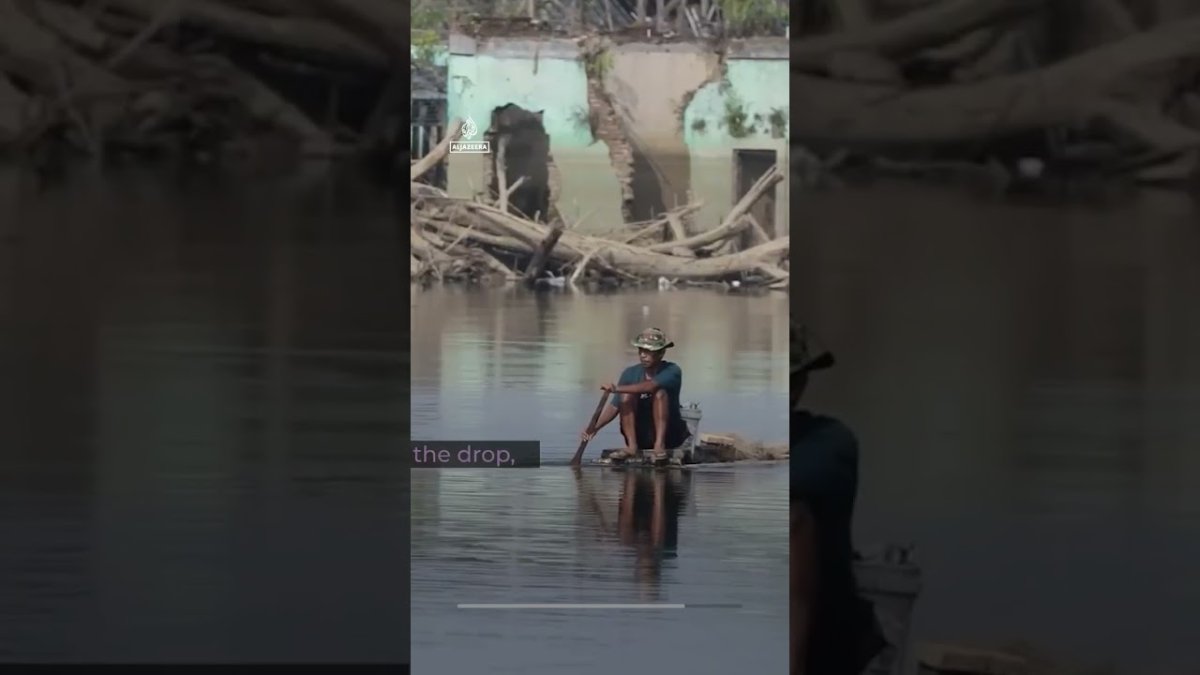
A Ghost Village Rises From a Thirsty Reservoir
The drone footage, captured by AP's Andi Jatmiko and broadcast globally via Al Jazeera English's NewsFeed on August 8, 2026, shows a landscape that defies modern expectation. Where there should be a smooth expanse of blue water serving the megacity of Jakarta, there is instead a cracked, sun-baked earth dotted with the remnants of a community. The rooftops of Somang, once deliberately inundated to make way for progress, now puncture the surface like the ribs of a stranded leviathan. The visual is haunting: a mosque's minaret, stripped of its paint, stands as a silent sentinel over a neighborhood that time and water had conspired to erase.
For the displaced families of Somang, this is not just a news story; it is the violent return of a buried past. They are returning to the site, drawn by a morbid gravity, to walk the streets where they once raised children and celebrated holidays. The re-emergence has transformed the reservoir bed into an impromptu memorial and an open-air museum of loss. Historians are flocking to the site, documenting the structures before the rains inevitably return to reclaim them. But the immediate reality is stark: the water that was supposed to be a permanent solution for Jakarta's chronic thirst is vanishing, and with it, the illusion of hydrological security.
The event forces a grim question upon us: if a reservoir built to secure the future of a megacity can so easily reveal its drowned past, what does that portend for the rest of the world’s water infrastructure? The answer lies in the complex interplay of a massive infrastructure project, a shifting climate baseline, and the relentless mechanics of El Niño. This is a story that begins in Banten, but its chapters are written in the dry soil of São Paulo, the rationing schedules of Bogotá, and the desperate taps of Puerto Rico.
Four Months Without Rain: How a Megaproject's Promise Met the Dry Season
The Karian Dam is a testament to Indonesian ambition. Constructed between 2015 and 2023, this multipurpose behemoth was designed to be a cornerstone of national water security. With a massive capacity of approximately 315 million cubic meters and a dam area sprawling across 2,226 hectares, it was engineered to deliver raw water to the Greater Jakarta area, a sprawling urban agglomeration of over 30 million people perpetually grappling with subsidence and water scarcity. Located in Banten province, just an hour from the capital, Karian was also tasked with irrigating 22,000 hectares of rice fields, a critical food-security buffer for the nation.
The project required the forced relocation of thousands of residents from villages like Somang, a painful sacrifice justified by the promise of collective progress. The reservoir filled, swallowing homes, farmlands, and cemeteries, and for a time, it seemed the trade-off was worth it. But the current drought has exposed the fragility of that promise. Banten provincial authorities report that the water level has dropped by 80 centimeters, a figure that, while technically within "safe operating levels," has been enough to unveil the submerged topography of the past. The visual of a mosque rising from the water is a potent symbol of how quickly the margins of safety can evaporate.
This is not a catastrophic failure of engineering; it is a catastrophic failure of prediction. The dam is functioning as designed, but the climate it was designed for no longer exists. The 80-centimeter drop is a statistical anomaly that has become a geopolitical and human tragedy. It demonstrates that even the most robust infrastructure is vulnerable when the hydrological cycle itself is broken. The promise of the megaproject—that it would tame the river and secure the future—has been broken by the very real, data-driven reality of a prolonged dry season that has turned a reservoir into a ghost town.
El Niño Tightens Its Grip on the Archipelago
The culprit behind this exposed village is the strengthening El Niño, a phenomenon that Indonesia knows all too well. The Meteorology, Climatology and Geophysics Agency (BMKG), under the leadership of head Teuku Faisal Fathani, has officially declared that Indonesia has entered a strong El Niño phase. The data is alarming: Pacific sea surface temperatures have risen more than 0.5 degrees Celsius above the threshold, disrupting the atmospheric circulation that typically brings rain to the archipelago. This has prolonged the dry season across Sumatra, Java, and Nusa Tenggara since June, triggering widespread drought and draining water supplies at an alarming rate.
The political response has been swift and centralized. President Prabowo Subianto convened a closed-door meeting with ministers and agencies to strengthen mitigation efforts, specifically focusing on safeguarding water supplies. The urgency is justified by the numbers coming from the National Disaster Management Agency (BNPB). As of June 16, 2026, a staggering 2,245 residents in Bekasi (296 households) and Klaten (393 households) were reported to be without clean water. Just days earlier, 1,624 people were affected in Cilacap, Karawang, and Bogor. These are not isolated incidents; they are a systemic collapse of water availability across the nation's most populous islands.
The crisis extends beyond drinking water. BMKG forecasts that El Niño will remain active with a 50-80% probability, with the drought peak expected between June and August, potentially persisting until early next year. The land is drying out, and the threat of fire is escalating. By early April 2026, 1,601 hotspots had already been detected, and by June, Riau province entered a critical forest fire risk phase. The Indonesian Red Cross (PMI) is now on the front lines, distributing clean water in drought-hit villages like Batangan in Bangkalan regency, East Java, as of July 21, 2026. The archipelago is burning and parched simultaneously, a dual crisis that threatens both human life and the region's carbon-rich peatlands.
What This Means for Latin America
As a journalist covering Latin America, I cannot watch the Somang village emerge from the water without a chill of recognition. We are not spectators to Indonesia's tragedy; we are co-stars in the same climate horror film. The same El Niño that is draining Karian Reservoir is actively strangling our own water systems. In Brazil, the Cantareira system, which supplies approximately 9 million people in Greater São Paulo, lost a staggering 25 billion liters in July 2026 alone. SABESP, the state utility, has been forced to limit capture to 27 cubic meters per second, down from a normal 33, and the system entered August operating in the "Alert" zone, having started the dry season at its lowest volume in a decade.
Colombia is still haunted by the memory of 2024, when the Chingaza reservoir system, which supplies 70% of Bogotá's water, plummeted to a terrifying 16-17% capacity. While utility officials in May 2026 stated that levels are stable and no rationing is expected, the entire nation is on guard for a "super" El Niño that threatens record heat, drought, and forest fires. The Associated Press reported on July 17, 2026, that governments across Latin America are mobilizing firefighters and activating contingency plans as El Niño strengthens. This is not a drill; it is a coordinated regional response to a shared threat.
The economic stakes are immense. A Rio Times analysis suggests that roughly 50% of Latin America's hydroelectric power is at risk in a hotter, drier El Niño year. This is a direct threat to our energy grids, our industries, and our daily lives. From the drought in northern Chile to the storms in center-south Chile, from Peru and Ecuador as the epicenter of El Niño region 1+2 to the blackout risk in Colombia and the stress on the Panama Canal, the entire region is bracing for impact. Puerto Rico is already rationing water amid a historic drought in August 2026. The ghost of Somang is a mirror reflecting our own future if we fail to act.
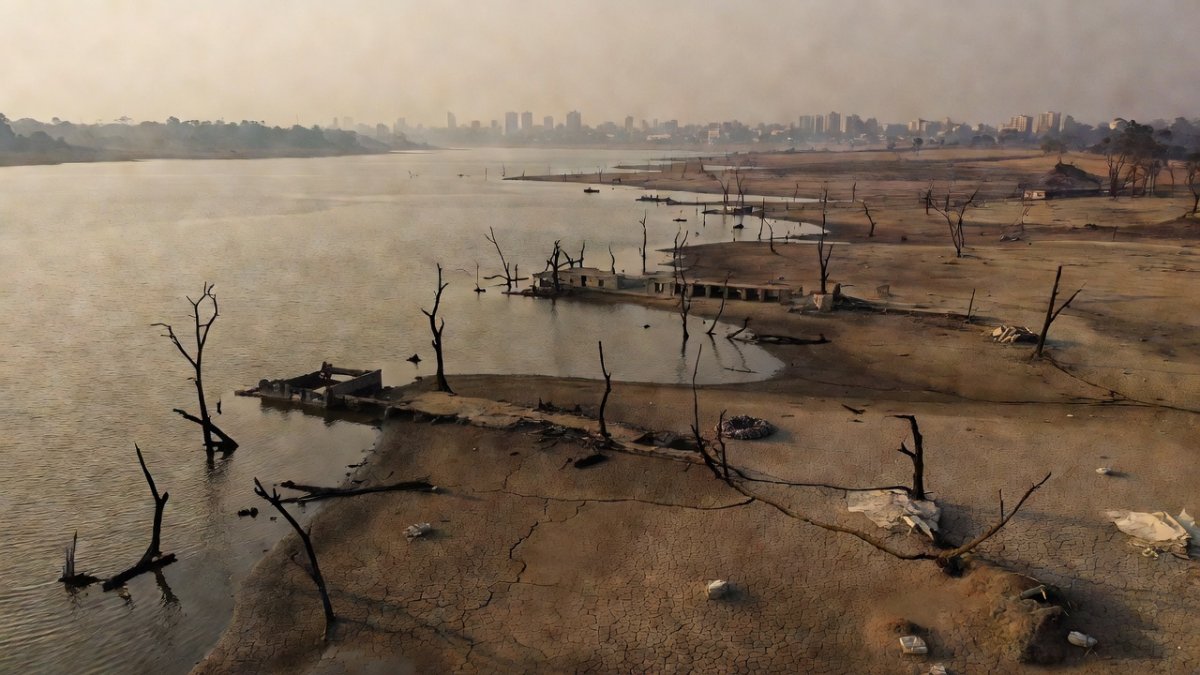
The Science of a Shared Thirst
To understand why a village in Indonesia and a reservoir in Brazil are suffering simultaneously, we must look to the central Pacific. The National Oceanic and Atmospheric Administration (NOAA) has issued a formal El Niño Advisory, with the critical Niño-3.4 index reaching +1.2 degrees Celsius in early July 2026. The forecast is even more dire: there is an 81% chance of a very strong event developing by October-December. This is not a marginal weather fluctuation; it is a planetary-scale redistribution of energy and moisture.
The fundamental science is often misunderstood. El Niño does not add or remove water globally; it redistributes it, tilting the odds of where rain falls. The warming of the central and eastern Pacific shifts the convective zones, weakening the Indian monsoon, and suppressing rainfall across Southeast Asia, eastern Australia, southern Africa, and the northern Andes. Conversely, it brings wetter winters to the southern United States and southeastern South America. This is why we see drought in Jakarta and potential floods in Buenos Aires—two sides of the same coin, flipped by the same oceanic hand.
The data from India provides a stark comparison. India's reservoirs are already running approximately 14 points behind last year's levels, a deficit that threatens agriculture and drinking water for hundreds of millions. This global synchronization of drought is the signature of a powerful El Niño. It is a reminder that water security is not a local issue but a global one, where the failure of one system is a warning to all. The 81% probability of a super El Niño is not just a statistic; it is a forecast of human suffering, economic disruption, and geopolitical tension over the most basic resource on Earth.
Voices From the Ground
Behind the data and the drone footage are human stories that must be told. In Somang, displaced families are returning to the reservoir's edge, not just to mourn, but to reconnect. They walk through the dried mud, pointing at the remnants of their homes, sharing memories with a new generation that had only known the village as a legend beneath the water. Historians are racing against time, documenting the architectural remnants and the oral histories of the community before the next rainy season inevitably submerges them again. This is a painful, public archaeology of loss.
The humanitarian response is being led by the Indonesian Red Cross (PMI), which is distributing clean water in drought-hit villages across the country. In Batangan village, Bangkalan regency, East Java, volunteers are on the ground providing relief to communities where wells have run dry and taps have stopped flowing. Their work is a lifeline, but it is a temporary fix for a chronic problem. Meanwhile, researchers like Aris Pramudia from BRIN (the National Research and Innovation Agency) are warning of a more insidious threat: the risk of a delayed onset of the 2026-2027 rainy season. This delay will directly hurt farmers' planting windows, threatening the next harvest and potentially triggering a food security crisis.
These voices from the ground—the displaced, the historians, the volunteers, and the scientists—paint a picture of a nation in a state of climate shock. The re-emergence of Somang is a powerful symbol, but the real story is in the daily struggle for water. It is in the queues at PMI distribution points, in the anxious conversations of farmers staring at cloudless skies, and in the closed-door meetings in the presidential palace. The human cost of El Niño is measured not just in cubic meters of water lost, but in the disruption of lives, the erosion of livelihoods, and the loss of cultural heritage.
The Bottom Line: Reservoirs as Climate Witnesses
The Karian Reservoir is no longer just a piece of infrastructure; it is a climate witness. Its receding waters have exposed not only a village but also the profound vulnerability of our water systems in the face of a changing climate. For Latin America, the lesson is unambiguous: we must stop treating reservoirs as static, permanent solutions and start managing them as dynamic systems that are on the front lines of climate change. The Cantareira system in São Paulo and the Chingaza system in Bogotá are not immune; they are equally exposed to the whims of El Niño.
The re-emergence of Somang should serve as a catalyst for a new era of water security. This means investing in early warning systems that can predict drought with greater accuracy, as NOAA and BMKG are attempting to do. It means diversifying water sources, moving beyond a reliance on large, centralized reservoirs to include rainwater harvesting, wastewater recycling, and the restoration of natural wetlands. It means managing demand aggressively, addressing the leaks and inefficiencies that plague urban water systems across the developing world. And it means regional cooperation, sharing data and strategies across borders, because El Niño does not respect national boundaries.
We are at a crossroads. The ghost village of Somang is a warning from the past, but it is also a blueprint for the future if we choose to ignore it. The 80-centimeter drop in water level is a small number, but it represents a massive failure of our collective imagination. We have built megaprojects to conquer nature, but nature is fighting back with a fury that our concrete and steel cannot contain. The bottom line is that reservoirs are not just storage facilities; they are barometers of our planet's health. And right now, the barometer is pointing to stormy, arid, and unpredictable weather ahead. We must listen to the ghosts of Somang and act before our own cities become the next submerged villages, exposed by a thirst we failed to quench.
By Elena Vasquez, Staff Writer
This article was produced with AI-assisted research and editorial support. Reporting is based on sources cited in the article.
What's Your Reaction?
 Like
0
Like
0
 Dislike
0
Dislike
0
 Love
0
Love
0
 Funny
0
Funny
0
 Wow
0
Wow
0
 Sad
0
Sad
0
 Angry
0
Angry
0

Latin America Correspondent at Global1.News. Based in Mexico City, covering politics, economics, energy, and culture across the region. Brings an on-the-ground perspective to stories spanning from the Rio Grande to Patagonia.












Comments (0)