
China's Tenth Dash: Normalizing Coercion in the Waters East of Taiwan
China has begun normalizing Coast Guard patrols in the waters east of Taiwan after Japan and the Philippines opened EEZ boundary talks, following Beijing's Senkaku and Kinmen playbook. The 2023 standard map's tenth dash line carries direct lessons for South Korea's East China Sea claims.
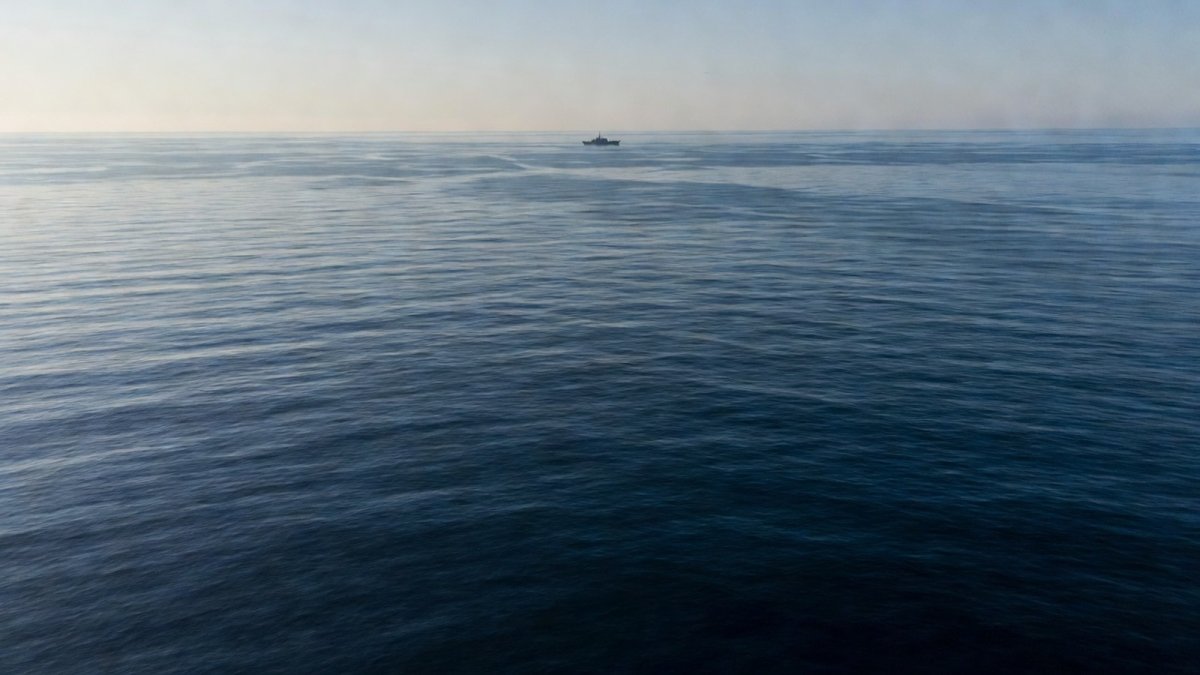
The announcement following the Japan-Philippines Summit on May 28, 2026, that the two nations would begin negotiations to delimit their overlapping Exclusive Economic Zones (EEZs) and continental shelves east of Taiwan has triggered a predictable, yet deeply consequential, response from Beijing. While Tokyo and Manila frame the talks as a model of peaceful dispute resolution under the United Nations Convention on the Law of the Sea (UNCLOS), China has responded not merely with diplomatic protest, but with a coordinated escalation of maritime law enforcement. In June 2026, the China Coast Guard (CCG) commenced what it described as "law enforcement patrols" off Taiwan's eastern coast, a move that mirrors Beijing's playbook in the Senkaku Islands and the Kinmen waters. This is not an isolated incident but a deliberate strategy of normalization-a process whereby Beijing exploits a diplomatic flashpoint to establish a new, permanent status quo in a maritime domain it has long coveted.
The Strategic Trigger: Japan-Philippines EEZ Negotiations
The catalyst for this latest escalation is the formalization of negotiations between Japan and the Philippines over their overlapping maritime claims. For Japan, the talks represent a pragmatic approach to resource development and maritime security cooperation, explicitly grounded in the legal framework of UNCLOS. The goal is to clarify the scope of resource extraction and prevent unforeseen clashes between coast guards and naval assets in a region of increasing strategic density. However, Beijing views these negotiations as a direct challenge to its sovereignty claims. Since China considers Taiwan an inalienable part of its territory, it asserts that any delimitation of waters east of the island is a bilateral matter that excludes Chinese participation. Consequently, China has declared the negotiations "illegal, null and void" and lodged formal diplomatic protests. This is a classic legal and diplomatic confrontation. Japan and the Philippines are attempting to impose a rules-based order on a maritime space where China claims historic rights. The Chinese response, however, transcends mere protest. By deploying the CCG to conduct patrols in these specific waters, Beijing is signaling that it will not allow a legal process to proceed without a corresponding physical assertion of its claims. The timing is precise: the CCG task force was dispatched on June 1, 2026, days after the summit, ensuring that the patrols would be inextricably linked in the international media narrative to the Japanese-Philippine initiative.The Cartographic Escalation: The Tenth Dash Line
To understand the depth of China's interest in these waters, one must look at the cartographic record. The "2023 edition of China's standard map," published by the Ministry of Natural Resources on August 28, 2023, added a tenth dash line to the infamous nine-dash line, extending the claim east of Taiwan. This was not a minor cartographic adjustment; it was a formal state assertion of sovereignty over a vast expanse of the Western Pacific. The tenth dash line, dormant since 2013, was resurrected to encompass the waters where Japan and the Philippines now seek to negotiate boundaries. This map is not merely a domestic document. It was met with formal objections from at least six neighboring countries, including Vietnam, the Philippines, and Malaysia, who saw it as an attempt to codify expansive claims that contradict UNCLOS. For Korea, this cartographic aggression is a familiar concern. The tenth dash line's trajectory, while east of Taiwan, reinforces China's broader approach to maritime claims in the East China Sea, where Beijing has consistently refused to recognize Seoul's "median line" principle regarding Ieodo (Socotra Rock). The 2023 map serves as a reminder that China's claims are not static; they are dynamic tools used to shift the baseline of negotiations.The Kinmen and Senkaku Precedents: A Playbook of Normalization
The current CCG patrols off Taiwan's eastern coast are not an improvisation. They follow a well-documented pattern of escalation that Beijing has refined over the past decade. The most instructive precedent is the Kinmen Islands episode of February 2024. Following the tragic deaths of two Chinese fishermen during a Taiwanese Coast Guard crackdown on February 14, the CCG abruptly announced it would conduct law enforcement patrols in the Xiamen-Kinmen waters. Crucially, Beijing declared these activities would be "normalized," effectively erasing the de facto boundary Taiwan had maintained for decades. The incident was a tragedy, but Beijing used it as a legal and operational lever to change the status quo. An earlier, more significant precedent is the Senkaku Islands crisis of September 2012. When the Japanese government purchased and nationalized private land on the islands, Beijing responded by routinely sending coast guard vessels into what Japan considers its territorial waters. What began as a protest against a specific political act became a permanent feature of the maritime landscape. Today, Chinese coast guard vessels operate in the Senkaku territorial waters with a frequency that would have been unthinkable a decade ago. The pattern is consistent: an incident occurs, Beijing voices protest, and then it normalizes a previously non-existent law enforcement activity, thereby changing the status quo permanently.Military, Legal, and Administrative Convergence
What distinguishes the current situation east of Taiwan is the convergence of all three instruments of state power: military, legal, and administrative. The People's Liberation Army (PLA) has been conducting exercises in these waters for years, including carrier group deployments that suggest preparation for an invasion of Taiwan from the east. These military activities have now been joined by the CCG's law enforcement patrols, which serve a different function. While the PLA projects hard power, the CCG projects administrative control. By having the CCG patrol these waters, Beijing is asserting that these are not international waters but waters under Chinese jurisdiction, subject to Chinese law. This convergence is a sophisticated form of gray-zone coercion. The legal framework is provided by the tenth dash line and the 2023 standard map. The administrative framework is provided by the CCG patrols. The military framework is provided by the PLA's exercises. Together, they create a reality on the water that is difficult for Japan, the Philippines, or Taiwan to counter without risking a direct military confrontation. The Japanese government, under Prime Minister Takaichi Sanae, has already framed the situation as a "threat to national survival," a remark made at the House of Representatives Budget Committee on November 7, 2025. China has seized on this rhetoric to accuse Japan of "neo-militarism," using it as a justification for its own actions.Korea's Strategic Calculus: The Ieodo Precedent
For South Korea, the developments east of Taiwan are a warning shot across the bow. The Korean Peninsula is not directly involved in the Japan-Philippines negotiations, but the principles at stake are identical to those in the East China Sea. South Korea and China both claim continental shelves extending beyond 200 nautical miles in the East China Sea. Seoul has consistently argued for the "median line" principle, which would place the disputed Ieodo (Socotra Rock) within Korea's EEZ. China, however, has refused to recognize this principle and has even refused to remove Socotra from its Air Defense Identification Zone (ADIZ). The Ieodo Ocean Research Station, a Korean facility perched atop the submerged reef southwest of Jeju Island, is a tangible symbol of this dispute. If China succeeds in normalizing its patrols east of Taiwan, it will set a precedent for the East China Sea. Beijing could argue that its actions in the Taiwan Strait region are consistent with its broader maritime claims, including those that overlap with Korea's. Seoul must therefore watch these developments closely. The normalization of CCG patrols in one region emboldens their use in another. The "incident or accident" pretext used by Beijing in the Senkaku and Kinmen cases could easily be replicated in the waters around Ieodo.Conclusion: A Recurring Pattern in the Western Pacific
The China Coast Guard's patrols off Taiwan's eastern coast are a textbook example of Beijing's strategy of normalization. By treating the Japan-Philippines EEZ negotiations as an "incident or accident," China has created a pretext to introduce a new law enforcement presence in a region where it previously had none. Based on the Senkaku and Kinmen precedents, these patrols will likely become a daily occurrence, permanently altering the maritime status quo. The narrative propagated by Beijing-that Japan and others moved first, thereby justifying Chinese actions-is a familiar refrain. It is a narrative designed for domestic consumption and international obfuscation. For scholars and policymakers, the lesson is clear: China's maritime claims are not static legal documents but dynamic instruments of statecraft. The tenth dash line is not a historical artifact; it is a forward-looking claim. The CCG patrols are not a temporary protest; they are the beginning of a new normal. For the region, the implications are profound. Japan and the Philippines must proceed with their negotiations, but they must do so with the understanding that China will not simply accept a legal outcome it deems contrary to its interests. South Korea must also recognize that the stability of the East China Sea is inextricably linked to the waters east of Taiwan. The pattern of escalation, normalization, and status quo change is likely to keep recurring in the Western Pacific. The question is not whether China will continue this strategy, but how the region will respond to it collectively. This article was produced with AI-assisted research and editorial support. Sources: The Diplomat, Reuters, The Korea Times, NBR. By Prof. David Park, Staff WriterWhat's Your Reaction?
 Like
0
Like
0
 Dislike
0
Dislike
0
 Love
0
Love
0
 Funny
0
Funny
0
 Wow
0
Wow
0
 Sad
0
Sad
0
 Angry
0
Angry
0

Prof. David Park
East Asia/Technology Correspondent at Global1.News. Seoul-based voice covering Korean politics, technology, business, and culture. Analyzes how technology and geopolitics intersect across East Asia.












Comments (0)