
China's Climate Leadership Enters the 'Era of Implementation' as COP31 Approaches
In a CGTN Leaders Talk exclusive, UNFCCC Executive Secretary Simon Stiell challenges China to convert its clean-energy dominance into global climate leadership as COP31 in Antalya opens a new 'era of implementation' with the United States absent.
China's Climate Leadership Enters the 'Era of Implementation' as COP31 Approaches
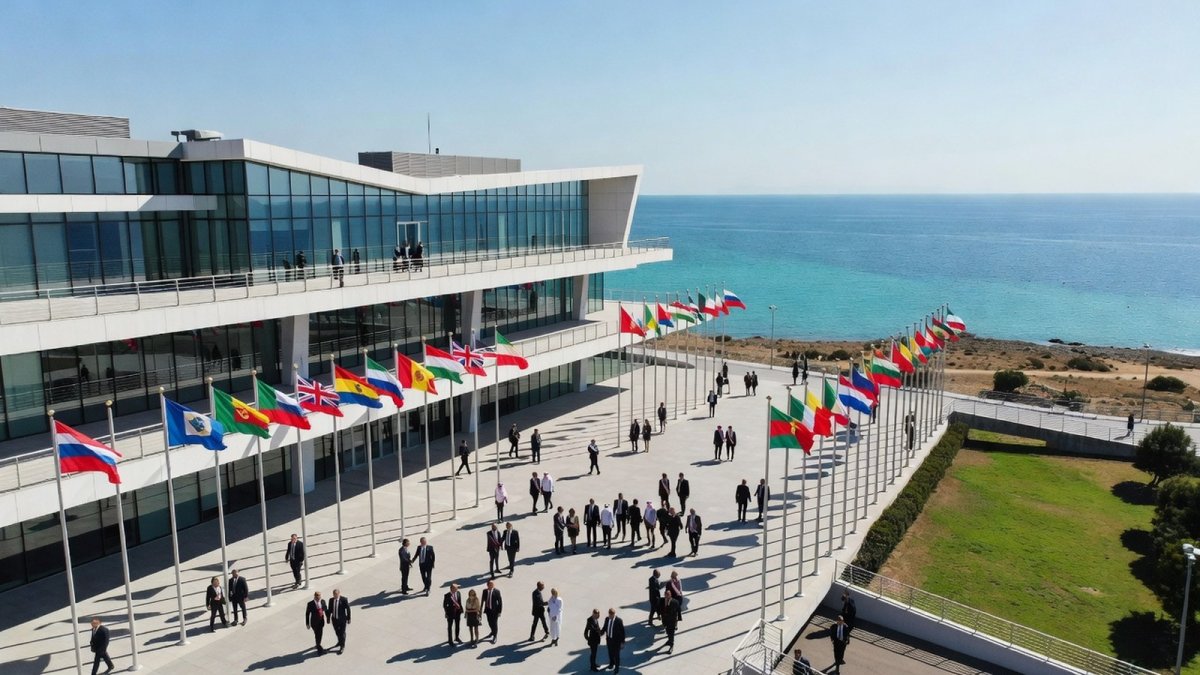
In a recent CGTN "Leaders Talk" exclusive aired August 14, 2026, CMG's Wang Guan sat down with Simon Stiell, Executive Secretary of the UN Framework Convention on Climate Change (UNFCCC), to pose a question that cuts to the heart of global climate geopolitics: "What role can China play in advancing global climate governance and accelerating the transition to clean energy?" The interview marks a shift in tone from a CGTN conversation with Stiell days earlier, on August 7-8, which praised China's record-breaking renewable energy deployment. This second interview is forward-looking, probing what Beijing should do next as the world gears up for COP31 in Antalya, Turkiye, scheduled for November 9-20, 2026. The stakes could not be higher: with the United States having withdrawn from the Paris Agreement on January 27, 2026, and having announced its intention to leave the UNFCCC itself, the architecture of international climate cooperation rests increasingly on China and the European Union—and on whether Beijing moves from leader in domestic deployment to leader in global implementation.
The Shift From Praise to Expectations
The evolution between the two interviews is telling. In the August 7-8 conversation, Stiell lauded China's "unwavering political will at the highest level," noting that "China keeps its promises and often exceeds them, as seen in solar and wind targets met six years early." The August 14 interview, by contrast, is an invitation to define a future role—an implicit acknowledgment that China's domestic achievements, while impressive, are no longer sufficient. The world's largest emitter is also its largest clean-energy manufacturer, and the question is how Beijing translates that industrial might into diplomatic leadership.'Era of Implementation': COP31's New Yardstick
Stiell's core message in the interview—and in his February 12, 2026 Istanbul press conference with COP31 President-Designate Murat Kurum of Turkiye and COP30 President Andre Correa do Lago—is that the climate regime must enter a "third era" of action. "This is an era to speed-up and scale-up," Stiell declared, moving beyond the Paris Agreement's consensus-building years to rapidly scaling projects, finance, and technologies on the ground—framing climate cooperation as a bulwark against the "new world disorder" of geopolitical fragmentation. This "era of implementation" reframes what success at COP31 will look like. It is no longer enough to set targets; the yardstick will be delivery. Countries must deliver and exceed the 2023 first global stocktake targets: doubling energy efficiency, tripling clean energy capacity by 2030, and transitioning away from fossil fuels in a just and orderly manner. The unusual dual-presidency structure of COP31—Turkiye's Murat Kurum as President-Designate and Australia's Chris Bowen as President of Negotiations—reflects the complexity of the task, as does an Action Agenda highlighting ten priority themes including Zero Waste, Green Industrialization, and Clean Energy Transition.
China's Leverage: Manufacturing, Markets, and the Global South
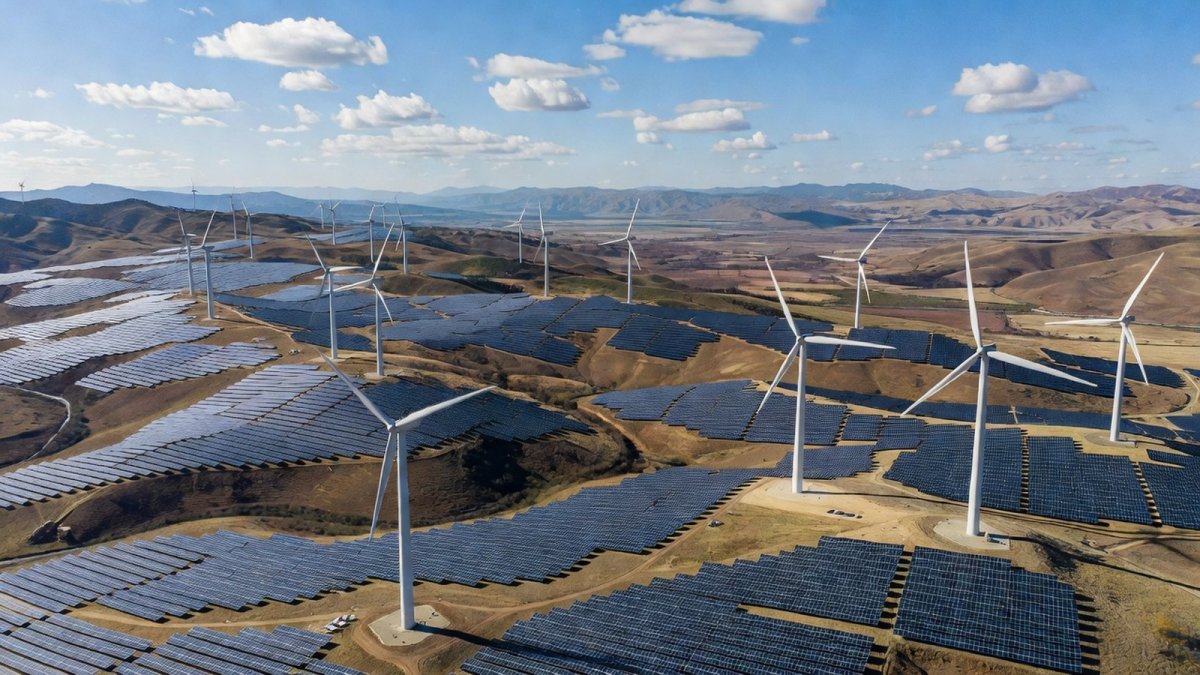
China's position entering COP31 is one of unprecedented strength. The National Energy Administration reported via Xinhua in February 2026 that newly installed solar and wind capacity exceeded 430 million kilowatts in 2025, up 22 percent year-on-year—a record. Cumulative grid-connected wind and solar reached 1.84 billion kilowatts, 47.3 percent of total installed capacity, surpassing thermal power for the first time. This dual identity as the world's top emitter and its dominant clean-energy supplier creates unique leverage: according to Lin Boqiang of the China Center for Energy Economics Research at Xiamen University, China supplies about 70 percent of the world's wind power equipment and 80 percent of its photovoltaic modules. As Stiell told a Tsinghua University audience on May 14, 2026, "Where China leads, others follow." The export data tells an equally compelling story. According to the General Administration of Customs, clean-tech exports from January to April 2026 surged: electric vehicles up 68.1 percent, lithium-ion batteries up 43.2 percent, and wind turbine generators up 40.7 percent year-on-year. Ember data from March 2026 shows that 50 countries had record solar imports from China, with Nigeria up 519 percent from February and notable spikes in Malaysia, Ethiopia, and Kenya; Ming Yang Smart Energy reportedly received a license for a $14.8 billion renewable-energy investment in Ethiopia.
The Climate Finance Gap and the US Vacuum
The absence of the United States from the UNFCCC process creates both a vacuum and an opportunity. Washington's second exit from the Paris Agreement, effective January 27, 2026, followed by the January 7 announcement of intent to leave the UNFCCC and associated bodies, removes the world's second-biggest emitter from the negotiating table. The Trump administration's championing of oil, gas, and coal, and its reported plans to revoke a landmark scientific finding underpinning US climate regulations, signal a prolonged absence. The vacuum is most acutely felt in climate finance. The $300 billion per year goal agreed at COP29 in Baku in 2024 was widely criticized as inadequate even at the time, and with the US absent the burden falls disproportionately on other developed economies and, increasingly, on China. Stiell noted that investment in clean energy was more than double that of fossil fuels last year, and that renewables have overtaken coal as the top electricity source. For China, the calculus is delicate: Beijing has pledged carbon peak before 2030 and carbon neutrality by 2060, and its new 2035 NDC, submitted in November 2025, projects emission levels of roughly 14.4 GtCO2e in 2030 and 13.7 GtCO2e in 2035—about 2 percent and 7 percent below 2025 levels, according to Climate Action Tracker. As Stiell put it at Tsinghua: "The further China goes, the faster the clean energy transition accelerates—the greater the benefit to your people and economy."Friction Points: Fossil Fuels and the Action Agenda
The path to Antalya is not without obstacles. In February 2026, the Guardian obtained a leaked draft of the COP31 "action agenda" that omitted explicit mention of fossil-fuel phaseout. Andreas Sieber of 350.org was blunt: "Fourteen priorities, around 50 sub-priorities, and not a single explicit reference to fossil fuels... looks less like oversight and more like a wilful omission." The top items reportedly reflected Turkish preferences—zero waste, linked to First Lady Emine Erdogan's 2017 initiative, and tourism and cultural heritage. The omission signals the continued power of fossil-fuel interests within the COP process. Stiell has called for transitioning away from fossil fuels "in a just and orderly manner," but the operationalization of that phrase remains contested, and the leaked agenda suggests Turkiye, as host, may prioritize less contentious issues, potentially sidelining the most difficult questions. For China, this creates a strategic choice. Beijing has been a consistent advocate of common but differentiated responsibilities and has resisted binding emission reduction targets that would constrain its development. But as the world's largest clean-energy manufacturer, China has a direct interest in accelerating the global transition. The question is whether Beijing will push for stronger fossil-fuel language at COP31 or align with the more cautious approach favored by the Turkish presidency. The Bloomberg Philanthropies partnership with the COP31 Presidency, involving Michael R. Bloomberg and Murat Kurum, suggests private finance will play a significant role—another area where Chinese companies could either compete or cooperate.Strategic Implications: What to Watch for in Antalya
As COP31 approaches, several dynamics bear watching. First, EU-China alignment will be critical: with the US absent, these two pillars of the UNFCCC architecture must find common ground on finance, technology transfer, and the pace of transition. Stiell's statement that "China was integral to forging the Paris Agreement back in 2015" is a reminder of Beijing's historical role. Second, the Global South's expectations will be high. Record solar imports across 50 countries—including spikes in Nigeria, Malaysia, Ethiopia, and Kenya—demonstrate that Chinese technology is already transforming energy systems across the developing world, where countries will likely press for more investment, transfer, and capacity building. Third, the "era of implementation" will test whether the COP process can deliver. Stiell's call to "speed-up and scale-up" is a direct challenge to the incrementalism that has characterized much of climate diplomacy. The strategic calculus for China is clear. As Stiell told the Tsinghua audience, "In this new era of geopolitics, and new era of climate multilateralism, China's climate leadership is more important than ever." But leadership also carries obligations. Beijing must decide whether to use its manufacturing dominance and diplomatic weight to push for a more ambitious COP31 outcome, or prioritize its own development interests. The answer will shape not only Antalya but the trajectory of global climate governance for years to come. As the world gathers in Turkiye this November, the question Wang Guan posed to Stiell will hang over the proceedings. China has demonstrated that it can lead by example; the challenge is whether it can lead by persuasion, using its unique position as both the largest emitter and the largest clean-energy supplier to forge a new consensus. The world will be watching whether Beijing is ready to answer the call. By Prof. Marcus Chen, Staff WriterThis article was produced with AI-assisted research and editorial support. Reporting is based on sources cited in the article.
What's Your Reaction?
 Like
0
Like
0
 Dislike
0
Dislike
0
 Love
0
Love
0
 Funny
0
Funny
0
 Wow
0
Wow
0
 Sad
0
Sad
0
 Angry
0
Angry
0

Marcus Chen
World Politics Analyst at Global1.News. Based in Beijing, covering US-China relations, global trade, and geopolitical strategy. Brings deep analytical perspective to the power dynamics shaping international affairs.













Comments (0)