
China Retaliates with Targeted Sanctions and Export Controls in US Trade Dispute
China's Ministry of Commerce announced a series of retaliatory measures on August 5, 2026, in direct response to recent United States actions under the Uyghur Forced Labor Prevention Act and related trade restrictions.
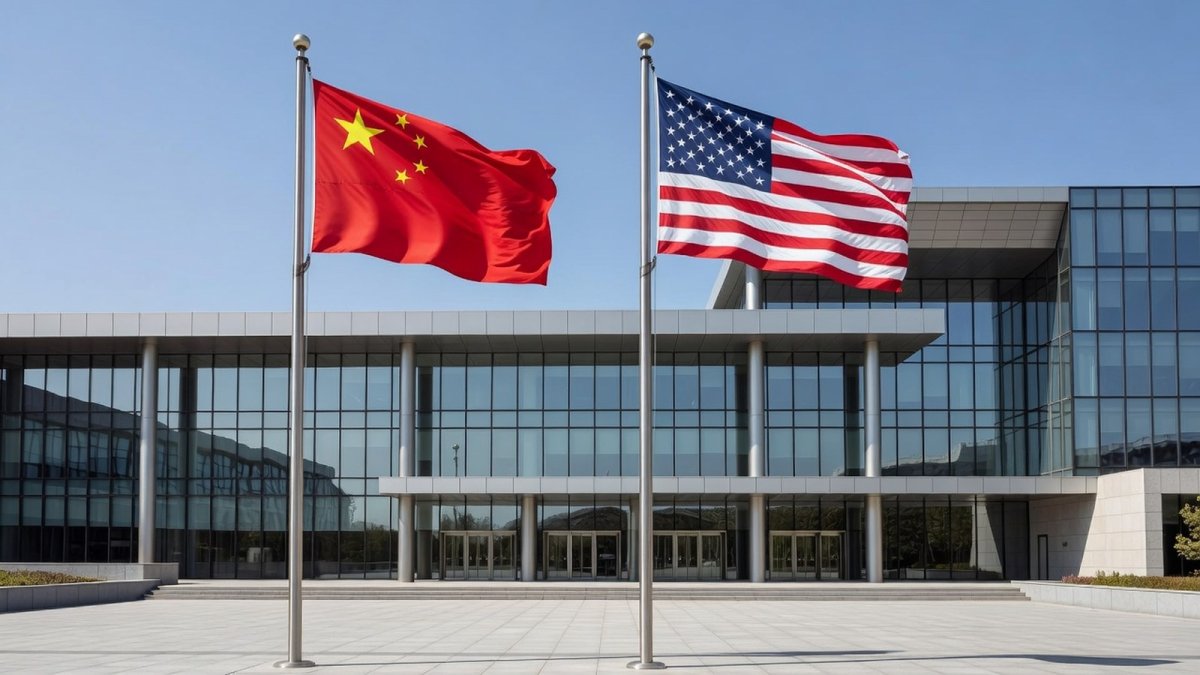
China Imposes Retaliatory Sanctions and Drone Controls on US Amid Escalating Trade Tensions
Beijing, China — Article continues...
The Retaliation Package
China's Ministry of Commerce unveiled five distinct measures on August 5, 2026, framed as necessary countermeasures to United States policies that harm China's legitimate rights and interests. The ministry cited the erroneous practices of Washington in expanding forced-labor restrictions and imposing tariffs, which it said violate the consensus reached by the two heads of state. "The US actions seriously harm China's legitimate rights and interests," a ministry spokesperson said. "China can only take necessary countermeasures in response, including strengthening export controls on drones and their key components and technology to the US." These actions invoke Article 41 of China's Foreign Trade Law for the first time in a foreign trade national security investigation, signaling a structured legal response rather than ad hoc retaliation.
The measures emphasize precision over broad disruption, targeting specific entities and sectors where the United States has applied pressure on China. MOFCOM described the United States rules as seriously violating prior agreements while calling for Washington to reverse course. This package builds directly on earlier steps taken in June 2026, illustrating a pattern of incremental escalation calibrated to match American moves.
The Six Blacklisted Entities
MOFCOM sanctioned six United States entities, prohibiting Chinese individuals and organizations from any transactions, cooperation, or activities with them. The list includes Applied DNA Sciences, Inc., a biotechnology firm; Stratum Reservoir, LLC, a geoscience research firm; Altana Technologies, Inc., a supply-chain data company; the Responsible Business Alliance; Verite Group, Inc.; and Human Rights in China. The ministry stated that these firms "have assisted and supported illegal US sanctions related to Xinjiang; the nature of their actions is egregious."
Altana Technologies stands out because United States Customs and Border Protection selected it in 2025 to deploy product passport software for mapping multi-tier supplier networks under forced-labor compliance rules. The blacklisting of Compliance Testing LLC, a Mesa, Arizona-based lab providing FCC certification testing, was announced separately for allegedly aiding actions that harm Chinese sovereignty. These designations disrupt specific compliance and verification channels that support United States enforcement efforts.
Drone Export Controls
China tightened export controls on dual-use drone technology destined for the United States by eliminating license facilitation and requiring individual case-by-case review for motors, batteries, and sensors. This shift applies to shipments bound for American drone manufacturers and could introduce delays for companies still dependent on Chinese component suppliers, though it stops short of an outright ban. MOFCOM spokesperson statements highlighted the need to strengthen export controls on drones and their key components and technology to the United States.
The controls extend restrictions first imposed on June 22, 2026, when Beijing barred exports of dual-use components to ten United States defense contractors and drone developers. American firms reliant on these inputs now face heightened administrative hurdles that may slow production timelines and raise costs. This approach preserves China's position as a critical supplier while signaling willingness to weaponize supply-chain dependencies in response to United States restrictions on Chinese drones and robots.
The Trigger: Washington's Escalation
The Chinese measures follow the United States Department of Homeland Security's addition of 43 Chinese companies to the Uyghur Forced Labor Prevention Act Entity List last Friday, expanding the total to 187 entities in the largest single update since the law took effect in 2021. United States Customs and Border Protection has denied entry to more than 24,300 commercial shipments valued at nearly $1 billion through July under this framework. Additional pressure came from new tariffs targeting Beijing and more than 50 other countries, introduced after the Supreme Court struck down reciprocal tariffs under the International Emergency Economic Powers Act.
The Federal Communications Commission's expanded Covered List, which bars imports of foreign-made military-grade drones, advanced humanoid and quadruped robots, and solar power inverters, further contributed to the friction. Beijing has viewed these steps as attempts to suppress Chinese enterprises. The timing, coming just one day after high-level consultations, amplified Chinese perceptions of bad faith in the bilateral relationship.
Diplomatic Back-Channels
China's senior trade envoy, Vice Premier He Lifeng, conveyed serious concern to United States Trade Representative Jamieson Greer during a phone call reported by state news agency Xinhua. He Lifeng and United States Treasury Secretary Scott Bessent held a high-level video conference last Thursday focused on maintaining bilateral trade stability. Chinese officials reportedly expressed frustration that the forced-labor list expansion occurred immediately after those discussions.
These exchanges represent continued efforts to manage tensions through established channels even as retaliatory measures proceed. The consultations reflect both sides' interest in preventing uncontrolled escalation, yet the rapid sequence of actions indicates limits to what such talks can achieve when core sovereignty and security concerns are at stake.
The Xi Visit Calculus
President Donald Trump traveled to Beijing on May 14 to discuss trade, regional security, and bilateral ties with President Xi Jinping. Xi Jinping is now planning travel to the United States in September, and the retaliatory package lands ahead of that scheduled visit. A Chinese vice-foreign minister visited the United States in July in what was widely seen as a planning trip for the upcoming summit.
By announcing these measures now, Beijing positions itself to enter the September talks from a posture of demonstrated resolve rather than concession. The timing allows China to test whether Washington will adjust its enforcement posture before the leaders meet, while also preparing domestic audiences for continued friction if no accommodation emerges. This sequencing aligns with China's broader preference for linking economic statecraft to high-level diplomatic calendars.
Strategic Implications
China's response demonstrates its capacity to impose targeted costs on United States compliance infrastructure and drone supply chains while advancing technological self-sufficiency goals. By suspending follow-up factory inspections and barring certain United States firms from issuing CCC certifications, Beijing disrupts verification processes that support American market access for Chinese goods. The national security investigation into office printers and copiers running foreign-developed software further signals willingness to scrutinize embedded technology dependencies.
For global supply chains, these steps introduce new uncertainties for drone manufacturers and certification bodies operating across borders. ASEAN and European Union firms may face indirect pressure to diversify away from both Chinese components and United States compliance tools. The Global South could see opportunities to position alternative suppliers, though China's leverage in critical inputs remains substantial. Each side seeks to protect domestic industries while limiting the other's ability to weaponize interdependence, yet second-order effects include accelerated decoupling in sensitive sectors and higher costs for end users worldwide.
What Happens Next
The 12-month national security investigation into imported office imaging equipment will provide Beijing with additional data and potential justification for further measures. American drone manufacturers must now navigate case-by-case export reviews, which may prompt accelerated efforts to qualify non-Chinese suppliers. Diplomatic engagement ahead of the September Xi visit offers one avenue for de-escalation, though the depth of accumulated grievances suggests limited room for rapid reversal.
Both capitals will likely continue calibrating responses to avoid crossing thresholds that trigger broader economic rupture. The episode illustrates how forced-labor enforcement, technology controls, and tariff policies have become intertwined instruments in the United States-China relationship, with each new action reshaping the parameters for future negotiations and supply-chain decisions.
By Prof. Marcus Chen, Staff Writer
This article was produced with AI-assisted research and editorial support. Reporting is based on sources cited in the article.
What's Your Reaction?
 Like
0
Like
0
 Dislike
0
Dislike
0
 Love
0
Love
0
 Funny
0
Funny
0
 Wow
0
Wow
0
 Sad
0
Sad
0
 Angry
0
Angry
0

World Politics Analyst at Global1.News. Based in Beijing, covering US-China relations, global trade, and geopolitical strategy. Brings deep analytical perspective to the power dynamics shaping international affairs.














Comments (0)