
BTS Arirang Tour Generates World Cup-Scale Economic Effects
BTS's Arirang World Tour is generating World Cup-scale spending across US cities, with four Las Vegas shows alone driving $340 million in economic activity. The Guardian's comparison has spotlighted South Korea's fandom economy, record tourism inflows, and the policy question of cultural over-reliance on one group.
BTS's "Arirang" World Tour — the group's first global concert series since completing mandatory military service — is generating visitor spending that economists are comparing to a FIFA World Cup, according to The Guardian's July 31, 2026 reporting. The comparison, echoed by the Korea JoongAng Daily and Chosun Ilbo, has turned a commercial concert tour into a live case study of South Korea's cultural economy and its capacity to project soft power through the "fandom economy."
BTS Arirang Tour Matches World Cup Economic Scale for Korea
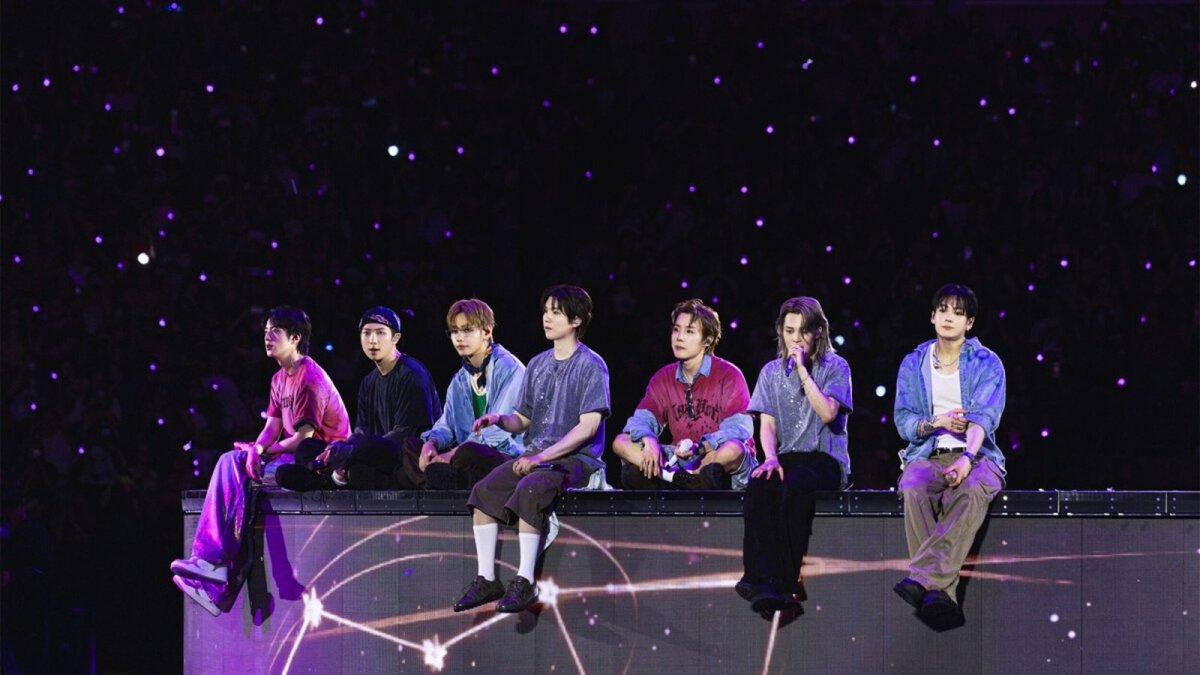
Seoul, South Korea – August 6, 2026 — The Guardian reported that BTS concertgoers are expected to generate spending on par with the crowds at the 2026 FIFA World Cup final, held at MetLife Stadium in East Rutherford, New Jersey, on July 19 — a match in which BTS performed "Dynamite" during FIFA's first-ever halftime show. With 14 shows remaining across six American cities in August and September, the tour's economic ripple effects extend from Las Vegas hotel suites to a 10-day shaved-ice pop-up in Manhattan.
The Guardian's World Cup Comparison as News Hook
The Guardian article dated July 31, 2026, titled "BTS are back: return of K-pop superstars sparks US economic boom," frames the Arirang World Tour's North American leg against the World Cup final staged at the same New Jersey venue on July 19. Michael Mariano of Tourism Economics stated that BTS concertgoers will "easily compare [to] or even exceed Fifa's economic impact just on average spending." This comparison draws directly from the tour's 14 shows scheduled across six US cities in August and September 2026, following earlier stops in South Korea and Europe.
Scale of the Arirang World Tour Itinerary
The Arirang World Tour constitutes BTS's sixth concert tour and supports the studio album released in March 2026. It began on April 9 in Goyang, South Korea, and extends through 2027 with more than 88 dates in 34 cities across 23 countries. The 360-degree panoramic stage design supports large-scale productions. Specific August 2026 dates include two nights at MetLife Stadium on August 1 and 2, followed by Foxborough on August 5-6, then Baltimore, Arlington, Toronto, Chicago, and Los Angeles. Earlier US performances occurred in Tampa in late April and in Stanford and Las Vegas in May.
Documented Economic Activity in Las Vegas and New York
Four sold-out Las Vegas shows in May generated an estimated $340 million in economic activity spanning hotels on the Strip and smaller Chinatown establishments. HYBE partnered with local businesses for the "BTS The City – Arirang" project, which supplied exclusive programming. At MetLife Stadium the two August concerts drew a combined 157,000 attendees. Manhattan's Koreatown prepared for thousands of visitors through mapped activities that included landmarks and eateries. New Wonjo, New York's oldest Korean barbecue restaurant, added a BTS-inspired menu featuring kimchi fried rice, pork belly, and jajangmyeon.
The alignment of BTS performances with the 2026 FIFA World Cup final at MetLife Stadium created direct parallels in visitor spending patterns, with per-attendee expenditures across lodging, dining, and transport tracking those recorded during the Spain-Argentina match. The Guardian further observed that concertgoers generated comparable localized revenue to soccer fans who attended the final weeks earlier, underscoring the tour’s capacity to replicate mega-event economics without requiring stadium infrastructure built for international athletics.
Fan interviews revealed how these inflows translated into sustained cultural consumption. Angela May, an 18-year-old New Jersey resident, encountered Korean desserts for the first time through BTS-linked promotions, while interior designer Sunmi Lee participated in themed bus tours of city landmarks. These individual experiences occurred alongside the North American leg’s fourteen shows across six cities and coincided with HYBE’s record quarterly revenue of $993 million, illustrating how ticket-driven visitation extended into diversified retail and hospitality channels.
Cultural Institutions and Fandom Spillover Effects
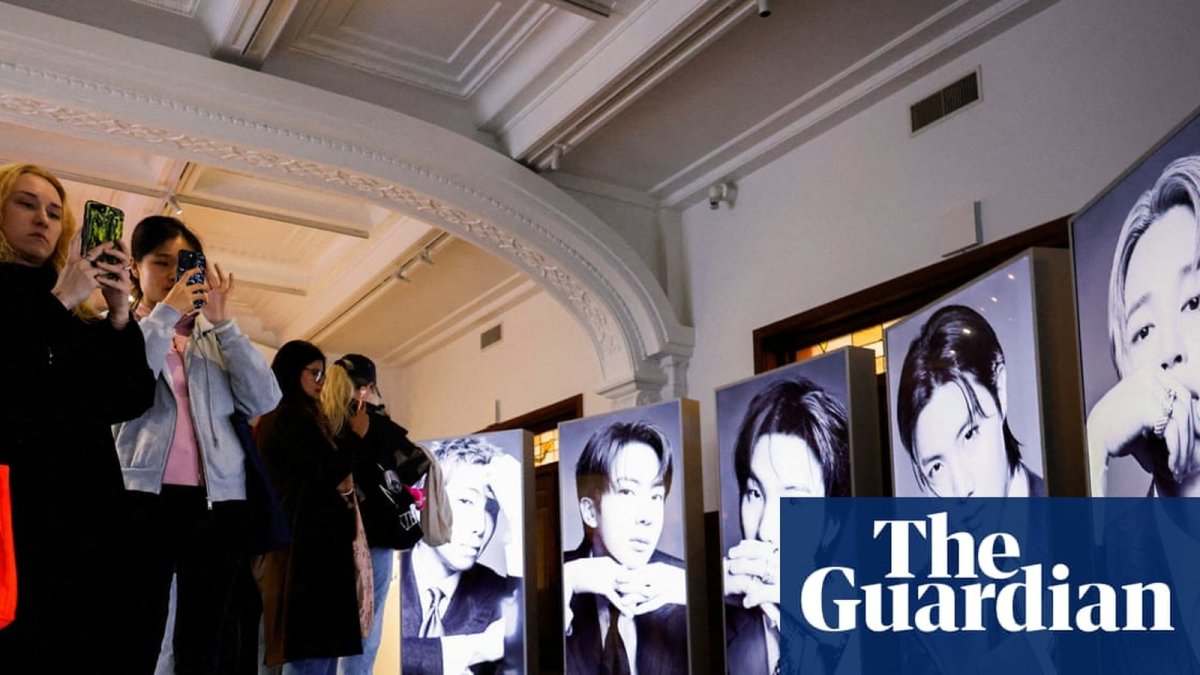
The Korean Cultural Center New York functioned as a central hub offering K-beauty products, desserts from Tous les Jours, and customization of Army bombs light sticks. Bora Yoon, visual arts manager at the center, noted that K-pop serves as a gateway to Korean language study and broader cultural elements including food, technology, and tourism. The Arte Museum hosted a special BTS exhibit linking music with digital art. Sang Jin Lee of d'strict described the presentation as sharing Korean heritage and contemporary digital art through the lens of the centuries-old folk song Arirang. A Seoul Bingsu pop-up ran a limited 10-day Arirang-themed menu in New York.
Jacob Baik of New Wonjo emphasized that the restaurant’s BTS-themed dishes were crafted to reflect authentic Korean culinary traditions rather than superficial branding. Seoul Bingsu owner Ara Go noted that the ten-day pop-up leveraged BTS visibility to broaden exposure for Korean desserts among international visitors previously unfamiliar with the cuisine. These targeted collaborations demonstrate how commercial venues translate fandom interest into structured encounters with regional food heritage.
Asli Penaeo, a seven-year fan, described using the events to explore partner restaurants and form connections with other attendees, extending participation beyond performances into everyday cultural spaces. This pattern aligns with institutional framing by the Korean Cultural Center and d’strict, where K-pop serves as an entry point for language study and digital-art interpretations of traditional songs, fostering repeated engagement that disperses economic activity across multiple sectors.
South Korea Tourism Data and Ministry Monitoring
Ministry of Culture, Sports and Tourism statistics for Q1 2026 recorded approximately 4.76 million international visitors, a 23 percent year-on-year increase and an all-time quarterly high. March alone saw 2.06 million visitors, coinciding with the March 21 "BTS The Comeback Live - Arirang" event at Gwanghwamun Square. China arrivals reached 1.45 million, Japan 940,000, and Taiwan 540,000. Yonhap News Agency reported that foreign visitors' spending on tickets and related expenses for the first three nights in Goyang and Seoul totaled 55.5 billion won. Average per-person spending by international fans reached about 1.85 million won. Total travel spending via international credit cards in South Korea during Q1 stood at 3.21 trillion won. Visits to destinations outside Seoul rose 34.5 percent.
Taiwan recorded the strongest growth among source markets at 37.7 percent, contributing to the overall quarterly record while arrivals from the Americas and Europe rose 17 percent to 690,000. More than 338 cruise ships called at Jeju, Busan, and Incheon during the same period, adding maritime visitor flows that complemented land-based concert attendance. These figures illustrate how the March Gwanghwamun event and subsequent tour dates amplified inbound movement beyond Seoul-centric patterns. These dispersal trends provide a measurable benchmark for evaluating whether cultural inflows can be sustained without over-dependence on single-market surges.
Structural Dependence and Policy Implications
Analysts project total ticket revenue for the Arirang World Tour through 2027 could reach 2.7 trillion won. HYBE recorded revenue of $993 million in its most recent quarter. Historical estimates from the Hyundai Research Institute placed BTS's annual contribution to the South Korean economy at roughly 5.6 trillion won in 2018, with a ten-year impact projected at 56.2 trillion won. The Korea Culture & Tourism Institute calculated that a single domestic BTS concert could generate up to 1.2207 trillion won in ripple effects. Kang Jeong-won, Director-General of the Tourism Policy Office, emphasized that authorities monitor airfare fluctuations and geopolitical tensions to sustain growth. This concentration raises questions about whether South Korea's cultural economy risks over-reliance on one group amid ongoing institutional support for cultural exports since the 1990s.
The government's smart-tourism roadmap integrates AI-driven personalization and platforms such as Yanolja to embed cultural content within booking systems, supporting a shift from traditional sightseeing toward lifestyle experiences while channeling fan-driven demand toward less concentrated destinations and reducing pressure on primary gateways.
Scholars view this period as a critical juncture for institutionalizing the fandom economy beyond any single act, drawing parallels to earlier Hallyu cycles that broadened after initial reliance on individual dramas or groups. BTS’s continued prominence also functions as an instrument of public diplomacy, sustaining cultural outreach toward Northeast Asia and the Indo-Pacific amid evolving inter-Korean and regional relations.
Forward Outlook Through 2027 and Soft Power Metrics
Remaining 2026 legs and the full 2027 schedule will test whether localized partnerships such as those with Korean Cultural Centers and independent businesses can be replicated across additional countries. Scholars of Korean soft power should track visitor diversification beyond Seoul, credit-card spending patterns, and integration of folk-song themes like Arirang into official diplomacy. The tour's continuation offers a measurable case study of how state-supported cultural strategies intersect with commercial fandom economies and long-term tourism resilience.
By Prof. David Park, Staff Writer
This article was produced with AI-assisted research and editorial support. Reporting is based on sources cited in the article.
What's Your Reaction?
 Like
0
Like
0
 Dislike
0
Dislike
0
 Love
0
Love
0
 Funny
0
Funny
0
 Wow
0
Wow
0
 Sad
0
Sad
0
 Angry
0
Angry
0

East Asia/Technology Correspondent at Global1.News. Seoul-based voice covering Korean politics, technology, business, and culture. Analyzes how technology and geopolitics intersect across East Asia.












Comments (0)