
Iran Turns to Iraq, Vows to Withstand 'Toughest' US Sanctions
Iran deepens ties with Iraq as Washington prepares its toughest sanctions yet. Analysis of de-dollarization, the China factor, energy markets and Strait of Hormuz risks.
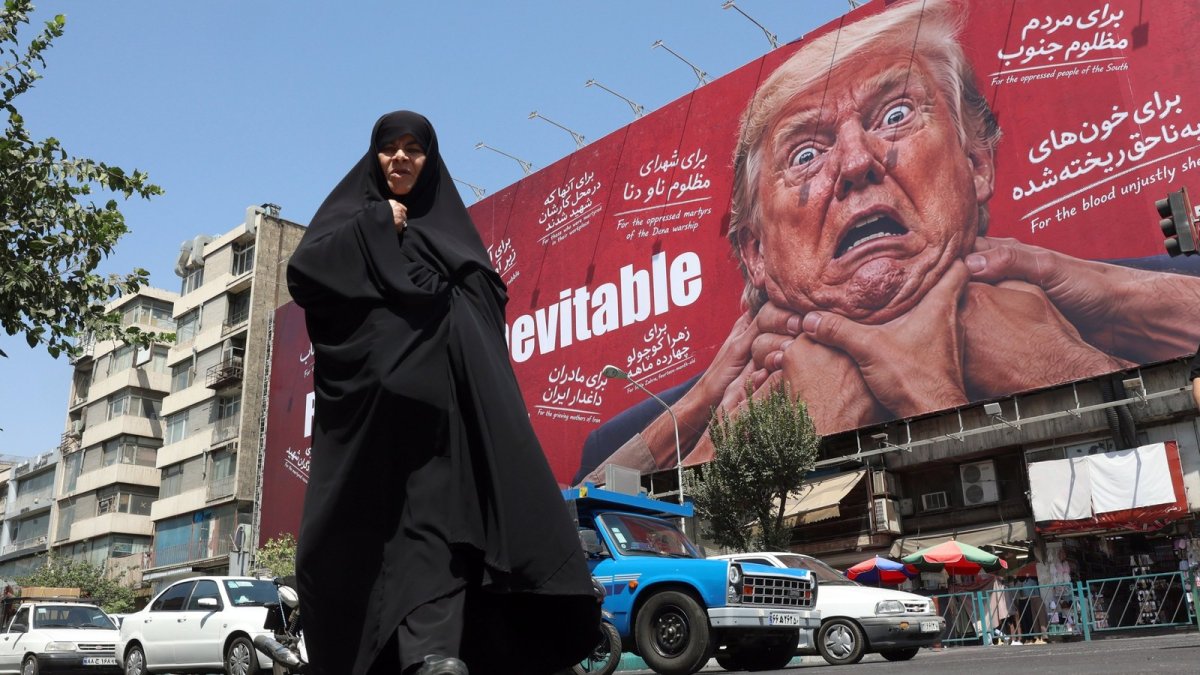
As Washington prepares to unveil what Treasury Secretary Scott Bessent calls "the toughest sanctions in history" against Tehran, Iran is pivoting eastward — deepening economic ties with neighboring Iraq and signaling that nearly five decades of US pressure have not broken its resolve. The confrontation, now entering its sixth month, has already disrupted energy markets and threatened the Strait of Hormuz, and the coming weeks will test whether economic coercion can succeed where direct military confrontation has failed.
Iran Turns to Baghdad as Washington Tightens the Screws
Baghdad, Iraq – Friday — Iranian Parliament Speaker Mohammed Baqer Qalibaf stood before a gathering of Iranian and Iraqi business representatives in Baghdad on Friday and delivered a message that was equal parts defiance and strategy: Iran will not bend to American pressure, and its economic future lies in regional cooperation, not dependence on the dollar.
"If you look at the resources and raw materials of Muslim countries, you will realize that our enemies come to plunder them," Qalibaf said, according to a statement posted on his Telegram channel. "Therefore, we must make plans to deal with the unjust sanctions so that we can overcome them."
The timing was no accident. Just one day earlier, Bessent told CNBC that Washington would unveil details of what he called "the toughest sanctions in history" at a Monday press conference, adding that the measures would form part of a "one-two punch" alongside the US naval blockade imposed in April and paused for a month in mid-June.
"It is going to work in Iran and we are going to collapse this regime," Bessent declared, calling on US allies to decide whether they would support Washington's campaign.
Qalibaf's Baghdad Gambit: De-dollarization as a Survival Strategy
Qalibaf's call for greater use of Iranian and Iraqi national currencies in bilateral trade is more than symbolic — it is a direct challenge to the financial architecture that underpins US sanctions power. By reducing dependence on the US dollar, Tehran and Baghdad can insulate their trade from Washington's reach, a strategy Iran has been refining since the 2012 sanctions regime that cut the country off from SWIFT and global banking channels.
Iraq is a natural partner in this effort. The two countries share a 1,400-kilometer border, deep historical ties, and a mutual interest in resisting US pressure. Iraq relies on Iranian natural gas for a significant portion of its electricity generation, and Iranian goods flow across the border despite US sanctions. Expanding this trade in local currencies would create a parallel financial system that Washington cannot easily penetrate.
But the strategy has limits. Iraq remains heavily dependent on the US dollar for its own oil revenues, and Baghdad's central bank operates under US oversight through the Federal Reserve's dollar auctions. Any significant move toward de-dollarization would require Iraq to accept substantial financial risk — a calculation that Iraqi leaders have so far been reluctant to make.
The China Factor: Washington's Toughest Test
The most consequential question hanging over Bessent's sanctions announcement is how far Washington will go in targeting China, which buys more than 80% of Iran's seaborne oil exports, according to 2025 data from analytics firm Kpler. Any attempt to impose secondary sanctions on Chinese entities would represent a dramatic escalation with potentially severe consequences for the global economy.
Bessent appeared to acknowledge the delicacy of the issue when asked whether Washington could target China over its trade with Iran. "Keep in mind that the Chinese get 50% of their energy from the Gulf," he said, arguing that Beijing would benefit from cooperating with Washington. Some discussions, he suggested, would be better handled privately.
China has already rejected the sanctions approach. "Sanctions and pressure do not help resolve the problem," a Chinese Embassy spokesperson in Washington said, calling on the parties involved to pursue political and diplomatic solutions.
The strategic calculus for Beijing is complex. On one hand, China needs Iranian oil to feed its refineries and maintain energy security. On the other, it relies on Gulf energy supplies and has no interest in destabilizing the region. China has positioned itself as a mediator in the conflict, maintaining diplomatic channels with both Tehran and Washington while continuing to purchase Iranian crude at discounted prices.
If Washington attempts to sanction Chinese entities, it risks triggering a broader trade confrontation at a time when the US economy is already struggling with record debt and rising interest rates. Iranian Foreign Minister Abbas Araqchi has accused Trump of using the confrontation with Tehran to divert attention from these domestic economic problems — a charge that resonates with voters ahead of the November midterm elections.
Energy Markets and the Strait of Hormuz: The Sword of Damocles
The sanctions threat has already moved markets. Oil prices climbed to more than a three-week high Thursday as traders assessed the potential impact of tighter sanctions on Iranian exports and the wider Middle East. The conflict has disrupted the movement of oil through the Strait of Hormuz, a vital waterway that previously carried roughly one-fifth of global oil trade.
Iran has demonstrated its ability to restrict shipping through the strait, and any renewed military confrontation could trigger another major energy shock. The United States and Iran have announced ceasefire agreements twice — in April and June — in efforts to restore shipping through the waterway and move toward an end to the conflict. Both agreements quickly unraveled.
Bessent suggested that the sanctions campaign could actually reduce the likelihood of another major military escalation. "I'm not sure why oil has popped up on this," he told CNBC. "If we are doing the maximum economic pressure, then that means that likely there will not be a large-scale kinetic restart."
This logic — that economic pressure can substitute for military action — is central to the Trump administration's strategy. But it carries significant risks. Iran has historically responded to economic pressure by escalating its nuclear program and regional proxy activities. The Islamic Republic has lived under extensive US sanctions for nearly five decades, dating to the 1979 Islamic Revolution, and has developed sophisticated mechanisms for evasion and resilience.
Iran's Resilience Playbook: Five Decades of Sanctions Survival
Iran's ability to withstand sanctions should not be underestimated. The country has survived UN Security Council sanctions, EU oil embargoes, and successive rounds of US "maximum pressure" campaigns. Each round has forced Tehran to adapt, diversify its economy, and deepen ties with non-Western partners.
The current crisis has accelerated this process. Iran has expanded trade with Russia, Turkey, and Gulf states while developing barter arrangements and alternative payment mechanisms. The push for regional currency cooperation with Iraq is part of this broader strategy of economic self-reliance.
Qalibaf's framing of the conflict as "economic and cognitive warfare" reflects a sophisticated understanding of how modern great-power competition works. Iran's leadership believes that the United States and Israel have failed to defeat Iran through direct military confrontation and are now attempting to achieve through economic means what they could not achieve through force.
This narrative resonates across the region, where many countries view US sanctions as a tool of regime change rather than a legitimate policy instrument. Iran's Foreign Ministry has described American economic and trade sanctions as "economic terrorism," a characterization that finds sympathy in parts of the Global South.
Domestic Pressures and the Midterm Calculus
Trump's economic threats have intensified domestic pressure on his administration to bring the conflict to an end. Higher fuel prices have added to concerns over the economic impact of the war and could become a political liability ahead of the November midterm elections, when Republicans will defend their control of Congress.
The administration faces a delicate balancing act. It must demonstrate resolve against Iran to satisfy its political base, while also avoiding a prolonged conflict that could damage the economy and hurt Republican electoral prospects. Bessent's suggestion that sanctions could prevent a "large-scale kinetic restart" may be an attempt to reassure markets and voters that the administration has a plan to de-escalate.
Araqchi has seized on this vulnerability, accusing Trump of using the confrontation with Tehran to divert attention from economic problems at home. "Washington's continued reliance on policies Iran considers failed would only produce further setbacks and deepen Iranian resistance," he said.
Regional Implications
The coming weeks will test whether economic coercion can succeed where military pressure has failed. The stakes extend far beyond Iran's borders. Gulf states, which have been navigating between their security dependence on Washington and their economic interests in regional stability, will be watching closely. Saudi Arabia and the UAE have maintained diplomatic channels with Tehran even as they coordinate with Washington on security matters.
For Iraq, the situation is particularly delicate. Baghdad must balance its relationship with Washington — which includes significant military and economic support — against its deep interdependence with Iran. Qalibaf's visit to Baghdad is a reminder that Iran retains significant influence in Iraq, and that any US attempt to pressure Baghdad into severing ties with Tehran could backfire.
The energy market implications are equally significant. If the sanctions succeed in removing Iranian oil from the market, global supply will tighten, potentially pushing prices higher and complicating the economic outlook for oil-importing countries across Asia and Africa. OPEC+ will face pressure to increase production to offset losses, but the cartel's spare capacity is limited.
The Strait of Hormuz remains the ultimate wildcard. Iran has shown it can disrupt shipping through the waterway, and any renewed military confrontation could trigger a global energy crisis. The two failed ceasefire agreements demonstrate how difficult it is to restore stability once the conflict has begun.
What Washington wants is clear: a collapse of the Iranian regime or a fundamental change in its behavior. What Tehran wants is equally clear: survival and the preservation of its regional influence. The sanctions campaign is the latest chapter in a confrontation that has defined US-Iran relations for nearly five decades. Whether it succeeds where previous efforts have failed remains an open question — one with profound implications for the Middle East and the global economy.
This article was produced with AI-assisted research and editorial support. Sources: Daily Sabah, Reuters, Al Jazeera, CNBC, Kpler.
By Malik Hassan, Staff Writer
What's Your Reaction?
 Like
0
Like
0
 Dislike
0
Dislike
0
 Love
0
Love
0
 Funny
0
Funny
0
 Wow
0
Wow
0
 Sad
0
Sad
0
 Angry
0
Angry
0

Middle East Correspondent at Global1.News. Based in Beirut, covering politics, conflict, energy, and society across the Middle East. Brings context and depth to a region often reduced to headlines.













Comments (0)