
China Joins Brazil's WTO Fight Against US Tariffs
China has filed to join WTO consultations Brazil opened against US tariffs of up to 37.5 percent, citing substantial commercial interest and warning comparable duties could hit Chinese exports. The Geneva filing in case DS646 tests a multilateral system whose appeals court has been frozen since 2...
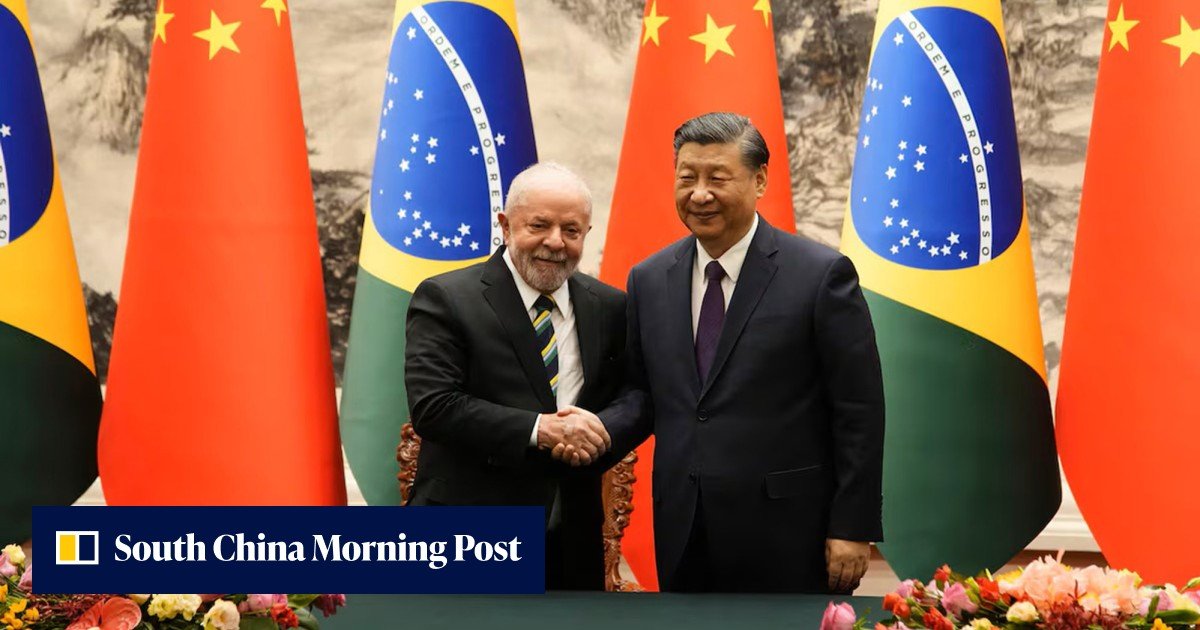
Beijing Steps Into Geneva Fray Against Washington's Tariff Wall
China filed a request in Geneva on Monday, August 10, to join World Trade Organization consultations that Brazil opened against United States tariffs reaching as high as 37.5 per cent, according to a Brazilian government source who confirmed the move to the South China Morning Post. The filing, first reported by the Brazilian newspaper Folha de S. Paulo, positions Beijing as a defender of the multilateral trading system at a moment when Washington continues to escalate unilateral tariff measures.
In its request, China told the WTO it holds a substantial commercial interest in the case, arguing that Washington could apply comparable measures to Chinese goods and that such duties would affect all Chinese exports to the American market, subject to specific exemptions. The document had not yet appeared in the WTO's public records as of Monday, and the Chinese embassy in Brasilia did not immediately respond to a request for comment. The commerce ministry in Beijing has not addressed the filing publicly.
The move extends a pattern Beijing has pursued since 2018, when it first challenged Section 301 of the US Trade Act of 1974 at the WTO. China has consistently argued that the statute allows Washington to determine violations and impose penalties without multilateral authorisation. By joining Brazil's case, Beijing signals that its grievances with US trade policy are not isolated but shared by other major economies.
The Duties at the Heart of the Dispute
Brazil requested consultations on July 27, and the WTO circulated the complaint three days later under case number DS646. The case targets two distinct actions taken by the Trump administration. The first is an additional duty of 25 per cent that came into force on July 22, following an investigation by the Office of the United States Trade Representative into digital trade and electronic payment services. That probe examined Brazil's Pix instant payment system, as well as preferential tariffs, anti-corruption enforcement, intellectual property protection, ethanol market access, and illegal deforestation.
The second measure is a duty of 12.5 per cent, in force since July 24, imposed after a separate inquiry into the enforcement of bans on goods made with forced labour. That investigation covered 60 economies, including mainland China. The Brazilian foreign ministry said the combined duties reach more than 23 per cent of the country's exports to the American market.
Brazil contends that both measures exceed the tariff ceilings in the American schedule of concessions and breach the most favoured nation rule, which bars a WTO member from giving one trading partner worse terms than it gives the rest. Brasilia also argues that Washington sought redress through unilateral determinations rather than through the dispute settlement system — the same claim China brought in 2018.
What Beijing's Request Actually Says
China's filing focuses on its own exports rather than the treatment of Brazilian goods. Beijing told the WTO that the additional duties altered the conditions of competition for Chinese products sold in the United States. The grounds set out in the request concern the potential spillover effect: if Washington can impose such duties on Brazil, it can apply comparable measures to Chinese goods, affecting all Chinese exports to the American market subject to specific exemptions.
This framing is deliberate. China is not defending Brazil's specific interests; it is defending the principle that WTO members cannot unilaterally impose tariffs beyond their scheduled commitments. The argument echoes Beijing's long-standing position on Section 301, which China has challenged since 2018. A Chinese commerce ministry spokesman said in March that the US forced-labour inquiry was "highly unilateral, arbitrary and discriminatory" and noted that the United States has never ratified the Forced Labour Convention of 1930.
Beijing made representations to Washington while the two sides were holding trade talks in Paris, the spokesman said at the time. The current filing extends that diplomatic pressure into the legal arena of the WTO, where China hopes to build a coalition of members concerned about US unilateralism.
The Mechanics of Joining Consultations
Under WTO rules on dispute settlement, a member claiming a substantial trade interest may notify the parties and the Dispute Settlement Body within 10 days of the circulation of the original complaint. The country being challenged — in this case, the United States — decides whether the claim is well founded. A member turned away is free to open a case of its own.
It is important to understand what joining consultations does and does not achieve. A member admitted to the consultations does not become a complainant in the dispute. It takes part in the discussions and sees what is exchanged between Brazil and the United States. It cannot make claims of its own or ask for a panel. To do either, it would have to open a separate case.
For China, the value of joining is therefore partly symbolic and partly informational. Beijing gains access to the substance of the consultations and signals solidarity with Brazil. But it cannot steer the case toward a panel ruling or shape the legal arguments beyond what Brazil chooses to advance. The United States has accepted the request for consultations, according to Folha, although no date has been set for the talks to begin.
The Wider Tariff Battlefield
The Brazil case sits within a broader landscape of US tariff actions that China is watching closely. The Trump administration extended 178 product exclusions from the Section 301 duties on Chinese goods to November, following a meeting between President Donald Trump and President Xi Jinping in November. Those exclusions provide temporary relief for specific products but do not address the underlying tariff structure.
China has separate consultations pending against American tariff measures adopted last year. Chinese officials have repeatedly invoked a September 2020 WTO panel report that found American tariffs on Chinese goods under Section 301 inconsistent with global trade rules. Washington appealed that ruling, and the report has never taken effect because the appellate body cannot hear the case.
Brazil itself brought a similar case last year against duties of 10 per cent and 40 per cent that Trump imposed under emergency economic powers. The US Supreme Court ruled on February 20 that those emergency powers did not authorise tariffs at all. The administration imposed the current duties under Section 301, a trade statute that does not depend on the authority the court rejected. This distinction matters: the Supreme Court ruling did not invalidate the Section 301 path, which remains the legal basis for the tariffs Brazil is challenging.
The Broken Appeals System
The central weakness in Brazil's case — and in China's broader strategy — is the state of the WTO appellate body. The appellate body is the final stage of WTO litigation and needs at least three members to hear a case. It lost its quorum in December 2019 after Washington blocked replacements for departing members, and the seats remain empty.
The practical consequence is severe. A losing party at panel stage can appeal to a body that cannot hear the case, which leaves the ruling unadopted and blocks any authorisation to retaliate. This means that even if Brazil wins a panel ruling against the US tariffs, Washington can appeal into the void and the ruling will never take effect.
A Brazilian government source, who spoke on condition of anonymity because they were not authorised to discuss the case publicly, told the South China Morning Post that Brasilia read the Chinese request as "a signal of support" and as confirmation that its complaint "reached beyond Brazilian interests." But the same source admitted that the dispute would remain "largely political" until the appellate body is restored, because the organisation cannot penalise the United States over the tariffs.
This is the structural reality that shapes both Brazil's case and China's decision to join. The WTO's dispute settlement system can produce rulings, but it cannot enforce them against a member that refuses to accept the appellate body's authority. Until that impasse is resolved, cases like DS646 serve primarily as political statements and legal placeholders.
What to Watch For
Should the consultations fail within 60 days, Brazil may ask for a panel of experts to rule on the measures. That timeline puts a potential panel request around late September or early October. The United States has accepted the request for consultations, but no date has been set for the talks to begin, which suggests the 60-day clock may not start immediately.
For Japan and the wider Asia-Pacific region, this case carries significant implications. Tokyo has its own history of friction with US trade actions and relies on the WTO dispute system as a check on unilateralism. Japanese exporters watch how far Beijing goes in using Geneva to push back on Washington, because a successful challenge to Section 301 tariffs would benefit all WTO members, not just China and Brazil.
Japan's trade policy balance is also relevant. Tokyo participates in both the Regional Comprehensive Economic Partnership and the Comprehensive and Progressive Agreement for Trans-Pacific Partnership, while managing bilateral pressure from Washington. The Brazil case and China's intervention in it test whether the multilateral system can still constrain US tariff policy, a question that directly affects Japanese manufacturers exporting to the American market.
The immediate signals to monitor are threefold. First, whether the United States formally admits China to the consultations or rejects the request, which would force Beijing to open a separate case. Second, whether Brazil requests a panel when the 60-day window closes, and how Washington responds. Third, whether any progress emerges on restoring the appellate body, without which all WTO dispute rulings remain unenforceable against the United States.
China's filing in Geneva is a calculated move that strengthens Brazil's hand politically while advancing Beijing's long-running argument against Section 301. But the broken appeals system means the legal outcome is uncertain at best. For now, the case is a forum for principle, not a mechanism for enforcement.
Tags: China WTO, Brazil WTO, US tariffs, Section 301, DS646, WTO dispute settlement, appellate body, Pix payment system, forced labor, trade war, multilateral trading system, Japan trade policy, Asia-Pacific trade
By Kenji Tanaka, Staff Writer
This article was produced with AI-assisted research and editorial support. Sources: South China Morning Post, Reuters.
What's Your Reaction?
 Like
0
Like
0
 Dislike
0
Dislike
0
 Love
0
Love
0
 Funny
0
Funny
0
 Wow
0
Wow
0
 Sad
0
Sad
0
 Angry
0
Angry
0

Japan Correspondent at Global1.News. Tokyo-based voice covering Japanese politics, technology, economy, and culture. Tracks the intersection of tradition and innovation in one of the world's most dynamic societies.












Comments (0)