
Alleged Rebel Leader Killed in Colombia as President Targets Armed Groups
Colombian security forces killed alleged FARC dissident leader Hernando Forero Mosquera, known as 'El Ruso,' as new President Abelardo de la Espriella launches a military offensive against armed groups, backed by $1bn in US security aid.
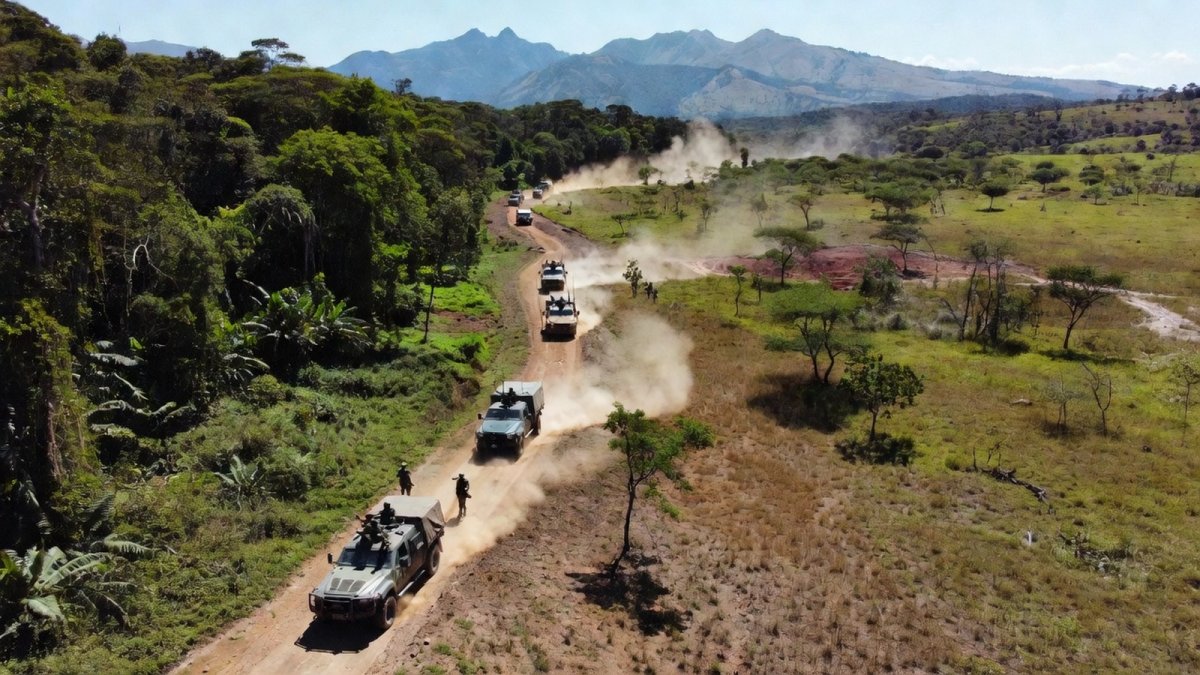
The killing of alleged FARC dissident leader Hernando Forero Mosquera, known as "El Ruso," in a military operation in central Colombia marks a decisive break with the failed negotiation strategies of the past. The operation, which took place over the weekend in a rural area of Meta province, signals that the new administration of President Abelardo de la Espriella is moving from dialogue to a full-scale military offensive. With the president vowing to send "a clear and powerful message to all bandits," the strike against one of the country's most wanted men is a dramatic opening salvo in a new era of Colombian security policy. The question now is whether this hardline approach can succeed where "total peace" failed, or if it will simply escalate a conflict that has already claimed too many lives.
Bogotá, Colombia — The weekend offensive that killed Forero, also known as "El Ruso" or "Alemán," was not an isolated incident but the opening move in a coordinated security crackdown. As de la Espriella settles into the presidential palace, his administration has made it clear that the era of negotiating with armed groups is over, replaced by a doctrine of relentless pursuit and air strikes. The coming weeks will test whether this aggressive posture can dismantle the criminal networks that have turned Colombia into the world's leading cocaine exporter, or whether it will provoke a new wave of retaliatory violence across the country's most vulnerable regions.
A Message to "All Bandits"
President Abelardo de la Espriella, sworn in on Friday, took to social media over the weekend to confirm the death of Forero and five other alleged members of armed groups, framing the operation as a foundational act of his new government. "The authority of the State is exercised, the law is upheld, and those who threaten the security of Colombians are confronted with determination," he wrote on X, praising the military for their precision and courage. In a separate video, the president described Forero as an explosives expert and declared that the killings sent "a clear and powerful message to all bandits that there is nowhere for them to hide."
The operation in Meta province resulted in the deaths of Forero and three other alleged members of his dissident faction, while a separate offensive in Antioquia province killed two alleged members of the Gulf Clan, including one of its leaders. In Necoclí, authorities also captured four alleged members of the Gulf Clan's financial and drug-trafficking substructure, seizing six rifles and abundant war material. Defense Minister Jorge Mora confirmed the results on X, stating, "Bluntness will be our line against the structures that seek to impose violence and affect the tranquility of Colombians." The weekend toll represents a significant blow to the criminal networks that have long operated with impunity in Colombia's rural heartland.
Who Was "El Ruso"?
Hernando Forero Mosquera, allegedly the main leader of Frente 28, or Estructura 28, was one of the most prominent figures in the constellation of dissident factions that emerged from the Revolutionary Armed Forces of Colombia (FARC) after the 2016 peace deal. While the majority of FARC members laid down their arms under the historic agreement, Forero and others refused the terms, choosing to continue their criminal enterprises in the country's remote jungles and savannas. Military intelligence had tracked Forero for years, noting his primary criminal influence in Arauca department, but it was in Guaviare where Special Forces units finally located and neutralized him.
Frente 28 controls significant territory in the jungle and savanna regions, holding influence over river and land routes that connect Guaviare with Meta, Caquetá, and Vaupés. These corridors are considered critical for drug trafficking and illegal mining, the two main economic engines of the dissident groups. According to reports, the dissident factions are now primarily involved in cocaine trafficking and illegal gold extraction, making them the main driving forces behind the resurgence of violence in Colombia. The death of Forero, identified by the government as the main leader of the structure loyal to the dissident commander known as Iván Mordisco, is a significant blow to the operational capacity of these groups in the central and southern parts of the country.
From "Total Peace" to Total Offensive
The killing of El Ruso represents a radical departure from the policies of former President Gustavo Petro, Colombia's first left-wing president, who pursued a "total peace" strategy that prioritized negotiation over confrontation. Petro's approach, which sought to bring armed groups into the political fold through dialogue and concessions, ultimately failed as groups repeatedly broke ceasefires and walked away from the negotiating table. The former president's critics argued that his strategy gave criminal organizations time to regroup and expand their operations, while his supporters maintained that a peaceful resolution was the only sustainable path forward for a country weary of six decades of conflict.
De la Espriella, a 48-year-old lawyer and businessperson with no prior political experience, campaigned on a radically different platform, promising to target "narco-terrorism" relentlessly, including launching air strikes against known hideouts. His narrow victory over Iván Cepeda, a progressive senator and Petro ally, signaled a shift in the Colombian electorate's mood, with voters seemingly opting for security over dialogue. The new president was sworn in on Friday in Cali, receiving the presidential sash from Senate President Honorio Henriquez, and delivered his first speech at the Pichincha Military Canton in the city. His first Security Council meeting was held in Cali, focused on the southwest and the Amazon, regions that have become the front lines of the new offensive.
Armed Groups Strike Back
The new administration's hardline posture has not gone unanswered by the armed groups, which have demonstrated their capacity to strike at civilian infrastructure and security forces. On Saturday, a day after the inauguration, a car bomb exploded at a tollbooth on the Pan-American Highway at Santander de Quilichao in Cauca province, destroying the booth and injuring two security guards. The army blamed FARC dissident factions for the attack on this critical route between Cali and Popayán, which threatens supply chains in the region. The choice of target suggests a deliberate attempt to disrupt economic activity and demonstrate that the groups can still project power despite the government's offensive.
In Cesar province, a police officer was killed by explosives dropped from a drone, a tactic that has become increasingly common among the armed groups. On Sunday, explosive-laden drones struck the municipal town hall and nearby police station in Rioblanco, Tolima, with gunfire from surrounding hills, though no injuries were reported. The attack was attributed to the Ismael Ruiz front of FARC dissidents. Separately, authorities captured alias "Bonito," identified as Héctor Orlando Bastidas Bravo, the second-in-command of Comandos de Frontera, an armed group of former FARC members tied to drug trafficking. These incidents illustrate the diverse and evolving threats facing Colombian security forces, from conventional car bombs to sophisticated drone attacks.
Washington's Embrace
De la Espriella's offensive has the explicit backing of US President Donald Trump, who endorsed his candidacy and has positioned himself as a staunch ally of the new Colombian government. On Friday, the US State Department announced plans to provide $1 billion in security assistance to Colombia, a significant increase in support that signals Washington's commitment to the new hardline approach. The announcement was accompanied by the news that Colombia had been welcomed into the US-led "Shield of the Americas" alliance, a coalition of Western Hemisphere countries fighting drug trafficking and transnational crime.
The embrace of Washington represents a significant geopolitical shift for Colombia, which under Petro had sought to distance itself from US policy and pursue more independent foreign relations. The $1 billion assistance package and the Shield of the Americas membership are likely to include intelligence sharing, military training, and equipment transfers that will enhance Colombia's capacity to conduct operations against armed groups. For the region, this renewed US-Colombia partnership signals a return to the security-first approach that characterized the bilateral relationship for decades, with potential implications for neighboring countries facing similar challenges from organized crime and drug trafficking.
A Hard Line With High Stakes
As a Brazilian journalist who has watched my own country struggle with public security, inequality, and organized crime, the situation in Colombia feels both familiar and deeply concerning. The shift from Petro's "total peace" to de la Espriella's total offensive mirrors debates across Latin America about how to confront criminal organizations that have become deeply embedded in the social and economic fabric. In Brazil, we have seen the limits of both approaches — the militarization of public security in Rio de Janeiro has produced high body counts without dismantling the drug factions, while negotiation attempts have often been exploited by criminal groups seeking to consolidate power.
The Colombian crackdown also has significant environmental implications, as the dissident groups finance themselves through cocaine trafficking and illegal gold mining, which drive deforestation and mercury contamination in the Amazon. The corridors controlled by Frente 28 in Guaviare and the surrounding departments are not just drug trafficking routes but also zones of environmental destruction that threaten the world's largest rainforest. A successful military offensive could disrupt these criminal economies, but it could also displace them to new areas, spreading the environmental damage to previously untouched regions. The new government's commitment to protecting the Amazon will be tested by its military operations, which must balance security objectives with environmental preservation.
The coming months will reveal whether de la Espriella's hardline approach can deliver the security that Colombians voted for, or whether it will simply produce a new cycle of violence. The president has promised a sustained offensive, and the weekend operations suggest he intends to keep that promise. But the armed groups have shown their resilience, adapting their tactics and striking back at civilian targets. The car bomb in Cauca and the drone attacks in Cesar and Tolima are reminders that the conflict is far from over. For the people of Meta, Cauca, and Antioquia, the front lines of this new war, the hope is that this time the state will prevail. The risk is that the offensive will simply repeat the mistakes of the past, prioritizing military victories over the long-term work of building institutions, addressing inequality, and winning the peace that has eluded Colombia for so long.
By Elena Vasquez, Staff Writer This article was produced with AI-assisted research and editorial support. Sources: BBC News, Infobae, Rio Times.What's Your Reaction?
 Like
0
Like
0
 Dislike
0
Dislike
0
 Love
0
Love
0
 Funny
0
Funny
0
 Wow
0
Wow
0
 Sad
0
Sad
0
 Angry
0
Angry
0

Latin America Correspondent at Global1.News. Based in Mexico City, covering politics, economics, energy, and culture across the region. Brings an on-the-ground perspective to stories spanning from the Rio Grande to Patagonia.












Comments (0)