
Chile's Mountain of Garbage Becomes the World's Biggest Detected Methane Source
The stench hits you before the sight does, a thick, sweet rot that clings to the back of the throat. Then, the horizon shifts, and there it is: a mountain of garbage, a pyramid of human consumption rising from the semi-arid scrubland north of Santiago. This is Lomas Los Colorados, and as of April 23, 2026, it holds an unwanted world record.
The stench hits you before the sight does, a thick, sweet rot that clings to the back of the throat. Then, the horizon shifts, and there it is: a mountain of garbage, a pyramid of human consumption rising from the semi-arid scrubland north of Santiago. This is Lomas Los Colorados, and as of April 23, 2026, it holds an unwanted world record. According to a new analysis by the UN Environment Programme (UNEP), this Chilean landfill is now the largest detected human-made source of methane on the planet, a title that transforms a local nuisance into a global climate emergency.
Chile's Mountain of Garbage Becomes the World's Biggest Detected Methane Source
Tiltil, Chile - August 20, 2026 — Residents of the Til Til commune have smelled it for decades; now satellites have confirmed it: the pyramid of waste rising from the scrubland north of Santiago is the largest detected human-made source of methane on the planet, and the UN is putting the world's garbage dumps on notice.
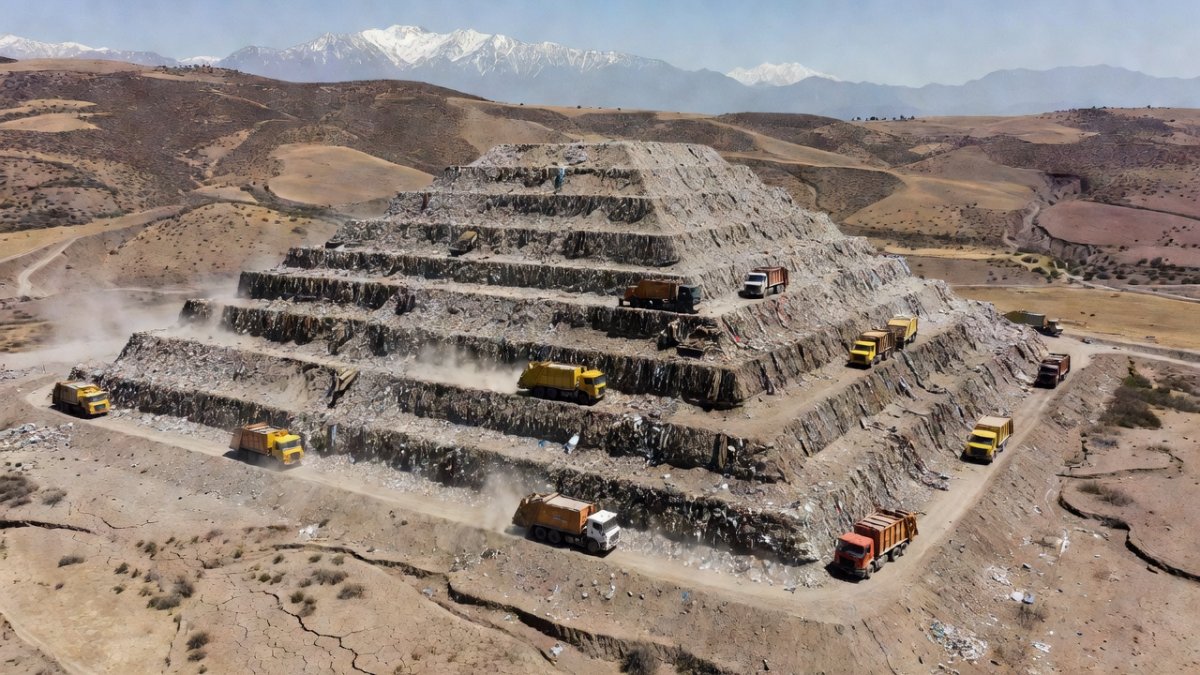
A Pyramid of Waste That Space Can See
The data is staggering, and it comes from the sky. UNEP's analysis, published on April 23, 2026, used a constellation of satellites to peer through the atmospheric haze and quantify what residents of the Til Til commune have smelled for decades. The verdict: Lomas Los Colorados, located roughly 60 kilometers north of Santiago, emits more than 102,000 tonnes of methane annually, with some reports citing figures as high as 106,000 tonnes per year. To put that in perspective, this single dump spews climate pollution equivalent to the emissions of nearly 2 million cars driven for a year. This isn't just a Chilean problem; it's a planetary one. The UNEP list of the top-50 detected super-emitters includes 22 coal mines and 11 waste facilities, but the top of the list is dominated by garbage. Two of the three highest emitters are landfills—one here in Chile and another in India, the Kanjurmarg landfill in Mumbai. Alarmingly, Chile doesn't just have one offender; three of its landfills made the global top-50 list.
The finding has forced a reckoning. On May 4, 2026, at a high-level methane event hosted by France under its G7 presidency, UNEP's International Methane Emissions Observatory (IMEO) announced a major expansion of its Methane Alert and Response System (MARS). Previously focused almost exclusively on oil and gas infrastructure, MARS will now expand its satellite surveillance to cover coal mines and waste facilities—the other two massive pillars of human-caused methane emissions. This is a direct response to the Chilean discovery. The system, which draws on more than 35 satellite instruments, is designed to detect "super-emitters"—sources so large they are visible from space. The expansion signals that the era of hiding behind regulatory gaps is over, and that the world's garbage dumps are now firmly in the crosshairs of climate diplomacy.
Methane: The Fastest Brake on Global Warming
To understand why a landfill in Chile has become a global flashpoint, you have to understand the physics of the gas itself. Methane is more than 80 times more powerful than carbon dioxide as a greenhouse gas over a 20-year period. It is the atmospheric equivalent of a sledgehammer, delivering a massive, immediate punch to the climate system. However, unlike carbon dioxide, which persists in the atmosphere for centuries, methane breaks down relatively quickly, disappearing after about a decade. This dual nature—extreme potency paired with a short lifespan—makes methane cuts the single fastest brake we have on global heating. If we stop emitting methane today, the atmosphere will feel the cooling effect within a generation. This is why the UNEP data on Lomas Los Colorados is so critical: it represents a low-hanging fruit, a problem we can actually solve in the near term.
The economic argument is just as compelling as the scientific one. The International Energy Agency (IEA) has calculated that plugging methane leaks across global supply chains—from pipelines to waste piles—could return about 200 billion cubic metres of gas to global markets annually. That is a staggering volume of energy currently being wasted, vented directly into the sky. The MARS system is the tool designed to find these leaks. Since January 2023, it has already helped detect and mitigate 41 super-emitter sources across 11 countries, with combined emissions of 1.2 million tonnes of methane. To visualize that, imagine the annual emissions of nearly 24 million petrol-powered cars. That is the equivalent of taking a small country's entire fleet off the road, simply by fixing leaks we can now see from orbit. The expansion of MARS to waste is not just an environmental measure; it is an economic efficiency drive for the planet.
Til Til: Three Decades of Stench and Sickness
For the people of Til Til, the UNEP report is not a distant scientific abstract; it is the validation of a thirty-year nightmare. The community has spent three decades living amid the stench and the waste, their daily lives dictated by the wind direction and the constant influx of garbage trucks. Resident Patricio Salguero, from the Montenegro area, is among those who endure it. He speaks of the flies, the rats, and the air that makes you gag. The health concerns are palpable, though often unquantified—respiratory issues, skin conditions, and a general sense of being abandoned by the state. The sheer volume of organic matter is the culprit. Over half of the landfill's trash is decomposing organic material—food scraps, plants, grass, and pruning waste. When this organic matter is buried and deprived of oxygen, it undergoes anaerobic decomposition, producing methane as a byproduct. The landfill is, in essence, a giant, uncontrolled biogas reactor.
The environmental damage extends beyond the human residents. The methane emissions and the toxic leachate that seeps from the site expose endemic and migratory birds to disease. The Andean condor, a majestic and vulnerable species, has been coming to the area for food for over 15 years, drawn by the easy pickings of the waste mountain. This is a tragic irony: a national symbol of the Andes, a bird that should be soaring over pristine peaks, is now scavenging for survival in a toxic dump. The condor's presence is a stark indicator of how deeply the landfill has disrupted the local ecosystem. The birds are not just visiting; they are ingesting plastics and toxins, becoming vectors of disease, and their long-term health is being compromised. The stench that the residents complain about is not just an inconvenience; it is a chemical soup that is poisoning the land, the water, and the wildlife that depend on this fragile semi-arid environment.
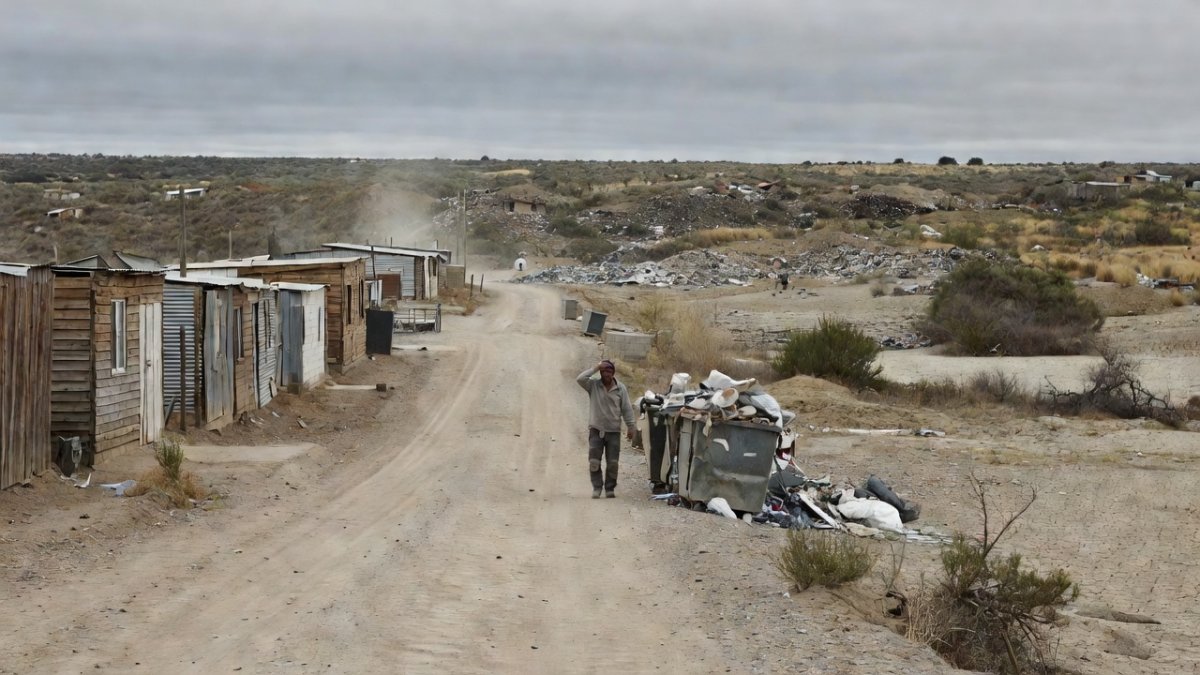
The Biogas Paradox at KDM's Waste Mountain
Here is the cruel irony of Lomas Los Colorados: it is not a completely unmanaged dump. Since 2007, the site has captured methane to generate biogas that powers a local power station. The waste containers at the site belong to a company called KDM, which has marketed this biogas capture as a green initiative, a way to turn the city's trash into electricity. This is the paradox of "partial mitigation." While the biogas system does capture a portion of the methane, the UNEP satellite data proves that the site still leaks massive volumes into the atmosphere. The infrastructure is either insufficient, poorly maintained, or simply overwhelmed by the sheer scale of the waste stream. The result is a facility that claims to be part of the solution while simultaneously being the world's largest detected source of a super-pollutant.
The numbers are damning. Even with the biogas plant running, the site emits the equivalent of nearly 2 million cars annually. This suggests that the capture rate is a fraction of what is actually being generated. The landfill receives 18,000 tons of garbage a day, a relentless torrent of waste that outpaces the ability of any gas capture system to keep up. The problem is structural. The landfill is pyramid-shaped, a design that maximizes volume but can also compress waste in ways that make gas extraction difficult. The organic fraction—over 50%—is the engine of methane production, and it is being buried faster than it can be processed. The KDM biogas operation is a band-aid on a hemorrhaging wound. It provides a false sense of progress while the underlying problem—a linear economy that produces far too much organic waste—remains completely unaddressed.
Santiago's Landfill Dead End
The crisis at Lomas Los Colorados is a symptom of a systemic failure in Santiago's metropolitan planning. The capital region, home to nearly 8 million people, generates an astronomical amount of waste daily. The city funnels 18,000 tons of garbage a day into this single site, which takes waste from 60% of the capital's residents. This dependency is a structural weakness. Santiago's metropolitan area has only four landfills that meet environmental standards for its massive population. When one of those four is the world's largest methane super-emitter, the fragility of the entire system is exposed. The city has essentially painted itself into a corner, with no room to close the site for remediation because there is nowhere else for the trash to go.
The fact that three Chilean landfills made the UNEP top-50 list underscores that this is not an isolated incident but a national pattern. The country's waste management framework is outdated. While Chile has passed progressive laws—like the Ley REP (Law 20.920) on extended producer responsibility in 2016 and the Roadmap for a Circular Chile to 2040—implementation is painfully gradual. These policies are designed to shift the burden of waste onto producers and to promote recycling and composting, but the infrastructure to support them is lagging. The result is that organic waste, which should be composted or processed in anaerobic digesters, is being buried in massive pyramids, generating methane that is heating the planet. The landfill is a dead end, literally and figuratively, for Santiago's waste strategy. It is a monument to a linear economy that takes, makes, and disposes, with no thought for the atmospheric consequences.
What This Means for Latin America
The UNEP designation of Lomas Los Colorados is a wake-up call for the entire Latin American region. The waste crisis is not unique to Chile; it is a continental challenge. From Mexico City to Buenos Aires, sprawling metropolises are grappling with mountains of garbage, and most are relying on open dumps or poorly managed landfills that are likely emitting methane at similar rates. The difference is that Chile now has the unenviable distinction of being the poster child for this failure. The MARS expansion to waste facilities is a game-changer for the region. It means that satellites will now be watching Latin American landfills, and the data will be public. Governments can no longer claim ignorance. The "invisible" emissions are now visible, and the pressure to act will be immense.
This presents a massive opportunity for a just transition. The expansion of MARS, combined with the UNEP's Methane Response Blueprint and the new Coal Methane Database covering nearly 250 mines, provides a roadmap for action. For Latin America, this means investing in modern waste-to-energy systems, but more importantly, in source separation and composting. The organic fraction of the waste stream—the food scraps and plant matter that make up over half of Lomas Los Colorados—can be diverted from landfills entirely. This would not only slash methane emissions but also create jobs in recycling and composting sectors. Cities across the region face the same trap that Santiago fell into: a reliance on massive, centralized landfills that are cheap in the short term but catastrophic in the long term. The Chilean example is a warning: if you build a pyramid of garbage, the world will eventually see it from space, and it will judge you by it.
The Bottom Line: The Era of Invisible Methane Is Ending
The message from UNEP is unambiguous. Martin Krause, UNEP Director of Climate Change, put it starkly: "Expanding UNEP's Methane Alert and Response System (MARS) to coal and waste, strengthening response frameworks, and bringing more companies into verified measurement sends a clear signal: the era of invisible methane emissions is ending." He added, "Methane cuts are the fastest brake we have on global warming—but only if emissions that are detected are rapidly fixed." The detection is done; the fixing is now the challenge. Meghan Demeter, MARS programme manager, echoed this, stating, "These sources are just the tip of the iceberg of the world's methane emissions. Satellites shine a light on the big mitigation opportunities, where governments and companies could act first for rapid impact." The spotlight is now firmly on KDM and the Chilean government.
For Chile, the path forward is clear but politically difficult. The Ley REP and the Circular Chile 2040 roadmap provide the legal framework, but they need to be enforced and accelerated. The Lomas Los Colorados site needs immediate intervention—not just to cap the landfill and improve gas capture, but to fundamentally reduce the waste stream entering it. The El País investigation from July 5, 2026, shows this story is still very much alive, with ongoing scrutiny of the government's response. The world is watching. The pyramid of garbage north of Santiago is no longer just a local eyesore; it is a global symbol of the methane challenge. The question is whether Chile will turn this unwanted record into a catalyst for genuine change, or whether it will remain a monument to inaction. The era of invisible methane is over, and the era of accountability has begun.
This article was produced with AI-assisted research and editorial support. Sources: UN Environment Programme (UNEP), Reuters, El País, Al Jazeera English.
By Elena Vasquez, Staff Writer
What's Your Reaction?
 Like
0
Like
0
 Dislike
0
Dislike
0
 Love
0
Love
0
 Funny
0
Funny
0
 Wow
0
Wow
0
 Sad
0
Sad
0
 Angry
0
Angry
0

Latin America Correspondent at Global1.News. Based in Mexico City, covering politics, economics, energy, and culture across the region. Brings an on-the-ground perspective to stories spanning from the Rio Grande to Patagonia.














Comments (0)