
Eight Matisse Works Stolen from São Paulo Library Recovered by Brazilian Police
Brazilian police recovered eight Henri Matisse illustrations stolen from São Paulo's Biblioteca Mário de Andrade in December, arresting a suspect in São Bernardo do Campo while five Portinari engravings remain missing.
Eight Matisse Works Stolen from São Paulo Library Recovered by Brazilian Police
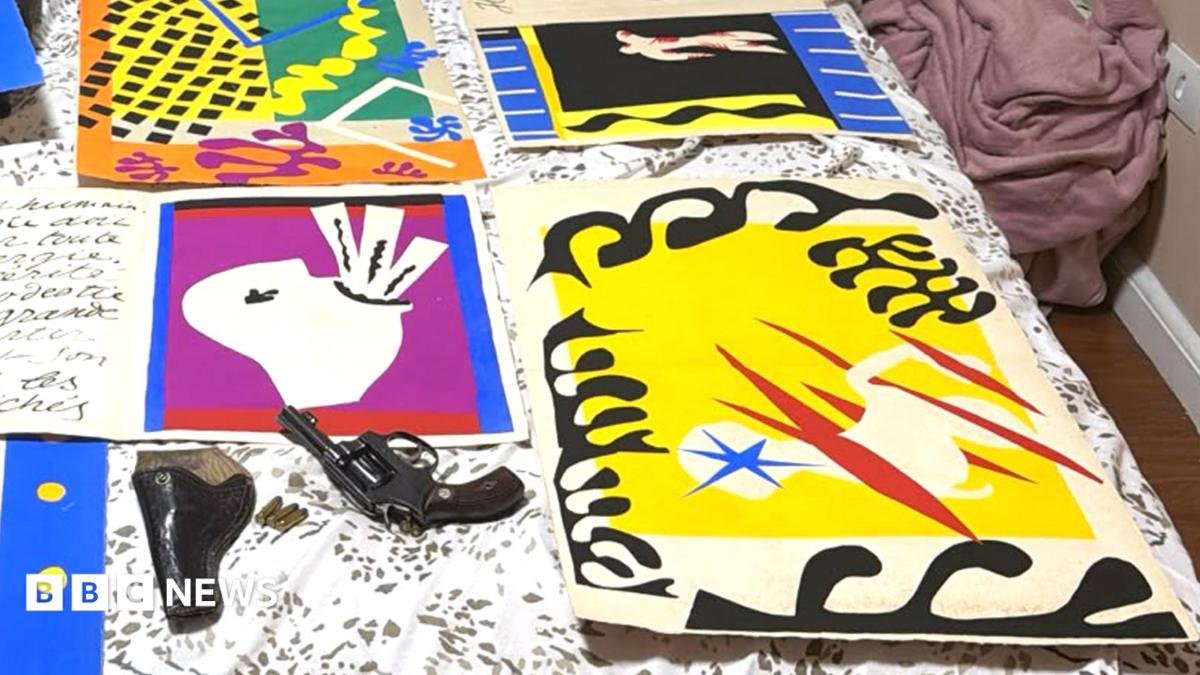
Eight illustrations by French master Henri Matisse, stolen from one of São Paulo's most important cultural institutions in December last year, have been recovered by police in a dramatic breakthrough. The artworks, valued at a combined $200,000, were found on Thursday at a home in São Bernardo do Campo, a working-class suburb south of the city, where a 44-year-old man was arrested. The recovery marks a significant victory for Brazilian investigators who have spent eight months tracking a network of suspects allegedly tied to one of the country's most prolific art thieves.
São Paulo, Brazil — article continues after the recovery of the Matisse illustrations, which were taken during a brazen daytime robbery at the Biblioteca Mário de Andrade, the city's iconic central library. The case has gripped Brazil's cultural community, raising urgent questions about the security of the nation's artistic heritage and the sophisticated criminal networks that target it.
The Recovery in São Bernardo do Campo
Police from the Secretaria de Segurança Pública of the State of São Paulo executed a search warrant on Thursday at a residential property in São Bernardo do Campo, a municipality known primarily as an industrial hub and the birthplace of Brazil's modern automobile industry. Inside, officers located the eight Matisse illustrations, which had been missing since the robbery on 7 December last year. The suspect, identified as João Paulo Linhares de Araujo, was taken into custody at the scene.
According to investigators, Araujo is suspected of having stored the artworks on behalf of those accused of orchestrating the theft. He also faces charges of illegal possession of a firearm, which police say was found during the search. The arrest adds another layer to a case that has already seen three other individuals detained in connection with the heist. The recovery of the Matisse works brings a measure of closure to the Biblioteca Mário de Andrade, where the illustrations have since been returned, according to the local department of culture.
The São Bernardo do Campo location is notable — the town has long been a center of labor activism and political history, but in recent years it has also appeared in police reports as a hub for fencing stolen goods. The choice of a residential property in this suburb, rather than a more remote location, suggests the suspects may have felt confident in their ability to move the artworks undetected.
The December Heist at Biblioteca Mário de Andrade
The robbery itself was audacious in its simplicity. On the morning of 7 December last year, two thieves entered the Biblioteca Mário de Andrade through its main entrance. The library, named after the modernist writer who helped shape Brazilian cultural identity in the early 20th century, is a landmark in the heart of São Paulo, just blocks from the city's bustling República neighborhood.
Once inside, the pair overpowered a security guard and an elderly couple who had been visiting the library. The violence of the encounter — targeting vulnerable visitors — shocked the local community and drew widespread condemnation. The thieves then made off with the artworks on foot, heading toward the nearest metro station, according to investigators. They reportedly placed the stolen pieces in a canvas bag to flee the scene, a detail that suggests a degree of planning and familiarity with the layout.
The works were part of a joint exhibition with the São Paulo Museum of Modern Art, entitled "From Book to Museum," which was on its final day when the thieves struck. The timing — the last day of an exhibition — is a pattern seen in art heists globally, when security protocols may be relaxed and staff attention is focused on closing procedures. The thieves exploited this window with precision, entering mid-morning when the library would have been open to the public but perhaps less guarded than at other times.
The Suspects and the Alleged Mastermind
Brazilian media, including the news outlet Globo, have identified Laéssio Rodrigues de Oliveira, 53, as the suspected mastermind behind the heist. Oliveira has been described by Brazilian press as a prolific art thief with a long history of targeting cultural institutions. He has been in custody since April, arrested in connection with an unrelated case, but investigators now believe he planned and directed the December robbery from the outset.
The network allegedly involved multiple layers — from the two men who physically carried out the theft, to those who stored the goods, to Oliveira as the strategic brain. Three other people were previously arrested in relation to the case, including another man and a woman, though police have not released all their names. The arrest of Araujo on Thursday suggests the investigation is far from over, with police continuing to trace the flow of stolen art through São Paulo's underground market.
Oliveira's alleged involvement points to a troubling reality: art theft in Brazil is not the work of amateurs but of organized networks with knowledge of both the value of the works and the weaknesses of the institutions that hold them. His reported history of similar crimes raises concerns about whether other unsolved thefts across the country may be linked to the same individual or network.
Matisse's Jazz and Portinari's Plantation Boy
The recovered works are illustrations from Henri Matisse's celebrated limited-edition art book Jazz, created in the 1940s. Matisse, widely considered one of the 20th century's most influential artists, produced the book using cut-out gouache techniques, a radical departure from traditional painting that would influence generations of artists. The illustrations are characterized by their vibrant colors and rhythmic compositions, reflecting the artist's fascination with the circus, theater, and the natural world. Art critics have described the value of the stolen works as "incalculable," a sentiment that underscores their significance beyond mere monetary worth.
The exhibition also featured five engravings by Candido Portinari, one of Brazil's most significant Modernist artists. Portinari, who often painted rural workers and laborers, created the engravings to illustrate a special edition of Menino de Engenho (Plantation Boy), the landmark 1932 novel by Brazilian writer José Lins do Rego. The novel, a semi-autobiographical account of life on a sugar plantation in the Northeast, is a cornerstone of Brazilian literature, and Portinari's illustrations captured its themes of childhood, loss, and social inequality with raw emotional power.
The pairing of Matisse and Portinari in a single exhibition was a deliberate curatorial choice, highlighting the dialogue between European modernism and Brazilian artistic expression. The theft of works from both artists struck at the heart of this cultural exchange, and the recovery of the Matisse pieces offers a partial restoration of that vision.
What the Missing Portinari Works Mean
While the recovery of the Matisse illustrations is cause for celebration, the five Portinari engravings remain unaccounted for. Police in São Paulo have said they suspect the works have already been sold, a grim assessment that suggests they may have entered the black market and could be difficult to trace. The loss of these engravings is particularly painful for Brazil, as Portinari's work is deeply tied to the nation's identity and its reckoning with social justice.
Portinari's depictions of rural laborers and the marginalized are not merely aesthetic achievements; they are political statements that resonate with Brazil's ongoing struggles with inequality. The engravings for Menino de Engenho are considered among his most important graphic works, and their disappearance represents a cultural loss that transcends financial value. If the works have indeed been sold, they may surface in private collections where they would be inaccessible to the public, a fate that art historians and cultural officials alike would consider a tragedy.
The asymmetry of the recovery — eight Matisse works found, five Portinari works still missing — also raises questions about the motives of the thieves. Were the Portinari pieces sold quickly because they were easier to move on the Brazilian market, while the Matisse illustrations were held back due to their higher profile? Investigators have not commented on this theory, but the pattern is consistent with how art theft networks often operate, prioritizing works that can be discreetly sold over those that might attract international attention.
Art Crime and Cultural Heritage in Latin America
The theft at Biblioteca Mário de Andrade is part of a broader pattern of art crime across Latin America, where cultural institutions often struggle with limited security budgets and vast collections. Museums and libraries in the region hold works of immense global significance, yet they frequently lack the sophisticated surveillance and tracking systems found in European or North American institutions. This disparity makes them attractive targets for organized theft rings.
In Brazil, the problem is compounded by the sheer scale of the country's cultural heritage. From colonial-era churches in Minas Gerais to modernist masterpieces in São Paulo and Rio de Janeiro, the nation's artistic treasures are spread across thousands of sites, many of which are under-resourced. The theft of sacred art from rural churches has been a persistent issue for decades, with works disappearing into private collections both domestically and abroad.
The recovery of the Matisse works demonstrates that Brazilian police are capable of pursuing these cases with determination, but it also highlights the need for preventive measures. The fact that the thieves were able to enter a major library, overpower a security guard and visitors, and walk out with valuable artworks suggests systemic vulnerabilities that cannot be addressed by police action alone. Investment in security infrastructure, staff training, and international cooperation on art crime will be essential to protect Brazil's cultural legacy for future generations.
Security Lessons for Brazil's Cultural Institutions
The local department of culture has stated that security at the Biblioteca Mário de Andrade has been improved since the theft, a necessary step but one that raises broader questions about the state of cultural security across Brazil. The library, which houses a collection of over three million items, is a vital resource for researchers and the public alike. Its role as a cultural anchor in São Paulo makes the breach particularly concerning.
Experts in cultural heritage protection have long argued that Brazilian institutions need a coordinated national strategy to safeguard their collections. This includes not only physical security measures — such as reinforced entrances, surveillance cameras, and trained personnel — but also digital cataloging and provenance tracking to make stolen works harder to sell. The international art market has become more vigilant in recent years, but gaps remain, particularly in jurisdictions where due diligence is less rigorous.
The arrest of Araujo and the recovery of the Matisse works send a message to would-be thieves that Brazilian authorities are watching. But the case also serves as a reminder that prevention is far more effective than recovery. For every artwork that is found, others — like the Portinari engravings — may be lost forever. The challenge for Brazil's cultural institutions is to learn from this incident and implement the kind of robust security protocols that will make future heists more difficult to execute. The nation's artistic heritage, from the modernist masterpieces of São Paulo to the colonial art of the Northeast, deserves nothing less.
This article was produced with AI-assisted research and editorial support. Sources: BBC News (14 August 2026).
By Elena Vasquez, Staff Writer
What's Your Reaction?
 Like
0
Like
0
 Dislike
0
Dislike
0
 Love
0
Love
0
 Funny
0
Funny
0
 Wow
0
Wow
0
 Sad
0
Sad
0
 Angry
0
Angry
0

Latin America Correspondent at Global1.News. Based in Mexico City, covering politics, economics, energy, and culture across the region. Brings an on-the-ground perspective to stories spanning from the Rio Grande to Patagonia.













Comments (0)