
Canada, U.S. officials to meet again as 50% tariffs to take effect in 3 days
Canadian and U.S. officials are meeting again as new 50 per cent tariffs on Canadian goods are set to take effect Wednesday. Softwood lumber is the key sticking point, with Pierre Poilievre pressing for tariff removal and negotiators racing to reach a deal.

Canada, U.S. officials to meet again as 50% tariffs to take effect in 3 days
OTTAWA — With just three days remaining before sweeping new American tariffs are scheduled to land on Canadian goods, federal and U.S. negotiators are preparing for another round of high-level talks Sunday afternoon, as pressure mounts on both sides of the border to reach a comprehensive trade agreement.
A spokesperson for the minister responsible for Canada-U.S. trade confirmed that Dominic LeBlanc is set to speak with U.S. Trade Representative Jamieson Greer at 4:30 p.m. Eastern time. The conversation comes as the clock ticks down to Wednesday, Aug. 19, when the Trump administration is poised to impose a 50 per cent tariff on a range of Canadian exports.
Diplomatic push intensifies ahead of Wednesday deadline
The scheduled call between LeBlanc and Greer marks the latest in a series of discussions between the two countries as they attempt to bridge what sources describe as a significant gap in negotiations. The spokesperson framed the meeting as a stock-taking exercise.
"Their meeting will be an opportunity to take stock of the work that has been accomplished by their respective negotiating teams, and the work that still lies ahead, as we seek to reach a comprehensive deal that delivers for businesses, workers, farmers and families on both sides of the border," the spokesperson said.
The proposed 50 per cent tariffs would apply to roughly $28 billion worth of Canadian exports — a substantial sum for the sectors affected, though it represents only a fraction of the approximately $382 billion in Canadian goods the U.S. imported last year. Still, the threat has galvanised politicians, industry leaders and the public, who fear the economic consequences of another trade shock.
Prime Minister Mark Carney and former president Donald Trump have previously agreed to "intensify" trade discussions, and Canada's stated goal remains reaching a deal before Wednesday to avoid the new tariffs taking effect. But sources with direct knowledge of the negotiations say significant hurdles remain, particularly around softwood lumber.
Softwood lumber emerges as key sticking point
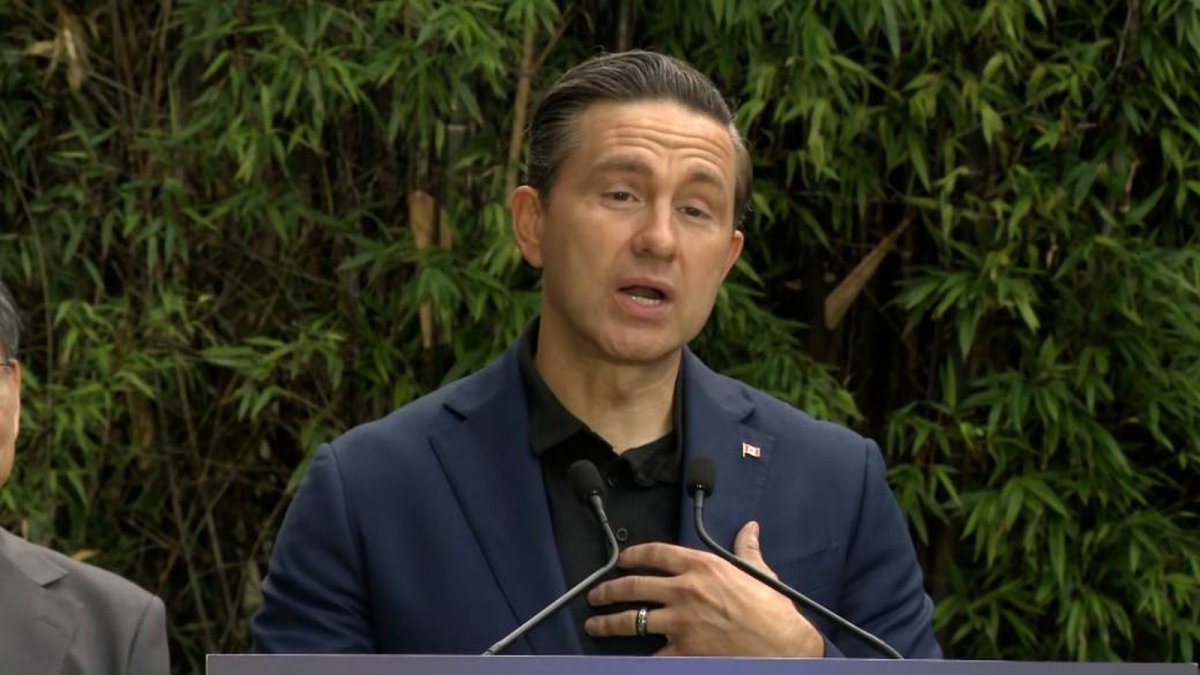
Conservative Leader Pierre Poilievre used the weekend to press the Liberal government on one of the most contentious files in the talks. In remarks delivered Sunday, Poilievre argued that any trade deal must eliminate tariffs on Canadian softwood lumber, which currently sit at a punishing 45 per cent.
"It is unacceptable for there to be U.S. tariffs on Canadian lumber. It's time for Mark Carney to keep his promise that he would negotiate a win and get the tariffs off Canadian softwood lumber. No more concessions while getting nothing in return," Poilievre said.
The Conservative leader has also sent Carney a letter urging "no more caving" to U.S. demands, co-signed by Conservative critic for Canada-U.S. relations Shuvaloy Majumdar. The letter reflects a broader political pressure campaign as the government navigates one of the most complex trade files in recent memory.
However, sources with knowledge of the talks suggest Poilievre's demand may be difficult to meet. According to those sources, the Americans are not interested in reducing softwood tariffs and duties, which currently sit at 45 per cent. One source told Global News that Canada has had to fight to even negotiate on softwood lumber, indicating the file remains a major point of contention.
The issue has particular resonance in British Columbia, where the forestry sector is a cornerstone of many communities. Last week, B.C. Premier David Eby criticised the high tariff rates in stark terms, drawing a pointed comparison.
"We face higher tariffs than Russia. The U.S., for some inexplicable reason, is putting forest families out of work here in order to prioritise lumber imports from Europe and Russia," Eby said Friday.
Eby's comments highlight the frustration felt in provinces that depend heavily on resource exports. The forestry industry supports tens of thousands of jobs across British Columbia and other regions, and the combination of existing tariffs and the threat of new ones has created deep uncertainty for workers and businesses alike.
Auto sector concerns loom large
Beyond lumber, the automotive industry is watching the negotiations closely. Sources familiar with the talks indicate that if a deal is reached, tariffs on Canadian autos and parts compliant under the Canada-U.S.-Mexico Agreement (CUSMA) would remain in place, but are expected to be reduced from the current 25 per cent level.
That prospect has drawn criticism from industry leaders who argue the auto sector must be fully addressed in any agreement. Brampton Mayor Patrick Brown, whose city is home to major automotive manufacturing operations, issued a stark warning Saturday.
"No deal is better than a bad deal," Brown said, if the auto sector is not included in the talks. His comments reflect broader anxiety in Ontario communities that rely on auto plants and the extensive supply chains that feed them.
The stakes are considerable. Auto manufacturing is one of Canada's largest export industries, and disruptions to cross-border supply chains would have immediate consequences for workers and the broader economy. The sector is already navigating the transition to electric vehicles and the competitive pressures of global markets.
Existing tariffs already straining Canadian industries
The proposed 50 per cent tariffs would add to an already complex web of trade barriers. Under Section 232 of the Trade Expansion Act of 1962, the Trump administration has already imposed tariffs of 50 per cent on steel and aluminum, 25 per cent on autos, 10 per cent on lumber and 25 per cent on wooden furniture.
These measures have been in place for some time, but the new round of tariffs represents an escalation that could have outsized effects on specific sectors. Steel and aluminum producers, particularly in Ontario and Quebec, have been grappling with the existing duties, and the prospect of additional tariffs on other goods adds further strain.
The cumulative effect of these measures is being felt across the Canadian economy. Manufacturers face higher input costs, exporters confront reduced competitiveness, and consumers may eventually see price impacts. The cost of living, already a pressing concern for many Canadians, could be affected if trade disruptions ripple through supply chains.
At the same time, the U.S. is insisting that American alcohol be put back onto all provincial liquor store shelves. Multiple premiers have expressed a willingness to comply with this demand, which has become a notable element of the broader negotiations. Provincial liquor boards, which control alcohol sales in most of Canada, have been drawn into the trade dispute as a result.
Political dynamics and the path forward
The negotiations unfold against a backdrop of intense political scrutiny in Ottawa. The Liberal government under Carney faces pressure from multiple directions: from opposition parties demanding a tougher line, from industry leaders seeking certainty, and from provinces with distinct economic interests.
Poilievre's public statements and letter to the prime minister reflect the Conservative strategy of positioning the government as too willing to concede ground. The accusation of "caving" to U.S. demands has become a recurring theme in opposition messaging, even as the government insists it is pursuing a comprehensive deal that serves Canadian interests.
As of Friday, a big gap remained between the two sides, according to sources with direct knowledge of the negotiations. The sources indicate that any deal the Trump administration is willing to sign will have some form of tariffs on steel, aluminum, autos and lumber. This suggests that even a successful negotiation may not result in the complete removal of trade barriers, but rather a reduction or restructuring of them.
The distinction matters for Canadian industries that have been lobbying for relief. While a reduction in tariffs would provide some respite, the continuation of any tariffs on key sectors would likely draw criticism from opposition parties and industry groups alike.
For now, all eyes are on Sunday's call between LeBlanc and Greer, and the days that follow. With the Wednesday deadline fast approaching, negotiators face a compressed timeline to resolve differences on some of the most contentious issues in the Canada-U.S. relationship.
The outcome will have significant implications for Canadian workers, businesses and families. From forestry communities in British Columbia to auto plants in Brampton, from steel mills in Hamilton to furniture manufacturers in Quebec, the effects of these negotiations will be felt across the country.
As the talks continue, the government's stated objective remains clear: reach a deal before Wednesday to avoid the new 50 per cent tariffs taking effect. Whether that goal is achievable, and what shape any agreement might take, remains uncertain. What is clear is that the next few days will be critical for the future of Canada-U.S. trade relations.
Tags: Canada-U.S. trade, tariffs, softwood lumber, auto industry, Dominic LeBlanc, Jamieson Greer, Mark Carney, Pierre Poilievre, David Eby, CUSMA, Section 232, trade negotiations
By Alex Thompson, Staff Writer
This article was produced with AI-assisted research and editorial support. Sources: Global News, CTV News, CBC News.
What's Your Reaction?
 Like
0
Like
0
 Dislike
0
Dislike
0
 Love
0
Love
0
 Funny
0
Funny
0
 Wow
0
Wow
0
 Sad
0
Sad
0
 Angry
0
Angry
0

Canada Correspondent at Global1.News. Based in Toronto, covering Canadian politics, energy, trade, and US-Canada relations. Provides the Canadian perspective on North American and global affairs.














Comments (0)